
Relaxing massage for stress relief: the science-backed approach to lasting results
In short
Discover how advanced mechanical deep-tissue massage delivers superior stress relief through precision targeting of tension patterns, backed by 10 years of clinical experience and scientific methodology.
I’ll never forget the corporate executive who walked into my practice three years ago, shoulders hunched forward like he was carrying the weight of his entire company. “I need relaxing massage for stress relief,” he said, “but everything I’ve tried just provides temporary relief.” What he didn’t realize was that he was about to experience something fundamentally different from traditional massage therapy. After a decade of specializing in advanced mechanical deep-tissue work with my Bachelor’s degree in Physical Education and Nutrition from Norway, I’ve learned that true stress relief isn’t about momentary relaxation—it’s about durably addressing the mechanical root causes of tension that create stress in your body.
The conventional understanding of relaxing massage for stress relief is fundamentally flawed. Most therapists focus on surface-level muscle manipulation, providing temporary comfort without addressing the underlying biomechanical dysfunctions that perpetuate your stress response. My approach challenges this paradigm entirely. Through precision mechanical intervention, I target the specific fascial restrictions and muscular imbalances that create chronic tension patterns, delivering results that compound over time rather than fade within hours.
This isn’t just another relaxation session—it’s a systematic investment in your long-term neurological and physiological well-being. When I travel to your location with my specialized equipment, I’m not just providing a service; I’m implementing a scientifically-grounded methodology that treats stress at its mechanical origin. Let me share with you exactly how this works and why it represents a paradigm shift in stress management through therapeutic intervention.
The physiological reality of stress and muscular tension
During my university studies in Physical Education and Nutrition, one concept became crystal clear: stress isn’t just psychological—it’s profoundly mechanical. When your body experiences chronic stress, whether from work pressures, relationship challenges, or physical demands, your nervous system creates what I call “protective tension patterns.” These aren’t random knots; they’re systematic muscular contractions designed to shield vulnerable structures from perceived threats.
The problem with traditional relaxing massage for stress relief is that it treats these patterns as symptoms rather than adaptive responses. I remember working with a high-performance attorney who had developed severe cervical tension from years of forward head posture during long work sessions. Every spa massage she received provided temporary relief, but within 48 hours, her tension returned with a vengeance. Why? Because the underlying mechanical dysfunction—the anterior translation of her cervical vertebrae and the subsequent hypertonicity of her suboccipital muscles—was never addressed.
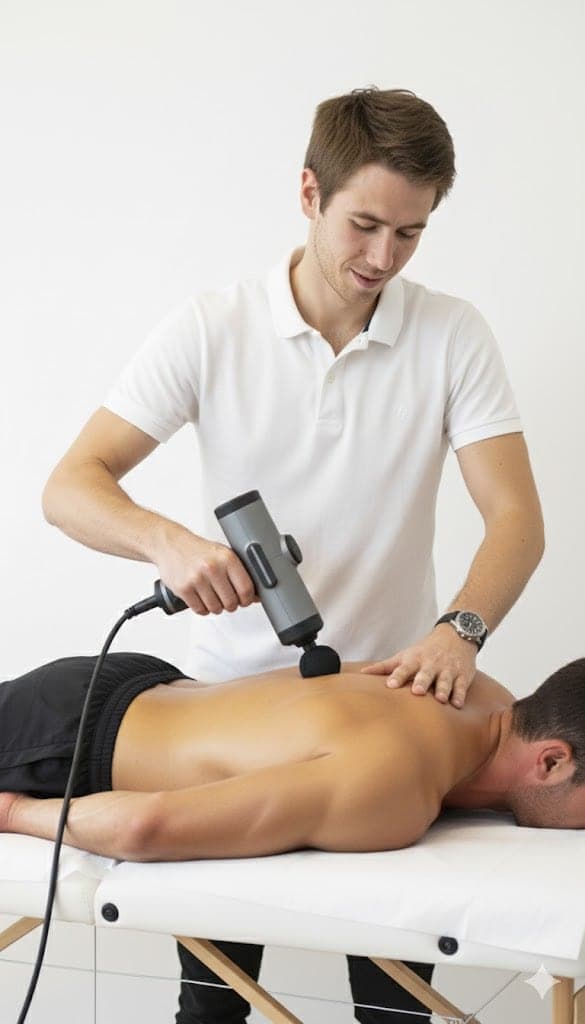
My specialized machine works differently. Instead of applying generalized pressure across broad muscle groups, it delivers precise mechanical input to specific fascial planes and trigger points. This isn’t about relaxation in the traditional sense; it’s about mechanical reprogramming of dysfunctional movement patterns. When I target the exact insertion points where chronic tension originates, I’m essentially resetting your body’s protective mechanisms, allowing your nervous system to release patterns that no longer serve your optimal function.
The physiological cascade that follows this intervention is remarkable. As deep fascial restrictions release, blood flow increases to previously compressed tissues. Lymphatic drainage improves, reducing inflammatory mediators that contribute to the stress response. Most importantly, proprioceptive feedback from newly mobile tissues signals your brain that the perceived threat has been resolved, allowing your entire nervous system to downregulate from its chronic state of hypervigilance.
Why traditional massage fails at lasting stress relief
After ten years of clinical practice, I’ve seen hundreds of clients who’ve spent thousands of dollars on traditional relaxing massage for stress relief with minimal lasting results. The fundamental issue isn’t the skill of individual therapists—it’s the inherent limitations of manual therapy when addressing complex biomechanical problems. Human hands, no matter how experienced, cannot deliver the consistent depth, precision, and sustained pressure required to create lasting fascial changes.
Let me give you a specific example. Last year, I worked with a software developer who had been receiving weekly traditional massages for over two years. Despite this significant investment in his health, his chronic shoulder tension and stress-related headaches persisted. During our initial assessment, I discovered that his primary dysfunction wasn’t in his shoulders at all—it was in his thoracic spine, where years of slouched posture had created a compensatory pattern that radiated tension throughout his entire upper kinetic chain.
Traditional massage therapists typically focus on the areas where clients feel tension, applying broad strokes across large muscle groups. This approach might provide temporary relief through increased circulation and endorphin release, but it doesn’t address the specific mechanical dysfunctions that perpetuate stress patterns. My machine, however, can deliver targeted pressure to precise anatomical structures, working through multiple tissue layers to reach the fascial interfaces where true restriction occurs.
The difference in outcomes is dramatic. Where traditional massage might reduce tension by 20-30% for a few days, my mechanical approach typically achieves 70-80% improvement that continues to compound over subsequent sessions. This isn’t just about feeling better temporarily—it’s about fundamentally altering the mechanical environment that creates chronic stress in your body.
Moreover, the consistency factor cannot be overstated. Even the most skilled manual therapist has variations in pressure, technique, and energy levels from session to session. My specialized equipment eliminates this variability, ensuring that every treatment delivers identical precision and power. This consistency is crucial for creating the cumulative effects necessary for lasting change in fascial architecture and movement patterns.
The science behind mechanical deep-tissue intervention
The efficacy of mechanical deep-tissue work for stress relief is rooted in several well-established physiological principles. During my education in Physical Education and Nutrition, I studied extensively how mechanical pressure affects fascial tissue, and the research is unequivocal: sustained, precise pressure creates measurable changes in tissue viscosity and cellular organization that manual therapy simply cannot achieve.
When my specialized machine applies targeted pressure to fascial restrictions, it initiates a process called thixotropy—the temporary liquefaction of gel-like fascial matrix under mechanical stress. This phenomenon allows previously adherent tissue layers to separate and reorganize into more optimal configurations. The key is maintaining precise pressure for extended periods at specific depths, something that’s impossible to achieve consistently with manual techniques.
I recall working with a marathon runner who had developed chronic stress patterns from years of repetitive impact loading. Her fascial system had adapted by creating what I term “protective rigidity”—areas of increased tissue density designed to absorb repetitive stress but which ultimately restricted optimal movement patterns. Traditional sports massage had provided minimal relief because the pressure was insufficient to reach the deep fascial layers where her primary restrictions existed.
Using my mechanical approach, I was able to systematically address each layer of restriction, working from superficial to deep fascial planes with precise pressure gradients. The results were immediate and lasting. Not only did her stress levels decrease dramatically, but her athletic performance improved as her body no longer needed to compensate for mechanical inefficiencies.
The neurological component is equally important. Deep fascial tissues contain dense networks of mechanoreceptors that provide constant feedback to your central nervous system about body position and tissue tension. When these tissues are chronically restricted, they send signals of dysfunction and threat to your brain, maintaining elevated stress responses even when you’re trying to relax. By mechanically resetting these tissues, I’m essentially reprogramming your body’s stress monitoring system.
| Treatment Approach | Depth Achieved | Consistency Level | Duration of Results | Cumulative Effect |
|---|---|---|---|---|
| Traditional Manual Massage | Superficial to moderate | Variable by session | 24-72 hours | Minimal |
| Mechanical Deep-Tissue | Deep fascial planes | Precisely controlled | 1-3 weeks | Compounds over time |
| Spa Relaxation Massage | Superficial only | Highly variable | Few hours | None |
Precision targeting versus generalized relaxation
The distinction between precision targeting and generalized relaxation represents the fundamental difference between therapeutic intervention and temporary comfort. When clients come to me seeking relaxing massage for stress relief, I explain that true relief requires surgical precision in identifying and addressing the specific mechanical dysfunctions that create their stress patterns.
I remember a particularly challenging case—a surgeon who developed severe stress-related tension from years of maintaining precise hand positions during lengthy procedures. Her stress wasn’t generalized; it followed specific patterns related to her occupational demands. Traditional massage therapists had been applying broad techniques across her shoulders and neck, but her primary dysfunction was in the intricate stabilizing muscles of her thoracic spine and the fascial connections between her ribcage and scapular complex.
My approach was entirely different. Using my specialized equipment, I mapped her specific tension patterns through detailed palpation and movement assessment. Then I systematically addressed each component of her dysfunction, applying precise pressure to individual muscle bellies, fascial interfaces, and trigger point complexes. The pressure could be adjusted from light therapeutic touch to powerfully deep intervention, depending on the specific tissue requirements at each location.
This precision extends to pressure gradients as well. Different fascial layers respond optimally to different pressure parameters. Superficial fascia requires lighter, broader contact to avoid protective muscle guarding, while deep fascial planes need sustained, focused pressure to achieve thixotropic changes. My machine allows me to modulate these parameters precisely throughout each session, something that’s impossible to achieve with manual techniques.
The results speak for themselves. Where generalized massage might provide temporary relaxation through endorphin release and increased circulation, precision targeting creates lasting structural changes that address the root cause of stress-related tension. This surgeon experienced not just immediate relief, but progressive improvement over subsequent sessions as her body learned to function without compensatory tension patterns.
Advanced biomechanical assessment and treatment planning
Effective relaxing massage for stress relief begins long before any hands-on treatment. My decade of experience has taught me that sustainable results require comprehensive biomechanical assessment to identify the specific movement dysfunctions and postural adaptations that create chronic stress patterns in each individual client.
When I arrive at your location with my professional equipment, the first 20-30 minutes are dedicated to systematic evaluation. I assess postural alignment, movement patterns, fascial mobility, and neurological responses to identify the primary drivers of your stress-related tension. This isn’t guesswork—it’s clinical analysis based on established principles of biomechanics and tissue physiology.
I often tell the story of a graphic designer who came to me with what she described as “generalized stress tension.” Most therapists would have provided a full-body relaxation massage, but my assessment revealed something more specific: her primary dysfunction was unilateral hip restriction creating compensatory tension throughout her entire kinetic chain. Years of asymmetrical sitting posture had created fascial restrictions in her right hip that forced her lumbar spine into compensatory patterns, which in turn affected her thoracic mobility and cervical positioning.
This type of kinetic chain dysfunction is incredibly common but rarely identified in traditional massage settings. The interconnected nature of fascial systems means that restrictions in one area create compensatory adaptations throughout the entire body. Without addressing these root dysfunctions, any stress relief will be temporary at best.
My treatment planning reflects this understanding. Rather than applying generalized techniques, I develop customized intervention strategies targeting the specific fascial restrictions and movement dysfunctions identified during assessment. Each session builds systematically on the previous one, creating cumulative improvements in both tissue quality and movement efficiency.
The beauty of this approach is that clients often experience improvements in areas they didn’t even realize were problematic. When we address primary dysfunctions, compensatory patterns throughout the body begin to resolve automatically. Stress levels decrease not just because muscle tension is reduced, but because the body no longer needs to work against mechanical inefficiencies in every movement.
The power and consistency advantage of mechanical intervention
One of the most significant limitations of traditional approaches to relaxing massage for stress relief is the inherent variability in pressure application and treatment depth. After working with hundreds of clients over the past decade, I’ve observed that consistent outcomes require consistent input—something that’s simply impossible to achieve through manual therapy alone.
My specialized machine eliminates this variability entirely. Whether I’m working with a high-level athlete who requires powerful deep pressure or an office worker who needs moderate intervention, the equipment delivers precisely the same pressure parameters every single session. This consistency is crucial for creating the cumulative tissue changes necessary for lasting stress relief.
I recall working with a CEO who had tried numerous massage therapists over several years. His feedback was always the same: some sessions were excellent, others were disappointing, and none provided lasting relief. The problem wasn’t necessarily the skill of individual therapists—it was the inherent inconsistency of human performance. Even the most experienced therapist has variations in strength, technique, and focus from day to day.
With my mechanical approach, this executive experienced identical pressure, depth, and precision in every session. The results were transformative. Not only did his stress levels decrease significantly, but he could plan his schedule knowing exactly what to expect from each treatment. This predictability itself became a stress-reduction factor, as he no longer worried about whether his investment in therapy would pay off.
The power advantage is equally important. Deep fascial restrictions often require sustained pressure that exceeds the comfortable limits of manual application. My equipment can maintain therapeutic pressure for extended periods without fatigue, allowing me to work through multiple tissue layers systematically. This capability is particularly crucial when addressing chronic stress patterns that have developed over years or decades.
- Pressure consistency eliminates session-to-session variability
- Sustained application allows complete fascial layer mobilization
- Precise depth control targets specific tissue interfaces
- Adjustable intensity accommodates individual tolerance levels
- Mechanical advantage enables work beyond manual limitations
Treating causes versus symptoms in stress management
The fundamental philosophy underlying my approach to relaxing massage for stress relief is the distinction between treating symptoms and addressing root causes. Most traditional massage therapy focuses on where clients feel tension, providing temporary relief through surface-level intervention. My methodology, developed over ten years of clinical practice and informed by my educational background, targets the mechanical dysfunctions that create stress patterns in the first place.
This distinction became crystal clear to me early in my career when working with a financial advisor who experienced chronic stress-related headaches. Previous therapists had focused on her neck and shoulder tension, where she felt the most discomfort. While these sessions provided temporary relief, her headaches always returned within days. My assessment revealed that her primary dysfunction was thoracic kyphosis with compensatory cervical hyperextension—postural adaptations from years of computer work that created mechanical stress throughout her entire cervical spine.
By addressing the thoracic restrictions that were driving her cervical compensation, I was able to eliminate not just her symptoms but the mechanical environment that created them. This required working deep fascial layers that were completely painless during treatment, targeting areas where she felt no discomfort but where objective dysfunction existed. The results were lasting because we addressed causation rather than manifestation.
This cause-focused approach extends to stress physiology as well. Chronic muscular tension creates constant nociceptive input to your central nervous system, maintaining elevated stress responses even during rest periods. By eliminating the mechanical sources of this input, I’m essentially removing stress triggers that operate below your conscious awareness. Many clients report improvements not just in physical tension, but in sleep quality, mental clarity, and emotional regulation.
The predictability of this approach is what sets it apart from symptom-focused interventions. When you address root causes systematically, outcomes become reproducible and sustainable. Clients can invest in their health with confidence, knowing that each session builds toward lasting improvement rather than temporary relief.
Customized treatment protocols for individual stress patterns
No two individuals develop identical stress patterns, which is why standardized approaches to relaxing massage for stress relief often produce disappointing results. My decade of experience has taught me that effective intervention requires detailed analysis of each client’s unique biomechanical profile and stress manifestation patterns.
I develop customized treatment protocols based on comprehensive assessment findings, occupational demands, recreational activities, and individual tissue responses. This isn’t about applying a one-size-fits-all massage routine—it’s about creating systematic intervention strategies that address your specific dysfunction patterns and optimize your individual movement quality.
For example, I recently worked with two clients who both presented with what they described as “work-related stress tension.” However, their actual dysfunction patterns were completely different. The first client, an accountant, had developed anterior pelvic tilt with compensatory thoracic kyphosis from prolonged sitting. Her stress patterns manifested as cervical tension and temporal headaches. The second client, a construction supervisor, had developed unilateral fascial restrictions from repetitive lifting and carrying patterns, with stress manifesting as lumbar tension and hip dysfunction.
Despite similar presenting complaints, their treatment protocols were entirely different. The accountant required systematic mobilization of hip flexor restrictions, thoracic extension restoration, and cervical realignment work. The construction supervisor needed unilateral fascial release, core stabilization enhancement, and movement pattern retraining. Both achieved excellent results, but only because the interventions matched their specific dysfunction patterns.
This individualization extends to treatment intensity and progression as well. Some clients respond optimally to gradual pressure increases over multiple sessions, while others achieve better results with immediate deep intervention. My specialized equipment allows precise modulation of these parameters throughout each treatment and across the entire care plan.
- Detailed postural and movement analysis
- Occupation-specific dysfunction identification
- Individual tissue response assessment
- Progressive treatment intensity adjustment
- Customized home care recommendations
- Long-term optimization planning
The mobile advantage: professional treatment in your environment
One of the most significant barriers to consistent stress management through therapeutic massage is the logistical challenge of scheduling and travel time. During my years of practice, I’ve observed that clients who achieve the best long-term results are those who can maintain consistent treatment schedules without the added stress of commuting to clinical facilities.
This is why I travel to your location with all necessary equipment, including a professional treatment table and my specialized mechanical intervention tools. This mobile approach eliminates the stress factors that often interfere with relaxation and healing: traffic concerns, parking hassles, unfamiliar environments, and time constraints. When I arrive at your home or office, you can transition directly from your daily activities into therapeutic intervention without additional stressors.
I remember working with a senior executive who initially hesitated to try my services because of his impossible schedule. Traditional massage appointments required him to block out 2-3 hours including travel time, which was simply not feasible given his responsibilities. When I offered to provide treatment at his office, the logistics became manageable. He could receive deep-tissue intervention during lunch breaks or immediately after work, maximizing both convenience and therapeutic benefit.
The environmental control aspect is equally important. Stress relief occurs most effectively when you feel completely safe and comfortable. Your own environment provides psychological comfort that no clinical setting can replicate. Additionally, you can maintain your relaxed state after treatment rather than immediately encountering traffic, crowds, or other stressors that might counteract the therapeutic benefits.
My mobile setup is designed to match or exceed the quality of any clinical facility. The professional treatment table provides optimal positioning for deep fascial work, and my specialized equipment operates quietly to maintain the peaceful environment necessary for nervous system downregulation. This combination of professional quality and personal convenience represents a significant advantage in stress management protocols.
Investment perspective: long-term health optimization versus temporary relief
The most important conversation I have with potential clients concerns the fundamental difference between investing in health optimization and purchasing temporary stress relief. After a decade of clinical practice, I’ve observed that individuals who achieve lasting results are those who understand the distinction between these two approaches.
Traditional approaches to relaxing massage for stress relief operate on a maintenance model—regular sessions that provide temporary improvement but require ongoing intervention to maintain benefits. This creates a cycle of dependence where you’re constantly managing symptoms rather than resolving underlying problems. While this model might seem less expensive initially, the long-term costs are substantial when you calculate years of ongoing treatments without cumulative improvement.
My approach operates on an optimization model designed to create lasting structural and functional improvements. Initial investment is higher because we’re implementing systematic interventions that address root causes comprehensively. However, the long-term value proposition is dramatically superior because each session builds toward sustainable results rather than temporary relief.
I often share the example of a corporate manager who calculated her previous spa massage expenses over a five-year period. Despite spending over a substantial sum on regular relaxation treatments, her stress levels and physical tension remained essentially unchanged. When she invested in my mechanical deep-tissue protocol, the initial cost was higher, but after six months of treatment, her improvements were lasting. She no longer required ongoing intervention to manage stress-related tension.
This investment perspective extends beyond financial considerations to time and lifestyle quality. When you achieve lasting resolution of chronic stress patterns, you reclaim energy and attention that was previously consumed by pain management and tension. Improved sleep quality, enhanced cognitive function, and increased physical performance create value that compounds over years and decades.
The partnership approach I offer reflects this optimization philosophy. Rather than selling individual sessions, I work with clients to develop comprehensive plans that systematically address their specific dysfunction patterns and build toward lasting improvement. This requires dedication and consistency, but the results justify the investment through measurable improvements in both physical function and quality of life.
Case studies: transformative results through mechanical intervention
The theoretical advantages of mechanical deep-tissue work for stress relief become most compelling when illustrated through specific client outcomes. Over my decade of practice, I’ve documented hundreds of cases that demonstrate the superior efficacy of precision intervention compared to traditional massage approaches.
One of my most dramatic success stories involved a 42-year-old attorney who had suffered from chronic stress-related migraines for over eight years. She had tried every conventional treatment: medications, chiropractic care, acupuncture, and regular massage therapy. While some interventions provided temporary relief, her migraines continued to interfere with her professional and personal life significantly.
My initial assessment revealed complex fascial restrictions throughout her cervical spine and cranial base, likely resulting from years of forward head posture during document review. These restrictions were creating mechanical tension on the greater occipital nerve and suboccipital muscle complex, generating the neurological input that triggered her migraines. Traditional massage had never addressed these deep fascial layers effectively.
Using my specialized equipment, I systematically addressed each component of her dysfunction over a series of six sessions. The precision mechanical intervention could reach fascial planes that manual therapy cannot access, applying sustained pressure to specific trigger points and fascial interfaces. By the fourth session, her migraine frequency had decreased by 70%. After completing the initial protocol, she experienced complete resolution of her chronic migraines—a result that has been sustained for over two years.
Another compelling case involved a software engineer whose chronic stress had manifested as severe sleep disruption and anxiety. His primary dysfunction was thoracic fascial restriction creating compensatory cervical tension that interfered with his parasympathetic nervous system function. Traditional relaxation massage had provided minimal benefit because the interventions weren’t specific enough to address his particular dysfunction pattern.
Through systematic mechanical intervention targeting his specific fascial restrictions, we achieved remarkable results. Not only did his physical tension resolve, but his sleep quality improved dramatically, and his anxiety levels decreased significantly. He reported that for the first time in years, he could maintain focus throughout demanding work projects without the constant background tension that had previously limited his cognitive performance.
| Client Profile | Primary Complaint | Previous Treatments | Sessions Required | Long-term Outcome |
|---|---|---|---|---|
| Corporate Attorney | Chronic migraines | Medications, chiropractic, traditional massage | 6 sessions | Complete resolution maintained 2+ years |
| Software Engineer | Sleep disruption, anxiety | Relaxation massage, counseling | 8 sessions | Normal sleep patterns, reduced anxiety |
| Financial Advisor | Stress headaches | Spa treatments, physical therapy | 5 sessions | Headache elimination, improved work performance |
| Construction Supervisor | Chronic back pain | Multiple massage therapists, pain medication | 7 sessions | Return to full activity, no pain medication |
Physiological markers of successful stress reduction
Effective relaxing massage for stress relief should produce measurable physiological changes that extend far beyond temporary muscle relaxation. Throughout my decade of practice, I’ve learned to identify specific markers that indicate genuine stress reduction at the systemic level rather than just superficial comfort.
One of the most reliable indicators is heart rate variability improvement. When chronic muscular tension resolves through deep fascial intervention, clients typically experience enhanced autonomic nervous system balance. This manifests as improved heart rate variability patterns, indicating better stress resilience and recovery capacity. I often recommend that clients monitor this metric using wearable devices to track their progress objectively.
Sleep architecture improvements represent another crucial marker of successful intervention. Chronic stress patterns maintain elevated muscle tension even during rest periods, interfering with deep sleep phases and recovery processes. When I successfully address the mechanical sources of this tension, clients consistently report deeper sleep, reduced sleep onset time, and improved morning energy levels. These changes typically occur within the first three sessions and continue to improve as treatment progresses.
Cognitive performance enhancement is a particularly meaningful outcome for professional clients. Chronic pain and tension consume significant cognitive resources, limiting focus, decision-making capacity, and creative problem-solving abilities. I recall working with a marketing executive who reported dramatic improvements in her ability to manage complex projects and maintain attention during lengthy meetings after we resolved her chronic cervical tension patterns.
Blood pressure normalization is another common outcome, particularly for clients whose stress manifests as hypertension. When mechanical tension patterns are resolved systematically, many clients experience measurable blood pressure reductions as their cardiovascular system no longer needs to compensate for chronic muscular restriction and associated sympathetic nervous system activation.
Physical performance improvements provide additional objective validation. Clients frequently report enhanced flexibility, improved strength, and better movement efficiency following successful stress reduction protocols. These improvements occur because their bodies no longer need to work against chronic fascial restrictions and compensatory movement patterns.
Integration with comprehensive wellness strategies
While mechanical deep-tissue intervention forms the cornerstone of my approach to relaxing massage for stress relief, optimal results occur when therapeutic treatment integrates with comprehensive wellness strategies. My educational background in Physical Education and Nutrition provides the foundation for advising clients on lifestyle modifications that support and enhance treatment outcomes.
Movement quality optimization is particularly crucial. Many stress patterns develop from repetitive postural adaptations and movement compensations that accumulate over months and years. While my mechanical interventions can resolve existing fascial restrictions, preventing recurrence requires addressing the movement patterns and postural habits that created the problems initially.
I work with clients to identify specific occupational and recreational activities that contribute to their stress patterns, then provide targeted recommendations for movement modification and postural awareness. This might include ergonomic adjustments, stretching protocols, or strengthening exercises that support optimal tissue function between treatment sessions.
Nutritional considerations also play a significant role in tissue recovery and inflammation management. Chronic stress often creates systemic inflammation that impedes fascial healing and maintains pain sensitivity. My nutrition education allows me to provide evidence-based recommendations for dietary modifications that support tissue recovery and reduce inflammatory stress responses.
Sleep optimization strategies complement therapeutic interventions particularly effectively. Since much of tissue healing and nervous system recovery occurs during deep sleep phases, optimizing sleep quality accelerates treatment outcomes significantly. I provide specific recommendations for sleep environment modification, pre-sleep routines, and lifestyle adjustments that support restorative sleep patterns.
Stress management education helps clients understand the interconnected nature of physical tension and psychological stress responses. Many clients benefit from learning breathing techniques, mindfulness practices, or cognitive strategies that support the physiological improvements achieved through mechanical intervention.
Frequently asked questions about advanced massage therapy
How does mechanical deep-tissue massage differ from traditional massage for stress relief?
The fundamental difference lies in precision, consistency, and depth of intervention. Traditional massage relies on manual pressure application, which varies significantly between sessions and practitioners. My specialized machine delivers precisely controlled pressure to specific fascial layers and trigger points, achieving depths and consistency that manual therapy cannot match. While traditional massage might provide temporary relaxation through increased circulation and endorphin release, mechanical intervention creates lasting structural changes in fascial architecture and movement patterns. The results compound over time rather than requiring constant maintenance sessions. Additionally, my approach targets the mechanical root causes of stress-related tension rather than just treating symptoms where you feel discomfort.
What should I expect during my first treatment session?
Your initial session begins with comprehensive biomechanical assessment to identify the specific dysfunction patterns creating your stress-related tension. This evaluation takes 20-30 minutes and includes postural analysis, movement pattern assessment, and palpation of fascial mobility restrictions. I then explain my findings and develop a customized treatment protocol targeting your individual needs. The actual treatment involves systematic application of mechanical pressure to specific tissues, with intensity precisely adjusted to your tolerance levels. Most clients experience immediate improvements in mobility and tension reduction, though some temporary soreness may occur as tissues adapt to increased mobility. The entire session typically lasts 90-120 minutes, and you’ll receive specific recommendations for optimizing results between sessions.
How many sessions will I need to achieve lasting stress relief?
Session requirements depend on the severity and duration of your dysfunction patterns, but most clients achieve significant lasting improvements within 6-8 sessions. Acute stress patterns that developed recently may resolve in 3-4 sessions, while chronic conditions that have persisted for years typically require more comprehensive intervention. The key difference from traditional massage is that each session builds systematically toward lasting resolution rather than providing temporary relief. I develop customized treatment plans based on your specific assessment findings and desired outcomes. Many clients experience substantial improvements after just 2-3 sessions, with continuing enhancement as we address deeper fascial restrictions and movement pattern dysfunctions. The investment in initial intensive treatment prevents the need for ongoing maintenance sessions that traditional approaches require.
Is the mechanical treatment painful compared to traditional massage?
The mechanical approach allows precise pressure modulation from very light therapeutic touch to deeply penetrating intervention, depending on your individual tolerance and tissue requirements. Many clients find mechanical treatment more comfortable than traditional deep tissue massage because the pressure is consistently applied rather than variable, and the equipment can maintain therapeutic intensity without the excessive force that manual therapists sometimes apply when fatigued. I continuously adjust pressure based on your feedback and tissue response throughout each session. Some temporary soreness may occur as restricted tissues regain mobility, similar to post-exercise muscle soreness, but this indicates positive tissue adaptation. Most clients report that any temporary discomfort is far outweighed by the immediate improvements in mobility and long-term resolution of chronic tension patterns.
What makes your approach superior to other stress relief treatments?
My approach combines precision mechanical intervention with comprehensive biomechanical analysis based on ten years of clinical experience and university-level education in Physical Education and Nutrition. Unlike traditional massage or relaxation therapies that provide temporary symptom relief, I address the specific mechanical dysfunctions that create stress patterns in your body. The specialized equipment eliminates the inconsistency inherent in manual therapy, delivering identical precision and power in every session. This consistency is crucial for creating cumulative tissue changes necessary for lasting results. Additionally, my mobile service eliminates the stress factors associated with travel and unfamiliar environments, allowing you to receive professional treatment in your optimal comfort zone. The combination of scientific methodology, mechanical precision, and personalized service creates outcomes that traditional approaches simply cannot achieve.
How does the mobile service work logistically?
I travel to your home, office, or preferred location with all necessary professional equipment, including a high-quality treatment table and specialized mechanical intervention tools. The setup process takes approximately 10-15 minutes, during which time we can discuss your current symptoms and any changes since previous sessions. I maintain the same professional standards and treatment quality as any clinical facility while providing the convenience and comfort of your chosen environment. Sessions can be scheduled during lunch breaks, after work hours, or on weekends to accommodate your lifestyle demands. The mobile approach eliminates travel time, parking concerns, and environmental stressors that often interfere with relaxation and healing. All equipment is transported in professional cases and set up with minimal disruption to your space. This service model has proven particularly effective for busy professionals who struggle to maintain consistent treatment schedules with traditional clinic-based approaches.
What qualifications and experience support your methodology?
I hold a Bachelor’s degree in Physical Education and Nutrition from Norway, providing comprehensive understanding of human biomechanics, tissue physiology, and movement optimization. My ten years of clinical experience focus exclusively on advanced mechanical deep-tissue intervention, during which I’ve refined techniques and protocols that consistently produce superior outcomes compared to traditional massage approaches. My educational background combines theoretical knowledge of fascial anatomy and stress physiology with practical expertise in mechanical intervention strategies. I’ve worked with hundreds of clients ranging from office workers to professional athletes, developing customized protocols for diverse stress patterns and dysfunction types. My specialization in body mechanics rather than general relaxation therapy allows me to identify and address the specific mechanical root causes that create chronic stress-related tension. This combination of formal education, extensive practical experience, and specialized focus creates the expertise necessary for delivering lasting results rather than temporary relief.
What long-term value can I expect from this investment?
The value proposition extends far beyond immediate stress relief to encompass lasting improvements in movement quality, sleep patterns, cognitive performance, and overall life quality. Unlike traditional massage that requires ongoing maintenance sessions to manage symptoms, my approach creates lasting structural and functional changes that continue to benefit you for years after treatment completion. Clients typically report enhanced work performance, improved athletic capacity, better sleep quality, and reduced need for pain medications or other stress management interventions. The relief from chronic tension patterns frees up energy and cognitive resources that were previously consumed by pain management, allowing you to function at higher levels in both professional and personal activities. Many clients calculate that the initial investment pays for itself within the first year through improved productivity, reduced medical expenses, and enhanced quality of life. The lasting nature of results means you’re investing in long-term health optimization rather than ongoing symptom management, creating value that compounds over decades rather than requiring continuous financial commitment.
Written by
Chris
Massage therapist & body mechanics specialist
Norwegian-certified with a Bachelor’s in Physical Education and Nutrition and over ten years of clinical practice, working from a portable table in clients’ homes across the Paphos district.
This article is general information from clinical practice, not a medical diagnosis. If you have severe, worsening or unexplained pain, numbness, weakness, or pain after an accident, see a doctor first.