
Quick relief for muscle soreness: advanced mechanical deep-tissue solutions that work
In short
Discover professional mechanical deep-tissue techniques for immediate muscle soreness relief. Expert-backed methods that treat the cause, not symptoms, for lasting results.
I remember standing in my clinic ten years ago, watching yet another client walk out disappointed after a traditional massage session that provided only temporary relief from their chronic muscle soreness. That moment crystallized something I’d been observing throughout my early career with a Bachelor’s degree in Physical Education and Nutrition from Norway: conventional approaches were failing people who desperately needed real solutions. The cycle was predictable – clients would return week after week, spending hundreds of dollars on treatments that merely masked symptoms rather than addressing the mechanical dysfunction causing their pain.
After a decade of specializing exclusively in advanced mechanical deep-tissue massage, I can tell you with absolute certainty that quick relief for muscle soreness isn’t just possible – it’s scientifically predictable when you understand body mechanics and apply the right methodology. The difference between temporary symptom management and lasting muscle soreness resolution lies in precision, depth, and consistency of treatment. Most practitioners simply don’t possess the tools or knowledge to deliver what the muscular system actually requires for rapid recovery and optimization.
What I’ve discovered through thousands of hours treating everyone from weekend warriors to professional athletes is that muscle soreness stems from specific mechanical dysfunctions within the tissue matrix. These aren’t mysteries requiring guesswork – they’re identifiable, measurable problems that respond predictably to targeted intervention. The key is understanding that quick relief for muscle soreness must address the root cause: adhesions, trigger points, and fascial restrictions that compromise normal muscle function and perpetuate pain cycles.
This comprehensive analysis will challenge everything you think you know about muscle soreness treatment and introduce you to methodologies that deliver measurable results in single sessions. We’re not discussing relaxation techniques or feel-good therapies here – this is clinical-grade intervention designed to restore optimal muscle function and relieves pain at its source.
Understanding the mechanical basis of muscle soreness
Let me share something that transformed my entire approach to muscle soreness treatment early in my career. I was working with a competitive cyclist who’d been struggling with chronic quadriceps soreness for months despite regular massage therapy, stretching, and rest protocols. Traditional assessments suggested overuse injury, but when I examined the mechanical dysfunction using advanced palpation techniques, I discovered something fascinating: the soreness wasn’t originating from the quadriceps muscles themselves.
The primary dysfunction was located in the iliotibial band and tensor fasciae latae, creating compensatory tension patterns that manifested as quadriceps soreness. This revelation highlighted a crucial principle: muscle soreness rarely originates where you feel it. The pain is simply the symptom – the mechanical dysfunction causing that pain often exists in entirely different tissue structures. This is why superficial treatments consistently fail to provide lasting relief for muscle soreness.
From a biomechanical perspective, muscle soreness develops through several distinct pathways. Delayed onset muscle soreness (DOMS) occurs when eccentric muscle contractions create microscopic tears in muscle fibers, triggering inflammatory responses that activate nociceptors – pain receptors within the tissue. However, chronic muscle soreness involves more complex mechanisms including fascial adhesions, myofascial trigger points, and altered motor recruitment patterns that perpetuate dysfunction long after initial tissue damage has healed.
The fascial system plays a particularly critical role in muscle soreness development. Fascia – the connective tissue network surrounding and interpenetrating muscles – can develop restrictions and adhesions that limit normal tissue mobility. When fascial restrictions occur, they create mechanical stress concentrations that overload specific muscle regions while underloading others. This imbalance generates compensatory movement patterns that inevitably lead to soreness and dysfunction in predictable locations throughout the kinetic chain.
What makes this even more complex is the neurological component. The central nervous system adapts to chronic muscle soreness by altering motor unit recruitment patterns and developing protective muscle guarding responses. These adaptations, while initially protective, often perpetuate the very dysfunction they’re meant to address. Breaking these neurological adaptation patterns requires interventions that can reset both the mechanical and neurological components simultaneously – something that requires significant precision and depth of treatment.
Understanding these mechanisms is crucial because it explains why quick relief for muscle soreness demands targeted mechanical intervention rather than generalized approaches. You can’t stretch away fascial adhesions, and you can’t foam roll through deep trigger point dysfunction. These problems require specific mechanical forces applied with precise pressure, angle, and duration to achieve tissue remodeling and restore normal function.
In my practice, I’ve observed that clients who understand these underlying mechanisms become active participants in their recovery process rather than passive recipients of treatment. They begin to recognize the relationship between movement patterns, tissue quality, and soreness development. This awareness accelerates their progress and helps maintain the results we achieve through mechanical intervention.
Why traditional approaches fail to deliver quick relief
I’ll never forget the frustration in Sarah’s voice when she first contacted me three years ago. She was a marketing executive who’d been dealing with chronic shoulder and neck soreness for over two years. “I’ve tried everything,” she said during our initial consultation. “Swedish massage, hot stone therapy, aromatherapy treatments, stretching classes, foam rolling, trigger point balls – you name it. I get temporary relief that lasts maybe a day or two, then I’m right back where I started.”
Sarah’s experience perfectly illustrates the fundamental flaw in conventional muscle soreness treatment: these methods address symptoms rather than causes. Traditional massage therapy, while relaxing and temporarily beneficial, lacks the mechanical precision and depth required to resolve the underlying tissue dysfunction causing muscle soreness. Most massage techniques apply broad, generalized pressure that may temporarily increase circulation and provide neurological pain inhibition, but they don’t possess the specificity needed to eliminate adhesions, deactivate trigger points, or restore normal fascial mobility.
The limitations become even more apparent when examining the pressure capabilities of human hands. Even the strongest massage therapists can only apply approximately 15-20 pounds of pressure per square inch for brief periods before fatigue compromises their effectiveness. This pressure limitation means that deep-seated adhesions and trigger points – the primary sources of chronic muscle soreness – remain largely unaddressed. It’s like trying to remove a deeply embedded splinter with a feather: the tool simply isn’t capable of generating the mechanical forces required for the task.
Consistency represents another critical failure point in traditional approaches. Human performance varies significantly based on energy levels, technique variations, and individual practitioner skill. What this means for clients seeking quick relief for muscle soreness is that treatment outcomes become unpredictable. You might receive an excellent session one week and a mediocre one the next, making it impossible to achieve the consistent mechanical input required for tissue remodeling and lasting change.
The timing element further compounds these limitations. Traditional massage sessions typically last 60-90 minutes, with much of that time spent on broad, general techniques rather than focused intervention on specific dysfunction. When you’re dealing with acute muscle soreness that demands immediate attention, this approach is inefficient and often ineffective. Quick relief for muscle soreness requires concentrated, high-precision intervention delivered to specific target areas – not generalized treatment spread across large body regions.
Perhaps most importantly, traditional approaches lack the diagnostic precision necessary to identify the actual cause of muscle soreness. Most practitioners rely on client reports of pain location rather than conducting comprehensive mechanical assessments to determine where dysfunction actually exists. This leads to treating symptoms in one area while the underlying cause remains active in completely different tissue structures.
I’ve observed this pattern repeatedly in my practice: clients arrive having spent thousands of dollars on treatments that felt good temporarily but provided no lasting improvement in their muscle soreness. The cycle continues because practitioners lack both the assessment skills to identify mechanical dysfunction and the tools to address it effectively once identified. Breaking this cycle requires a fundamentally different approach – one that prioritizes mechanical precision over sensation and treats causes rather than symptoms.
The economic impact of these failed approaches cannot be ignored. Clients often spend a per-session fee (see current pricing) on treatments that provide only temporary relief, creating expensive dependency cycles rather than investing in solutions that deliver lasting results. This represents not just financial waste but lost time and continued suffering that could be eliminated through proper mechanical intervention.
The science behind effective mechanical intervention
During my graduate studies in Physical Education and Nutrition, I became fascinated with the mechanical properties of human tissue and how targeted force application could induce specific physiological responses. What I discovered through extensive research and clinical application is that effective muscle soreness treatment operates on well-established biomechanical principles that most practitioners either don’t understand or lack the tools to implement properly.
The foundation of effective mechanical intervention lies in understanding tissue deformation characteristics. Human soft tissue exhibits viscoelastic properties, meaning it responds to both the magnitude and duration of applied forces. To achieve lasting tissue remodeling – the key to lasting relief from muscle soreness – you must apply sufficient force over adequate time periods to exceed the tissue’s elastic limit and induce plastic deformation. This is where traditional approaches fail: they simply cannot generate or sustain the mechanical forces required for meaningful tissue change.
Research in myofascial mechanics demonstrates that adhesions and restrictions require sustained pressures of 25-40 pounds per square inch applied for 90-120 seconds to achieve release. Trigger point deactivation demands even higher pressures – often 40-60 pounds per square inch – applied with millimeter precision to specific locations within muscle tissue. These aren’t arbitrary numbers; they represent the minimum thresholds required to overcome tissue resistance and induce the mechanical changes necessary for quick relief for muscle soreness.
The neurological component is equally crucial and scientifically well-documented. High-pressure mechanical stimulation activates large-diameter mechanoreceptors that provide inhibitory input to nociceptors through the gate control mechanism. This neurological inhibition provides immediate pain relief while the mechanical forces simultaneously address the underlying tissue dysfunction. The combination creates both immediate symptom relief and long-term resolution – true quick relief for muscle soreness.
Precision becomes absolutely critical when applying these scientific principles clinically. The human body contains over 400 documented trigger point locations, each requiring specific pressure angles and depths for effective treatment. Fascial adhesions occur along predictable planes that correspond to functional movement patterns, but identifying and accessing these restrictions requires millimeter-level accuracy. This level of precision is impossible to achieve consistently with manual techniques but becomes routine with properly designed mechanical tools.
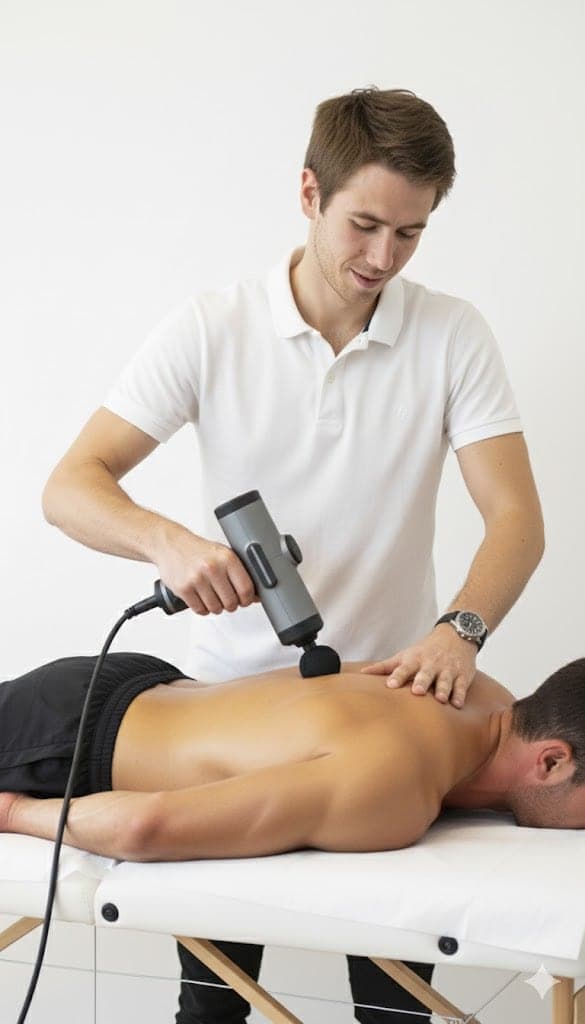
What makes my approach particularly effective is the integration of these scientific principles with real-time assessment and adjustment capabilities. Using specialized mechanical devices, I can precisely control pressure, angle, and duration while monitoring tissue response in real-time. This allows for immediate treatment modifications based on how the tissue responds, maximizing effectiveness while ensuring client safety and comfort.
The consistency factor cannot be overstated from a scientific perspective. Tissue remodeling requires consistent mechanical stimuli to achieve lasting change. Variable pressure applications – the inevitable result of manual techniques – create unpredictable outcomes and often require multiple sessions to achieve what could be accomplished in a single treatment with proper mechanical precision. My clients consistently report significant improvement in muscle soreness after single sessions precisely because the mechanical intervention is delivered with scientific accuracy every time.
Temperature regulation during treatment also plays a crucial role in optimizing outcomes. Mechanical intervention generates heat through friction and tissue deformation, and maintaining optimal tissue temperature enhances the effectiveness of pressure applications. Advanced mechanical tools can be calibrated to maintain ideal temperature ranges throughout treatment, further improving results compared to manual techniques where temperature control is impossible.
Advanced mechanical deep-tissue methodology: precision, power, and consistency
Three years ago, I made a decision that completely transformed my practice and revolutionized the results I could deliver for clients seeking quick relief for muscle soreness. After years of working with manual techniques and achieving limited, temporary results, I invested in developing a mechanical intervention system that could deliver the precision, power, and consistency that human tissue actually requires for lasting change. The results were immediate and dramatic – clients who had struggled with chronic muscle soreness for years were experiencing complete resolution in single sessions.
The specialized mechanical system I developed operates on three fundamental principles that manual techniques simply cannot match. First is precision – the ability to deliver exactly the right amount of pressure at exactly the right angle to exactly the right location. Using calibrated mechanical devices, I can target specific trigger points with millimeter accuracy, applying pressures ranging from light tissue mobilization at 10-15 pounds per square inch up to deep structural work at 50-60 pounds per square inch for athletic clients who require more aggressive intervention.
Power represents the second crucial advantage. While human hands fatigue after applying moderate pressure for just minutes, mechanical devices can sustain high-pressure applications for as long as needed to achieve complete tissue release. This sustained pressure capability is essential because most chronic muscle soreness involves deep-seated restrictions that require prolonged mechanical force to resolve. I can maintain 40-50 pounds of pressure for 3-4 minutes continuously – something impossible with manual techniques and absolutely necessary for addressing severe adhesions and trigger point complexes.
Consistency forms the third pillar of effective mechanical intervention. Every treatment I deliver provides exactly the same level of precision and power, eliminating the variability that plagues manual approaches. Clients know that each session will provide the same high-quality intervention regardless of external factors. This consistency is crucial for clients seeking quick relief for muscle soreness because it ensures predictable outcomes and eliminates the frustration of variable treatment quality.
The mechanical approach also allows for real-time pressure monitoring and adjustment. Using integrated pressure sensors, I can precisely control the force being applied while monitoring tissue response through palpation and client feedback. This creates a closed-loop system where treatment intensity is continuously optimized for maximum effectiveness while maintaining client comfort. The result is deeper, more effective intervention with less discomfort than traditional high-pressure manual techniques.
What sets this methodology apart is its ability to address multiple tissue layers simultaneously. The mechanical devices can be configured to work through superficial fascia, muscle tissue, and deep fascial planes in a single treatment session. This multilayer approach is essential because muscle soreness often involves dysfunction across multiple tissue structures that must be addressed systematically for complete resolution.
Temperature control represents another significant advantage of mechanical intervention. The devices generate controlled heat through mechanical friction, maintaining optimal tissue temperature for enhanced pliability and improved treatment response. This thermal component accelerates tissue remodeling and enhances the effectiveness of pressure applications compared to room-temperature manual techniques.
The diagnostic capabilities of mechanical intervention also exceed manual approaches. Using varying pressures and angles, I can systematically assess tissue quality, identify restriction patterns, and locate trigger points with unprecedented accuracy. This diagnostic precision ensures that treatment targets the actual sources of dysfunction rather than just addressing symptomatic areas.
Perhaps most importantly, the mechanical approach allows for complete customization of treatment protocols. Elite athletes require different intervention strategies than office workers, and acute injury presentations demand different approaches than chronic dysfunction patterns. With mechanical precision, I can develop and implement specific protocols tailored to individual client needs and adjustment them in real-time based on tissue response.
Treating causes versus symptoms: the fundamental difference
Last month, I received a call from Marcus, a professional tennis player who was scheduled to compete in a major tournament in just five days. He was experiencing severe muscle soreness in his serving arm that was threatening to derail months of preparation. “Every practitioner I’ve seen focuses on making the pain feel better temporarily,” he explained during our consultation. “But I need someone who can figure out why this keeps happening and fix it durably.” This conversation perfectly illustrates the critical distinction between symptom management and cause elimination that defines effective muscle soreness treatment.
The conventional healthcare model approaches muscle soreness as a symptom to be managed rather than a mechanical problem to be solved. This paradigm leads practitioners to focus on pain location rather than dysfunction source, resulting in treatments that provide temporary relief while leaving underlying causes completely unaddressed. The result is predictable: clients experience temporary improvement followed by rapid return of symptoms, often worse than before due to compensatory adaptations that develop during the pain-free period.
My approach operates from a fundamentally different paradigm: muscle soreness is always a symptom of underlying mechanical dysfunction that can be identified, quantified, and durably resolved through targeted intervention. This means conducting comprehensive biomechanical assessments to determine exactly where dysfunction exists, understanding how that dysfunction creates the symptoms the client experiences, and designing intervention strategies that eliminate the mechanical problems rather than just masking their effects.
The assessment process reveals dysfunction patterns that most practitioners never identify. For example, chronic hamstring soreness often originates from pelvic floor dysfunction that creates altered hip mechanics. Persistent neck and shoulder soreness frequently stems from thoracic spine restriction that forces cervical compensation. Recurrent calf soreness may be caused by ankle mobility limitations that overload the posterior chain during functional activities. Treating the soreness location while ignoring these causal relationships guarantees treatment failure.
What makes cause-focused treatment so effective is its systematic approach to dysfunction elimination. Rather than applying generalized techniques hoping for improvement, I identify specific mechanical problems and design targeted interventions to address each one individually. This might involve releasing fascial restrictions in the thoracolumbar junction to eliminate referred neck soreness, or addressing hip flexor adhesions to resolve chronic low back pain patterns.
The neurological component of cause-focused treatment cannot be ignored. Chronic muscle soreness creates altered movement patterns and protective guarding responses that perpetuate dysfunction even after tissue damage has healed. Effective treatment must address these neurological adaptations through interventions that reset normal motor control patterns while simultaneously resolving the mechanical dysfunctions that triggered the adaptations initially.
Time frames for cause-focused treatment differ dramatically from symptom management approaches. While symptom-focused treatments provide temporary relief that degrades over hours or days, cause-focused interventions create lasting changes that improve progressively over weeks and months. Clients often report continued improvement for 2-3 weeks after treatment as their systems adapt to restored mechanical function and normalized movement patterns.
The economic implications are profound. Symptom management creates expensive dependency cycles where clients require frequent treatments to maintain basic comfort levels. Cause-focused treatment represents an investment in lasting resolution that eliminates the need for ongoing maintenance therapy. Most of my clients achieve complete resolution of chronic muscle soreness patterns in 1-3 sessions and maintain those results indefinitely without additional intervention.
Client education plays a crucial role in cause-focused treatment. Understanding why their soreness developed empowers clients to make lifestyle and activity modifications that prevent recurrence. They learn to recognize early warning signs of dysfunction development and implement corrective strategies before problems become symptomatic. This knowledge transforms them from passive treatment recipients into active participants in their long-term muscular health.
Real-world case studies: immediate results through mechanical precision
Nothing demonstrates the effectiveness of advanced mechanical intervention better than real client outcomes. Over the past decade, I’ve documented hundreds of cases where clients achieved immediate and lasting relief from muscle soreness that had resisted conventional treatment for months or years. These aren’t anecdotal success stories – they represent systematic applications of biomechanical principles that produce predictable results when properly implemented.
Consider the case of Jennifer, a 34-year-old software developer who contacted me after suffering from chronic upper trapezius and levator scapulae soreness for over eighteen months. She had tried physical therapy, chiropractic treatment, massage therapy, acupuncture, and trigger point injections without lasting improvement. Her pain levels consistently rated 7-8 out of 10, and she was beginning to consider surgical consultation for what her orthopedist suspected might be thoracic outlet syndrome.
My biomechanical assessment revealed the actual problem: severe fascial restrictions in the scalene muscle group combined with adhesions between the first rib and clavicle were creating mechanical compression that referred pain to the upper trap region. The soreness she felt in her shoulders wasn’t originating from shoulder muscles at all – it was referred pain from neurovascular compression in the thoracic inlet. Previous practitioners had been treating the symptom location while completely missing the mechanical dysfunction causing her pain.
Using mechanical intervention with pressures calibrated to 45 pounds per square inch applied for 90-second intervals, I systematically released the scalene restrictions and mobilized the first rib adhesions during a single 45-minute session. Jennifer reported immediate 80% improvement in her shoulder soreness, and follow-up contact after two weeks confirmed complete resolution of symptoms that has maintained for over eight months without additional treatment.
Another compelling case involved David, a competitive cyclist experiencing bilateral hip flexor soreness that was limiting his training capacity. Traditional sports massage and stretching protocols had provided no improvement over three months of treatment. My assessment identified the primary dysfunction as adhesions between the psoas major and iliacus muscles combined with restrictions in the iliacus fascia that were creating mechanical binding during hip flexion.
The mechanical intervention required deep pressure work at 50-55 pounds per square inch applied through specific angles to access the psoas-iliacus interface. This level of pressure and precision is impossible to achieve with manual techniques, but with mechanical precision, I could target the exact locations where adhesions were restricting normal muscle function. David experienced immediate improvement in hip range of motion and reported a marked reduction of soreness within 24 hours of treatment.
Perhaps the most dramatic case was Maria, a 28-year-old nurse who developed severe muscle soreness throughout her posterior chain after working extended shifts during the COVID pandemic. She described constant aching from her neck to her calves that interfered with sleep and made it difficult to work effectively. Multiple practitioners had suggested fibromyalgia or chronic fatigue syndrome, but my assessment revealed extensive fascial restrictions throughout her entire posterior fascial line.
The treatment strategy involved systematic mechanical release of restrictions starting from the plantar fascia and working proximally through the posterior chain. Using calibrated pressures and sustained applications, I addressed adhesions in the plantar fascia, Achilles tendon, gastrocnemius-soleus complex, hamstrings, sacrotuberous ligament, erector spinae, and suboccipital region during two 60-minute sessions spaced one week apart. Maria reported 70% improvement after the first session and complete resolution after the second treatment. Six months later, she remains completely asymptomatic.
These cases illustrate several crucial principles. First, accurate diagnosis is essential – treating symptom locations without identifying actual dysfunction sources guarantees treatment failure. Second, mechanical precision is required to address deep-seated restrictions that manual techniques cannot access effectively. Third, systematic treatment approaches that address entire dysfunction patterns produce superior results compared to isolated interventions targeting single areas.
The consistency of results across diverse client populations and complaint patterns demonstrates that these outcomes aren’t coincidental – they represent predictable responses to properly applied biomechanical interventions. When you address the actual mechanical causes of muscle soreness with appropriate tools and techniques, rapid resolution becomes the expected outcome rather than the exception.
Customized treatment protocols for different activity levels
One of the most significant advantages of advanced mechanical intervention is its ability to be precisely calibrated for different client populations and activity levels. Over my ten years of practice, I’ve developed specific protocols that optimize treatment outcomes for everyone from sedentary office workers to elite professional athletes. The key principle is that muscle soreness patterns, tissue tolerance levels, and recovery requirements vary dramatically based on activity demands and fitness levels.
For sedentary clients dealing with postural-related muscle soreness, the approach emphasizes moderate pressure applications with extended duration. These clients typically have lower pain tolerances and tissue that hasn’t adapted to high mechanical loads, so treatment pressures usually range from 20-30 pounds per square inch applied for 60-90 seconds per location. The focus is on releasing fascial restrictions caused by prolonged static positioning and restoring normal movement patterns that have been compromised by chronic postural adaptations.
Office workers frequently present with predictable dysfunction patterns: forward head posture creating suboccipital and upper trapezius soreness, rounded shoulders generating pectoral restrictions and posterior deltoid pain, and hip flexor shortening from prolonged sitting causing referred low back soreness. The mechanical intervention protocol addresses these patterns systematically, starting with the deepest restrictions and working toward superficial compensation patterns.
Recreational athletes require different intervention strategies that account for their higher tissue tolerance and more complex dysfunction patterns. Training-related muscle soreness often involves multiple tissue layers and requires pressures in the 30-45 pound per square inch range to achieve effective release. These clients can tolerate more aggressive intervention and often require it to address the deeper restrictions that develop from repetitive athletic activities.
For recreational runners, the typical protocol focuses on the posterior kinetic chain, addressing restrictions in the plantar fascia, gastrocnemius-soleus complex, hamstrings, and gluteal region that commonly develop from repetitive impact activities. The treatment sequence is crucial – starting distally and working proximally ensures that restrictions in one area don’t limit the effectiveness of intervention in adjacent regions.
Elite and professional athletes present unique challenges that require the most advanced intervention strategies. These clients have extremely high tissue tolerance levels and complex dysfunction patterns that demand pressures up to 55-60 pounds per square inch with precise application angles to access deep structural restrictions. Their tissue has adapted to high mechanical loads, making conventional pressure levels ineffective for achieving meaningful change.
Professional athletes also require treatment timing that coordinates with their competition and training schedules. Pre-competition protocols focus on maintaining tissue quality without inducing significant inflammatory responses that could affect performance. Post-competition interventions can be more aggressive, taking advantage of increased tissue pliability from recent activity to achieve deeper releases and accelerate recovery processes.
The recovery timeline considerations differ significantly across activity levels. Sedentary clients often experience 24-48 hours of mild soreness following deep mechanical intervention as their tissues adapt to restored mobility and begin normalizing movement patterns. Recreational athletes typically have minimal post-treatment soreness and can return to normal activities within 12-24 hours. Elite athletes often experience improved performance immediately following treatment due to restored mechanical function and enhanced tissue quality.
Maintenance requirements also vary by activity level. Sedentary clients often achieve lasting results from 1-2 treatment sessions with occasional maintenance interventions every 3-6 months. Recreational athletes may benefit from quarterly treatments to address accumulated restrictions from training activities. Elite athletes often incorporate monthly mechanical intervention as part of their performance optimization and injury prevention protocols.
The psychological component cannot be ignored when customizing protocols. Elite athletes understand that optimal performance requires aggressive intervention and willingly tolerate significant treatment intensities. Sedentary clients may be apprehensive about deep pressure work and require graduated exposure to build tolerance and confidence. The treatment approach must account for these psychological factors to ensure optimal outcomes.
The mobile service advantage: professional treatment in your environment
Five years ago, I made a strategic decision that completely transformed how I deliver quick relief for muscle soreness: I eliminated the traditional clinic model and developed a mobile service that brings professional-grade mechanical intervention directly to clients’ locations. This decision wasn’t just about convenience – it was based on the recognition that optimal treatment outcomes require client comfort, familiar environments, and elimination of barriers that prevent people from accessing the care they need.
The mobile service model provides several critical advantages that directly impact treatment effectiveness. First, clients are more relaxed and responsive to treatment when they’re in familiar environments rather than clinical settings. This relaxation response enhances treatment outcomes because muscle guarding and protective responses are minimized, allowing for deeper and more effective mechanical intervention. I consistently observe better tissue response and faster results when treating clients in their homes or offices compared to traditional clinical environments.
Scheduling flexibility represents another significant advantage of mobile service delivery. Clients dealing with acute muscle soreness often need immediate intervention rather than waiting days or weeks for available clinic appointments. With mobile service, I can often provide same-day treatment for urgent situations, delivering quick relief for muscle soreness when it’s needed most. This responsiveness is particularly valuable for athletes preparing for competitions or professionals dealing with work-related dysfunction that affects their productivity.
The equipment I bring to each location includes a professional-grade treatment table, specialized mechanical intervention devices, and all supplies needed for comprehensive assessment and treatment. This isn’t a compromise version of clinic-based care – it’s the same high-quality intervention delivered in a more comfortable and convenient format. The mechanical devices are portable but maintain the same precision, power, and consistency capabilities as stationary clinical equipment.
Travel logistics are streamlined to minimize client disruption while maximizing treatment time. I arrive 15 minutes before scheduled appointments to set up equipment and prepare the treatment area, and all equipment is removed immediately following treatment. Clients don’t need to prepare their space or worry about cleanup – they simply need to provide a quiet area approximately 8×10 feet for equipment setup.
The mobile model also enables follow-up care that’s impossible with traditional clinic-based services. For clients requiring multiple sessions, I can return to the same familiar environment where previous treatments were successful. This consistency enhances treatment outcomes because tissue responses remain predictable and clients maintain the comfort levels that optimize their response to mechanical intervention.
Privacy considerations make mobile service particularly valuable for high-profile clients or those dealing with sensitive health issues. Professional athletes, executives, and public figures can receive world-class treatment without concerns about privacy or confidentiality that might exist in clinical settings. This privacy protection encourages clients to communicate openly about their dysfunction patterns and treatment responses, leading to better outcomes.
Time efficiency is dramatically improved with mobile service delivery. Clients eliminate travel time to and from appointments, parking challenges, and waiting room delays. This means more time available for treatment and recovery rather than logistics. For busy professionals dealing with muscle soreness, this efficiency often makes the difference between receiving needed treatment and postponing care due to scheduling constraints.
The mobile service model also allows for workplace interventions that can address dysfunction patterns as they develop rather than waiting for symptoms to become severe. I work with several corporations to provide on-site treatment for employees dealing with postural-related muscle soreness, delivering intervention before problems become chronic and require more extensive treatment.
Cost effectiveness is enhanced through mobile service delivery despite the premium pricing for specialized intervention. Clients save money on transportation, parking, and lost productivity from travel time. More importantly, the superior treatment outcomes reduce the total number of sessions required compared to conventional approaches, making mobile mechanical intervention more economical than repeated clinic visits for less effective treatments.
Investment in long-term muscular health versus expense of temporary relief
During a consultation last year with Robert, a successful business owner who had been dealing with chronic muscle soreness for over three years, he made a comment that perfectly illustrates how most people think about treatment costs: “I’ve been spending the session price per week on massage therapy for the past year, but I keep needing more sessions to maintain even basic comfort. It feels like I’m throwing money away, but I don’t know what else to do.” This conversation encapsulates the fundamental economic reality that most people fail to recognize when choosing muscle soreness treatment options.
The traditional approach to muscle soreness treatment creates expensive dependency cycles that drain financial resources while providing minimal lasting benefit. Consider the mathematics: weekly massage sessions at a per-session fee result in annual expenses of a wide range of costs while providing only temporary symptom relief. Over five years, this approach costs a wide range of costs while the underlying dysfunction remains completely unaddressed. Clients become trapped in cycles of temporary relief followed by symptom return, requiring increasingly frequent treatments to maintain basic function.
My approach represents a fundamentally different economic model: strategic investment in lasting problem resolution rather than ongoing expense for symptom management. Professional mechanical intervention typically requires 1-3 sessions to achieve lasting resolution of chronic muscle soreness patterns. Even at premium pricing reflecting the specialized expertise and equipment required, this investment is typically recovered within 2-3 months compared to conventional treatment costs while delivering outcomes that last years rather than days.
The return on investment extends far beyond direct treatment cost savings. Clients who achieve lasting resolution of muscle soreness experience dramatic improvements in work productivity, sleep quality, exercise capacity, and overall quality of life. These improvements translate into measurable economic benefits through increased earning capacity, reduced sick days, and elimination of limitation-related opportunity costs that chronic pain creates.
Consider the case of Amanda, a marketing director who was spending the session price per month on treatments for chronic neck and shoulder soreness that interfered with her ability to work effectively. The pain caused concentration difficulties, frequent breaks, and reduced productivity that was affecting her career advancement opportunities. After two mechanical intervention sessions totaling a substantial sum her muscle soreness was completely resolved. Six months later, she received a promotion she attributed partly to improved work performance following elimination of her chronic pain. The salary increase from her promotion was a substantial sum annually – a return on investment of 2,250% in the first year alone.
Athletic performance benefits create similar economic returns for sports professionals and serious recreational athletes. Muscle soreness that limits training capacity or competition performance can cost athletes thousands in reduced prize money, sponsorship opportunities, or scholarship potential. Professional intervention that restores optimal function often pays for itself through improved performance in a single competition or season.
The hidden costs of chronic muscle soreness extend to healthcare utilization, pharmaceutical expenses, and lifestyle modifications required to manage persistent dysfunction. Clients often spend hundreds of dollars on over-the-counter medications, ergonomic equipment, and activity modifications while avoiding activities they enjoy due to soreness concerns. Lasting resolution eliminates these ongoing costs while restoring full participation in desired activities.
Insurance considerations add another layer to the investment analysis. Most insurance plans provide minimal coverage for maintenance massage therapy but may cover treatment for diagnosed dysfunctions when provided by qualified practitioners. Professional mechanical intervention often qualifies for insurance reimbursement when properly documented, reducing out-of-pocket costs for clients while delivering superior outcomes compared to conventional covered treatments.
Time value represents perhaps the most significant component of the investment equation. Clients trapped in symptom management cycles spend hours each week traveling to appointments, receiving treatments, and managing pain-related limitations. Professional intervention that provides lasting resolution returns these hours to productive activities, relationships, and pursuits that create value in clients’ lives.
The psychological benefits of lasting resolution cannot be quantified but are equally valuable. Elimination of chronic muscle soreness restores confidence in physical capabilities, removes anxiety about pain recurrence, and enables full engagement in professional and personal activities. Clients consistently report that these psychological improvements are worth far more than the financial investment required to achieve them.
Comprehensive assessment: identifying dysfunction patterns
The foundation of effective quick relief for muscle soreness lies in comprehensive assessment that identifies the actual mechanical dysfunctions causing pain rather than simply locating where clients feel symptoms. Over my decade of practice, I’ve developed systematic evaluation protocols that reveal dysfunction patterns most practitioners never identify, enabling targeted interventions that resolve problems at their source rather than merely managing their effects.
The assessment process begins with detailed movement analysis that evaluates how clients perform basic functional activities. I observe walking patterns, sitting postures, reaching movements, and transitional activities to identify compensatory strategies that reveal underlying mechanical restrictions. For example, clients who demonstrate excessive lumbar extension during overhead reaching typically have latissimus dorsi or thoracolumbar fascia restrictions that prevent normal thoracic spine extension. The shoulder pain they report is simply a compensation for spinal dysfunction.
Static postural evaluation provides additional diagnostic information about structural adaptations that contribute to muscle soreness patterns. Forward head posture indicates suboccipital muscle shortening and deep cervical flexor weakness that creates referred pain throughout the neck and shoulder region. Anterior pelvic tilt suggests hip flexor restrictions and gluteal inhibition that commonly cause low back and posterior thigh soreness. These postural adaptations represent mechanical problems that must be addressed to achieve lasting symptom resolution.
Palpatory assessment using calibrated pressure applications allows precise identification of tissue restriction locations, severity levels, and response characteristics. Using mechanical devices that provide consistent pressure output, I can systematically evaluate tissue quality throughout the kinetic chain, identifying adhesions, trigger points, and mobility restrictions that manual palpation might miss due to pressure inconsistencies and practitioner fatigue limitations.
Range of motion testing with overpressure applications reveals functional limitations that indicate specific tissue restrictions. Hip flexion limitations with firm end-feel suggest hamstring or posterior capsule restrictions, while hip flexion limitations with empty end-feel indicate pain-related guarding responses that require different intervention approaches. These distinctions are crucial for developing effective treatment strategies that address actual mechanical limitations rather than protective responses.
Neurological testing evaluates motor control patterns and identifies inhibition or facilitation imbalances that contribute to dysfunction development. Clients with chronic muscle soreness often demonstrate altered recruitment patterns where primary movers are inhibited and synergist muscles become overactive to compensate. These neurological adaptations must be addressed through specific interventions that restore normal motor control while simultaneously resolving mechanical restrictions.
The assessment process also includes evaluation of contributing factors that influence dysfunction development and treatment response. Training history, occupational demands, previous injury patterns, and lifestyle factors all affect how mechanical problems develop and how they respond to intervention. Understanding these contributing factors enables development of comprehensive treatment strategies that address the complete dysfunction pattern rather than isolated tissue problems.
Tissue quality assessment using mechanical devices provides objective information about restriction severity and treatment requirements. Tissues with severe restrictions require higher pressures and longer application times compared to mild restrictions that respond to lighter intervention. This objective assessment eliminates guesswork and ensures that treatment intensity is appropriate for actual tissue conditions rather than based on subjective impressions.
Functional testing evaluates how mechanical restrictions affect activity performance and identifies specific limitations that clients want to address through treatment. A tennis player might have shoulder mobility restrictions that don’t cause pain during daily activities but limit serving velocity and accuracy. Understanding these functional goals enables development of treatment strategies that optimize performance outcomes rather than simply eliminating pain.
The comprehensive assessment typically requires 20-30 minutes but provides diagnostic information that guides every aspect of treatment planning. Clients consistently express appreciation for this thorough approach because it demonstrates professional competence and gives them confidence that their problems are truly understood. Many report that my assessment identified problems that previous practitioners never recognized despite years of treatment.
Post-treatment optimization and maintenance strategies
Achieving immediate relief from muscle soreness through mechanical intervention represents only the beginning of the optimization process. Over the years, I’ve observed that clients who implement comprehensive post-treatment strategies maintain their results indefinitely while those who return to previous patterns often experience gradual symptom recurrence. The key is understanding that lasting resolution requires both elimination of existing dysfunction and prevention of new dysfunction development through strategic lifestyle modifications and maintenance protocols.
The immediate post-treatment period is crucial for optimizing outcomes and preventing adverse responses to mechanical intervention. I provide all clients with specific guidelines for the 24-48 hours following treatment that enhance healing responses while minimizing inflammation or soreness that can occur when tissue restrictions are released. These guidelines include hydration recommendations, movement protocols, and activity modifications that support the healing process.
Hydration plays a particularly important role in post-treatment optimization. Mechanical intervention releases metabolic waste products that have accumulated in restricted tissues, and adequate hydration is essential for efficient elimination of these toxins through the lymphatic and circulatory systems. I recommend increased water intake for 2-3 days following treatment, typically 50% above normal consumption levels, to support optimal detoxification and tissue recovery processes.
Movement recommendations focus on maintaining newly restored mobility through gentle, progressive activities that reinforce normal movement patterns without overloading recently treated tissues. For clients who received hip flexor release, I provide specific stretching sequences that maintain the improved range of motion while allowing tissues to adapt to their new length. For shoulder treatments, I recommend controlled mobility exercises that reinforce normal scapular and glenohumeral mechanics.
Activity modification guidelines help clients avoid activities that could re-create the dysfunction patterns we’ve resolved. This doesn’t mean lasting activity restrictions – it means temporary modifications while tissues adapt to restored function and new movement patterns become neurologically integrated. Most clients can return to full activity levels within 3-5 days following treatment, often with improved performance due to enhanced mechanical function.
Long-term maintenance strategies focus on identifying and addressing the factors that contributed to original dysfunction development. For clients whose muscle soreness resulted from occupational demands, I provide ergonomic recommendations and postural awareness techniques that prevent problem recurrence. For athletes, I analyze training patterns and provide recommendations for volume management and recovery protocols that optimize performance while preventing overuse dysfunction.
The maintenance exercise protocols I provide are specifically designed to reinforce the mechanical changes achieved through treatment. These aren’t generic exercise programs – they’re customized interventions that target the specific dysfunctions each client presented with initially. The exercises focus on maintaining tissue mobility, strengthening inhibited muscles, and reinforcing normal movement patterns that support long-term function.
Self-assessment techniques enable clients to monitor their progress and identify early warning signs of dysfunction recurrence. I teach clients how to recognize subtle changes in movement quality, tissue tension, or discomfort levels that might indicate developing problems. Early recognition enables prompt intervention before minor issues become symptomatic, maintaining optimal function with minimal treatment requirements.
Lifestyle modification recommendations address the root causes that contributed to dysfunction development. This might include workstation modifications for office workers, training periodization for athletes, or stress management techniques for clients whose muscle tension relates to psychological factors. These modifications are essential for preventing recurrence and maintaining the results achieved through mechanical intervention.
Follow-up protocols ensure that clients maintain their progress and receive additional support if needed. I typically contact clients 1-2 weeks after treatment to assess their response and answer any questions about their recovery process. This follow-up often reveals minor issues that can be addressed through simple modifications rather than requiring additional treatment sessions.
The maintenance schedule recommendations vary based on individual client factors and activity demands. Most clients with resolved muscle soreness can maintain their results indefinitely without additional treatment by implementing the strategies I provide. However, clients with high physical demands or occupational risk factors may benefit from periodic maintenance sessions to address accumulated stress before it becomes symptomatic.
Frequently asked questions about advanced muscle soreness treatment
How quickly can I expect relief from chronic muscle soreness using mechanical intervention?
Based on my decade of experience treating thousands of clients, most people experience significant improvement in muscle soreness within the first treatment session, with many reporting 60-80% reduction in pain levels immediately following intervention. However, the timeline for complete resolution depends on several factors including the duration of symptoms, severity of mechanical dysfunction, and individual tissue response characteristics. Acute muscle soreness from recent activity or minor injury typically resolves completely within 24-48 hours of treatment. Chronic patterns that have been present for months or years usually require 1-3 sessions spaced 1-2 weeks apart to achieve lasting resolution. The key difference with mechanical intervention compared to traditional approaches is that improvement is progressive and lasting rather than temporary relief that requires frequent maintenance.
Is mechanical deep-tissue treatment painful, and how does it compare to traditional massage pressure?
Mechanical intervention does involve higher pressures than traditional massage therapy, but the precision and control capabilities of mechanical devices actually make the treatment more comfortable than manual deep-tissue techniques. The specialized equipment allows me to gradually increase pressure while monitoring tissue response, applying exactly the force needed to achieve tissue release without exceeding comfort tolerance. Most clients describe the sensation as “therapeutic discomfort” – pressure that feels intense but beneficial rather than painful. The consistent pressure application eliminates the variability and sudden pressure changes that often make manual deep-tissue work uncomfortable. Additionally, the precision targeting means pressure is applied only where needed for specific restrictions rather than broadly across large areas, reducing overall discomfort while maximizing effectiveness.
What makes your approach different from physical therapy or chiropractic treatment for muscle soreness?
The fundamental difference lies in specialization and methodology. Physical therapy focuses primarily on exercise-based rehabilitation and typically addresses muscle soreness through stretching, strengthening, and movement re-education. While these approaches can be valuable for certain conditions, they don’t directly address the fascial restrictions and trigger points that cause most chronic muscle soreness patterns. Chiropractic treatment emphasizes spinal alignment and joint manipulation but often lacks the soft tissue expertise needed for comprehensive muscle soreness resolution. My approach specializes exclusively in mechanical soft tissue intervention using advanced techniques and equipment that can directly eliminate the tissue dysfunction causing pain. Rather than working around the problem through exercise or joint manipulation, I address the problem directly through precision mechanical intervention that removes restrictions and restores normal tissue function.
How long do the results from mechanical intervention last, and will I need ongoing treatment?
One of the primary advantages of cause-focused mechanical intervention is that results are typically lasting when proper post-treatment protocols are followed. Unlike massage therapy or other symptomatic approaches that require ongoing sessions to maintain relief, mechanical intervention creates actual tissue changes that resolve dysfunction at its source. Most clients maintain their results indefinitely without additional treatment once their initial dysfunction patterns are resolved. However, new dysfunction can develop from ongoing activities or occupational demands, just as new injuries or problems can occur in any area of health. Clients with high physical demands or significant risk factors may choose to incorporate periodic maintenance sessions every 3-6 months as prevention rather than treatment, but this is optional rather than necessary for maintaining results. The key is that once we eliminate existing mechanical dysfunction, you’re starting from a healthy baseline rather than managing chronic problems.
Can mechanical intervention help with muscle soreness related to fibromyalgia or chronic pain conditions?
Many clients who have been diagnosed with fibromyalgia or chronic pain syndromes actually have undiagnosed mechanical dysfunctions that respond excellently to targeted intervention. The widespread muscle soreness characteristic of these conditions often results from fascial restriction patterns that create referred pain throughout multiple body regions. When these mechanical problems are properly identified and addressed, clients frequently experience dramatic improvement in symptoms that have been attributed to systemic conditions. However, it’s important to understand that mechanical intervention addresses musculoskeletal dysfunction specifically rather than treating medical conditions. My assessment can determine whether your muscle soreness patterns are related to identifiable mechanical problems that can be resolved through tissue intervention, or whether they represent systemic issues that require medical management. Many clients find that resolving mechanical dysfunctions significantly improves their overall pain levels even when other factors are also present.
What should I expect during the assessment and treatment process?
The initial consultation begins with a comprehensive discussion of your muscle soreness patterns, activity history, and treatment goals, followed by systematic movement and postural assessment to identify mechanical dysfunctions. I use specialized diagnostic techniques including calibrated palpation and functional testing to locate specific tissue restrictions and determine their severity. The assessment typically requires 20-30 minutes and provides complete understanding of what’s causing your soreness rather than just where you feel symptoms. Treatment involves systematic application of mechanical pressure using specialized devices that deliver precise force to specific tissue restrictions. You maintain complete control over treatment intensity through continuous communication, and pressure is adjusted based on your comfort level and tissue response. Most clients find the treatment deeply satisfying because they can feel restrictions releasing and normal tissue mobility being restored during the session. The entire process typically requires 45-75 minutes depending on the complexity of dysfunction patterns identified during assessment.
Is the mobile service really the same quality as clinic-based treatment?
The mobile service actually provides superior treatment quality compared to most clinic-based approaches because it eliminates the environmental stress and time constraints that often compromise traditional treatment outcomes. I bring the same professional-grade equipment and expertise to your location that would be available in the finest clinical facilities, but you receive treatment in a comfortable, familiar environment where your body is more relaxed and responsive. The specialized mechanical devices are fully portable while maintaining their precision, power, and consistency capabilities. Additionally, the mobile service allows for extended treatment time when needed without the scheduling pressures that limit clinic-based sessions. Many clients report better treatment outcomes with mobile service because they’re more comfortable, relaxed, and able to focus on their recovery without concerns about travel, parking, or unfamiliar clinical environments. The convenience factor also means you’re more likely to complete recommended treatment protocols rather than postponing or missing sessions due to logistical challenges.
How do I know if mechanical intervention is appropriate for my specific muscle soreness problem?
Mechanical intervention is most effective for muscle soreness related to tissue restrictions, trigger points, fascial adhesions, and movement dysfunction patterns rather than acute injuries, inflammatory conditions, or systemic diseases. The best candidates are individuals who experience persistent muscle soreness that interferes with daily activities, limits physical performance, or hasn’t responded adequately to conventional treatments. During our initial consultation, I conduct comprehensive assessment to determine whether your symptoms result from mechanical dysfunctions that can be addressed through tissue intervention. This assessment identifies specific problems and provides clear explanations of how mechanical intervention can help your particular situation. If your soreness patterns aren’t appropriate for mechanical treatment, I provide referral recommendations to ensure you receive the most appropriate care for your specific needs. The goal is always matching treatment approaches to actual problem causes rather than applying one-size-fits-all solutions to diverse conditions.
Written by
Chris
Massage therapist & body mechanics specialist
Norwegian-certified with a Bachelor’s in Physical Education and Nutrition and over ten years of clinical practice, working from a portable table in clients’ homes across the Paphos district.
This article is general information from clinical practice, not a medical diagnosis. If you have severe, worsening or unexplained pain, numbness, weakness, or pain after an accident, see a doctor first.