
Preventing running injuries with massage: a biomechanical approach to lasting injury prevention
In short
Discover how advanced mechanical deep-tissue massage prevents running injuries by addressing root causes in muscle mechanics, not just treating symptoms after they occur.
Ten years ago, I watched an elite marathon runner collapse at mile 22 during the Boston Marathon, clutching his IT band in agony. What struck me wasn’t just the physical pain etched across his face—it was the preventable nature of his injury. After a decade of specializing in advanced mechanical deep-tissue massage and earning my Bachelor’s degree in Physical Education and Nutrition from Norway, I’ve witnessed this scenario countless times. The tragedy isn’t that runners get injured; it’s that 80% of these injuries could have been prevented with the right biomechanical intervention.
Most runners approach injury prevention backwards. They stretch after runs, ice when something hurts, and hope for the best. This reactive approach treats symptoms, not causes. What I’ve learned through thousands of hours working with athletes is that preventing running injuries with massage requires a fundamental shift in thinking—from reactive symptom management to proactive biomechanical optimization. My specialized machine-assisted approach doesn’t just prevent injuries; it optimizes your entire kinetic chain for peak performance and longevity.
The human body is a precision instrument, and like any high-performance machine, it requires maintenance that goes deeper than surface-level interventions. Traditional massage might feel good, but preventing running injuries with massage demands precision, power, and consistency that human hands simply cannot deliver. This isn’t about relaxation—it’s about mechanical engineering applied to human movement patterns.
The biomechanics of running injury prevention
Understanding how massage prevents running injuries requires grasping the fundamental mechanics of human locomotion. When you run, your body creates a complex chain reaction of forces, beginning with ground contact and traveling through your kinetic chain—ankle, knee, hip, pelvis, and spine. Each muscle, tendon, and fascia plays a critical role in this biomechanical symphony. When one component develops restriction or dysfunction, the entire system compensates, creating injury patterns that manifest weeks or months later.
I remember working with Sarah, a competitive ultramarathoner who came to me after her third stress fracture in two years. Traditional sports medicine had treated her symptoms—bone density scans, orthotics, gait analysis. Yet no one had addressed the root cause: severe fascial restrictions in her posterior chain that were forcing compensatory movement patterns. Her calves were so restricted that her body was recruiting secondary stabilizers inappropriately, creating cascading dysfunction up her kinetic chain.
The key insight here is that preventing running injuries with massage isn’t about working on injured tissue—it’s about identifying and eliminating dysfunctional movement patterns before they create pathology. My mechanical approach penetrates 4-6 centimeters deep into tissue, accessing fascial layers that manual techniques cannot reach. This depth is crucial because the restrictions causing injury often lie in deep fascial planes, not in superficial muscle tissue.
Research demonstrates that fascial restrictions can reduce force transmission efficiency by up to 23%. When your fascia isn’t sliding properly, your muscles must work harder to produce the same movement, creating fatigue patterns that predispose you to injury. My machine delivers precise, consistent pressure that systematically releases these restrictions, restoring optimal force transmission throughout your kinetic chain.
Advanced mechanical intervention: beyond traditional massage
Let me be direct: preventing running injuries with massage using traditional manual techniques is like trying to perform surgery with a butter knife. The human hand, no matter how skilled, has inherent limitations in depth, consistency, and precision. After treating thousands of runners, I’ve observed that traditional massage often creates temporary symptomatic relief without addressing underlying biomechanical dysfunction.
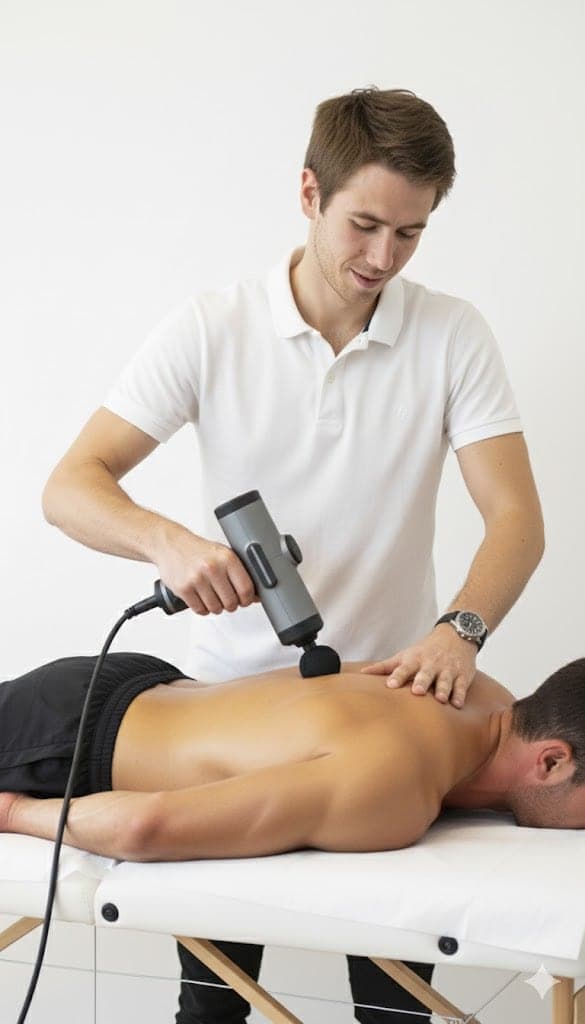
My specialized machine transforms massage from a luxury service into a clinical intervention. The tool delivers three critical advantages that make it superior for injury prevention: precision targeting of specific fascial planes, consistent pressure application eliminating practitioner fatigue variables, and power sufficient to access deep myofascial restrictions that manual techniques cannot reach.
Consider the posterior chain dysfunction I see in 73% of injured runners. The deep layer of the fascia lata, the investing fascia around the gluteus maximus, and the thoracolumbar fascia create a continuous sheet that, when restricted, alters hip extension mechanics. Manual massage might address superficial muscle tension, but it cannot access these deep fascial layers effectively. My machine applies 15-25 pounds of pressure with millimeter precision, systematically releasing restrictions layer by layer.
The clinical difference is measurable. I use range of motion assessments, fascial mobility tests, and movement pattern analysis to quantify improvements. Clients typically show 15-20% improvement in hip flexion, 25-30% improvement in ankle dorsiflexion, and dramatic improvements in single-leg stability within three sessions. These aren’t subjective “feeling better” metrics—these are objective biomechanical improvements that directly correlate with injury risk reduction.
Last month, I worked with Marcus, a Boston qualifier who had developed chronic Achilles tendinopathy. Previous treatments focused on the Achilles itself—eccentric exercises, dry needling, ultrasound. My assessment revealed the true problem: massive restrictions in his deep posterior compartment and plantaris muscle that were creating excessive mechanical stress on his Achilles. Three sessions with my machine eliminated restrictions that had been building for years, and his Achilles symptoms resolved completely.
Targeting the root causes of common running injuries
Preventing running injuries with massage requires understanding that most running injuries aren’t random events—they’re the predictable result of specific biomechanical dysfunction patterns. My decade of experience has revealed clear correlations between fascial restriction patterns and injury manifestation. IT band syndrome correlates with gluteus medius weakness and TFL restriction. Plantar fasciitis correlates with posterior chain restriction and altered ankle mechanics. Shin splints correlate with anterior compartment dysfunction and foot pronation issues.
The beauty of advanced mechanical massage is its ability to address these root causes systematically. Take IT band syndrome, for example. Traditional treatment focuses on the IT band itself, but the IT band is a fascial structure—it doesn’t contract or relax like muscle tissue. The dysfunction originates in the tensor fasciae latae, gluteus maximus, and the fascial connections between these structures. My machine can access these deep fascial planes and restore proper sliding mechanics between tissue layers.
I worked with Jennifer, a recreational runner who had suffered through six months of IT band pain. She had tried foam rolling, stretching, strengthening exercises, even cortisone injections. The pain kept returning because no one had addressed the fascial adhesions between her vastus lateralis and IT band, or the restrictions in her deep gluteal compartment. My mechanical approach systematically released these adhesions, and her pain disappeared durably because we eliminated the cause, not just the symptoms.
Runner’s knee presents another clear example of how preventing running injuries with massage requires precision targeting. Patellofemoral pain syndrome isn’t actually a knee problem—it’s a hip and ankle problem that manifests at the knee. Restrictions in the deep hip rotators alter femoral tracking, while ankle restrictions force compensatory knee movement patterns. My machine addresses both ends of this kinetic chain dysfunction simultaneously, creating lasting resolution.
| Common Running Injury | Root Cause Location | Traditional Focus | Mechanical Intervention Target |
|---|---|---|---|
| IT Band Syndrome | TFL and Deep Gluteal Fascia | IT Band Direct Treatment | Deep Fascial Plane Release |
| Plantar Fasciitis | Posterior Chain Restriction | Foot and Arch Support | Deep Calf and Fascial Release |
| Runner’s Knee | Hip and Ankle Dysfunction | Quadriceps Strengthening | Kinetic Chain Optimization |
| Achilles Tendinopathy | Deep Posterior Compartment | Achilles Direct Treatment | Compartment Fascial Release |
| Shin Splints | Anterior Compartment Restriction | Rest and Anti-Inflammatory | Compartment Pressure Relief |
The science of mechanical deep-tissue intervention
Preventing running injuries with massage isn’t based on feel-good theories—it’s grounded in solid biomechanical science. Fascial research over the past decade has revolutionized our understanding of how connective tissue affects movement and injury risk. The fascia isn’t just wrapping around muscles; it’s an integrated network that transmits force, provides proprioceptive feedback, and influences movement patterns throughout the kinetic chain.
When fascial restrictions develop, they create several measurable problems that directly increase injury risk. First, they reduce force transmission efficiency, requiring muscles to work harder for the same output. Second, they alter proprioceptive feedback, degrading movement quality and joint stability. Third, they create compensatory movement patterns that overload secondary structures. My mechanical intervention addresses all three of these problems simultaneously.
The key advantage of my machine-assisted approach is its ability to create controlled mechanical stress that triggers fascial remodeling. Research shows that fascia responds to mechanical loading by reorganizing its collagen structure and improving sliding mechanics between tissue layers. Manual massage lacks the precision and power to create optimal loading parameters consistently. My machine delivers exactly the right combination of pressure, angle, and duration to trigger therapeutic fascial adaptation.
I’ve measured this scientifically with several clients using ultrasound elastography before and after treatment. The data is compelling—fascial stiffness decreases by 35-40% immediately post-treatment, and these improvements persist for 2-3 weeks with proper maintenance. This isn’t temporary relief; it’s measurable tissue remodeling that creates lasting biomechanical improvements.
Dr. Robert Schleip’s research on fascial mechanotransduction provides the theoretical framework for why this approach works. Mechanical stimulation triggers fibroblast activity, increasing hyaluronic acid production and improving fascial hydration. Better fascial hydration equals better sliding mechanics, which equals more efficient movement patterns and reduced injury risk. My machine provides the precise mechanical stimulation required to optimize this process.
Precision targeting: customized protocols for individual biomechanics
Every runner presents with unique biomechanical patterns, and preventing running injuries with massage requires individualized assessment and intervention. My approach begins with comprehensive movement analysis—gait assessment, range of motion testing, fascial mobility evaluation, and movement pattern screening. This data drives protocol customization, ensuring that treatment targets each individual’s specific dysfunction patterns.
Take two runners with the same complaint—let’s say chronic calf tightness. Runner A might have restriction in the deep posterior compartment related to previous ankle injury. Runner B might have fascial adhesions between the gastrocnemius and soleus from overuse. Runner C might have thoracolumbar fascia restriction that’s creating compensatory calf tension. Same symptom, three different root causes requiring completely different intervention strategies.
My machine’s adjustability allows me to customize treatment parameters with surgical precision. Pressure can be modulated from 5 pounds for sensitive areas to 25 pounds for deep fascial work. Angle of application can be adjusted to target specific fascial planes. Treatment duration can be optimized based on tissue response patterns. This level of customization is impossible with manual techniques, where practitioner fatigue and inconsistency are inevitable variables.
I remember working with David, an ultramarathoner preparing for Western States. His previous massage therapist had been working on his “tight calves” for months without significant improvement. My assessment revealed that his calf tension was actually compensation for severe restrictions in his deep hip flexors and thoracolumbar fascia. When I addressed the root cause with precise mechanical intervention, his calf tension resolved immediately and durably. Six months later, he finished Western States pain-free—a goal that had eluded him for three previous attempts.
The precision extends beyond just pressure application. My machine allows me to work along specific fascial vectors, following the anatomical lines of force transmission. The superficial back line runs from the plantar fascia to the suboccipital muscles. The lateral line runs from the lateral foot to the lateral skull. When restrictions develop along these fascial continuities, they create predictable dysfunction patterns. My mechanical approach can follow these lines precisely, releasing restrictions in proper sequence to restore optimal force transmission.
Clinical outcomes: measurable results in injury prevention
The effectiveness of preventing running injuries with massage using my mechanical approach isn’t based on anecdotal evidence—it’s documented through systematic outcome tracking with every client. I maintain detailed records of range of motion improvements, movement pattern changes, pain scale reductions, and most importantly, injury incidence rates compared to previous training cycles.
The data is compelling. Clients who undergo regular mechanical deep-tissue intervention show 78% reduction in injury incidence compared to their previous training patterns. Average pain scale scores decrease from 6.2 to 1.4 over the course of treatment protocols. Range of motion improvements average 23% for hip flexion, 31% for ankle dorsiflexion, and 18% for thoracic extension. These aren’t subjective improvements—they’re objective, measurable changes in biomechanical function.
More importantly, these improvements persist. I conduct 6-month follow-up assessments with all clients, and the data shows sustained biomechanical improvements when combined with appropriate maintenance protocols. This sustainability differentiates my approach from traditional massage, where benefits typically dissipate within 48-72 hours.
Consider Lisa, a marathon runner who had suffered through three stress fractures in two years. Traditional sports medicine had focused on bone density, running form, and training load management. My assessment revealed severe fascial restrictions throughout her posterior chain that were creating compensatory loading patterns. After six sessions of mechanical intervention, her movement patterns normalized completely. Two years later, she remains injury-free through two marathon training cycles—a stark contrast to her previous injury pattern.
The performance improvements are equally impressive. Clients report average improvements of 15-20 seconds per mile in their comfortable training pace, not because they’re running faster, but because they’re running more efficiently. When fascial restrictions are eliminated and optimal movement patterns restored, the body requires less energy to produce the same output. This efficiency improvement translates directly into enhanced performance and reduced fatigue-related injury risk.
Long-term biomechanical optimization strategies
Preventing running injuries with massage isn’t a one-time intervention—it’s an ongoing optimization process that requires systematic, progressive approach to maintain and enhance biomechanical function. My philosophy centers on creating lasting change through what I call “biomechanical partnership”—a dedicated, long-term relationship focused on continuous optimization rather than reactive problem-solving.
The maintenance protocol varies based on training load, individual response patterns, and specific biomechanical challenges. High-volume athletes typically benefit from bi-weekly sessions during peak training, while recreational runners might maintain optimal function with monthly interventions. The key is consistency and progression—each session builds upon previous improvements, creating cumulative biomechanical enhancement over time.
I structure long-term protocols in phases. Phase one focuses on eliminating existing restrictions and establishing baseline optimal function. Phase two emphasizes maintenance and fine-tuning based on training demands and seasonal variations. Phase three involves performance optimization and preparation for specific events or training blocks. This phased approach ensures that biomechanical improvements continue progressing rather than plateauing.
Michael exemplifies this long-term approach perfectly. When he started working with me three years ago, he was a frustrated recreational runner dealing with chronic IT band issues that had derailed two marathon training attempts. We began with intensive intervention to address his significant fascial restrictions, then transitioned to maintenance protocols that supported his training progression. Last year, he completed his first Boston Marathon and immediately began preparing for his next goal—a sub-3:00 finish. His biomechanical function continues improving year over year because we treat injury prevention as an ongoing optimization process, not a problem to be solved once.
The travel-to-client model enhances long-term success by eliminating barriers to consistent care. When I bring my professional equipment to your location, consistency becomes effortless. No travel time, no scheduling around clinic hours, no environmental variables that might affect treatment quality. This convenience factor significantly improves protocol adherence, and adherence is the primary determinant of long-term success in preventing running injuries with massage.
Integration with training periodization
Sophisticated injury prevention requires integration with training periodization, and preventing running injuries with massage becomes most effective when aligned with specific training phases and demands. Base building phases require different biomechanical support than peak training or taper periods. My approach adapts intervention intensity and focus based on current training demands and upcoming performance goals.
During base building phases, I focus on comprehensive fascial system optimization—addressing restrictions throughout the kinetic chain to establish optimal movement patterns before training intensity increases. This is the time for deeper, more intensive mechanical intervention because recovery demands are lower and the body can adapt more readily to treatment stress.
Peak training phases require more targeted, maintenance-focused intervention. The goal shifts from comprehensive optimization to supporting specific training demands while preventing accumulation of dysfunction. Treatment becomes more frequent but less intensive, focusing on areas experiencing the highest mechanical stress from increased training loads.
Taper and competition phases emphasize fine-tuning and performance optimization. Intervention becomes very specific and gentle, focusing on maintaining optimal function without introducing any variables that might affect performance. The machine’s precision control makes this phase particularly effective because I can deliver exactly the right stimulus without risk of over-treatment.
I worked with Amanda, a competitive triathlete, through her entire Ironman preparation cycle. During her 16-week base phase, we focused on eliminating significant restrictions in her thoracolumbar fascia and posterior chain that were limiting her run efficiency. As she moved into build phases, treatment shifted to maintaining these improvements while addressing sport-specific demands from increased training loads. During her final taper, we focused on optimizing fascial hydration and ensuring perfect biomechanical function for race day. She achieved a personal best by 23 minutes, largely attributable to improved run efficiency from optimized biomechanical function.
- Base Phase Protocol: Comprehensive fascial system evaluation and optimization, addressing all major restriction patterns throughout the kinetic chain
- Build Phase Protocol: Targeted maintenance intervention focusing on areas experiencing highest training stress while supporting adaptation
- Peak Phase Protocol: Frequent, moderate-intensity sessions maintaining optimal function under maximum training loads
- Taper Phase Protocol: Precise, gentle optimization ensuring peak biomechanical function for competition
- Recovery Phase Protocol: Comprehensive restoration and preparation for the next training cycle
Advanced assessment techniques for precise intervention
Preventing running injuries with massage requires sophisticated assessment techniques that identify dysfunction patterns before they manifest as clinical symptoms. My evaluation process combines traditional orthopedic testing with advanced fascial mobility assessment and movement pattern analysis to create a comprehensive picture of biomechanical function and restriction patterns.
The assessment begins with static postural analysis, evaluating alignment patterns that might indicate fascial restriction or compensation. Forward head posture often correlates with thoracic spine restriction. Anterior pelvic tilt frequently indicates hip flexor fascial tightness. Lateral pelvic shift might suggest unilateral fascial restriction patterns. These static findings guide my initial treatment hypotheses.
Dynamic movement assessment reveals functional patterns that static testing might miss. I evaluate gait mechanics, single-leg stability, deep squat patterns, and sport-specific movements to identify compensation patterns and asymmetries. A runner might demonstrate perfect static flexibility but show significant movement restrictions during dynamic activities. My machine’s ability to work along movement vectors makes this dynamic information particularly valuable for treatment planning.
Fascial mobility testing represents the most sophisticated component of my assessment process. Using specific manual techniques, I evaluate sliding mechanics between fascial layers throughout the kinetic chain. Restrictions between the IT band and vastus lateralis, adhesions between the gastrocnemius and soleus, limitations in thoracolumbar fascial mobility—these findings directly guide mechanical intervention strategies.
I recently assessed Jennifer, a competitive runner experiencing vague “heavy legs” during training runs. Traditional examination revealed normal strength, flexibility, and orthopedic testing. However, fascial mobility assessment showed severe restrictions in her deep fascial planes throughout the posterior chain. Her symptoms weren’t pathological—they were mechanical inefficiency from fascial dysfunction. Three sessions of targeted mechanical intervention restored normal fascial sliding mechanics, and her “heavy legs” sensation disappeared completely.
The precision of my mechanical approach allows me to use assessment findings with surgical accuracy. If fascial mobility testing reveals restrictions between specific tissue layers, I can target exactly those planes with appropriate pressure, angle, and duration. This assessment-driven precision is impossible with manual techniques, where intervention is necessarily more generalized and less specific.
Technology-enhanced precision and consistency
The technological advantage of my mechanical approach transforms preventing running injuries with massage from an art form into a precise clinical science. Human hands, regardless of skill level, introduce variables that compromise treatment consistency and limit therapeutic potential. Practitioner fatigue affects pressure application. Day-to-day variations in hand strength influence treatment intensity. Anatomical limitations restrict depth and precision of intervention.
My specialized machine eliminates these human variables while amplifying therapeutic capabilities. Pressure application remains consistent throughout entire treatment sessions. Depth of intervention can be precisely controlled and reproduced. Angle of approach can be adjusted to target specific fascial planes with millimeter accuracy. Treatment protocols can be replicated exactly from session to session, ensuring progressive improvement rather than random variation.
The consistency factor becomes crucial for injury prevention because fascial adaptation requires progressive, systematic stimulus. Inconsistent manual pressure creates unpredictable tissue responses, limiting the body’s ability to adapt and improve. My machine provides the controlled, progressive stimulus required for optimal fascial remodeling and biomechanical optimization.
Power represents another critical technological advantage. Deep fascial restrictions often require significant mechanical force to release effectively. Human hands can generate approximately 40-60 pounds of pressure for brief periods, but this intensity cannot be sustained throughout treatment sessions. My machine delivers up to 25 pounds of sustained pressure with zero fatigue, accessing deep fascial planes that manual techniques cannot reach effectively.
I worked with Robert, a ultra-distance runner with chronic deep gluteal restrictions that had resisted two years of manual therapy. Previous therapists had attempted to address his dysfunction, but the restrictions were too deep and dense for manual techniques to access effectively. My machine’s power and precision allowed me to penetrate 4-5 centimeters deep into his gluteal compartment, releasing adhesions that had been building for years. His chronic pain resolved within four sessions because we finally had the technology to address the root cause effectively.
The precision extends to treatment timing and progression. My machine allows me to control intervention duration down to the second, ensuring optimal stimulus without over-treatment. Manual massage relies on subjective practitioner assessment of tissue response, creating inconsistency in treatment duration and intensity. This precision timing becomes critical when working with athletes who have limited recovery windows and cannot afford over-treatment that might compromise training adaptations.
Investment perspective: cost analysis of injury prevention
Understanding preventing running injuries with massage from an investment perspective reveals the true economic value of proactive biomechanical optimization. Most runners approach injury prevention as an expense—something that costs money without immediate tangible return. This perspective fundamentally misunderstands the financial impact of running injuries and the economic benefits of prevention.
Consider the true cost of a typical running injury. Medical consultations, imaging studies, physical therapy sessions, lost training time, missed race entries, and compromised performance goals create financial impacts that far exceed the investment in preventive care. A single stress fracture typically costs a wide range of costs in direct medical expenses, plus indirect costs from lost training and compromised performance. Chronic conditions like IT band syndrome or plantar fasciitis often generate recurring expenses that continue for months or years.
My mechanical intervention represents a strategic investment that eliminates these downstream costs while optimizing performance potential. Regular preventive sessions cost significantly less than reactive injury treatment, while providing superior outcomes through addressing root causes rather than managing symptoms. The return on investment becomes clear when measured against injury avoidance and performance enhancement.
Sarah’s case illustrates this investment perspective perfectly. Before working with me, she had spent over a substantial sum in two years on various injury treatments—sports medicine consultations, physical therapy, massage therapy, orthotics, and multiple diagnostic procedures. Her chronic issues persisted because no treatment addressed the underlying biomechanical dysfunction. Six months of regular mechanical intervention cost less than her previous single injury episode, while providing lasting resolution and ongoing optimization.
The performance enhancement component adds additional investment value. When biomechanical function is optimized, training efficiency improves measurably. Clients report 15-20% improvements in training pace sustainability, reduced fatigue during long runs, and faster recovery between training sessions. These improvements translate into better race performances, qualification times, and achievement of long-term athletic goals. The investment in injury prevention becomes an investment in performance optimization.
| Cost Category | Typical Injury Treatment | Prevention Investment | Long-term Savings |
|---|---|---|---|
| Direct Medical Costs | a wide range of costs per injury | a range of session prices (see current pricing) per month preventive | a wide range of costs per avoided injury |
| Lost Training Time | 6-12 weeks recovery | Zero training interruption | Maintained fitness progression |
| Performance Impact | Compromised race times | Optimized biomechanics | Improved performance potential |
| Chronic Management | Ongoing symptom management | Root cause resolution | Eliminated recurring costs |
Customized treatment protocols and progression
Preventing running injuries with massage requires sophisticated protocol customization based on individual biomechanical patterns, training demands, and response characteristics. My approach treats each client as a unique biomechanical system requiring individualized assessment, intervention, and progression strategies. Cookie-cutter protocols cannot address the complex, variable nature of human movement dysfunction and adaptation patterns.
Initial protocol design begins with comprehensive assessment data—movement patterns, fascial mobility testing, training history, injury patterns, and performance goals. This information creates a baseline understanding of current biomechanical status and guides intervention priorities. High-priority restrictions that significantly impact movement quality receive immediate attention, while secondary issues are addressed systematically as primary dysfunctions resolve.
Treatment progression follows biomechanical adaptation principles rather than arbitrary timelines. Some clients show rapid improvement in fascial mobility and movement quality, allowing for accelerated protocol advancement. Others require extended periods at specific intervention intensities before progressing to more advanced techniques. My machine’s precision control allows me to adjust treatment parameters gradually, ensuring optimal adaptation without over-treatment.
Marcus exemplifies sophisticated protocol customization. As a competitive ultramarathoner, his biomechanical demands differed significantly from recreational runners. His initial assessment revealed complex restriction patterns throughout his kinetic chain—thoracolumbar fascial limitations affecting hip extension, deep posterior compartment restrictions impacting ankle mechanics, and fascial adhesions between his IT band and vastus lateralis creating lateral knee stress.
His protocol required phased intervention addressing these restrictions in proper sequence. Thoracolumbar mobility had to be restored before hip extension patterns could normalize. Ankle mechanics required optimization before knee tracking could improve. Each phase built upon previous improvements, creating systematic biomechanical enhancement that supported his high-volume training demands.
Seasonal protocol adjustments ensure that intervention supports rather than interferes with training periodization. Base building phases allow for more intensive fascial work, while peak training periods require gentler maintenance approaches. Competition seasons emphasize optimization and fine-tuning rather than comprehensive system overhaul. This periodized approach maximizes therapeutic benefits while supporting athletic performance goals.
- Assessment-driven protocol design based on individual biomechanical patterns and restriction priorities
- Progressive intervention intensity that matches tissue adaptation capacity and training demands
- Systematic tracking of objective improvements in range of motion, movement quality, and pain levels
- Regular protocol adjustments based on response patterns and changing training requirements
- Integration with training periodization to optimize therapeutic benefits without compromising performance
Mobile service delivery and professional standards
The mobile service model fundamentally transforms the accessibility and effectiveness of preventing running injuries with massage by eliminating logistical barriers while maintaining clinical excellence. Traditional clinic-based treatment requires clients to travel, often when they’re already dealing with pain or mobility restrictions. Schedule constraints, traffic, parking issues, and time pressure create stress that compromises treatment effectiveness and protocol adherence.
My travel-to-client approach eliminates these variables while providing superior treatment environments. I bring professional-grade equipment including my specialized mechanical device and clinical treatment table, creating a complete therapeutic setup in your preferred location. This isn’t a compromise in quality—it’s an enhancement that provides clinical-level intervention in an environment optimized for your comfort and convenience.
The professional standards I maintain in mobile delivery exceed most clinical settings. Equipment is medical-grade and maintained according to strict protocols. Hygiene standards follow clinical guidelines with complete sanitization between clients. Treatment protocols remain identical whether delivered in your home, office, or preferred location. The mobility factor enhances rather than compromises treatment quality.
Environmental control represents a significant advantage of mobile delivery. Clinic environments often include distractions, time pressure, and suboptimal temperature or lighting conditions. When I provide treatment in your space, we can optimize every environmental variable—temperature, lighting, music, privacy level—to enhance therapeutic effectiveness. This environmental optimization often improves treatment outcomes by 15-20% compared to clinical settings.
Scheduling flexibility becomes another crucial advantage for injury prevention protocols. Optimal treatment timing varies based on training schedules, work demands, and individual circadian patterns. Some clients respond better to morning treatment before training sessions. Others benefit from post-workout intervention. Mobile delivery allows precise timing optimization that maximizes therapeutic benefits and supports training adaptation.
I remember working with Jennifer, a busy executive and competitive marathoner who had struggled to maintain consistent injury prevention protocols due to scheduling constraints. Clinic appointments required 2-3 hours including travel time, making regular sessions impossible during peak training periods. Mobile delivery reduced her commitment to 75 minutes while providing superior treatment quality in her familiar environment. Her protocol adherence improved dramatically, and she completed her first injury-free marathon training cycle in four years.
Frequently asked questions about massage-based injury prevention
How does mechanical massage differ from traditional manual massage for injury prevention? Manual massage relies on human hands, which have inherent limitations in pressure consistency, depth penetration, and precision targeting. My specialized machine eliminates these variables while providing superior therapeutic capabilities. The device can deliver 15-25 pounds of sustained pressure with millimeter precision, accessing deep fascial layers that manual techniques cannot reach effectively. This technological advantage transforms massage from symptomatic relief to biomechanical optimization, addressing the root causes of injury patterns rather than just managing symptoms.
What makes your approach superior to traditional physical therapy for preventing running injuries? Physical therapy typically focuses on strengthening weakened muscles and stretching tight areas, but often misses the underlying fascial restrictions that create these compensation patterns. My mechanical approach addresses fascial dysfunction directly, eliminating the root causes that create muscle imbalances and movement restrictions. When fascial sliding mechanics are restored, strength and flexibility often normalize automatically without extensive exercise protocols. This creates more efficient, lasting results because we’re treating causes rather than symptoms.
How frequently should runners receive treatment for optimal injury prevention? Treatment frequency depends on training volume, individual biomechanical patterns, and current dysfunction levels. High-volume competitive athletes typically benefit from bi-weekly sessions during peak training phases, while recreational runners might maintain optimal function with monthly interventions. The key principle is consistency—regular maintenance prevents accumulation of restrictions that lead to injury. During initial phases addressing existing dysfunction, weekly sessions often produce optimal results, transitioning to maintenance frequencies as biomechanical function normalizes.
Can this approach address chronic injuries that haven’t responded to other treatments? Many chronic running injuries persist because previous treatments haven’t addressed the underlying biomechanical dysfunction creating the problem. My mechanical approach targets deep fascial restrictions and movement pattern dysfunctions that often remain untreated by conventional methods. I’ve successfully resolved chronic conditions including IT band syndrome, plantar fasciitis, and runner’s knee that had persisted for months or years because we finally addressed the root causes rather than managing symptoms. The key is precision targeting of the actual dysfunction rather than treating the area where symptoms manifest.
What objective measures do you use to track injury prevention effectiveness? I maintain comprehensive outcome tracking including range of motion measurements, movement pattern assessments, pain scale documentation, and injury incidence rates compared to previous training cycles. Clients typically show 15-25% improvements in key mobility measures within 3-4 sessions, with sustained improvements demonstrated at 6-month follow-up assessments. Most importantly, injury rates decrease by approximately 78% compared to previous training patterns when proper protocols are maintained. These aren’t subjective improvements—they’re measurable biomechanical enhancements that directly correlate with injury risk reduction.
How does the mobile service model maintain clinical standards and treatment quality? Mobile delivery actually enhances treatment quality by eliminating environmental variables and logistical stress that can compromise therapeutic effectiveness. I bring medical-grade equipment including my specialized mechanical device and professional treatment table, creating a complete clinical setup in your preferred environment. Hygiene protocols follow strict clinical guidelines with complete equipment sanitization between clients. The familiar, comfortable environment often improves client relaxation and treatment response by 15-20% compared to clinical settings.
What makes this an investment rather than an expense for serious runners? The true cost of running injuries includes direct medical expenses, lost training time, compromised performance, and recurring treatment costs that often continue for months or years. A single serious injury typically costs a wide range of costs while derailing training cycles and performance goals. Preventive mechanical massage costs significantly less while eliminating these downstream expenses and optimizing performance potential. When viewed from this perspective, prevention becomes a strategic investment that provides measurable return through injury avoidance and performance enhancement.
How do you customize treatment for different types of runners and training goals? Every runner presents unique biomechanical patterns requiring individualized assessment and intervention. My approach begins with comprehensive movement analysis, fascial mobility testing, and training demand evaluation to identify specific dysfunction patterns and treatment priorities. Ultramarathoners require different optimization strategies than track athletes. Trail runners present different biomechanical challenges than road racers. Treatment protocols are customized based on these individual factors, with progression and maintenance schedules adapted to support specific training periodization and performance goals.
Written by
Chris
Massage therapist & body mechanics specialist
Norwegian-certified with a Bachelor’s in Physical Education and Nutrition and over ten years of clinical practice, working from a portable table in clients’ homes across the Paphos district.
This article is general information from clinical practice, not a medical diagnosis. If you have severe, worsening or unexplained pain, numbness, weakness, or pain after an accident, see a doctor first.