
Post-Event Massage Techniques: Advanced Methods for Athletic Recovery and Performance Restoration
In short
Post-event massage techniques are critical for athletic recovery. Learn evidence-based mechanical approaches that address muscle trauma at its source, accelerate healing, and restore performance faster than conventional methods.
After ten years of working directly with competitive athletes and weekend warriors alike, I’ve witnessed the same pattern repeatedly: athletes push their bodies to physiological limits during competition, then treat recovery as an afterthought. The consequence? Prolonged muscle soreness, compromised performance in subsequent training, and accumulated microtrauma that eventually manifests as chronic injury. Post-event massage techniques, when executed with precision and mechanical understanding, represent the difference between optimal recovery and months of suboptimal performance.
My approach to post-event recovery differs fundamentally from conventional massage therapy. While traditional techniques focus on relaxation and superficial tissue manipulation, advanced post-event massage techniques target the specific physiological damage that occurs during intense athletic performance. We’re addressing lactate accumulation, microscopic muscle fiber tears, fascial adhesions, and inflammatory responses that—left unaddressed—create the foundation for chronic dysfunction.
The Physiological Reality of Post-Event Muscle Trauma
Understanding effective post-event massage techniques requires understanding what actually happens to muscle tissue during competitive athletic performance. When athletes push beyond their aerobic threshold, several simultaneous processes create the conditions we must address:
The muscle fibers experience eccentric loading that creates microscopic tears in the sarcomeres. This isn’t inherently problematic—it’s the mechanism through which strength adaptation occurs. However, these micro-tears trigger localized inflammation and create temporary adhesions between fascial layers. Simultaneously, metabolic byproducts accumulate in the interstitial spaces between muscle fibers. While lactate clears relatively quickly, other inflammatory mediators remain present for 48-72 hours post-event.
I’ve observed this pattern consistently across different athletic populations. A marathon runner finishing a race presents with different tissue characteristics than a powerlifter after competition, yet both share the fundamental challenge: accumulated mechanical tension combined with inflammatory response that inhibits optimal tissue healing.
The traditional approach—light Swedish massage techniques applied superficially—addresses none of these underlying mechanical realities. You cannot release deep fascial adhesions with surface-level manipulation. You cannot properly evacuate accumulated metabolic waste without sufficient mechanical pressure to compress and release the tissue. This is where advanced post-event massage techniques become not just beneficial, but essential.
Mechanical Deep-Tissue Techniques: Beyond Conventional Massage
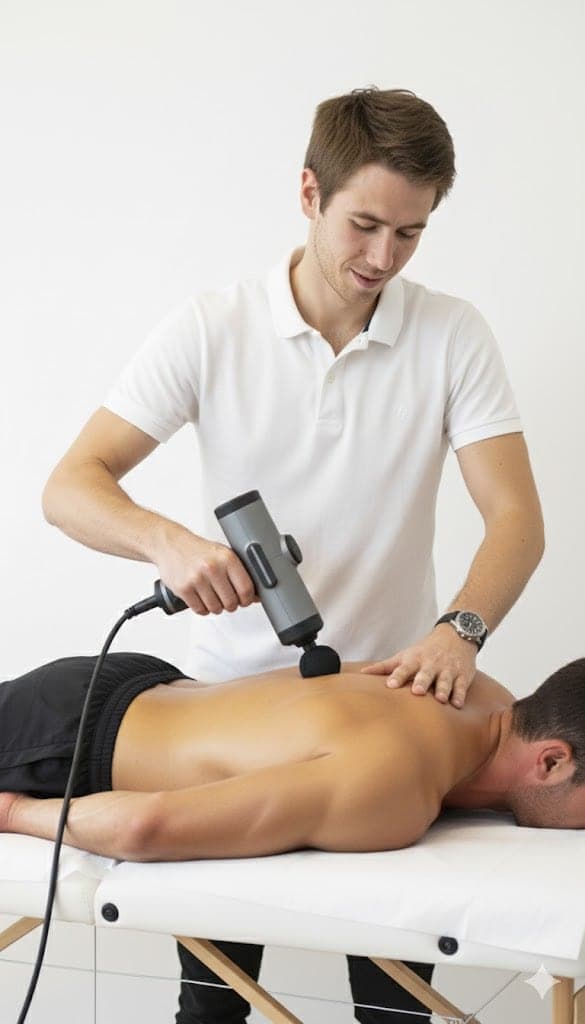
Through my education in physical education and nutrition from Norway, combined with a decade of clinical practice, I’ve developed a methodology that treats post-event recovery as a biomechanical restoration process rather than a comfort measure. This requires equipment capable of delivering consistent mechanical pressure at depths human hands simply cannot reach.
The specialized machinery I employ provides three critical advantages that define effective post-event massage techniques:
Precision Targeting of Compromised Tissue
Post-event muscle tissue doesn’t experience uniform trauma. Certain motor units bear disproportionate loading based on the specific movement patterns of the sport. A cyclist’s vastus lateralis presents with different adhesion patterns than a tennis player’s rotator cuff musculature. The precision of mechanical deep-tissue work allows me to identify and address these specific areas of dysfunction rather than applying generalized pressure across broad muscle groups.
I remember working with a competitive runner who had completed an ultra-marathon. Her gastrocnemius and soleus were predictably compromised, but the real dysfunction existed in her tibialis posterior—a muscle that had compensated for forefoot fatigue throughout the latter stages of the race. Manual palpation identified the problem, but only the controlled mechanical pressure of advanced equipment could reach the depth necessary to release the accumulated tension at its origin point.
Controlled Intensity for Different Recovery Phases
Post-event massage techniques must acknowledge that tissue tolerance changes throughout the recovery timeline. Immediately post-event, tissue is acutely inflamed and requires different mechanical input than tissue 48 hours later. The ability to precisely modulate intensity from light lymphatic facilitation to powerfully deep fascial release allows me to match the technique to the specific recovery phase.
This is where conventional massage consistently fails. A therapist’s hands fatigue. Pressure becomes inconsistent. The depth achievable in minute five differs dramatically from minute forty-five. When you’re treating an athlete whose performance and livelihood depend on optimal recovery, this inconsistency is unacceptable.
Sustained Mechanical Load for Fascial Release
Fascia—the connective tissue matrix surrounding and interpenetrating muscle—responds to sustained mechanical pressure through a process called thixotropy. The tissue literally changes from a more solid to a more fluid state when appropriate pressure is maintained for sufficient duration. This requires consistent mechanical load that doesn’t fatigue or weaken over time.
I’ve worked with athletes who received daily post-event massage from well-intentioned therapists, yet continued experiencing restricted range of motion and compromised performance. The problem wasn’t effort—it was mechanical insufficiency. The pressure simply wasn’t deep enough, sustained enough, or consistent enough to create actual fascial reorganization.
The Post-Event Recovery Timeline: Strategic Technique Application
Effective post-event massage techniques follow a strategic timeline aligned with the body’s natural healing processes. This isn’t a single treatment—it’s a systematic approach to restoration that addresses different physiological needs at different recovery stages.
| Recovery Phase | Timing Post-Event | Physiological Focus | Technique Approach |
|---|---|---|---|
| Acute Inflammatory Phase | 0-6 hours | Lymphatic facilitation, metabolic waste clearance | Light to moderate mechanical compression with rapid rhythm |
| Early Recovery Phase | 6-48 hours | Reducing inflammation, preventing adhesion formation | Moderate depth with sustained pressure, targeting specific motor units |
| Regeneration Phase | 48-96 hours | Breaking down formed adhesions, restoring tissue mobility | Deep mechanical work with maximum controlled intensity |
| Late Recovery Phase | 96+ hours | Optimizing tissue quality, preparing for next training cycle | Comprehensive deep-tissue restoration across all compromised areas |
Each phase requires different mechanical input. During the acute inflammatory phase, aggressive deep-tissue work would be counterproductive—you’d potentially increase tissue damage and prolong the inflammatory response. However, waiting too long to address developing adhesions allows them to mature into restrictive scar tissue that compromises long-term function.
Advanced Techniques for Specific Athletic Populations
The post-event massage techniques I employ vary significantly based on the specific demands of the athletic event. A powerlifter’s tissue responds differently to mechanical stress than an endurance athlete’s, requiring adapted approaches.
Endurance Athletes: Addressing Repetitive Loading Patterns
Marathon runners, cyclists, and triathletes experience extraordinarily high repetition counts of relatively moderate-force contractions. This creates a unique pattern of tissue dysfunction: accumulated microtrauma distributed across large muscle groups with specific hotspots where compensation patterns emerged during fatigue.
I worked with a competitive cyclist who consistently experienced bilateral knee pain following long-distance events. Conventional treatment focused on the knees themselves—perfectly logical given where the pain presented. However, the mechanical assessment revealed the actual dysfunction: his hip external rotators had fatigued during the latter portions of rides, forcing compensatory movement patterns that overloaded his vastus medialis oblique and iliotibial band.
The post-event massage techniques for this athlete required deep mechanical work into the piriformis, gemellus, and obturator complex—muscles conventional massage rarely addresses with sufficient intensity. The result wasn’t just pain relief; it was restored biomechanical efficiency that improved his subsequent training capacity.
Power Athletes: Managing Acute Muscular Trauma
Powerlifters, Olympic weightlifters, and sprinters generate enormous forces through rapid, maximum-intensity contractions. This creates different tissue trauma: concentrated stress in primary movers with significant eccentric loading damage.
Post-event massage techniques for power athletes must address the deep, dense tissue of highly hypertrophied muscle. A competitive powerlifter’s gluteus maximus after a maximum squat session presents tissue density that requires mechanical pressure far beyond what hands can deliver. The muscle fibers are literally thicker, the fascial layers more robust, and the accumulated tension proportionally greater.
I remember treating a strongman competitor after a competition involving heavy yoke walks and atlas stones. His entire posterior chain—from calcaneus to occiput—was locked in sustained contraction patterns. Manual therapy would have required hours to address even superficially. The specialized mechanical approach allowed me to systematically work through each compromised area with consistent pressure, releasing the accumulated tension layer by layer.
Rotational Sport Athletes: Addressing Asymmetrical Loading
Tennis players, golfers, baseball pitchers, and martial artists create highly asymmetrical loading patterns. Their dominant-side musculature experiences dramatically different stress than their non-dominant side, and rotational movements create specific fascial strain patterns.
The post-event massage techniques for these athletes must account for this asymmetry. I don’t simply mirror treatments from one side to the other—the tissue quality, adhesion patterns, and mechanical requirements differ fundamentally. A tennis player’s dominant-side internal rotators require substantially deeper mechanical work than their non-dominant side, while their non-dominant side external rotators often harbor compensatory tension that contributed to performance during the event.
Why Conventional Post-Event Massage Fails Athletic Populations
Having worked alongside traditional massage therapists for years, I respect their skill and intention. However, I’ve observed consistent patterns where conventional approaches fail to deliver the results competitive athletes require:
Insufficient depth: Human hands, regardless of strength or technique, cannot consistently deliver the mechanical pressure required to address deep fascial adhesions in highly trained athletes. A 200-pound powerlifter’s tissue density requires forces that would injure a therapist’s hands and wrists to deliver manually.
Inconsistent pressure: Therapist fatigue is inevitable. The pressure delivered in minute five differs from minute forty-five. For athletes whose recovery depends on consistent mechanical input, this variability compromises outcomes.
Limited duration: Properly addressing the accumulated mechanical tension following intense athletic performance requires sustained treatment time. Conventional massage typically offers 60-90 minute sessions. Comprehensive post-event recovery for serious athletes often requires substantially longer focused work.
Symptom-focused rather than cause-focused: Most massage therapy addresses where the athlete reports discomfort. However, pain presentation often occurs distant from the actual mechanical dysfunction. The knee pain stems from hip dysfunction. The shoulder pain originates from thoracic spine immobility. Effective post-event massage techniques require identifying and addressing the causative factors, not just treating symptomatic areas.
This isn’t theoretical observation—I’ve worked with numerous athletes who received regular conventional massage yet continued experiencing chronic dysfunction. When we transitioned to advanced mechanical deep-tissue techniques targeting the actual causative factors, the results were transformative. Not just temporary symptom relief, but resolution of the underlying mechanical problems.
The Mechanical Approach to Common Post-Event Dysfunctions
Certain patterns of post-event dysfunction appear consistently across different athletic populations. Understanding how to mechanically address these specific problems represents the foundation of effective post-event massage techniques.
Delayed Onset Muscle Soreness (DOMS): Mechanical Perspective
DOMS results from eccentric muscle damage—the lengthening contractions that create microscopic tears in muscle fibers. The subsequent inflammatory response and tissue swelling create the familiar sensation of muscle soreness that peaks 24-72 hours post-event.
Conventional wisdom suggests light activity and gentle stretching. While not harmful, this approach does nothing to address the underlying mechanical dysfunction. Advanced post-event massage techniques actively facilitate the healing process through controlled mechanical pressure that:
- Increases local blood flow to deliver nutrients and remove metabolic waste
- Prevents the formation of adhesions between damaged muscle fibers
- Maintains tissue mobility during the repair process
- Reduces excessive inflammation without compromising the necessary healing response
The timing and intensity must be precisely calibrated. Too aggressive too soon exacerbates the damage. Too gentle or too late fails to prevent adhesion formation. This is where the precision of mechanical techniques becomes essential—the ability to deliver exactly the right intensity at exactly the right time.
Fascial Restrictions: The Hidden Performance Limiter
Fascia behaves differently than muscle tissue. While muscle can contract and relax relatively quickly, fascial tissue changes occur over longer timeframes and require sustained mechanical input. Post-event fascial restrictions—if not properly addressed—accumulate over subsequent training cycles, progressively limiting range of motion and force production capacity.
I’ve worked with athletes who couldn’t understand why their performance plateaued despite consistent training. The problem wasn’t programming or effort—it was accumulated fascial restriction that had developed over months of inadequate post-event recovery. Their muscles were strong, their cardiovascular system robust, but their tissue couldn’t move through required ranges of motion efficiently.
The mechanical approach to fascial release requires sustained pressure maintained long enough for thixotropic change to occur. This typically requires 90-120 seconds of consistent mechanical load at appropriate depth. Human hands cannot maintain this pressure consistently, particularly across multiple treatment areas. The specialized equipment I employ delivers this sustained mechanical input without fatigue or pressure variation.
Trigger Points: Addressing Persistent Contractile Dysfunction
Intense athletic performance frequently creates trigger points—localized areas of sustained muscle contraction that fail to release normally. These aren’t merely “knots” as they’re colloquially described—they’re areas where the actin-myosin contractile mechanism has become mechanically stuck due to calcium dysregulation and metabolic insufficiency.
Effective post-event massage techniques must address trigger points with sufficient mechanical pressure to disrupt the dysfunctional contractile activity. This requires precise targeting and sustained pressure that exceeds the muscle’s ability to maintain the pathological contraction. Again, this goes beyond what conventional massage typically delivers.
I recently treated a competitive rower who had developed a persistent trigger point in his rhomboid major following a particularly intense regatta. The trigger point had existed for weeks—he’d received multiple conventional massage sessions that provided temporary relief but no lasting resolution. The problem was mechanical insufficiency: the pressure wasn’t deep enough or sustained enough to actually disrupt the dysfunctional contractile activity.
Using advanced mechanical techniques, we applied precise, sustained pressure directly to the trigger point while the athlete actively moved through rowing-specific movement patterns. This combination of mechanical pressure with active movement created the conditions for the trigger point to release durably. Three weeks later, he reported no recurrence—not temporary symptom relief, but actual resolution of the mechanical dysfunction.
Integration with Comprehensive Recovery Protocols
Post-event massage techniques, while powerful, represent one component of comprehensive athletic recovery. My background in physical education and nutrition allows me to position manual therapy within the broader context of optimal recovery.
Nutritional Considerations for Tissue Recovery
The mechanical work I perform creates the conditions for optimal healing, but the body requires appropriate nutritional substrate to execute that healing. Post-event nutrition should prioritize:
Protein timing and quantity: Damaged muscle tissue requires amino acids for repair. I recommend 0.4-0.5 grams per kilogram bodyweight within two hours post-event, with total daily intake reaching 2.0-2.5 grams per kilogram for serious athletes during intensive training phases.
Anti-inflammatory nutrition without compromising adaptation: While we want to manage excessive inflammation, completely suppressing the inflammatory response compromises the training adaptation we’re seeking. Strategic use of omega-3 fatty acids, curcumin, and tart cherry concentrate can modulate inflammation without eliminating it entirely.
Hydration and electrolyte balance: Tissue hydration status directly affects recovery capacity. Dehydrated tissue demonstrates reduced mechanical properties and slower healing rates. Post-event hydration should exceed losses by approximately 150% to account for continued fluid loss through respiration and skin.
Sleep and Recovery Hormone Optimization
The mechanical tissue work I provide creates the potential for optimal recovery, but the actual healing occurs during sleep. Growth hormone and testosterone—the primary recovery hormones—follow circadian patterns with peak production during deep sleep stages.
Athletes serious about recovery must prioritize sleep quantity and quality with the same dedication they apply to training. This means 8-9 hours nightly during intensive training phases, with attention to sleep hygiene factors that maximize deep sleep percentage.
Strategic Active Recovery
Post-event massage techniques work synergistically with appropriate active recovery. Light movement increases blood flow and facilitates metabolic waste removal without creating additional mechanical stress. However, the intensity and type of active recovery must be carefully calibrated.
I recommend low-intensity aerobic activity at 40-50% of maximum heart rate for 20-30 minutes beginning 12-24 hours post-event. This might include easy cycling, swimming, or walking. The goal is movement without loading—facilitating circulation without creating additional tissue trauma.
Long-Term Benefits: Beyond Immediate Recovery
While post-event massage techniques deliver immediate benefits in terms of reduced soreness and faster recovery, the long-term advantages extend far beyond single event recovery:
Prevention of chronic injury development: Accumulated microtrauma that goes unaddressed becomes the foundation for chronic injury. Regular, comprehensive post-event treatment prevents this accumulation, keeping tissue healthy and functional across multiple training cycles.
Maintenance of optimal tissue quality: Athletic tissue should be strong, mobile, and responsive. Regular advanced massage maintains these qualities rather than allowing gradual degradation through accumulated restrictions and adhesions.
Enhanced training capacity: Athletes who recover more effectively can train harder and more frequently. The competitive advantage isn’t just better performance on event day—it’s enhanced training capacity that develops superior fitness over time.
Extended athletic career: I’ve worked with masters-level athletes in their 40s, 50s, and 60s who maintain performance levels that exceed younger competitors. The common denominator isn’t genetic advantage—it’s comprehensive attention to recovery, including advanced post-event massage techniques that maintain tissue quality despite decades of training.
The Partnership Approach to Athletic Recovery
Effective post-event recovery isn’t a transaction—it’s a partnership between athlete and practitioner. My approach involves understanding the athlete’s specific competitive goals, training demands, and individual physiological response patterns.
This requires initial assessment to establish baseline tissue quality and identify existing restrictions that might compromise performance. From there, we develop a customized recovery protocol that addresses the specific demands of their sport, competition schedule, and individual recovery capacity.
I travel to the athlete’s location with professional equipment, eliminating the logistical burden that often prevents athletes from prioritizing recovery. The treatment environment is professional and focused—this isn’t spa massage, it’s clinical intervention designed to optimize physiological function.
The frequency and timing of sessions vary based on training phase and competition schedule. During intensive training blocks or competition seasons, twice-weekly sessions maintain optimal tissue quality. During lower-intensity preparation phases, weekly sessions prevent accumulation of restrictions while allowing appropriate training stress.
Case Study: Transforming Chronic Dysfunction Through Mechanical Intervention
A competitive CrossFit athlete came to me experiencing bilateral hip pain that had progressively worsened over six months. She’d undergone conventional physical therapy, received regular sports massage, and modified her training—yet the dysfunction persisted and was beginning to affect her competitive performance.
The initial assessment revealed the problem: severe fascial restriction in her hip flexor complex, particularly the psoas and iliacus, combined with trigger points in her gluteus medius bilaterally. The hip flexor restriction created compensatory overactivation of the glutes during squatting and Olympic lifting movements. Over months of training, this compensation pattern had created the trigger points that were now causing her pain.
Conventional massage had addressed the symptomatic glute pain but never achieved sufficient depth to release the causative hip flexor restriction. The psoas, in particular, requires working through the abdominal contents to access properly—technique that demands specialized knowledge and equipment.
Using advanced mechanical deep-tissue techniques, we systematically released the hip flexor restriction over three intensive sessions. Each session involved sustained mechanical pressure at depths that would be impossible to achieve manually, combined with active movement patterns that facilitated tissue reorganization.
Within two weeks, her pain had resolved completely. More significantly, her squat depth improved measurably, and her Olympic lifting efficiency increased. Six months later, she reported no recurrence and had achieved personal records in multiple competitive lifts. This wasn’t temporary symptom management—it was resolution of the underlying mechanical dysfunction.
Investment in Long-Term Athletic Performance
I characterize my services as an investment rather than an expense because the return extends far beyond single event recovery. Athletes who prioritize comprehensive post-event care experience:
- Fewer injuries requiring extended time away from training
- Enhanced performance capacity through optimal tissue function
- Extended competitive career with maintained performance into masters-level competition
- Improved quality of life through reduced chronic pain and movement restriction
The athlete who views recovery as optional—something to address only when injury forces attention—pays the price through compromised performance, chronic dysfunction, and shortened athletic career. The athlete who treats recovery as integral to training success experiences the compound benefits of consistently optimal tissue quality.
Frequently Asked Questions About Post-Event Massage Techniques
How soon after an event should I receive treatment?
The optimal timing depends on the intensity and duration of the event. For moderate-intensity events, treatment can begin within 2-4 hours. For maximum-intensity competitions involving significant eccentric loading, I typically recommend waiting 6-12 hours to allow the acute inflammatory response to stabilize. However, light lymphatic facilitation techniques can be applied immediately post-event to accelerate metabolic waste clearance.
How does mechanical deep-tissue work differ from conventional sports massage?
The fundamental difference is mechanical capacity. Conventional massage, regardless of the therapist’s skill, is limited by human hand strength and endurance. The specialized equipment I employ delivers consistent mechanical pressure at depths and durations impossible to achieve manually. This allows treatment of deep fascial restrictions and trigger points that conventional massage cannot adequately address. Additionally, the precision of mechanical work allows targeting specific dysfunctional tissues rather than applying generalized pressure across broad areas.
Will post-event massage interfere with training adaptations?
This is a sophisticated question that reflects understanding of exercise physiology. The inflammatory response following training is necessary for adaptation—completely suppressing inflammation would compromise the training benefit. However, excessive inflammation or inflammation that persists beyond necessary timeframes is counterproductive. Properly applied post-event massage techniques modulate inflammation to optimal levels—reducing excess while preserving the necessary adaptive response. Research demonstrates that appropriate post-event treatment actually enhances long-term adaptation by maintaining optimal tissue quality and allowing more consistent high-intensity training.
How does this approach address chronic injuries versus acute post-event recovery?
Chronic injury typically represents accumulated mechanical dysfunction that has progressed beyond the body’s capacity to self-resolve. While acute post-event treatment prevents this progression, chronic conditions require more intensive intervention to address established adhesions, trigger points, and compensatory movement patterns. My approach treats both scenarios using the same fundamental principles—identifying and mechanically addressing the causative dysfunction—but chronic conditions require more extensive treatment duration and frequency.
Can recreational athletes benefit from advanced post-event massage techniques?
Absolutely. While competitive athletes require these techniques for performance optimization, recreational athletes benefit equally in terms of reduced injury risk, faster recovery, and enhanced training enjoyment. The primary difference is typically treatment frequency—recreational athletes might receive monthly rather than weekly sessions, with intensified treatment following particularly demanding training periods or events.
How do I know if I need post-event treatment versus regular maintenance care?
Post-event treatment addresses the acute mechanical trauma resulting from specific competitions or intensive training sessions. Maintenance care prevents the accumulation of restrictions during regular training. Most serious athletes benefit from combining both approaches—regular maintenance sessions with intensified post-event treatment following major competitions or training blocks. During initial assessment, I evaluate your current tissue quality, training schedule, and competitive goals to recommend an appropriate protocol.
What makes your approach superior to other recovery modalities like compression therapy or cryotherapy?
Different modalities address different aspects of recovery. Compression therapy facilitates lymphatic drainage and reduces edema. Cryotherapy modulates inflammation and provides analgesic effects. These tools have value, but they don’t address mechanical tissue dysfunction—the fascial restrictions, trigger points, and adhesions that limit performance and create chronic injury risk. Advanced post-event massage techniques mechanically restore tissue to optimal functional status in ways that passive modalities cannot achieve. I view these other modalities as complementary rather than competitive—they can be integrated into comprehensive recovery protocols.
How long does a typical post-event treatment session last?
Comprehensive post-event treatment typically requires 90-120 minutes to systematically address all compromised tissues. However, the duration varies based on event intensity, athlete size, and specific areas requiring attention. A 150-pound distance runner might require 75 minutes, while a 250-pound powerlifter could need 150 minutes for thorough treatment. This is substantially longer than conventional massage because we’re performing actual mechanical intervention rather than superficial relaxation treatment.
Conclusion: Elevating Recovery to Match Training Intensity
Athletic performance represents the visible outcome of countless training hours. However, adaptation doesn’t occur during training—it occurs during recovery. The athlete who trains intensively but recovers inadequately progressively accumulates mechanical dysfunction that eventually limits performance or causes injury.
Post-event massage techniques, when executed with appropriate mechanical intensity and physiological understanding, transform recovery from passive process to active intervention. We don’t simply wait for the body to heal—we create optimal mechanical conditions that facilitate and accelerate that healing.
Through a decade of clinical practice, I’ve observed the dramatic difference between athletes who prioritize comprehensive recovery and those who treat it as afterthought. The former maintain peak performance across extended careers, experience fewer injuries, and continue enjoying their sport into ages where others have been forced to retirement by accumulated dysfunction.
This isn’t massage as luxury or indulgence—it’s clinical intervention that addresses the mechanical realities of athletic tissue trauma. The precision, power, and consistency of advanced mechanical techniques deliver results that conventional approaches simply cannot match.
For athletes serious about performance optimization and long-term competitive career, post-event recovery represents not an expense but an essential investment in sustainable excellence. The tissue quality you maintain today determines the performance capacity you’ll possess tomorrow, next season, and throughout your athletic career.
Written by
Chris
Massage therapist & body mechanics specialist
Norwegian-certified with a Bachelor’s in Physical Education and Nutrition and over ten years of clinical practice, working from a portable table in clients’ homes across the Paphos district.
This article is general information from clinical practice, not a medical diagnosis. If you have severe, worsening or unexplained pain, numbness, weakness, or pain after an accident, see a doctor first.