Paphos Physiotherapy Clinics: A Comprehensive Guide to Muscle Tension Treatment
In short
Discover specialized Paphos physiotherapy clinics that address muscle tension at its source. Learn which clinics offer advanced mechanical deep-tissue treatment for lasting pain relief.
The physiotherapy landscape in Paphos has evolved significantly over the past decade, yet most people still don’t understand the fundamental difference between treating symptoms and addressing causation. After ten years of specialized work in body mechanics and advanced deep-tissue therapy, I’ve observed countless clients who’ve cycled through multiple Paphos physiotherapy clinics without achieving lasting results. The question isn’t whether these clinics offer qualified therapists—many do. The question is whether they’re equipped to deliver the precision, depth, and consistency required to durably resolve chronic muscle tension.
Let me be direct: muscle tension isn’t resolved through surface-level intervention. It requires targeted mechanical force applied at specific depths and angles that traditional manual therapy simply cannot sustain. This isn’t an opinion—it’s biomechanical fact supported by decades of sports science and clinical research. When you’re evaluating Paphos physiotherapy clinics, you need to understand what differentiates temporary relief from lasting resolution.
Understanding Muscle Tension: The Foundational Problem Most Clinics Miss
In my years of practice, I’ve treated everyone from professional athletes to office workers suffering from chronic neck pain. The common thread? They’ve all received treatment that addressed their discomfort without correcting the underlying mechanical dysfunction. Traditional physiotherapy approaches in Paphos—and globally—tend to follow a predictable pattern: assessment, manual manipulation, exercise prescription, and follow-up sessions that perpetuate dependency rather than create independence.
Here’s what actually happens in your musculature when tension develops. Repetitive stress, postural compensation, or acute injury creates microtrauma within muscle fibers. Your body responds by developing adhesions—essentially internal scar tissue that restricts movement and creates pain signals. These adhesions exist in the deeper fascial layers, often 4-6 centimeters beneath the skin surface. No amount of superficial massage or generic stretching protocols will break down these structural restrictions.
I had a client last year who’d visited four different Paphos physiotherapy clinics over eighteen months. Each provided temporary relief through manual therapy and electrical stimulation. Within days, her shoulder pain returned. When I examined her, the problem was immediately apparent: nobody had addressed the subscapularis adhesions and the compensatory tension patterns in her serratus anterior. These require sustained mechanical pressure at depths that human hands cannot maintain for the duration necessary to create plastic deformation in the tissue.
The Paphos Physiotherapy Clinic Landscape: What’s Actually Available
Paphos offers several physiotherapy options, ranging from hospital-based departments to private clinics specializing in sports rehabilitation, post-surgical recovery, and chronic pain management. The standard of education is generally high—most practitioners hold recognized certifications and understand musculoskeletal anatomy. However, understanding anatomy and possessing the tools to effectively treat deep myofascial dysfunction are entirely different capabilities.
Hospital-Based Physiotherapy Services
The public healthcare system in Paphos provides basic physiotherapy services through hospital departments. These facilities handle post-operative rehabilitation, stroke recovery, and general mobility issues. For acute injuries requiring supervised rehabilitation protocols, they serve an important function. For chronic muscle tension requiring specialized mechanical intervention, they’re fundamentally limited by time constraints, equipment availability, and the clinical focus on standardized protocols rather than individualized treatment plans.
Private Physiotherapy Clinics
Private clinics in Paphos typically offer more personalized attention and a broader range of modalities. You’ll find services including manual therapy, ultrasound treatment, laser therapy, and exercise rehabilitation programs. The quality varies significantly. Some practitioners have advanced training in specific techniques like myofascial release or trigger point therapy. Others rely primarily on electrical modalities and supervised exercise.
The critical limitation across most private clinics is consistency. Manual therapy effectiveness depends entirely on the therapist’s physical capacity on any given day. I’ve worked in clinical settings where even highly skilled practitioners acknowledged they couldn’t deliver the same depth and pressure during their fifth treatment of the day as they could during their first. This variability creates unpredictable outcomes for clients.
Sports-Focused Rehabilitation Centers
Several facilities in Paphos cater specifically to athletic populations. These centers understand performance optimization and typically employ therapists with sports science backgrounds. They recognize that athletes require more aggressive intervention than general populations. However, even these specialized centers often rely on manual techniques that simply cannot generate the mechanical force required to address severe adhesions in large muscle groups like the quadriceps, hamstrings, or thoracolumbar fascia.
Why Traditional Approaches to Muscle Tension Fall Short
Let me share something from my own experience that fundamentally changed how I approach treatment. Early in my career, I spent countless hours performing manual deep-tissue work. I understood the anatomy, I could identify dysfunctional movement patterns, and I genuinely helped people—temporarily. But I watched clients return with the same issues because my hands, regardless of technique or effort, couldn’t sustain the precise pressure required to create lasting tissue change.
The human hand can deliver approximately 30-40 pounds of pressure for short bursts. Effective adhesion breakdown in dense muscle tissue requires 60-80 pounds of sustained pressure applied at specific angles for extended periods. This isn’t about therapist skill—it’s simple physics. The tools determine the outcome.
The Consistency Problem
When you visit Paphos physiotherapy clinics for ongoing treatment, you’re subject to human variability. Your therapist might be fatigued, distracted, or physically limited on any given day. This creates what I call “treatment lottery”—sometimes you get excellent work, sometimes mediocre, but rarely consistent. Chronic conditions require consistent intervention to achieve progressive improvement.
The Depth Problem
Surface tension responds to almost any therapeutic touch. That’s why many people feel immediate relief after massage or manual therapy. But within 24-48 hours, the deeper restrictions reassert themselves, pulling surface muscles back into dysfunction. Without addressing the foundational layers—the deep stabilizers, the fascial planes between muscle groups, the attachments near bone—you’re managing symptoms, not solving problems.
The Specificity Problem
Generic treatment protocols don’t work for complex musculoskeletal issues. I’ve reviewed countless treatment notes from various Paphos physiotherapy clinics that prescribed essentially identical exercise programs for vastly different presentations. A runner with IT band syndrome needs entirely different intervention than an office worker with IT band tightness from prolonged sitting, even though both present with lateral knee pain. Effective treatment requires precise diagnosis followed by specific mechanical intervention targeting the actual dysfunctional tissues.
Advanced Mechanical Deep-Tissue Treatment: The Evidence-Based Alternative
After completing my degree in Physical Education and Nutrition in Norway, I spent years refining my understanding of body mechanics and treatment methodologies. The turning point came when I encountered specialized mechanical therapy tools that could deliver what human hands couldn’t: precision, power, and consistency.
This isn’t about replacing clinical expertise—it’s about augmenting it with technology that produces superior outcomes. My approach combines comprehensive biomechanical assessment with advanced mechanical treatment that addresses tissue dysfunction at causative levels.
Precision: Targeting the Actual Problem
The specialized equipment I use allows me to work with millimeter-level accuracy. When I identify a specific adhesion in the infraspinatus muscle or a fascial restriction between the gastrocnemius and soleus, I can position the treatment head precisely on that structure and maintain exact placement throughout the intervention. This specificity is impossible with manual therapy, where hand placement shifts constantly due to fatigue and the necessary body mechanics of applying pressure.
I treated a professional cyclist three months ago who’d received extensive manual therapy for chronic hamstring tightness that was limiting his power output. Multiple therapists had worked his hamstrings aggressively, yet the restriction persisted. When I assessed him, the primary dysfunction wasn’t in the hamstrings at all—it was a severe adhesion pattern in his adductor magnus that was creating compensatory tension throughout his posterior chain. The mechanical treatment allowed me to target that specific structure with sustained pressure that broke down the adhesions over a 45-minute session. His hamstring “tightness” resolved immediately because we’d addressed the actual cause.
Power: Reaching the Depth Required for Change
The machine delivers controlled force ranging from gentle surface work to powerful deep-tissue intervention that would be physically impossible to sustain manually. For athletes or individuals with significant muscle density, I can adjust the intensity to penetrate 6-8 centimeters into tissue—depths where chronic restrictions typically reside.
This isn’t about causing pain. It’s about generating sufficient mechanical force to create plastic deformation in restricted fascia and adhesed muscle fibers. The sensation is intense, certainly, but clients universally report that it feels “productive”—they can sense tissue releasing in ways that standard massage never achieved.
Consistency: Eliminating the Variables
Every treatment delivers the same quality of intervention. Whether it’s my first session of the day or my sixth, whether I’m working on a small area or treating the entire posterior chain, the mechanical tool maintains consistent pressure, angle, and rhythm. This consistency creates predictable, progressive improvement rather than the unpredictable results typical of manual therapy.
One of my long-term clients, a software developer with severe upper cross syndrome, receives treatment every three weeks. He knows exactly what to expect: the same thorough assessment, the same precise intervention on his chronically tight upper trapezius and levator scapulae, and the same lasting relief that allows him to maintain his posture and productivity. This predictability has transformed his relationship with his body—he’s no longer reactive to pain but proactive about maintenance.
What to Look for When Evaluating Paphos Physiotherapy Clinics
If you’re researching treatment options in Paphos, here’s what actually matters. Forget the marketing language about “holistic approaches” or “patient-centered care.” Those are baseline expectations, not differentiators. Focus on these specific criteria:
Treatment Philosophy: Symptoms vs. Causation
Ask directly: “Do you treat the symptoms of my condition or the underlying cause?” Listen carefully to the response. If you hear about managing pain, improving comfort, or reducing inflammation, you’re looking at symptom-focused care. If you hear about correcting movement patterns, breaking down adhesions, and restoring optimal biomechanics, you’re getting closer to causation-focused treatment.
Equipment and Methodology
What tools does the clinic actually use? Ultrasound and electrical stimulation are fine for specific applications but don’t address deep tissue restrictions. Manual therapy is valuable but limited by human capacity. Advanced mechanical treatment tools represent the current state of the art for myofascial dysfunction.
Customization vs. Protocol
Does the clinic offer individualized treatment plans or do they follow standardized protocols? Chronic muscle tension is never a standard problem—it’s a complex interaction of postural habits, movement patterns, occupational demands, and previous injury history. Effective treatment requires customized intervention, not cookie-cutter approaches.
Long-Term Outcomes
Ask about treatment duration and expected outcomes. If you’re told you’ll need indefinite ongoing sessions, that’s a red flag. Effective intervention should progressively reduce treatment frequency as your body achieves structural correction and learns to maintain that correction independently. My clients typically transition from weekly intensive treatment to monthly maintenance within 8-12 weeks.
The Mobile Treatment Advantage: Professional Care at Your Location
Here’s something most Paphos physiotherapy clinics can’t offer: I travel to your location. This isn’t a convenience feature—it’s a strategic advantage for treatment outcomes. When you travel to a clinic, you’re typically driving there with the exact postural dysfunctions and muscle tension patterns that need treatment. You arrive already partially fatigued from the journey, particularly if you’re dealing with chronic pain.
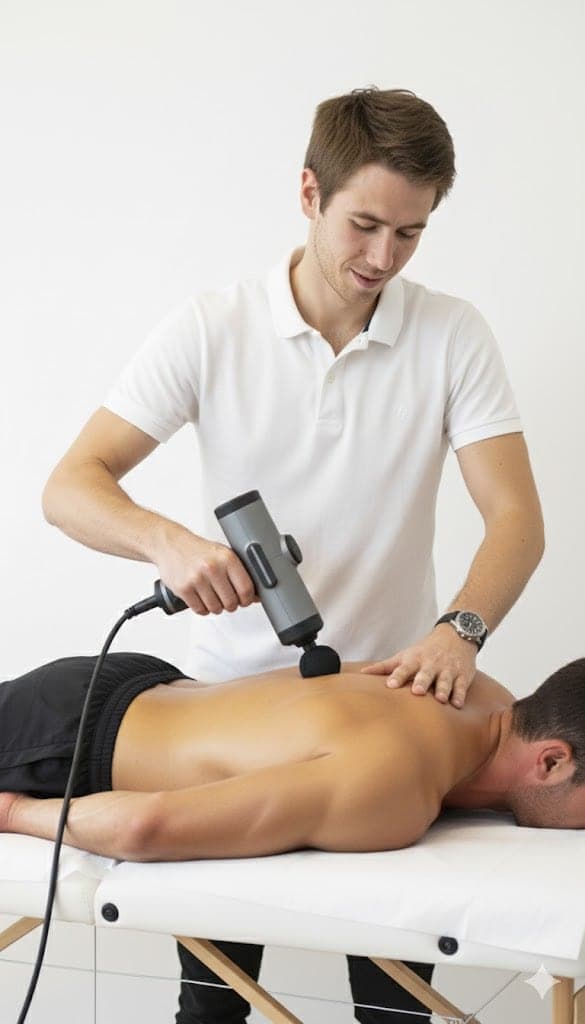
I bring everything required for professional treatment: a specialized massage bench designed for optimal body positioning, the advanced mechanical treatment equipment, and all necessary accessories. Your body receives treatment in a relaxed state, then you can rest afterward without immediately sitting in a car and reactivating tension patterns.
This approach also allows me to see your actual living and working environment. I’ve identified countless causative factors by observing how clients sit at their desks, how they position themselves on their couches, or how they move in their daily spaces. This contextual information is impossible to gather in a clinical setting and often reveals why problems persist despite treatment.
The Investment Perspective: Understanding Value vs. Cost
Let’s address the financial reality directly. Quality treatment costs more than basic massage. Always. The question isn’t whether specialized mechanical deep-tissue therapy costs more than a standard physiotherapy session—it’s whether the outcome justifies the investment.
Consider the actual cost of chronic muscle tension:
| Hidden Cost Category | Annual Impact | Long-Term Consequence |
|---|---|---|
| Reduced work productivity | Estimated 10-15% efficiency loss | Career advancement limitations, reduced earning potential |
| Sleep disruption from pain | 156-260 impaired sleep nights | Compromised immune function, cognitive decline, mood disorders |
| Repetitive ineffective treatments | €1,200-2,400 on temporary relief | Dependency cycle, progressive worsening |
| Missed activities and experiences | Incalculable quality of life reduction | Diminished life satisfaction, social isolation |
| Compensatory patterns leading to secondary injuries | Variable medical costs | Progressive deterioration, potential surgical intervention |
When you frame the decision correctly, investing in effective treatment that durably resolves muscle tension isn’t an expense—it’s one of the highest-return investments available. The return isn’t just financial; it’s the restoration of your body’s capacity to function as designed, without pain limiting your work, recreation, or sleep.
I had a client who’d spent over €3,000 across various Paphos physiotherapy clinics over two years trying to resolve chronic lower back pain. Every few weeks, he’d book another series of sessions that provided temporary relief. We resolved his issue in six sessions over eight weeks through targeted mechanical treatment of his quadratus lumborum and psoas muscles. His total investment was less than he’d spent on a single three-month period of ongoing traditional therapy, and he’s been pain-free for over a year with only occasional maintenance sessions.
Common Muscle Tension Conditions and How They Should Be Treated
Let me walk you through the most frequent presentations I see and explain what effective treatment actually requires. This will help you evaluate whether Paphos physiotherapy clinics you’re considering have the capability to address your specific condition.
Chronic Neck and Shoulder Tension
This is the most common complaint I encounter, particularly from desk workers and anyone who spends significant time looking at screens. The typical clinical picture includes tight upper trapezius, levator scapulae dysfunction, and forward head posture with accompanying suboccipital tension.
Standard treatment at most clinics involves massage to the upper back and neck, possibly some electrical stimulation, and exercise prescription for postural correction. Here’s why that’s insufficient: the tension in your upper trapezius is a compensatory response to deeper dysfunction. Your deep neck flexors have become inhibited and weak, forcing superficial muscles to work overtime maintaining head position. Your mid and lower trapezius aren’t firing properly, creating upward migration of your shoulder girdle.
Effective treatment requires breaking down the chronic adhesions in the levator scapulae and upper trapezius, releasing the suboccipital muscles, and then retraining the deep stabilizers and proper scapular mechanics. The mechanical treatment addresses the tissue restrictions that prevent proper movement patterns, then we progressively restore functional control.
Lower Back Pain and Chronic Tightness
Lower back pain is rarely about your lower back. In perhaps 7 out of 10 cases I treat, the primary dysfunction originates in the hip flexors, particularly the psoas and iliacus, or in inadequate gluteal activation creating compensatory lumbar spine loading.
Most clinics will treat your erector spinae with massage and perhaps mobilize your lumbar spine. This might reduce symptoms temporarily but doesn’t address why those muscles are overworking. The psoas, in particular, lies deep beneath your abdominal contents—it’s physiologically impossible to adequately release this muscle with manual therapy. It requires sustained mechanical pressure applied at precise angles to access and treat effectively.
I work with several tradesmen whose occupations involve repetitive bending and lifting. Their lower back pain consistently originates from chronically tight hip flexors preventing proper hip hinge mechanics, forcing their lumbar spines into excessive flexion under load. Once we release the psoas and iliacus and restore hip mobility, their “back pain” resolves without ever directly treating their backs.
Sports Performance Limitations from Muscle Tightness
Athletes understand that tight muscles limit power output, reduce range of motion, and increase injury risk. What most don’t understand is that stretching and standard sports massage won’t resolve deep fascial restrictions that develop from repetitive training loads.
A competitive runner might have chronically tight calves that limit ankle dorsiflexion, reducing stride efficiency and increasing Achilles tendon stress. Standard treatment focuses on calf stretching and massage. Advanced treatment recognizes that the gastrocnemius-soleus complex has developed dense adhesions between the muscle bellies and the fascial planes separating them from underlying structures. These adhesions require aggressive mechanical intervention to break down.
Similarly, cyclists frequently develop severe quadriceps restrictions that limit knee flexion and create patellofemoral tracking issues. The vastus lateralis, in particular, can develop adhesions to the iliotibial band that no amount of foam rolling or manual therapy will adequately address. Mechanical treatment can target these specific structures with sufficient force to create lasting change.
The Treatment Process: What to Expect from Advanced Mechanical Therapy
When someone books their first session with me, they typically don’t know what to expect beyond “deep tissue massage with a machine.” Let me demystify the process so you understand what effective treatment actually involves.
Comprehensive Assessment
We begin with functional movement assessment, postural analysis, and detailed palpation to identify areas of restriction. This isn’t a cursory examination—it’s a systematic evaluation of how your body moves, where it compensates, and what structures are preventing optimal function. I’m looking for asymmetries, movement limitations, and pain patterns that reveal the underlying biomechanical dysfunction.
This assessment phase often takes 20-30 minutes because accuracy here determines treatment effectiveness. I’ve had clients tell me they’d never had anyone actually watch them move and analyze their patterns before—most clinics move quickly from brief examination to treatment.
Targeted Mechanical Intervention
Once I’ve identified the primary dysfunctions, treatment begins with the specialized mechanical equipment. I adjust the intensity based on tissue density, restriction severity, and your individual tolerance. The treatment head works systematically through adhesed tissue, breaking down restrictions and restoring normal tissue mobility.
The sensation is intense but productive. Clients describe it as “pain that feels necessary” or “discomfort that clearly doing something important.” This differs fundamentally from the relaxing but superficial sensation of standard massage. We’re creating structural change, not just temporary comfort.
For a typical full-body session addressing multiple areas of dysfunction, we’ll spend 60-75 minutes on focused treatment. Shorter sessions targeting specific areas might run 45 minutes. The duration isn’t arbitrary—it’s determined by what’s actually required to address the identified dysfunctions.
Progressive Treatment Planning
After the initial session, we establish a treatment plan based on severity, chronicity, and your specific goals. Acute issues that haven’t yet developed severe adhesions might resolve in 3-4 sessions. Chronic conditions with years of compensatory patterns typically require 8-12 sessions of progressive intervention.
This isn’t about creating dependency—it’s about achieving lasting resolution. As treatment progresses, we transition from addressing accumulated dysfunction to maintaining optimal function. Eventually, most clients move to occasional maintenance sessions every 4-8 weeks, rather than ongoing frequent treatment.
Case Studies: Real Outcomes from Specialized Treatment
Let me share specific examples that illustrate what’s possible when treatment addresses causation rather than symptoms.
The Corporate Executive with Chronic Headaches
A business owner came to me after two years of frequent tension headaches that were affecting his cognitive performance and decision-making capacity. He’d tried various Paphos physiotherapy clinics, chiropractors, and massage therapists. Each provided temporary relief, but headaches returned within days.
Assessment revealed severe restriction in his suboccipital muscles and upper cervical fascia, combined with chronic forward head posture and virtually no activation of his deep neck flexors. The suboccipital muscles, in particular, were so adhesed and hypertonic that they were creating constant referral pain into his skull.
Treatment focused on aggressive mechanical release of the suboccipital triangle, the upper cervical paraspinals, and the levator scapulae. We then progressively retrained his deep cervical flexors and corrected his postural habits. Within six weeks and seven sessions, his headaches had ceased entirely. Eighteen months later, he maintains with monthly sessions and reports zero headache recurrence.
The Marathon Runner Facing Retirement
An experienced marathoner was considering ending his competitive running due to persistent IT band syndrome that had resisted nine months of conventional treatment including rest, stretching, foam rolling, and standard physiotherapy. He’d been told he might need surgery.
The actual problem wasn’t his IT band—it was massive adhesions in his tensor fasciae latae and gluteus medius, combined with severe restriction in his vastus lateralis where it interfaces with the IT band. These restrictions were creating excessive friction and inflammation at the lateral knee.
Mechanical treatment broke down the TFL and glute medius adhesions over four intensive sessions. We then addressed the vastus lateralis restrictions and worked on activating his gluteus medius properly to reduce TFL dominance. He returned to full training within six weeks and has since completed three marathons without IT band issues.
The Chronic Pain Patient Ready to Accept Disability
Perhaps the most rewarding case involved a woman in her mid-50s who’d lived with chronic widespread muscle pain for over a decade. She’d been diagnosed with fibromyalgia and told she needed to manage symptoms rather than expect resolution. She’d tried everything available through conventional medical channels in Paphos and was preparing to apply for disability status.
Her presentation was complex—severe restrictions throughout her posterior chain, virtually no functional core stability, and compensatory patterns layered upon compensatory patterns. Treatment required a methodical, long-term approach addressing each dysfunctional area systematically while building fundamental movement capacity.
Over six months and 24 sessions, we progressively released chronic adhesions, restored movement capability, and rebuilt functional strength. Her “fibromyalgia” symptoms reduced by approximately 80%. She returned to work full-time and recently completed a hiking trip that would have been unthinkable a year ago. This case demonstrates that even severe, chronic conditions can respond dramatically to targeted mechanical intervention when applied with sufficient precision and consistency.
Frequently Asked Questions About Paphos Physiotherapy Clinics and Advanced Treatment
How do I know if I need specialized treatment or if standard physiotherapy is sufficient?
If you’ve received conventional treatment that provided temporary relief but problems return within days or weeks, that’s a clear indicator you need more advanced intervention. If your condition has persisted for more than three months despite treatment, or if multiple practitioners haven’t achieved lasting results, standard approaches are insufficient. Chronic muscle tension requires specialized mechanical treatment to address the structural restrictions maintaining your symptoms.
Is mechanical deep-tissue treatment painful?
It’s intense, but I carefully distinguish between productive discomfort and unnecessary pain. The sensation when breaking down adhesions is significant—your body is experiencing force it’s not accustomed to, applied to tissues that have been restricted for extended periods. However, clients consistently report that it feels purposeful and that they can sense tissue releasing. Pain tolerance varies individually, and I adjust intensity accordingly while maintaining treatment effectiveness.
How long do results last after treatment?
When we achieve true structural resolution—breaking down adhesions, restoring movement patterns, and retraining proper function—results are lasting unless you recreate the causative conditions. Most clients transition to maintenance sessions every 4-8 weeks to address minor restrictions before they become significant problems. This differs fundamentally from dependency on ongoing treatment to manage persistent symptoms.
Can I continue normal activities during treatment?
Yes, with some modifications. After intensive sessions, your body needs 24-48 hours to process the tissue changes. During this period, gentle movement is beneficial but intense training should be reduced. I provide specific guidelines based on your activity level and treatment intensity. Most clients maintain their normal schedules with minor adjustments around session timing.
Why don’t more Paphos physiotherapy clinics offer this type of treatment?
Advanced mechanical therapy requires specialized equipment that represents significant investment, plus extensive training to use effectively. Many clinics focus on standardized treatment protocols that can be delivered by multiple practitioners with varying skill levels. Mechanical deep-tissue work requires individual expertise and a fundamentally different treatment philosophy—focusing on lasting resolution rather than symptom management, which doesn’t fit traditional clinical business models.
How does mechanical treatment compare to manual physiotherapy techniques?
Manual therapy has value and can be effective for specific applications. However, it’s fundamentally limited by human capacity. Therapist hands can deliver 30-40 pounds of pressure for brief periods. Many chronic restrictions require 60-80 pounds of sustained pressure applied precisely for extended duration. The mechanical approach delivers what manual therapy cannot: consistent force, unlimited duration, and millimeter-level precision. This creates outcomes that manual techniques simply cannot achieve for deep tissue dysfunction.
Do I need a referral from a doctor to receive treatment?
No referral is necessary. I conduct comprehensive assessment to determine if your condition is appropriate for mechanical deep-tissue treatment. In cases where medical pathology might be present, I’ll recommend appropriate medical consultation before proceeding. However, muscular dysfunction and chronic tension patterns don’t require medical referral—they require biomechanical expertise and effective intervention.
What should I expect to pay for advanced mechanical treatment compared to standard physiotherapy?
Quality treatment costs more than basic massage, but consider the total cost picture. If you’re spending €50-70 every week or two for ongoing symptom management with temporary results, you’ll spend thousands annually without resolution. Specialized treatment that achieves lasting results in 8-12 sessions represents superior value despite higher per-session cost. I focus on resolving your condition, not creating ongoing revenue from perpetual symptom management.
Making the Right Decision for Your Body
After a decade of specialized work in body mechanics and advanced treatment, I can tell you with absolute certainty: your body deserves better than symptomatic band-aids. The Paphos physiotherapy clinics landscape offers many competent practitioners providing valuable services for acute injuries and standard conditions. But chronic muscle tension requiring deep structural intervention demands specialized capability that most facilities simply don’t possess.
You have a choice. You can continue cycling through conventional treatments that provide temporary comfort without addressing causation. Many people do—it’s familiar, it’s covered by insurance in some cases, and it doesn’t require confronting the intensity of deep tissue work. Or you can invest in treatment that actually resolves dysfunction at its source, restores your body’s capacity to function optimally, and eliminates the chronic limitations that have been compromising your quality of life.
I’ve built my practice on a simple principle: treat the cause, achieve lasting results, and help people reclaim their bodies’ full potential. This requires advanced equipment, specialized expertise, and an uncompromising commitment to outcomes over ongoing revenue. It requires clients who understand the difference between expense and investment, between management and resolution.
Your chronic muscle tension didn’t develop overnight, and it won’t resolve with superficial intervention. But with precise mechanical treatment targeting the actual structural dysfunctions maintaining your symptoms, lasting change is absolutely achievable. I’ve seen it countless times across every type of presentation, from athletes seeking performance optimization to chronic pain patients who’d been told to accept their limitations.
The body is mechanically brilliant when it functions without restriction. It’s mechanically compromised when adhesions, compensatory patterns, and chronic tension limit its capability. The right treatment—applied with sufficient precision, power, and consistency—restores that brilliance. Everything else is just temporary symptom management.
If you’re ready to address your muscle tension at its source rather than perpetually managing symptoms, if you understand that effective treatment is an investment in long-term function rather than an expense to minimize, and if you’re willing to experience the intensity required to create lasting structural change, then advanced mechanical deep-tissue therapy offers what conventional Paphos physiotherapy clinics cannot: genuine, lasting resolution.
I travel to your location throughout Paphos, bringing professional equipment and a decade of specialized expertise focused entirely on one outcome—restoring your body to optimal function without pain, without limitation, and without ongoing dependency on treatment. That’s not marketing language. That’s the standard I’ve built my reputation on, and the result my clients experience consistently.
The question isn’t whether you can afford specialized treatment. The question is whether you can afford to continue accepting temporary relief while your condition potentially worsens and your quality of life remains compromised. Make the choice your body deserves.
Written by
Chris
Massage therapist & body mechanics specialist
Norwegian-certified with a Bachelor’s in Physical Education and Nutrition and over ten years of clinical practice, working from a portable table in clients’ homes across the Paphos district.
This article is general information from clinical practice, not a medical diagnosis. If you have severe, worsening or unexplained pain, numbness, weakness, or pain after an accident, see a doctor first.