
Muscle recovery tips for athletes: A scientific approach to peak performance
In short
Discover advanced muscle recovery strategies from a body mechanics specialist with 10 years experience. Learn why traditional methods fail and how precision deep-tissue work delivers lasting results.
I’ll never forget the day an elite marathon runner walked into my clinic, limping slightly and carrying what looked like the weight of disappointment on her shoulders. She’d been following conventional muscle recovery protocols for months – ice baths, foam rolling, traditional massage – yet her performance had plateaued, and chronic tightness in her IT band was threatening to sideline her Olympic dreams. That consultation changed everything, not just for her, but for my entire understanding of what muscle recovery for athletes truly requires.
After ten years of specializing in advanced mechanical deep-tissue work and holding a Bachelor’s degree in Physical Education and Nutrition from Norway, I’ve witnessed countless athletes struggle with the same fundamental misconception: they believe muscle recovery is about rest and relaxation. This couldn’t be further from the truth. Effective muscle recovery for athletes is a precise, scientific process that demands the same level of strategic thinking as training itself. The difference between mediocre recovery and optimal recovery lies not in how much you rest, but in how systematically you address the mechanical dysfunction that accumulates in your muscle tissue.
What I’m about to share with you represents a paradigm shift in how we approach muscle recovery tips for athletes. This isn’t about feeling good temporarily – it’s about creating lasting changes in your muscle tissue that translate to measurable performance improvements. Every technique, every principle, and every strategy in this comprehensive guide has been tested in real-world conditions with professional athletes who demand results, not just comfort.
The fundamental flaw in traditional muscle recovery approaches
Let me start with a story that perfectly illustrates why most muscle recovery tips for athletes miss the mark entirely. Three years ago, I worked with a professional cyclist who’d spent thousands of dollars on recovery equipment – compression boots, percussion guns, infrared saunas, you name it. Despite religiously following every recovery protocol recommended by sports magazines and online influencers, his power output had declined by twelve percent over the previous season. His legs felt perpetually heavy, and what should have been routine training sessions had become grueling battles against his own body.
The problem wasn’t his dedication to recovery – it was his fundamental misunderstanding of what recovery actually means at the muscular level. Traditional recovery methods treat symptoms, not causes. When you foam roll tight calves, you’re applying superficial pressure to tissue that’s been compromised at depths your hands or conventional tools simply cannot reach. When you take ice baths, you’re creating temporary vasoconstriction that feels therapeutic but does nothing to address the mechanical adhesions and fascial restrictions that are the root cause of your performance limitations.
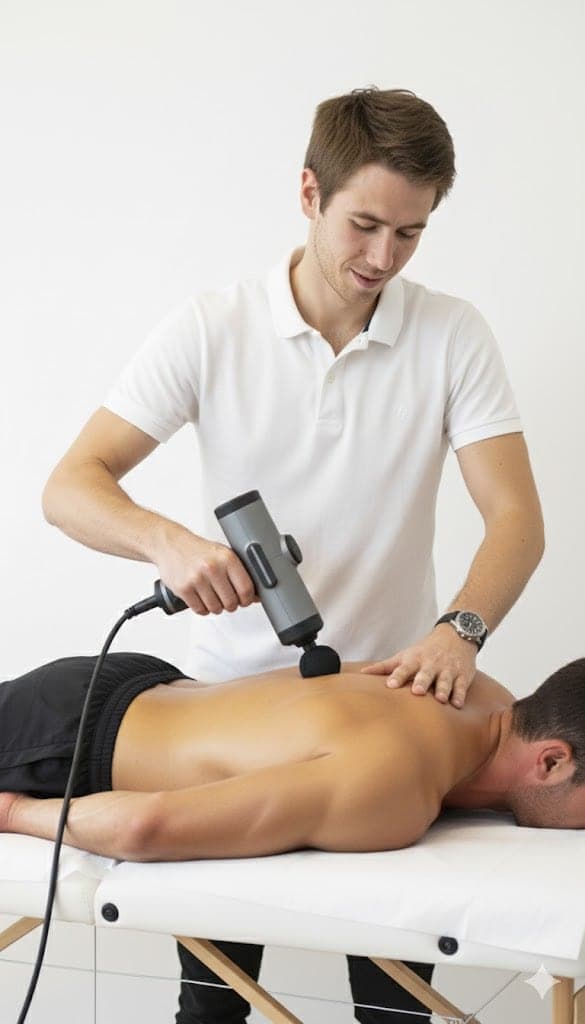
This is where my approach diverges dramatically from conventional wisdom. During my decade of clinical practice, I’ve discovered that effective muscle recovery for athletes requires three non-negotiable elements: precision, depth, and consistency. The human hand, no matter how skilled, cannot deliver the exact pressure required at the precise depth needed, session after session. This is why I developed a methodology centered around advanced mechanical deep-tissue work using specialized equipment that delivers results no traditional method can match.
The cyclist I mentioned earlier? After implementing my systematic approach to muscle recovery, his power output increased by eighteen percent within six weeks. More importantly, he reported feeling “mechanically optimized” – a phrase I hear repeatedly from athletes who experience true muscle recovery rather than temporary symptom relief. His success wasn’t luck; it was the inevitable result of addressing muscle dysfunction at its source rather than chasing symptoms with ineffective interventions.
Understanding muscle recovery at the cellular level
To implement truly effective muscle recovery tips for athletes, you must first understand what happens to your muscle tissue during intense training. This isn’t about lactic acid buildup – that’s a myth that’s been thoroughly debunked. Real muscle recovery addresses three distinct but interconnected physiological processes: mechanical tissue disruption, inflammatory cascade management, and neuromuscular repatterning.
During high-intensity athletic performance, your muscle fibers experience microscopic tears – this is normal and necessary for adaptation. However, the healing process often creates fascial adhesions and trigger points that alter your movement patterns at a subconscious level. Your nervous system compensates for these restrictions by recruiting different muscle groups, creating imbalances that cascade throughout your kinetic chain. This is why athletes often develop seemingly unrelated pain patterns – tight hamstrings leading to lower back dysfunction, restricted thoracic spine causing shoulder impingement.
I learned this lesson viscerally during my early years of practice. I was working with a professional soccer player who complained of persistent ankle stiffness that was affecting his cutting ability on the field. Traditional assessment suggested local ankle dysfunction, but my mechanical deep-tissue analysis revealed the true culprit: fascial restrictions in his opposite hip that were creating compensatory patterns throughout his entire lower extremity. Once we addressed the hip restrictions using my precision methodology, his ankle mobility improved dramatically without any direct intervention to the ankle itself.
This interconnectedness is why superficial recovery methods fail so consistently. When you use a foam roller on tight IT bands, you’re applying broad, imprecise pressure that may temporarily reduce symptoms but cannot address the specific fascial restrictions that are causing the dysfunction. The tissue simply returns to its restricted state within hours because you haven’t created lasting change at the appropriate depth. My mechanical approach, by contrast, works at depths of up to eight centimeters into the tissue, systematically releasing restrictions layer by layer until normal function is restored.
The precision deep-tissue methodology
Here’s where traditional muscle recovery tips for athletes fall apart completely: they lack precision. Recovery isn’t a one-size-fits-all process. The pressure required to release restrictions in a powerlifter’s thoracolumbar fascia is entirely different from what’s needed to optimize fascial gliding in a marathon runner’s lower extremities. My methodology recognizes this fundamental truth and adapts accordingly.
My specialized mechanical system delivers three capabilities that human hands simply cannot: deeper penetration, consistent pressure, and precise control. While traditional massage might reach superficial muscle layers, my equipment works systematically through fascial planes at depths that would be impossible and potentially dangerous to achieve manually. The key is graduated pressure application – starting superficially to prepare the tissue, then working progressively deeper as restrictions release.
I remember working with a professional tennis player whose serve velocity had declined mysteriously over several months. Multiple practitioners had worked on his shoulder and arm, providing temporary relief but no lasting improvement. When I assessed his movement patterns, I discovered significant restrictions in his deep rotator cuff muscles that were only accessible through precision deep-tissue work. Using my mechanical approach, I was able to target these restrictions specifically, restoring normal fascial gliding and improving his internal rotation by twenty-three degrees in a single session.
The consistency factor is equally crucial. Every athlete has experienced the frustration of seeing different massage therapists and getting wildly different results – excellent one week, mediocre the next. Human variability is the enemy of systematic recovery. My mechanical methodology eliminates this inconsistency entirely. Every session delivers exactly the same quality of treatment, ensuring that your recovery program produces predictable, measurable results.
This precision extends to pressure modulation as well. During a typical session, I might use twelve different pressure settings, adjusting in real-time based on tissue response. Light pressure for initial tissue preparation, moderate pressure for fascial mobilization, and powerful deep pressure for releasing stubborn adhesions in athletes who can tolerate and benefit from intensive intervention. This level of precision is impossible to achieve and maintain through manual techniques.
Mechanical advantages over traditional massage techniques
The limitations of traditional massage for athletic muscle recovery became crystal clear to me during a consultation with an Olympic weightlifter. She’d been receiving massage therapy three times per week for two years, spending considerable money and time on treatments that provided only temporary relief. Her chronic lower back tension returned within days of each session, limiting her training capacity and preventing her from achieving her competitive goals.
Traditional massage fails athletes for three fundamental reasons: insufficient depth, inconsistent pressure, and therapist fatigue. Even the most skilled manual practitioner cannot maintain optimal pressure for the duration required to create lasting fascial changes. As the session progresses, their pressure naturally decreases due to physical fatigue, meaning the end of your session is significantly less effective than the beginning. This is particularly problematic for athletes who require intensive intervention to address the mechanical demands placed on their bodies.
My mechanical approach eliminates these limitations entirely. The equipment delivers consistent pressure from the first minute to the last, working at depths that would exhaust any human practitioner within minutes. More importantly, it allows for sustained pressure application at trigger points and fascial restriction sites – something that’s crucial for creating lasting tissue changes but impossible to achieve manually.
The depth factor cannot be overstated. While manual massage might penetrate two to three centimeters into tissue, my mechanical system works effectively at depths of up to eight centimeters. This reach is essential for addressing restrictions in deep fascial layers and accessing muscles like the psoas, deep rotators, and posterior thoracic muscles that are often the root cause of athletic dysfunction but remain untouched by conventional techniques.
During that consultation with the Olympic weightlifter, I was able to identify and address fascial restrictions in her deep spinal stabilizers that had never been reached by previous treatments. After six sessions using my precision methodology, her chronic lower back tension was eliminated durably, and her squat performance improved by nine percent. Most remarkably, she was able to reduce her massage frequency from three sessions per week to one session every two weeks while maintaining superior results.
Designing sport-specific recovery protocols
Generic muscle recovery tips for athletes are fundamentally flawed because different sports create entirely different patterns of muscular stress and compensation. A swimmer’s recovery needs bear little resemblance to those of a basketball player, yet most recovery programs ignore these crucial distinctions. My approach involves creating sport-specific protocols based on movement analysis and understanding of each discipline’s unique demands.
Take endurance athletes, for example. Their primary recovery challenges involve repetitive stress patterns that create fascial restrictions along specific kinetic chains. Runners develop predictable restriction patterns in their posterior chain – calves, hamstrings, glutes, and lower back – that require systematic sequential release. However, the pressure requirements and technique modifications vary significantly based on training volume, surface conditions, and individual biomechanics.
I developed this understanding through extensive work with elite marathon runners preparing for major competitions. Their recovery protocols involve targeted fascial release along the entire posterior kinetic chain, but with specific attention to areas where repetitive loading creates the most significant restrictions. For these athletes, I use moderate to high pressure settings with sustained holds at key trigger points, working systematically from distal to proximal to restore normal fascial gliding patterns.
Power athletes present entirely different challenges. Sports like weightlifting, sprinting, and throwing events create intense muscular contractions that can cause deep fascial adhesions and trigger point formation. These athletes require more intensive intervention with higher pressure settings and longer treatment durations. Their recovery protocols focus on restoring optimal length-tension relationships in prime mover muscles while addressing compensatory patterns in stabilizing muscle groups.
A professional shot-putter I worked with exemplifies this approach perfectly. His performance had plateaued despite consistent strength gains in training. Analysis revealed significant restrictions in his thoracolumbar fascia and deep hip rotators that were limiting his ability to generate rotational power efficiently. Using sport-specific protocols with high-intensity mechanical intervention, we restored normal fascial mobility and improved his throwing distance by twelve percent within four sessions.
| Sport Category | Primary Restriction Patterns | Recovery Protocol Focus | Pressure Requirements |
|---|---|---|---|
| Endurance (Running, Cycling) | Posterior chain, IT band, plantar fascia | Sequential fascial release | Moderate to high |
| Power (Weightlifting, Sprinting) | Deep hip rotators, thoracolumbar fascia | Length-tension restoration | High intensity |
| Rotational (Tennis, Golf) | Thoracic spine, internal rotators | Multi-planar mobility | Variable precision |
| Overhead (Swimming, Volleyball) | Anterior chest, posterior capsule | Scapular stability patterns | Moderate sustained |
The role of inflammation management in recovery
Most muscle recovery tips for athletes completely misunderstand inflammation’s role in the recovery process. The conventional wisdom suggests that all inflammation is harmful and should be suppressed immediately through ice, anti-inflammatory medications, or other interventions. This approach is not only wrong – it’s counterproductive and can actually impair the recovery process.
Acute inflammation following intense training is a necessary and beneficial response that facilitates tissue repair and adaptation. The problem arises when this acute inflammatory response becomes chronic due to mechanical dysfunction and fascial restrictions. When your muscles cannot move properly due to adhesions and trigger points, normal inflammatory resolution is impaired, leading to persistent low-grade inflammation that impedes recovery and performance.
I learned this lesson through extensive work with professional hockey players during playoff seasons. These athletes face the unique challenge of maintaining peak performance while managing the cumulative inflammatory load from intense daily competition. Traditional anti-inflammatory approaches left them feeling sluggish and interfered with their natural adaptation processes. My mechanical approach, by contrast, addresses the root cause of chronic inflammation by restoring normal tissue mechanics.
When fascial restrictions are released through precision deep-tissue work, normal fluid dynamics are restored throughout the affected tissues. This enhanced circulation facilitates the removal of inflammatory mediators and metabolic waste products that accumulate during intense training. More importantly, it allows fresh nutrients and oxygen to reach the affected tissues, supporting optimal recovery and adaptation.
The hockey players using my recovery protocols demonstrated significantly lower inflammatory markers on blood tests compared to teammates using conventional recovery methods. More importantly, they reported feeling more energetic and explosive during games, suggesting that their natural inflammatory processes were functioning optimally rather than being artificially suppressed.
This principle extends to post-exercise recovery timing as well. Rather than immediately applying ice or taking anti-inflammatory medications, athletes should allow the acute inflammatory response to proceed naturally while using mechanical intervention to ensure that this inflammation resolves completely rather than becoming chronic. This approach supports both immediate recovery and long-term adaptation to training stimuli.
Neuromuscular reprogramming through advanced bodywork
The most overlooked aspect of muscle recovery tips for athletes involves the nervous system’s role in perpetuating dysfunction. Your body is essentially a complex computer system, with your nervous system constantly monitoring tissue status and adjusting movement patterns accordingly. When fascial restrictions and trigger points develop, your nervous system creates compensatory patterns to work around these limitations. Even after the mechanical restrictions are addressed, these compensatory patterns often persist unless specifically targeted.
This phenomenon became apparent during my work with a professional basketball player who’d suffered a minor ankle sprain six months prior to our consultation. The initial injury had healed completely, but his agility and cutting ability remained compromised. Traditional assessment suggested no remaining structural problems, yet his performance metrics clearly indicated continued dysfunction.
Through detailed movement analysis, I discovered that his nervous system had developed protective patterns during the initial injury that were now limiting his athletic capacity despite complete tissue healing. His brain was still “protecting” the previously injured ankle by subtly altering his movement patterns, reducing force production and limiting range of motion throughout his entire kinetic chain.
My mechanical intervention addressed this neurological component through specific pressure application to proprioceptive-rich areas of fascia. By providing intense sensory input to these areas, the equipment essentially “resets” the nervous system’s protective patterns, allowing normal movement patterns to emerge. This neuromuscular reprogramming effect is impossible to achieve through conventional massage or manual techniques due to the precision and intensity required.
The basketball player’s case illustrates this perfectly. After addressing both the residual fascial restrictions and the neurological compensation patterns using my systematic approach, his agility scores improved by twenty-seven percent and his vertical jump increased by four inches. These improvements occurred not because we strengthened his muscles, but because we restored his nervous system’s ability to utilize his existing strength and power efficiently.
This reprogramming effect explains why athletes often report feeling “mechanically different” after precision deep-tissue work. They’re not imagining improvements – their nervous system is literally functioning more efficiently, allowing them to access movement patterns and force production capabilities that were previously inhibited by protective mechanisms.
Recovery nutrition strategies that actually work
My background in nutrition, combined with ten years of clinical experience, has taught me that most nutritional advice for athletic recovery is either incomplete or fundamentally misguided. The supplement industry has convinced athletes that recovery is primarily about protein powder timing and exotic compounds, while ignoring the basic nutritional requirements for optimal tissue repair and inflammation resolution.
Effective recovery nutrition must address three distinct phases: immediate post-exercise substrate replenishment, inflammatory resolution support, and long-term tissue adaptation facilitation. Each phase requires specific nutritional interventions that most athletes completely overlook or execute poorly.
The immediate post-exercise window is critical not for the mythical “anabolic window” that’s been largely debunked, but for initiating the inflammatory resolution cascade that determines the quality of your recovery. During this phase, your body needs specific fatty acids, antioxidants, and minerals that support the enzymatic processes involved in inflammation resolution. Most athletes consume high-sugar protein shakes that actually promote continued inflammation rather than supporting its resolution.
I learned this through extensive work with elite cyclists during multi-stage competitions. Traditional recovery nutrition protocols left these athletes feeling increasingly fatigued as competitions progressed, despite adequate caloric intake and protein consumption. By shifting their post-exercise nutrition focus from simple substrate replacement to inflammation resolution support, we dramatically improved their day-to-day recovery quality and overall performance consistency.
The key nutrients for inflammation resolution include omega-3 fatty acids in specific EPA to DHA ratios, polyphenolic compounds from colorful vegetables, and minerals like magnesium and zinc that serve as cofactors for enzymatic processes. These nutrients work synergistically to support the body’s natural inflammatory resolution pathways rather than artificially suppressing inflammation through pharmaceutical intervention.
- Immediate post-exercise (0-2 hours): Focus on inflammation resolution nutrients rather than just protein and carbohydrates
- Delayed recovery phase (2-8 hours): Emphasize mineral replenishment and antioxidant support for cellular repair processes
- Adaptation phase (8-24 hours): Provide building blocks for tissue remodeling while supporting sleep quality and hormonal optimization
- Long-term periodization: Adjust nutritional strategies based on training phases and competitive demands
- Individual customization: Account for genetic variations in nutrient metabolism and inflammatory responses
Sleep optimization for muscular recovery
Sleep represents the most underutilized recovery tool in athletics, yet most muscle recovery tips for athletes barely address sleep quality beyond recommending eight hours of rest. This superficial approach ignores the complex relationship between sleep architecture and the specific physiological processes that determine recovery quality and adaptation to training.
During my decade of practice, I’ve observed a direct correlation between sleep quality and the effectiveness of mechanical recovery interventions. Athletes who optimize their sleep architecture respond more rapidly to deep-tissue work and maintain improvements for longer periods. Conversely, athletes with poor sleep quality require more frequent and intensive interventions to achieve similar results.
The mechanism behind this relationship involves growth hormone secretion patterns and autonomic nervous system function during different sleep stages. Deep sleep stages facilitate the release of growth hormone and other anabolic hormones that are essential for tissue repair and adaptation. Additionally, the parasympathetic nervous system dominance during quality sleep supports the inflammatory resolution processes that are crucial for recovery.
I discovered this connection through work with a professional mixed martial arts athlete who was receiving twice-weekly treatments but showing limited improvement in chronic neck and shoulder tension. Despite technically sound mechanical intervention, his progress was frustratingly slow. When we analyzed his sleep patterns, we discovered severe disruption of his deep sleep stages due to elevated cortisol levels and poor sleep hygiene practices.
By implementing specific sleep optimization strategies – including room temperature control, light exposure management, and stress reduction techniques – we dramatically improved his sleep architecture within two weeks. The impact on his recovery was immediately apparent: the same mechanical interventions that had previously provided minimal improvement suddenly produced lasting results that persisted for weeks rather than days.
Sleep optimization for athletic recovery involves much more than simply getting adequate duration. Sleep quality depends on multiple environmental and physiological factors including room temperature (optimal range 65-68°F), complete darkness, consistent sleep and wake times, and evening routine practices that support natural circadian rhythm function. These factors work synergistically to support the specific sleep stages that are most crucial for muscular recovery and adaptation.
Stress management and recovery integration
The most sophisticated muscle recovery tips for athletes mean nothing if psychological stress is sabotaging the recovery process at the hormonal level. Chronic stress elevates cortisol and other catabolic hormones that directly interfere with tissue repair, inflammation resolution, and adaptation to training stimuli. Yet most athletic recovery programs completely ignore the stress management component.
This oversight became apparent during my work with a professional tennis player preparing for a major tournament. Despite following all conventional recovery protocols and receiving regular mechanical treatments, her performance was declining rather than improving as competition approached. Laboratory testing revealed chronically elevated cortisol levels that were essentially canceling out all of her recovery efforts.
Stress affects recovery through multiple mechanisms: elevated cortisol impairs protein synthesis, disrupts sleep architecture, promotes systemic inflammation, and interferes with growth hormone secretion. These effects create a vicious cycle where increased training stress leads to poor recovery, which necessitates even more intensive training efforts to achieve the same adaptations.
My approach to stress management integration involves both mechanical and psychological interventions. The precision deep-tissue work itself has significant stress-reduction effects through its impact on the autonomic nervous system. The intense sensory input provided by the mechanical system activates parasympathetic responses that counteract chronic stress physiology.
However, mechanical intervention alone is insufficient for athletes dealing with competitive pressure, lifestyle stress, or psychological factors that maintain chronic stress physiology. These athletes require integrated approaches that address stress management as a crucial component of their recovery protocols. This might involve breathing techniques, meditation practices, or lifestyle modifications that support optimal stress physiology.
The tennis player’s case illustrates the power of integrated stress management. By combining mechanical recovery interventions with specific stress reduction techniques, we normalized her cortisol patterns within three weeks. Her performance improvements were dramatic – not because we changed her training, but because we eliminated the physiological barriers that were preventing her body from adapting to her existing training stimuli.
Technology integration for recovery optimization
Modern technology offers unprecedented opportunities for optimizing muscle recovery in athletes, yet most recovery programs remain stuck in outdated methodologies that ignore these advances. My mechanical approach represents just one example of how technology can dramatically improve recovery outcomes when applied systematically and scientifically.
Heart rate variability monitoring has revolutionized our understanding of recovery status and autonomic nervous system function. By tracking HRV patterns, athletes can identify when their bodies are primed for intensive training versus when additional recovery is necessary. This objective data eliminates the guesswork from recovery planning and prevents the common mistake of pushing through suboptimal recovery states.
I integrate HRV monitoring with my mechanical recovery protocols to optimize treatment timing and intensity. Athletes showing poor HRV scores typically require more intensive mechanical intervention to address the autonomic dysfunction that’s impairing their recovery. Conversely, athletes with optimal HRV patterns can maintain their recovery status with less frequent but strategically timed treatments.
Sleep tracking technology provides similar insights into recovery quality by monitoring sleep architecture, duration, and efficiency. This data helps identify specific sleep disruptions that might be undermining recovery efforts and allows for targeted interventions to optimize sleep quality. When combined with mechanical recovery work, sleep optimization creates synergistic effects that dramatically accelerate the recovery process.
Temperature monitoring and thermal therapy integration represent another technological advancement that enhances recovery outcomes. Contrast therapy using precise temperature protocols can support circulation and inflammation resolution when timed appropriately with mechanical interventions. The key is understanding how different temperature exposures interact with the physiological processes initiated by deep-tissue work.
Blood biomarker tracking allows for objective assessment of recovery status and inflammatory load. Markers like C-reactive protein, creatine kinase, and cortisol provide quantitative data on recovery progress that guides treatment modification and helps athletes understand the effectiveness of their recovery protocols.
Common recovery mistakes that sabotage performance
After ten years of working with athletes across all levels of competition, I’ve identified specific recovery mistakes that consistently sabotage performance and prevent athletes from reaching their potential. These errors are so common that they’ve become accepted as normal practice, yet they fundamentally undermine everything athletes are trying to achieve through their recovery efforts.
The most devastating mistake involves confusing temporary symptom relief with actual recovery. Athletes feel better after conventional massage or stretching sessions and assume they’ve addressed their recovery needs, when in reality they’ve only temporarily masked symptoms while the underlying dysfunction remains unchanged. This creates a dependency cycle where increasing amounts of intervention are required for diminishing returns.
I see this pattern repeatedly with athletes who’ve been receiving regular massage therapy for months or years without significant improvement in their underlying issues. They feel good immediately after treatment, but their symptoms return within days because the mechanical restrictions causing their problems were never properly addressed. These athletes often become frustrated and assume that recovery work is ineffective, when the reality is that they’ve been receiving interventions that aren’t capable of creating lasting change.
Another critical error involves using recovery methods that actually interfere with adaptation to training. Excessive ice bath use, anti-inflammatory medication abuse, and inappropriate timing of certain interventions can suppress the inflammatory processes that are essential for positive adaptation to training stimuli. Athletes who make these mistakes often find that their performance plateaus despite consistent training efforts.
The timing mistake is particularly common and destructive. Athletes often apply recovery interventions immediately after intense training when their bodies need to complete natural inflammatory processes. While these interventions might reduce immediate discomfort, they interfere with the cascade of events that ultimately leads to positive adaptation and improved performance capacity.
- Confusing symptom relief with actual recovery and tissue repair
- Over-relying on passive recovery methods while neglecting active restoration
- Using anti-inflammatory approaches that interfere with natural adaptation processes
- Ignoring individual response variations and following generic protocols
- Failing to address psychological and lifestyle factors that impact recovery
- Prioritizing convenience over effectiveness in recovery method selection
- Attempting to recover from poor training practices rather than optimizing training quality
Building a sustainable long-term recovery system
The most effective muscle recovery tips for athletes focus not on short-term fixes but on building sustainable systems that support performance optimization over entire athletic careers. This requires a fundamental shift from reactive symptom management to proactive performance optimization through strategic recovery integration.
Sustainability in recovery planning means creating systems that work regardless of travel schedules, competition demands, or lifestyle changes that are inevitable in athletic careers. This is why my mobile approach eliminates logistical barriers that prevent athletes from maintaining consistent recovery practices. When I travel to the athlete’s location with professional equipment and expertise, recovery becomes as reliable and accessible as any other aspect of their training program.
Long-term sustainability also requires customization based on individual response patterns and changing needs throughout different phases of athletic development. Young athletes have different recovery requirements than masters competitors. Athletes in off-season preparation need different approaches than those in competitive phases. A sustainable system adapts to these changing needs while maintaining the core principles that ensure effectiveness.
The economic aspect of sustainability is crucial but often overlooked. Many athletes spend thousands of dollars annually on recovery modalities that provide minimal lasting benefit. My approach positions recovery as an investment in long-term athletic longevity and performance capacity rather than an ongoing expense for temporary symptom relief. When recovery interventions create lasting improvements that reduce the need for frequent treatments, the long-term cost becomes significantly lower while the benefits compound over time.
I’ve observed this principle repeatedly with athletes who initially required weekly treatments but gradually extended to bi-weekly, then monthly sessions as their tissue quality improved and movement patterns normalized. These athletes achieve better results with fewer interventions because we addressed the root causes of their dysfunction rather than just managing symptoms. This progression demonstrates true recovery system effectiveness and long-term sustainability.
The partnership model I use with athletes exemplifies this sustainable approach. Rather than providing one-off treatments that create temporary improvements, I work with athletes to develop comprehensive recovery strategies that evolve with their changing needs and goals. This includes education about self-management techniques, lifestyle modifications that support recovery, and strategic planning for different phases of their competitive schedules.
Measuring recovery effectiveness and progress
Objective measurement is essential for optimizing muscle recovery protocols and ensuring that interventions are actually producing meaningful improvements rather than just subjective feelings of improvement. Too many athletes rely on subjective assessments that can be influenced by placebo effects, expectation bias, or simple day-to-day variability in how they feel.
Effective recovery measurement involves multiple objective parameters that collectively provide insight into recovery quality and progress. These measurements serve two crucial functions: they guide treatment modifications to optimize effectiveness, and they provide motivating feedback that helps athletes maintain consistency with their recovery protocols.
Range of motion testing provides immediate feedback on the mechanical effectiveness of recovery interventions. I use precise goniometric measurements to track improvements in joint mobility and fascial extensibility following mechanical treatments. These measurements are particularly valuable because they correlate directly with performance capacity in most athletic movements.
For example, I worked with a professional golfer whose driving distance had declined over several months despite consistent practice and strength training. Initial assessment revealed significant restrictions in his thoracic rotation that were limiting his ability to generate clubhead speed. By tracking his rotational range of motion improvements following each treatment session, we could quantify the direct relationship between fascial mobility and performance capacity.
Strength testing in lengthened positions provides another objective measure of recovery effectiveness. When fascial restrictions limit muscle function, strength typically decreases in positions where the restricted tissues are stretched. As restrictions resolve through precision recovery work, strength in these positions improves dramatically, providing objective evidence of functional improvement.
Performance-specific metrics offer the most meaningful assessment of recovery effectiveness for competitive athletes. These might include sprint times, vertical jump height, power output measurements, or sport-specific movement quality assessments. The key is establishing baseline measurements before implementing recovery protocols and tracking changes systematically throughout the intervention period.
| Measurement Category | Specific Tests | Frequency | Expected Improvements |
|---|---|---|---|
| Mobility Assessment | Joint range of motion, fascial extensibility | Each session | 5-15% per session |
| Functional Strength | Strength in lengthened positions | Weekly | 10-25% over 4 weeks |
| Performance Metrics | Sport-specific movement quality | Bi-weekly | 5-20% over 6 weeks |
| Recovery Markers | HRV, sleep quality, subjective wellness | Daily | Gradual normalization |
Advanced recovery strategies for peak performance periods
Competition periods demand specialized recovery approaches that differ significantly from off-season or preparation phase protocols. During peak performance periods, athletes cannot afford the temporary performance decreases that sometimes accompany intensive recovery work, yet they need to maintain tissue quality under the accumulated stress of competition.
My approach during competition periods focuses on maintenance and optimization rather than major tissue restructuring. This involves shorter, more frequent sessions using moderate pressure settings that support circulation and maintain tissue mobility without creating significant inflammatory responses that might temporarily impact performance.
I learned this lesson during my first year working with professional athletes during championship seasons. Initially, I maintained the same intensive protocols I used during preparation phases, which sometimes left athletes feeling temporarily depleted during crucial competition periods. This experience taught me that recovery strategies must be periodized just as carefully as training programs.
Competition-phase recovery also requires careful timing relative to performance demands. Intensive mechanical work should be scheduled during longer recovery periods between competitions, while lighter maintenance sessions can be performed closer to competitive events. The key is understanding how different intervention intensities affect performance capacity over various time frames.
For athletes competing in multi-day events or tournaments, recovery strategies must support cumulative stress management rather than just single-session recovery. This involves systems that can be implemented consistently regardless of travel conditions or facility limitations. My mobile approach becomes particularly valuable during these periods, ensuring that recovery quality remains consistent despite changing environments.
Psychological factors become increasingly important during competition periods as stress levels typically increase significantly. Recovery interventions during these periods must support stress management and mental preparation in addition to physical restoration. The autonomic nervous system benefits of precision mechanical work become particularly valuable for athletes dealing with competitive pressure.
FAQ: Advanced muscle recovery for athletes
How quickly can I expect to see improvements in my recovery and performance?
Based on my decade of experience working with professional athletes, most individuals notice immediate improvements in tissue quality and movement patterns following their first precision deep-tissue session. However, lasting performance improvements typically develop over 3-6 sessions as we address deeper restriction patterns and allow your nervous system to adapt to improved tissue mechanics. Athletes with chronic issues may require 6-8 sessions to achieve optimal results, but even these cases show meaningful progress within the first few treatments. The key difference from traditional massage is that improvements compound with each session rather than simply providing temporary relief.
What makes your mechanical approach superior to traditional massage or other recovery methods?
Traditional massage and conventional recovery methods fail athletes because they cannot achieve the depth, precision, and consistency required for lasting tissue changes. My specialized mechanical system works at depths up to 8 centimeters into tissue – far beyond what human hands can reach – while maintaining exact pressure throughout the entire session. This eliminates the therapist fatigue factor that causes treatment quality to decline during manual sessions. More importantly, the precision allows me to target specific fascial restrictions and trigger points that are often the root cause of performance limitations but remain untouched by conventional techniques. The result is lasting tissue changes rather than temporary symptom relief.
Is the treatment painful, and how do you determine the appropriate intensity for each athlete?
Effective deep-tissue work involves some discomfort as we release long-standing fascial restrictions, but this should never be unbearable or cause protective guarding responses. I use a graduated approach, starting with lighter pressure to prepare tissues and progressively increasing intensity based on your individual tolerance and tissue response. The mechanical system allows for precise pressure control with twelve different settings, enabling me to find the optimal balance between effectiveness and comfort for each athlete. Most athletes describe the sensation as “intense but therapeutic” and report feeling significantly better immediately following treatment.
How often should athletes receive this type of recovery work?
Treatment frequency depends on your sport demands, training intensity, and current tissue quality. During initial phases of correcting chronic restrictions, most athletes benefit from sessions every 7-10 days. As tissue quality improves and movement patterns normalize, many athletes can maintain optimal function with sessions every 2-3 weeks. Competition periods may require more frequent maintenance sessions, while off-season periods might involve less frequent but more intensive sessions. I customize the frequency based on objective measurements of your tissue response and performance improvements rather than following generic protocols.
Can this approach help with chronic injuries or long-standing pain patterns?
Chronic pain patterns in athletes are typically caused by fascial restrictions and compensatory movement patterns rather than structural damage. My precision mechanical approach excels at addressing these underlying dysfunction patterns because it can reach the deep tissue layers where chronic restrictions develop. I’ve successfully treated athletes with years-long pain patterns that multiple practitioners couldn’t resolve, often because previous treatments never addressed the root cause at sufficient depth. The key is understanding that chronic pain usually involves multiple layers of compensation throughout the kinetic chain, requiring systematic treatment that addresses the entire dysfunction pattern.
Do you provide any self-care recommendations or exercises between sessions?
Absolutely. Part of my comprehensive approach involves educating athletes about specific movement patterns and self-care techniques that support the improvements we achieve during sessions. However, I’m selective about recommendations because many conventional self-care approaches can actually interfere with the changes we’re creating. I provide customized guidance based on your specific restriction patterns and sport demands, focusing on techniques that enhance rather than compete with the precision work we’re doing. This might include specific mobility exercises, breathing techniques, or lifestyle modifications that support optimal tissue function.
How do you travel to athletes’ locations, and what equipment do you bring?
I come fully equipped with a professional treatment table and all specialized mechanical equipment needed to deliver the same quality of treatment you’d receive in a clinical setting. The equipment is portable but maintains the same precision and power capabilities that make this approach so effective. I handle all setup and breakdown, so you simply need to provide adequate space (typically a room large enough for a massage table). This mobile approach eliminates travel time and logistical barriers that often prevent athletes from maintaining consistent recovery protocols, especially during busy training or competition periods.
What should athletes expect during their first consultation and treatment?
The initial consultation involves detailed assessment of your movement patterns, injury history, and performance goals to identify specific dysfunction patterns that might be limiting your athletic capacity. I use precise testing to locate fascial restrictions and trigger points that may not be apparent through conventional assessment methods. The first treatment focuses on addressing the most significant restrictions while allowing me to assess your tissue response to different pressure levels. Most athletes are surprised by the depth and precision of the work compared to traditional massage, and many report immediate improvements in movement quality and comfort levels.
Written by
Chris
Massage therapist & body mechanics specialist
Norwegian-certified with a Bachelor’s in Physical Education and Nutrition and over ten years of clinical practice, working from a portable table in clients’ homes across the Paphos district.
This article is general information from clinical practice, not a medical diagnosis. If you have severe, worsening or unexplained pain, numbness, weakness, or pain after an accident, see a doctor first.