
Massage for Stress Relief: How Advanced Mechanical Bodywork Treats the Root Cause
In short
Discover how precision mechanical deep-tissue massage in Kissonerga addresses chronic stress at its physical source—delivering measurable mental health improvements through targeted body mechanics, not temporary relaxation.
Most people seeking massage for stress relief walk through my door expecting the same thing: dimmed lights, soft music, and an hour of gentle kneading that feels pleasant but changes nothing. They leave relaxed for a few hours, then return to the same tension patterns by evening. I’ve seen this cycle repeated thousands of times over my decade as a body mechanics specialist in Cyprus.
The truth is this: stress isn’t just a mental phenomenon—it manifests as physical dysfunction in your musculoskeletal system. When you experience chronic stress, your body responds by creating compensatory tension patterns that become embedded in your fascia, muscle tissue, and connective structures. A full body massage in Kissonerga that targets these mechanical dysfunctions doesn’t just reduce stress temporarily—it recalibrates your nervous system’s baseline response to stressors.
After working with everyone from chronically stressed executives to elite athletes dealing with performance anxiety, I’ve learned that effective stress relief requires a fundamentally different approach than what most massage therapists provide. My method, refined through a Bachelor’s degree in Physical Education and Nutrition from Norway and ten years of clinical practice, addresses the biomechanical origins of stress manifestation in the body.
The Physical Reality of Stress: What’s Actually Happening in Your Body
When clients come to me complaining of stress, they describe it in emotional terms—anxiety, overwhelm, mental exhaustion. But when I examine their bodies, I find concrete, measurable dysfunction: hypertonic musculature in the neck and shoulders, restricted thoracic mobility affecting breathing mechanics, and fascial adhesions that limit movement patterns and create chronic discomfort.
Your body’s stress response activates the sympathetic nervous system, triggering what we call the “fight or flight” mechanism. This physiological cascade causes specific muscular contractions—primarily in the trapezius, levator scapulae, and suboccipital muscles. When this activation becomes chronic, these muscles develop trigger points and adhesions that maintain a perpetual state of tension.
Here’s what most practitioners miss: these physical manifestations aren’t secondary to stress—they actively perpetuate it. A client stuck in chronic shoulder elevation due to fascial restriction can’t achieve parasympathetic activation (the relaxation response) no matter how many breathing exercises they practice. The mechanical restriction literally prevents the nervous system from downregulating.
The Stress-Pain-Stress Cycle
I’ve treated hundreds of clients trapped in what I call the stress-pain-stress cycle. It works like this:
- Initial stressor activates muscular tension patterns
- Maintained tension creates microtrauma and fascial adhesions
- Adhesions restrict movement and create pain signals
- Pain signals elevate stress hormones (cortisol, adrenaline)
- Elevated stress hormones reinforce muscular guarding
- The cycle intensifies with each repetition
Traditional massage approaches this cycle with superficial techniques that temporarily interrupt the pattern. My method dismantles it by addressing the mechanical restrictions that anchor the entire system in place.
Why Traditional Massage Fails at Lasting Stress Relief
I need to be direct about something: the vast majority of massage therapy provides temporary symptom relief, not actual stress resolution. After treating clients who’ve spent thousands of euros on conventional massage with minimal lasting improvement, I’ve identified exactly why this approach falls short.
The human hand, no matter how skilled, cannot generate sufficient pressure to release deep fascial restrictions while maintaining the precision needed to avoid tissue damage. Therapists face a fundamental limitation: they either work superficially (providing temporary relaxation) or attempt deep work that fatigues them quickly and varies dramatically in effectiveness from session to session.
I experienced this limitation myself early in my career. Even with excellent training and strong hands, I found I could only deliver truly effective deep work to perhaps three clients per day before my precision deteriorated. The fourth, fifth, and sixth clients received inferior treatment—not due to lack of effort, but simple physiological reality.
The Consistency Problem
Traditional therapists have “off days.” They get tired, develop their own tension patterns, or lose focus. The pressure they apply varies not just between sessions but within a single treatment. This inconsistency means clients never know if they’ll receive the relief they experienced last time.
When you’re investing in stress relief, inconsistency is unacceptable. Your nervous system requires reliable input to recalibrate. Sporadic, variable treatments confuse the body rather than training it toward new, healthier patterns.
Advanced Mechanical Massage: The Scientific Alternative
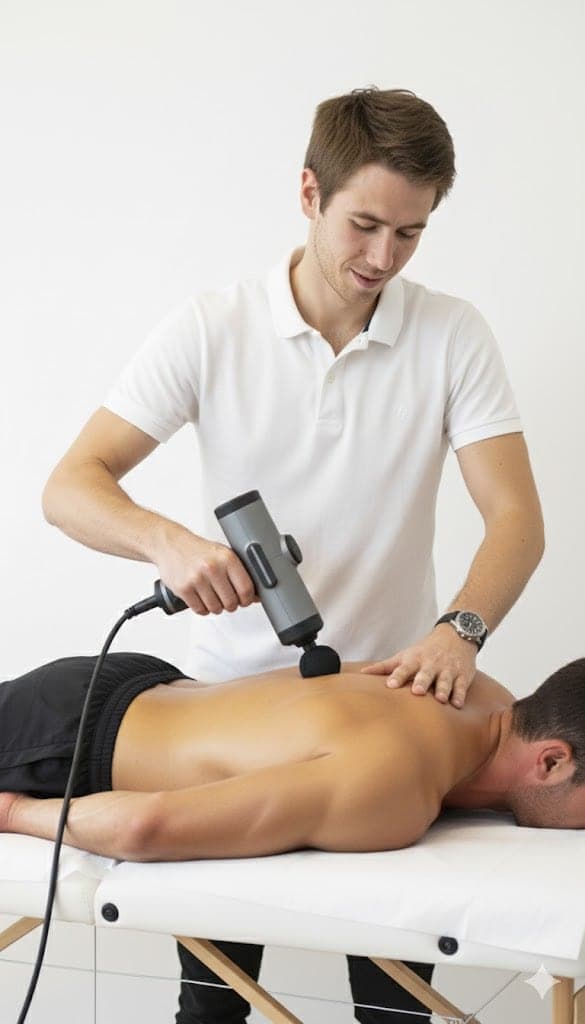
My approach to massage for stress relief utilizes specialized mechanical technology that delivers what hands cannot: precision, power, and consistency in every single treatment. This isn’t about replacing human expertise—it’s about amplifying it.
The equipment I use allows me to work at depths between 8-12 centimeters into tissue structures, releasing fascial adhesions at their origin point. More importantly, I control the exact pressure, angle, and duration at each treatment site, adjusting intensity from 1-10 based on your specific tissue response and tolerance.
For a client presenting with stress-related tension, here’s what this capability means: I can address the deep erector spinae attachments contributing to thoracic rigidity, the subscapularis adhesions limiting shoulder mobility, and the scalene trigger points affecting cervical range of motion—all in a single comprehensive session with consistent, measurable pressure application.
The Biomechanical Stress Assessment
Before any treatment, I conduct a detailed biomechanical assessment that identifies exactly where stress has created physical dysfunction in your body. This isn’t guesswork or general technique application—it’s clinical evaluation of:
- Postural deviations indicating chronic muscle guarding
- Range of motion restrictions in key joints (cervical spine, shoulders, thoracic outlet)
- Palpable fascial adhesions and trigger point locations
- Breathing pattern dysfunction affecting parasympathetic activation
- Muscle tone imbalances creating compensatory tension
This assessment creates a treatment roadmap. We’re not “doing a massage”—we’re implementing a therapeutic intervention targeting specific mechanical dysfunctions that perpetuate your stress response.
How Full Body Massage in Kissonerga Addresses Mental Health
The connection between physical bodywork and mental health improvement is well-documented in clinical literature, but the mechanism is frequently misunderstood. Effective massage for stress relief doesn’t just relax you—it literally retrains your autonomic nervous system.
When I release deep fascial restrictions in your body, several measurable physiological changes occur:
| Physiological Change | Mental Health Impact | Timeframe |
|---|---|---|
| Reduced muscle guarding | Decreased baseline anxiety levels | Immediate to 48 hours |
| Improved breathing mechanics | Enhanced emotional regulation capacity | Within one week |
| Normalized cortisol production | Better stress resilience and recovery | 2-4 weeks |
| Increased parasympathetic tone | Improved sleep quality and mood stability | 3-6 weeks |
| Enhanced proprioception | Greater body awareness and mindfulness | 4-8 weeks |
These aren’t subjective improvements—they’re measurable changes that accumulate with consistent treatment. Clients frequently report that their responses to everyday stressors fundamentally change after we’ve addressed their mechanical restrictions.
Case Study: The Executive Burnout Pattern
Last year, I worked with a senior manager who’d been managing stress with medication and weekly traditional massage for three years. She described constant mental fog, inability to disconnect from work thoughts, and a general sense of being “wound too tight” despite regular attempts at relaxation.
My assessment revealed severe thoracic outlet restriction, bilateral scalene hypertonicity limiting cervical mobility, and complete loss of natural spinal curves due to chronic postural compensation. Her body was locked in a perpetual stress posture—shoulders elevated, chest collapsed, head forward. No amount of mental relaxation could override these physical restrictions.
We implemented an eight-session protocol targeting these specific dysfunctions. By session four, she reported the first truly restful sleep she’d experienced in years. By session eight, she’d eliminated her anxiety medication (under her doctor’s supervision) and described feeling “like I got my brain back.”
This wasn’t miraculous—it was mechanical. We released the physical restrictions that were keeping her nervous system in chronic activation mode.
The Comprehensive Treatment Protocol for Stress Relief
When you book a full body massage in Kissonerga focused on stress relief, you’re not purchasing a single relaxation session—you’re beginning a therapeutic partnership aimed at lasting improvement. My protocol typically follows this structure:
Initial Phase: Foundation Work (Sessions 1-3)
The first three sessions focus on releasing the primary tension patterns that have developed over months or years of stress accumulation. We target the major postural muscles and fascial planes that create the most significant nervous system impact:
- Posterior chain release: Deep work on erector spinae, trapezius, and rhomboids to decompress the spine and reduce protective guarding
- Shoulder girdle restoration: Addressing rotator cuff restrictions, pectoralis minor adhesions, and scapular stabilizer dysfunction
- Cervical decompression: Releasing suboccipital tension, scalene trigger points, and levator scapulae hypertonicity
- Breathing mechanics optimization: Diaphragm release and intercostal work to restore full respiratory capacity
During this phase, clients typically experience significant immediate relief, but also some post-treatment soreness as tissues adapt to restored mobility. This is normal and indicates we’re working at the appropriate depth to create lasting change.
Integration Phase: Pattern Correction (Sessions 4-6)
Once we’ve released the primary restrictions, the second phase focuses on retraining your body to maintain these improvements. Stress relief isn’t sustainable if your movement patterns immediately recreate the same tension we’ve just released.
I address compensatory patterns that have developed around your original restrictions—the secondary adaptations your body created to work around primary dysfunctions. This phase also incorporates specific biomechanical education: I teach you what activities or positions trigger your stress patterns and how to modify them.
Maintenance Phase: Long-Term Optimization
After establishing a new baseline, we shift to maintenance protocols customized to your specific needs. Some clients require monthly sessions to sustain their improvements; others need work only quarterly. This depends on your stress exposure, activity level, and how well you’ve integrated the biomechanical adjustments I’ve recommended.
The goal is always the same: you should need me less over time, not more. If I’m doing my job correctly, you’re building resilience against stress-induced dysfunction, not becoming dependent on treatment.
Why Location Matters: The Mobile Treatment Advantage
I travel to your location in Kissonerga with professional equipment because environment significantly impacts treatment outcomes. When you’re stressed, the last thing you need is additional stressors—traffic, unfamiliar locations, schedule pressure.
By bringing the treatment to you, we eliminate these variables. You receive your session in your own space, maintain complete control over your schedule, and can immediately rest afterward without needing to drive. This isn’t a convenience—it’s a therapeutic necessity.
After treatment, your nervous system needs time to integrate the changes we’ve made. The worst thing you can do is immediately activate stress responses by rushing back into your day. Home treatment allows proper integration time, which directly impacts how well your body maintains the improvements we’ve achieved.
The Investment Perspective: Stress Relief vs. Stress Management
Most people view massage as an expense—a luxury to indulge in occasionally when stress becomes overwhelming. This perspective guarantees mediocre results. You’re treating symptoms sporadically rather than addressing underlying causes systematically.
I position my service as an investment because that’s precisely what it is. Chronic stress costs you professionally through reduced cognitive performance and personally through degraded quality of life. The medical expenses associated with stress-related conditions—cardiovascular disease, immune dysfunction, gastrointestinal issues—dwarf the cost of addressing stress mechanically before it creates pathology.
When a client commits to a comprehensive treatment protocol, they’re investing in enhanced performance, better decision-making capacity, improved sleep quality, and reduced risk of stress-related illness. These benefits compound over time. The return on investment becomes exponential.
Calculating Real Costs
Consider what unmanaged stress is costing you right now:
- Lost productivity due to mental fog and poor focus
- Medication expenses for anxiety, sleep issues, or pain management
- Reduced professional advancement due to burnout and poor performance
- Relationship strain from irritability and emotional unavailability
- Compromised immune function leading to frequent illness
A client recently calculated that her stress-related sick days were costing her approximately €6,000 annually in lost income and medical expenses. After three months of consistent treatment, she’d taken zero sick days and described feeling more mentally clear than she had in a decade. Her investment in bodywork was €1,200 over that period—an 80% reduction in stress-related costs with dramatically improved quality of life.
What to Expect: The Reality of Advanced Mechanical Treatment
I believe in complete transparency about what this treatment involves. Advanced mechanical massage for stress relief is not a spa experience—it’s clinical bodywork that produces measurable results.
During treatment, you’ll feel significant pressure as we work through your restrictions. I adjust intensity precisely to your tolerance, but effective work at these depths creates sensations ranging from “intense but manageable” to “challenging but necessary.” Most clients describe it as “good pain”—discomfort that feels productive rather than damaging.
Post-treatment, you may experience soreness similar to delayed onset muscle soreness after intense exercise. This typically peaks 24-48 hours after treatment and indicates we’ve worked at sufficient depth to create tissue adaptation. Proper hydration and gentle movement help process this response.
The First Session Experience
Your initial treatment begins with detailed consultation and assessment. I need to understand not just your stress symptoms but your complete movement history, injury patterns, occupational demands, and lifestyle factors that contribute to your current state.
The physical assessment takes 15-20 minutes and involves both static postural analysis and dynamic movement evaluation. I’m identifying restriction patterns, compensatory strategies, and the specific locations where stress has created the most significant dysfunction.
Treatment itself typically runs 90 minutes for full body work. I begin with broader fascial release to prepare tissues, then progress to deeper, more specific work on primary restriction sites. Throughout the session, I explain what I’m addressing and why—education is integral to long-term success.
Integration with Other Stress Management Approaches
Mechanical bodywork doesn’t exist in isolation. The most successful stress relief protocols combine physical treatment with appropriate mental health support, lifestyle modifications, and stress management techniques.
I actively encourage clients to work with mental health professionals, particularly those who understand the mind-body connection. Therapy addresses the cognitive and emotional aspects of stress; my work addresses the physical manifestations. Together, these approaches create comprehensive stress resilience.
Similarly, practices like meditation, breathwork, and mindfulness become dramatically more effective once we’ve released the physical restrictions preventing parasympathetic activation. Many clients tell me they couldn’t “get meditation to work” until after we’d addressed their thoracic restrictions and restored proper breathing mechanics.
The Synergy of Multiple Modalities
Here’s what optimal stress management looks like in my most successful cases:
- Mechanical bodywork addressing physical stress manifestations (my role)
- Cognitive-behavioral support for stress response patterns (therapist’s role)
- Movement practice maintaining biomechanical improvements (client’s role)
- Lifestyle adjustments reducing stress exposure (collaborative development)
Each element reinforces the others. Physical relief makes mental work more effective; improved mental resilience reduces physical tension; better movement maintains both physical and mental gains; lifestyle changes prevent pattern recurrence.
Frequently Asked Questions About Massage for Stress Relief
How many sessions will I need before experiencing significant stress relief?
Most clients report noticeable improvement after the first session—particularly in sleep quality and physical comfort. However, substantial, lasting change typically requires 6-8 sessions over 2-3 months. This allows time to address deep restrictions, retrain movement patterns, and establish sustainable improvements. Chronic stress patterns developed over years cannot be resolved in a single treatment.
Is mechanical massage safe for people with severe anxiety or panic disorders?
Yes, with appropriate modifications. I adjust intensity and communication style based on each client’s nervous system sensitivity. For clients with significant anxiety, we may begin with lighter pressure to establish trust and safety, progressively increasing depth as their system adapts. The controlled, predictable nature of mechanical work is often less triggering than unpredictable manual techniques.
How is this different from massage I can get at a spa?
Spa massage prioritizes immediate relaxation through superficial techniques. My approach targets the biomechanical dysfunctions that perpetuate stress, working at depths of 8-12 centimeters to release fascial restrictions that cannot be accessed with conventional techniques. Spa massage is stress management—temporary relief that requires constant repetition. This is stress resolution—addressing root causes to create lasting change.
Will I need ongoing treatment forever, or is this a lasting fix?
The goal is always sustainable improvement requiring minimal ongoing intervention. After completing an initial intensive protocol, most clients maintain results with quarterly or even semi-annual sessions. Your maintenance needs depend on stress exposure, activity level, and how well you integrate the biomechanical education I provide. You should need me progressively less over time.
Can this help with stress-related insomnia?
Absolutely. Sleep disruption is frequently connected to physical restrictions that prevent nervous system downregulation. When we release chronic tension patterns—particularly in the neck, shoulders, and thorax—most clients experience immediate improvements in sleep quality and duration. I’ve had clients report their first full night’s sleep in years after just 2-3 sessions addressing specific mechanical dysfunctions.
What if I have existing injuries or chronic pain conditions?
Existing conditions require modified approaches but don’t prevent treatment. My clinical background allows me to work safely around injuries, often addressing compensatory patterns that developed due to original trauma. Many clients come specifically for pain conditions and discover significant stress relief as a secondary benefit—or vice versa. The biomechanical approach addresses both simultaneously.
How does mechanical massage compare to other bodywork like Rolfing or myofascial release?
Those modalities and my approach all target fascial restrictions, but mechanical treatment offers advantages in depth, precision, and consistency. Manual myofascial techniques are limited by practitioner strength and fatigue. The specialized equipment I use maintains exact pressure and angle regardless of treatment duration, ensuring the eighth area treated receives identical quality to the first.
What should I do between sessions to maximize results?
I provide specific movement recommendations based on your individual restrictions—usually simple daily practices taking 5-10 minutes. Proper hydration is critical for tissue adaptation. Most importantly, pay attention to the biomechanical principles I teach: how you sit, stand, move, and position yourself throughout your day significantly impacts how well your body maintains the improvements we create during treatment.
Making the Decision: Is This Approach Right for You?
Advanced mechanical bodywork for stress relief is ideal for individuals who:
- Experience chronic stress despite trying conventional relaxation methods
- Suffer from stress-related physical symptoms (tension headaches, jaw pain, shoulder pain)
- Want measurable, lasting improvement rather than temporary symptom relief
- Are willing to commit to a comprehensive treatment protocol
- Value evidence-based, results-oriented approaches
- Seek to address root causes rather than manage symptoms indefinitely
This approach may not suit individuals looking primarily for gentle relaxation experiences or those expecting single-session resolution of long-standing patterns. I’m direct about what this work requires and what results you can realistically expect.
The Partnership Model
I don’t take every potential client who contacts me. This work requires commitment from both parties—I invest significant clinical expertise and customization into each treatment plan, and you invest time, resources, and active participation in your own recovery.
During our initial consultation, I assess not just your physical presentation but your readiness for this type of intervention. The most successful outcomes occur when clients understand they’re not purchasing a service but entering a therapeutic partnership aimed at substantial, lasting change.
Final Perspective: Stress as a Mechanical Problem
After ten years and thousands of treatments, I’ve concluded that most people fundamentally misunderstand what stress is and how to address it effectively. They view it as a purely mental phenomenon requiring purely mental solutions—therapy, meditation, medication.
But your body doesn’t make that distinction. When you experience stress, it creates immediate, measurable mechanical changes in your tissues. When stress becomes chronic, those mechanical changes become structural—embedded in your fascia, locked into your movement patterns, perpetuated by compensatory strategies that feel normal because you’ve adapted to them.
You can’t think your way out of these physical restrictions. You can’t meditate away fascial adhesions. You need mechanical intervention that addresses the structural dysfunction maintaining your stress response at the tissue level.
That’s what I provide. Not relaxation—resolution. Not temporary relief—lasting change. Not symptom management—root cause treatment.
If you’re ready to address stress as the mechanical problem it actually is, rather than continuing to manage symptoms indefinitely, we should talk. I travel to your location in Kissonerga with professional equipment and bring a decade of clinical expertise focused exclusively on the kind of deep, precise, consistent bodywork that creates real change.
This isn’t a massage. It’s an investment in reclaiming the mental clarity, emotional stability, and physical comfort that chronic stress has taken from you. The question isn’t whether you can afford to invest in this approach—it’s whether you can afford not to.
Written by
Chris
Massage therapist & body mechanics specialist
Norwegian-certified with a Bachelor’s in Physical Education and Nutrition and over ten years of clinical practice, working from a portable table in clients’ homes across the Paphos district.
This article is general information from clinical practice, not a medical diagnosis. If you have severe, worsening or unexplained pain, numbness, weakness, or pain after an accident, see a doctor first.