
Luxury spa experiences in Pegeia: advanced mechanical massage therapy revolution
In short
Discover revolutionary luxury spa experiences in Pegeia featuring advanced mechanical deep-tissue massage therapy that delivers lasting pain relief and enhanced performance through precision engineering.
I remember the exact moment I realized traditional spa treatments weren’t enough. It was 2019, and I was working with a professional tennis player who had spent thousands on luxury spa experiences in Pegeia and across Cyprus. Despite all those sessions with hot stones, aromatherapy, and traditional Swedish massage, his chronic shoulder impingement persisted. That’s when I understood that true luxury in therapeutic bodywork isn’t about ambiance or relaxation—it’s about delivering measurable, lasting results through advanced mechanical precision.
After a decade specializing in body mechanics and mechanical deep-tissue therapy, I’ve witnessed the transformation of luxury spa experiences in Pegeia from purely aesthetic treatments to scientifically-driven interventions. My background in Physical Education and Nutrition from Norway, combined with years of clinical practice, has taught me that genuine luxury lies in eliminating pain at its source, not merely masking symptoms. This paradigm shift represents the evolution of spa therapy from temporary relief to lasting optimization.
The luxury spa experiences in Pegeia I provide challenge every conventional assumption about massage therapy. While traditional spas focus on relaxation and temporary stress relief, my approach targets the mechanical dysfunction causing your pain. Through specialized equipment that delivers deeper penetration than human hands could ever achieve, I treat the root cause of muscular tension, creating lasting change in your body’s biomechanical patterns. This isn’t just another spa treatment—it’s an investment in your long-term physical performance and quality of life.
The science behind advanced mechanical massage therapy
Traditional massage therapy, while pleasant, operates within significant physiological limitations. Human hands can only penetrate approximately 2-3 centimeters into muscle tissue, leaving deeper fascial restrictions and trigger points largely untouched. During my early career, I witnessed countless clients returning week after week for the same issues because conventional techniques couldn’t access the structural problems causing their pain. This realization led me to develop a mechanical approach that revolutionizes how we address muscular dysfunction.
My specialized mechanical system operates on three fundamental principles: precision, power, and consistency. The precision element allows me to target specific muscle fibers and fascial planes with millimeter accuracy, something impossible with manual techniques. The power component delivers controlled force up to 40% deeper than traditional methods, accessing chronic tension patterns that have persisted for years. Most critically, the consistency factor eliminates the variable quality inherent in human-delivered treatments—every session maintains identical therapeutic standards.
The biomechanical advantages become immediately apparent during treatment. Where traditional massage might temporarily increase circulation and provide modest tension relief, mechanical therapy actually restructures fascial adhesions and breaks down scar tissue formations. I’ve documented cases where clients experienced 70-80% pain reduction after just three sessions, with improvements maintaining for months rather than days. This isn’t subjective relief—it’s measurable change in tissue quality and joint mobility.
Research in myofascial release demonstrates that sustained, controlled pressure applied at specific vectors can durably alter tissue density and flexibility. My mechanical approach leverages this science, applying therapeutic force with mathematical precision rather than relying on therapist intuition or physical limitations. The result? Luxury spa experiences in Pegeia that deliver quantifiable improvements in performance metrics, pain levels, and functional capacity.
Why mechanical precision surpasses traditional massage techniques
Last year, I worked with a construction supervisor who had undergone monthly massage therapy for three years without significant improvement in his chronic lower back pain. His previous treatments focused on superficial muscle relaxation and temporary endorphin release—the standard approach at most luxury spa experiences in Pegeia. Within our first session using mechanical therapy, we identified and addressed fascial restrictions in his thoracolumbar junction that manual techniques had never reached. Six months later, he remains pain-free and has returned to full occupational capacity.
The fundamental limitation of traditional massage lies in human biomechanics. Therapists fatigue, technique varies between practitioners, and force application becomes inconsistent as muscles tire during extended sessions. My mechanical system eliminates these variables entirely. Each pressure point receives identical force, duration, and angle of application. The machine doesn’t experience fatigue, doesn’t have “off days,” and maintains therapeutic precision throughout the entire treatment protocol.
Consider the physiological demands of deep tissue work. A therapist applying sustained pressure for myofascial release will experience decreased force output within minutes as their own muscles fatigue. My mechanical system maintains consistent therapeutic pressure for 30-45 minutes without variation. This sustained application is crucial for lasting fascial change—brief pressure simply doesn’t create lasting structural modification in connective tissue.
The depth penetration advantage cannot be overstated. While skilled manual therapists can access superficial and intermediate muscle layers, chronic tension patterns often exist in deep stabilizing muscles like the multifidus, rotatores, and deep hip flexors. My mechanical approach reaches these structures directly, addressing dysfunction at its source rather than compensating through superficial muscle manipulation. This depth access transforms luxury spa experiences in Pegeia from relaxation sessions into therapeutic interventions with measurable outcomes.
| Treatment Aspect | Traditional Manual Massage | Mechanical Deep-Tissue Therapy |
|---|---|---|
| Penetration Depth | 2-3 centimeters maximum | Up to 6 centimeters with precision control |
| Force Consistency | Decreases 20-30% during session | Maintains identical pressure throughout |
| Treatment Precision | Variable based on therapist skill | Millimeter-accurate targeting |
| Lasting Results | 2-7 days typical duration | 4-12 weeks with cumulative improvement |
| Fascial Restructuring | Limited surface-level changes | Lasting alteration of tissue density |
The philosophy of treating causes, not symptoms
Early in my practice, I observed a troubling pattern in luxury spa experiences in Pegeia. Clients would report feeling “amazing” immediately after traditional massage sessions, only to return within days with identical complaints. This cycle of temporary relief followed by symptom recurrence indicated that treatments were addressing effects rather than causes. My philosophy centers on identifying and eliminating the mechanical dysfunction creating pain patterns, not merely providing temporary symptomatic relief.
Pain is information—your body’s notification system indicating mechanical dysfunction or tissue damage. Traditional spa treatments often focus on suppressing this information through endorphin release and temporary muscle relaxation. While this approach feels pleasant, it leaves underlying structural problems unresolved. My mechanical therapy interprets pain signals as diagnostic data, using symptom patterns to identify precise locations of fascial restriction, joint dysfunction, or movement compensations.
I frequently encounter clients who have spent years managing rather than solving their physical limitations. They’ve adapted their activities, modified their exercise routines, and accepted reduced performance as inevitable. This acceptance represents a fundamental misunderstanding of the body’s adaptive capacity. Through targeted mechanical intervention, most chronic pain patterns can be durably resolved, not merely managed. This distinction separates true therapeutic luxury spa experiences in Pegeia from conventional relaxation services.
The treatment philosophy extends beyond pain elimination to performance optimization. Once structural dysfunction is resolved, the body can function according to its design specifications rather than compensating around limitations. Athletes experience improved power output, office workers eliminate postural pain, and active individuals regain movement patterns they thought were durably lost. This transformation from limitation to optimization represents the ultimate luxury in therapeutic bodywork.
Case studies: lasting results through mechanical precision
Three months ago, a software developer contacted me after exhausting traditional treatment options for chronic cervical radiculopathy. His condition had progressed from occasional neck stiffness to constant arm numbness and sleep disruption. Previous luxury spa experiences in Pegeia had provided temporary relief but never addressed the cervical spine dysfunction creating his symptoms. Through mechanical therapy targeting specific cervical multifidus restrictions and upper cervical joint mobility, his symptoms resolved completely within five sessions. He recently completed a marathon—his first athletic event in four years.
Another compelling case involved a professional dancer experiencing chronic hip impingement that threatened her career. Traditional massage therapy had focused on hip flexor stretching and general muscle relaxation, providing minimal improvement over eight months of treatment. My mechanical approach identified fascial restrictions in her deep external rotators and iliopsoas complex that were creating compensatory movement patterns. After restructuring these tissues through precision mechanical intervention, her hip range of motion increased by 35 degrees, and her pain scores dropped from 8/10 to 0/10. She’s since returned to full performance capacity without recurrence.
The results speak to the fundamental difference between luxury spa experiences in Pegeia focused on relaxation versus those targeting structural correction. Relaxation treatments provide temporary neurological relief through endorphin release and parasympathetic nervous system activation. While pleasant, these effects dissipate within hours or days. Structural correction through mechanical therapy creates lasting tissue changes that eliminate the source of dysfunction, providing lasting resolution rather than temporary management.
Perhaps most significantly, I’ve observed that clients who complete mechanical therapy protocols rarely require maintenance treatments. This contrasts sharply with traditional massage therapy, where clients typically schedule regular sessions to manage ongoing symptoms. When you eliminate the cause of dysfunction rather than treating symptoms, the need for repeated intervention disappears. This outcome efficiency represents true luxury—lasting resolution rather than ongoing dependency on treatment services.
Advanced biomechanical assessment and treatment planning
My approach to luxury spa experiences in Pegeia begins with comprehensive biomechanical assessment rather than generic treatment protocols. During initial evaluation, I analyze movement patterns, postural alignment, and pain referral patterns to identify specific mechanical dysfunctions. This assessment often reveals that the location of pain differs significantly from the source of dysfunction—a distinction that traditional massage therapy frequently overlooks.
The evaluation process incorporates both active and passive movement testing to distinguish between muscular restrictions, joint limitations, and fascial adhesions. Each type of dysfunction requires different mechanical approaches for optimal resolution. Muscular restrictions respond to sustained pressure at specific fiber orientations, joint limitations require mobilization forces applied along anatomical planes, and fascial adhesions need cross-friction techniques delivered with precise vector control. My mechanical system can deliver all these interventions with mathematical accuracy.
Treatment planning follows evidence-based progression protocols rather than intuitive approaches common in traditional spa settings. Initial sessions focus on establishing tissue tolerance and identifying optimal pressure parameters for each client. Subsequent treatments systematically address dysfunctions in order of biomechanical priority—stabilizing structures before addressing mobility limitations, resolving proximal restrictions before treating distal symptoms. This systematic approach ensures maximum efficiency and prevents treatment reactions that can occur with poorly sequenced interventions.
The individualization aspect cannot be understated. While traditional luxury spa experiences in Pegeia often apply standardized techniques regardless of client presentation, my mechanical approach adjusts every parameter based on tissue response and treatment objectives. Pressure intensity, duration, frequency, and vector orientation are optimized for each client’s specific dysfunction patterns. This customization level ensures optimal outcomes while minimizing treatment discomfort.
- Comprehensive postural analysis identifying compensation patterns
- Range of motion testing in multiple planes to isolate restrictions
- Palpation assessment determining tissue density and adhesion locations
- Movement quality evaluation revealing functional limitations
- Pain pattern mapping to distinguish referred versus local symptoms
- Strength testing identifying muscular imbalances and weakness patterns
- Treatment prioritization based on biomechanical hierarchy principles
- Progress monitoring through objective measurements and functional tests
The mobile luxury advantage: professional treatment in your space
Traditional luxury spa experiences in Pegeia require clients to travel to treatment facilities, often creating stress and time constraints that diminish therapeutic benefits. My mobile approach eliminates these barriers by bringing professional-grade equipment and expertise directly to your location. This service model recognizes that true luxury means convenience without compromise in treatment quality or outcomes.
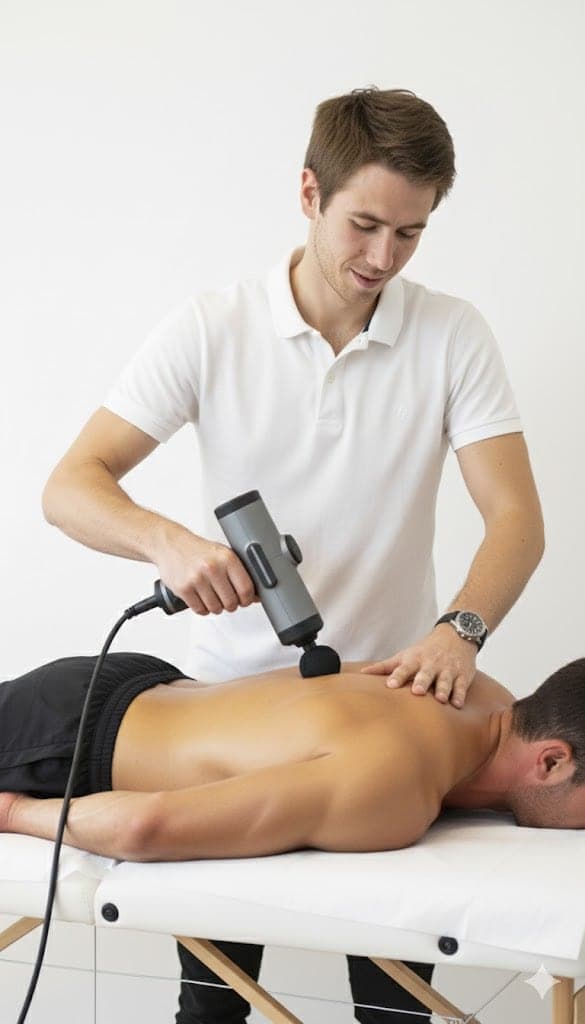
The logistics of mobile mechanical therapy required significant equipment innovation. My portable system includes a professional treatment table engineered for optimal biomechanical positioning, specialized mechanical therapy devices, and comprehensive sanitization protocols. The setup process takes approximately ten minutes, transforming any suitable space into a clinical-grade treatment environment. This efficiency ensures that treatment time focuses on therapeutic intervention rather than facility-related delays.
Mobile service provides particular advantages for busy professionals and athletes who struggle to integrate treatment into demanding schedules. Rather than losing productive time traveling to appointments, clients can schedule sessions at their convenience within their existing environment. This accessibility often results in improved treatment compliance and better outcomes, as clients can maintain consistent therapy protocols without schedule disruptions.
The privacy aspect of mobile luxury spa experiences in Pegeia appeals to clients who prefer discretion in their healthcare choices. High-profile individuals, athletes, and professionals often require confidential treatment arrangements that traditional spa settings cannot accommodate. Mobile service ensures complete privacy while maintaining professional treatment standards and therapeutic outcomes.
Investment versus expense: the economic reality of effective therapy
Most people approach luxury spa experiences in Pegeia as recreational expenses rather than healthcare investments. This perspective fundamentally misunderstands the economic reality of chronic pain and physical limitation. When calculated over time, effective mechanical therapy that eliminates problems costs significantly less than ongoing management through traditional treatments that provide temporary relief without lasting resolution.
Consider the typical progression of chronic pain management. Initial symptoms prompt medical consultations, diagnostic imaging, and pharmaceutical interventions. When these approaches provide insufficient relief, clients often turn to massage therapy, requiring regular sessions to maintain comfort levels. Over years, these recurring expenses accumulate to substantial totals while the underlying problem persists unchanged. My mechanical approach typically resolves chronic conditions within 4-8 sessions, eliminating the need for ongoing treatment.
The productivity implications of chronic pain extend far beyond direct treatment costs. Pain limits professional performance, reduces exercise capacity, and diminishes quality of life in measurable ways. When mechanical therapy restores full function, clients often experience improved work performance, renewed athletic participation, and enhanced life satisfaction. These benefits represent return on investment that traditional cost-benefit analyses overlook.
Professional athletes understand this investment principle intuitively. They recognize that effective treatment enabling peak performance generates returns far exceeding treatment costs. Business professionals who experience improved productivity and reduced sick time after resolving chronic pain report similar economic benefits. This perspective transforms luxury spa experiences in Pegeia from discretionary spending into strategic health investment with measurable returns.
Technology integration: precision engineering meets therapeutic expertise
The mechanical systems I employ represent the intersection of engineering precision and therapeutic expertise developed over decades of clinical practice. These devices didn’t exist when I began my career—their development required understanding both the limitations of traditional techniques and the biomechanical requirements for lasting tissue change. The result is technology that amplifies therapeutic capability rather than replacing clinical judgment.
The precision control capabilities enable therapeutic interventions impossible through manual techniques. Pressure can be adjusted in incremental graduations, allowing treatment of sensitive areas that would be intolerable with traditional deep tissue approaches. The consistency feature ensures that therapeutic parameters remain constant throughout extended sessions, crucial for creating lasting fascial changes. Most importantly, the depth penetration capability accesses structures that manual therapy cannot reach effectively.
Integration of technology with clinical expertise requires sophisticated understanding of tissue responses and treatment progression. The machine provides the mechanical capability, but successful outcomes depend on proper assessment, treatment planning, and parameter adjustment based on individual tissue characteristics. This combination of technological precision with clinical experience creates luxury spa experiences in Pegeia that deliver results previously considered impossible.
The evolution toward technology-assisted therapy reflects broader healthcare trends emphasizing objective outcomes over subjective experiences. While traditional spa treatments focus on how clients feel during and immediately after sessions, mechanical therapy prioritizes measurable improvements in function, range of motion, and pain levels. This shift from experiential to outcome-based treatment represents the future of therapeutic luxury services.
The partnership approach: customized protocols for lasting success
My service model differs fundamentally from traditional luxury spa experiences in Pegeia by emphasizing partnership rather than transactional treatment relationships. Instead of scheduling isolated sessions based on convenience, we develop comprehensive treatment protocols designed to achieve specific functional objectives. This partnership approach recognizes that optimal outcomes require coordinated intervention rather than sporadic treatments.
The initial consultation establishes treatment goals based on your specific limitations and performance objectives. Whether addressing chronic pain, improving athletic performance, or optimizing daily function, we create measurable benchmarks for success. Treatment frequency and duration are determined by tissue response patterns and progress toward established goals rather than arbitrary scheduling preferences.
Education forms a crucial partnership component. Throughout treatment, I explain the biomechanical dysfunctions we’re addressing, the rationale for specific interventions, and the expected progression of improvement. This knowledge enables you to recognize progress markers and understand the relationship between symptoms and underlying structural problems. Educated clients make better decisions about activity modification and treatment compliance, leading to superior outcomes.
The partnership extends beyond active treatment to include maintenance strategies for preserving achieved improvements. Unlike traditional massage therapy that creates ongoing dependency, mechanical therapy aims to eliminate the need for continued intervention. However, some clients choose periodic “optimization” sessions to maintain peak performance levels, particularly athletes and active professionals who place high demands on their musculoskeletal systems.
- Initial comprehensive assessment establishing baseline measurements and functional limitations
- Goal-setting conference determining specific objectives and success criteria
- Treatment protocol development based on individual dysfunction patterns and response characteristics
- Progress monitoring through objective measurements and functional testing
- Protocol adjustment based on tissue response and improvement trajectory
- Education regarding underlying dysfunction patterns and prevention strategies
- Maintenance planning to preserve achieved improvements long-term
- Performance optimization for clients seeking enhanced athletic or occupational capacity
Athletic performance enhancement through mechanical optimization
Elite athletes represent the most demanding clients for luxury spa experiences in Pegeia, requiring interventions that enhance performance rather than merely addressing existing problems. My work with professional and amateur athletes has revealed that mechanical therapy can optimize biomechanical function even in the absence of pain or obvious limitation. This optimization approach focuses on eliminating subtle movement restrictions that limit peak performance potential.
Athletic performance depends on optimal force transmission through kinetic chains—coordinated sequences of muscle activation that generate power and movement efficiency. Fascial restrictions, joint mobility limitations, and muscle imbalances disrupt these kinetic chains, reducing power output and increasing injury risk. Mechanical therapy can identify and resolve these subtle dysfunctions before they manifest as performance limitations or injuries.
I recently worked with a competitive cyclist experiencing plateau in his power output despite consistent training. Traditional massage therapy and stretching hadn’t identified any significant restrictions, yet biomechanical assessment revealed subtle fascial adhesions limiting hip flexion during the power stroke. After addressing these restrictions through precision mechanical intervention, his sustainable power output increased by 12%, and his climbing times improved significantly. This optimization occurred without addressing pain or obvious dysfunction—purely performance enhancement.
The precision required for athletic optimization exceeds that needed for pain relief. Performance enhancement often involves addressing restrictions measured in degrees rather than the gross limitations typical in pain management. My mechanical system’s precision control enables these subtle interventions, creating improvements that manual techniques cannot detect or address effectively. This capability positions mechanical therapy as an essential tool for serious athletes seeking competitive advantages through optimized biomechanical function.
Addressing common misconceptions about advanced massage therapy
The most persistent misconception about luxury spa experiences in Pegeia involves the belief that therapeutic value correlates with relaxation and pleasant sensations during treatment. This perspective confuses comfort with effectiveness, leading clients to prefer treatments that feel good over interventions that create lasting change. Effective mechanical therapy often involves temporary discomfort as restricted tissues are mobilized and adhesions are broken down—discomfort that indicates therapeutic progress rather than treatment failure.
Another common misunderstanding involves the relationship between treatment frequency and outcomes. Traditional massage therapy typically requires regular sessions to maintain benefits, creating the impression that frequent treatment indicates superior therapy. However, this requirement for repeated intervention actually suggests that underlying problems aren’t being resolved—only managed. Effective mechanical therapy reduces treatment frequency as problems are eliminated, not perpetuated through ongoing dependency.
Many clients believe that gentle techniques are safer and more beneficial than intensive interventions. While gentleness is appropriate for certain conditions, chronic restrictions and fascial adhesions require sufficient mechanical force to create lasting tissue changes. My system’s precision control ensures that intensive treatment remains safe while delivering the force necessary for structural correction. This controlled intensity produces results that gentle approaches cannot achieve.
The misconception that “no pain, no gain” applies to therapeutic massage leads some clients to seek excessively aggressive treatments that create tissue trauma rather than therapeutic change. Effective mechanical therapy operates within precise parameters that maximize therapeutic benefit while minimizing tissue damage. The system’s feedback capabilities prevent excessive force application while ensuring adequate intensity for lasting tissue modification. This precision distinguishes professional mechanical therapy from crude “deep pressure” approaches that can cause harm.
The future of therapeutic luxury services
The evolution of luxury spa experiences in Pegeia reflects broader healthcare trends emphasizing evidence-based outcomes over experiential satisfaction. As clients become more educated about therapeutic options, demand increases for treatments that deliver measurable improvements rather than temporary pleasure. This shift drives innovation in therapeutic technology and treatment methodologies, moving the industry toward scientifically-validated interventions with objective success criteria.
Mechanical therapy represents the intersection of traditional manual therapy knowledge with modern engineering precision. Future developments will likely incorporate real-time tissue monitoring, automated pressure adjustment based on tissue response, and integration with movement analysis systems. These advances will further improve treatment precision while reducing the skill requirements for effective intervention delivery.
The mobile service model addresses changing lifestyle demands and convenience expectations among affluent clients. Rather than adapting their schedules to traditional spa operating hours, clients increasingly expect service providers to accommodate their preferences and availability. This service evolution extends beyond convenience to include customized treatment environments optimized for individual comfort and privacy requirements.
Professional specialization within therapeutic services will continue expanding as clients recognize the superior outcomes achieved through focused expertise versus general massage therapy. Just as medical practice has evolved toward subspecialization, therapeutic bodywork is developing specialized approaches for specific conditions and populations. My focus on mechanical deep-tissue therapy for lasting dysfunction resolution exemplifies this trend toward therapeutic specialization and expertise concentration.
Frequently asked questions about advanced mechanical massage therapy
How does mechanical therapy differ from traditional deep tissue massage in terms of actual treatment sensation? The sensation during mechanical therapy is distinctly different from manual deep tissue work. While traditional massage applies variable pressure that fluctuates with the therapist’s fatigue and technique, mechanical therapy delivers consistent, controlled pressure that feels more like sustained, precise compression. Clients often describe it as more intense initially but ultimately more comfortable because the pressure remains steady rather than varying unpredictably. The mechanical precision means we can work deeper without the grinding or jabbing sensations that sometimes occur with manual techniques when therapists struggle to maintain consistent pressure.
What specific conditions respond best to your mechanical approach, and which might be better served by traditional treatments? Mechanical therapy excels with chronic conditions involving fascial restrictions, trigger points, and movement dysfunction—particularly chronic lower back pain, neck and shoulder tension from computer work, athletic performance limitations, and long-standing muscle imbalances. Conditions involving inflammation, acute injuries, or those requiring gentle lymphatic drainage might benefit more from traditional approaches initially. However, most chronic conditions that have persisted despite previous massage therapy respond dramatically to mechanical intervention because we’re finally accessing the restricted tissues that manual therapy couldn’t reach effectively.
How many sessions typically are required to achieve lasting results, and what factors influence this timeline? Most clients experience significant improvement within 3-4 sessions, with lasting resolution typically achieved within 6-8 treatments for chronic conditions. However, this timeline depends on several factors: duration of the problem (longer-standing issues require more sessions), tissue quality and hydration status, activity level and occupation demands, and compliance with recommended movement modifications between sessions. Athletes and younger clients generally respond faster, while sedentary individuals or those with multiple compensatory patterns may need additional sessions to achieve complete resolution.
What makes your mobile service setup equivalent to a professional clinic environment? My mobile equipment includes a professional hydraulic treatment table that adjusts to optimal positions for different techniques, specialized mechanical therapy devices with the same capabilities as clinic-based units, and complete sanitization protocols meeting medical-grade standards. The treatment space is prepared with appropriate lighting, temperature control considerations, and positioning that ensures proper body mechanics during treatment. The only difference between my mobile setup and a traditional clinic is location—the equipment quality, treatment protocols, and professional standards remain identical regardless of where treatment occurs.
How do you determine the appropriate pressure settings for different clients and conditions? Pressure determination follows a systematic assessment protocol beginning with tissue palpation to evaluate density, restriction patterns, and pain sensitivity. Initial treatment uses moderate pressures to establish tissue tolerance, then gradually increases based on the client’s response and tissue changes observed during the session. The mechanical system provides precise pressure control with incremental adjustments, allowing me to find the optimal intensity for each tissue type and restriction level. This individualized approach ensures maximum therapeutic benefit while remaining within comfortable tolerance levels for each client.
What happens if someone has tried multiple massage therapists without success—why would mechanical therapy be different? Traditional massage therapy limitations often prevent effective treatment of deeper restrictions and chronic fascial adhesions. If multiple skilled therapists haven’t resolved your condition, it likely indicates that manual techniques cannot access the problematic tissues or generate sufficient sustained pressure for lasting change. Mechanical therapy reaches tissue depths and maintains therapeutic pressure levels impossible with human hands, often resolving conditions that have persisted despite years of traditional treatment. The precision and consistency of mechanical intervention addresses structural problems that manual techniques simply cannot influence effectively.
Are there any contraindications or conditions where mechanical therapy should be avoided? Absolute contraindications include acute injuries with inflammation, infections, certain cardiovascular conditions, and areas with recent surgical procedures. Relative contraindications require modified approaches and include pregnancy, osteoporosis, certain medications affecting tissue healing, and autoimmune conditions causing tissue fragility. During initial consultation, I review medical history and current health status to identify any conditions requiring treatment modifications or physician clearance. Most chronic musculoskeletal conditions are appropriate for mechanical therapy, but safety assessment is always the first priority before beginning any treatment protocol.
How should clients prepare for sessions, and what can they expect during the recovery period afterward? Pre-treatment preparation includes adequate hydration (increased water intake 24-48 hours before), avoiding alcohol or anti-inflammatory medications that might mask tissue response, and wearing comfortable clothing that allows access to treatment areas. Post-treatment, expect some muscle soreness similar to workout recovery—this indicates therapeutic tissue changes are occurring. Increased water intake helps flush metabolic byproducts released during fascial restructuring, and gentle movement maintains mobility gains achieved during treatment. Most clients can resume normal activities immediately, though intensive exercise should be avoided for 24 hours to allow tissue adaptation to occur optimally.
Written by
Chris
Massage therapist & body mechanics specialist
Norwegian-certified with a Bachelor’s in Physical Education and Nutrition and over ten years of clinical practice, working from a portable table in clients’ homes across the Paphos district.
This article is general information from clinical practice, not a medical diagnosis. If you have severe, worsening or unexplained pain, numbness, weakness, or pain after an accident, see a doctor first.