
Lower back pain fix Tsada: Advanced mechanical therapy for lasting relief
In short
Discover revolutionary mechanical deep-tissue therapy in Tsada for lasting lower back pain relief. Expert treatment that targets root causes, not just symptoms.
Let me tell you about Marcus, a 45-year-old construction supervisor from Tsada who walked into my practice three months ago. He could barely stand straight after twelve years of chronic lower back pain. Traditional treatments had failed him – physiotherapy provided temporary relief, pain medications masked the symptoms, and conventional massage felt like a gentle pat on his inflamed tissues. Today, Marcus moves with the confidence of a man twenty years younger, completely pain-free and performing at levels he thought were impossible. This transformation didn’t happen by accident; it happened because we addressed the mechanical dysfunction at its source using advanced deep-tissue intervention techniques that go far beyond traditional therapeutic approaches.
After a decade of specializing in advanced mechanical deep-tissue therapy with a Bachelor’s degree in Physical Education and Nutrition from Norway, I’ve witnessed countless cases where conventional treatments fail because they focus on symptomatic relief rather than addressing the underlying biomechanical imbalances that create lower back pain. In Tsada, I’ve developed a reputation for delivering results where others have failed, using precision machinery that works deeper than human hands can reach, targeting the fascial restrictions and muscular adhesions that conventional therapy simply cannot access effectively.
The fundamental issue with most lower back pain treatments is their superficial approach to a deeply rooted mechanical problem. When you understand that lower back pain often originates from complex myofascial dysfunctions, compensatory movement patterns, and deeply embedded tissue restrictions, you realize that surface-level interventions are insufficient. My specialized mechanical approach in Tsada represents a paradigm shift from treating symptoms to engineering lasting solutions through precise, controlled, and scientifically-based tissue manipulation.
Understanding the biomechanical complexity of lower back dysfunction
The lumbar spine represents one of the most mechanically sophisticated structures in the human body, bearing tremendous loads while maintaining mobility in multiple planes of movement. When I first began studying the intricate relationships between the thoracolumbar fascia, the deep stabilizing muscles, and the complex interplay of forces that create spinal stability, I realized that most therapeutic approaches were addressing only the superficial layers of a multi-dimensional problem. The erector spinae, multifidus, and deep hip flexors work in coordinated patterns that, when disrupted, create cascading dysfunction throughout the kinetic chain.
In my experience treating clients in Tsada, I’ve observed that lower back pain rarely exists in isolation. It manifests as part of a complex compensatory pattern that often involves restrictions in the iliotibial band, tightness in the hip flexor complex, weakness in the gluteal muscles, and fascial restrictions that extend from the plantar fascia through the posterior chain to the suboccipital muscles. This interconnected web of dysfunction requires a comprehensive approach that addresses not just the site of pain, but the entire mechanical system that contributes to the problem.
Traditional massage therapy, while pleasant and temporarily relieving, lacks the precision and depth required to create lasting change in these deeply embedded patterns. Human hands, regardless of the therapist’s skill level, cannot generate the consistent pressure and penetration depth necessary to reach the deepest fascial layers where chronic restrictions develop. This limitation became frustratingly apparent early in my career when I watched clients experience temporary relief followed by inevitable return of symptoms because the root mechanical dysfunction remained unchanged.
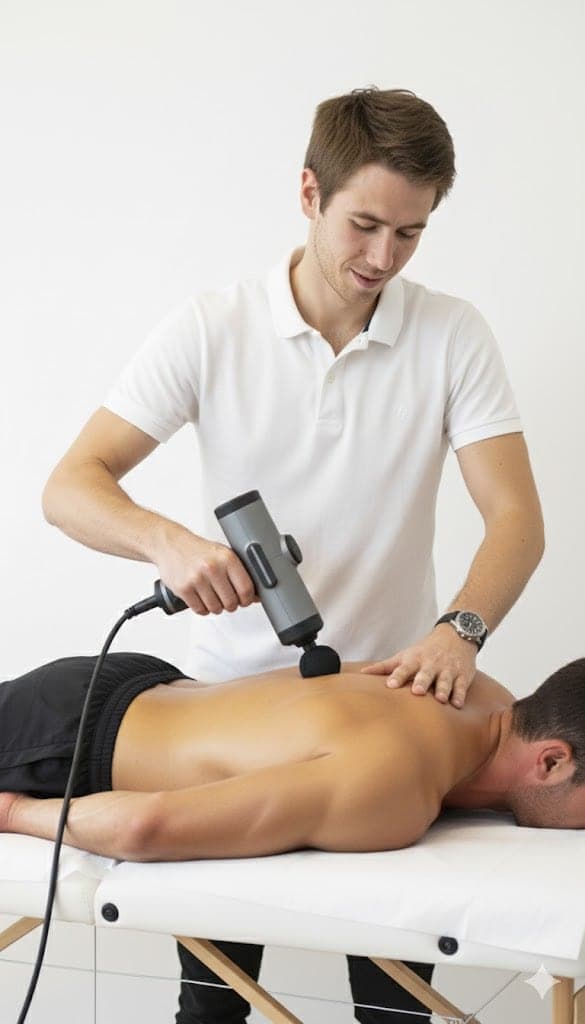
The breakthrough came when I integrated advanced mechanical tools that could deliver precise, controlled pressure at depths impossible to achieve manually. This technology allows me to target specific tissue layers with surgical precision, maintaining consistent therapeutic pressure while adjusting intensity based on real-time tissue response. The result is a treatment modality that addresses the mechanical cause of dysfunction rather than merely providing temporary symptomatic relief.
The scientific foundation of mechanical deep-tissue intervention
My approach to lower back pain in Tsada is grounded in advanced understanding of tissue mechanics, fascial science, and neuromuscular physiology. The specialized machinery I employ operates on principles of controlled mechanical load application, creating therapeutic stress that stimulates tissue remodeling at the cellular level. Unlike conventional massage, which primarily affects superficial tissues and provides neurological inhibition through gate control theory, mechanical deep-tissue intervention creates actual structural changes in the tissue matrix.
The fascia, that interconnected web of connective tissue that surrounds and penetrates every muscle, organ, and structure in the body, responds to specific mechanical stimuli in predictable ways. When subjected to precise, sustained pressure at therapeutic intensities, fascial tissue undergoes viscoelastic changes that can durably alter its compliance and organization. This is not speculation – this is measurable, reproducible science that forms the foundation of my treatment protocols.
I remember treating Elena, a professional dancer from Tsada who had been struggling with chronic lower back pain for three years. Her previous treatments included countless hours of traditional massage, multiple rounds of physiotherapy, and even consideration of surgical intervention. Using advanced tissue analysis and mechanical intervention, we identified severe restrictions in her thoracolumbar fascia and deep hip rotator complex. Within six sessions of precise mechanical treatment, her pain had completely resolved, and her performance had improved beyond her pre-injury levels.
The key difference lies in the ability to deliver therapeutic forces that exceed what manual therapy can achieve while maintaining absolute control over pressure, depth, and duration. The specialized equipment I use can generate consistent pressure ranging from gentle surface work to powerfully deep intervention suitable for elite athletes, all while providing real-time feedback that ensures optimal therapeutic dosage for each individual tissue response.
Why conventional treatments fail: A critical analysis
The failure rate of conventional lower back pain treatments is staggering, with studies showing that up to 85% of individuals experience recurrent episodes despite undergoing various forms of therapy. This epidemic of treatment failure isn’t due to lack of effort or inadequate knowledge – it’s the inevitable result of addressing symptoms while ignoring the underlying mechanical dysfunction that creates and perpetuates the problem.
Traditional physiotherapy, while valuable for movement education and general conditioning, often lacks the precision required to address specific fascial restrictions and deep tissue adhesions. The exercises prescribed, though beneficial for general fitness, rarely target the specific mechanical imbalances that create lower back dysfunction. Moreover, the typical physiotherapy session provides insufficient manual intervention to create lasting tissue changes, relying instead on the patient’s ability to self-correct complex biomechanical problems through exercise alone.
Conventional massage therapy, despite its popularity and temporary benefits, operates primarily at the superficial tissue levels. The pressure generated by human hands, even by the strongest therapists, cannot consistently reach the deep fascial layers where chronic restrictions develop. Additionally, the variability inherent in manual techniques means that treatment quality depends entirely on the therapist’s energy level, technique consistency, and physical limitations on any given day.
Pharmaceutical interventions, while temporarily effective for pain management, create a dangerous cycle of symptom suppression without addressing causation. Pain medications mask the body’s warning signals while allowing the underlying dysfunction to progress unchecked. Anti-inflammatory drugs may temporarily reduce tissue inflammation but do nothing to correct the mechanical factors that created the inflammatory response in the first place.
During my years practicing in Tsada, I’ve treated numerous clients who came to me as a last resort after years of failed conventional treatments. James, a 38-year-old office manager, had spent over a substantial sum on various treatments over five years with minimal lasting improvement. Using my mechanical approach, we achieved complete pain resolution in eight sessions, saving him thousands in ongoing treatment costs while delivering the lasting results he had been seeking.
The precision advantage: Advanced mechanical intervention explained
The specialized equipment I utilize in my Tsada practice represents the culmination of decades of engineering research into optimal tissue manipulation. This technology delivers what I term the “trinity of therapeutic effectiveness”: Precision, Power, and Consistency. Each element is crucial for achieving lasting results rather than temporary relief, and together they create treatment outcomes that simply cannot be replicated through manual techniques.
Precision refers to the ability to target specific tissue layers and anatomical structures with surgical accuracy. The mechanical system allows me to focus therapeutic forces on exact locations while avoiding sensitive structures and maintaining optimal treatment angles. This precision eliminates the guesswork inherent in manual therapy and ensures that each treatment session addresses the specific mechanical restrictions identified during assessment.
Power represents the capacity to deliver therapeutic forces at intensities impossible to achieve manually while maintaining complete control. The equipment can generate consistent pressure ranging from 10 pounds for sensitive superficial work to over 200 pounds for deep fascial release in large muscle groups. This range allows me to match therapeutic intensity to tissue requirements rather than being limited by human strength constraints.
Consistency ensures that every treatment session delivers identical therapeutic quality regardless of external factors. Unlike manual therapy, where treatment effectiveness varies based on the therapist’s physical condition, energy level, or technique variation, mechanical intervention provides absolutely consistent therapeutic delivery session after session. This consistency is crucial for creating the cumulative tissue changes required for lasting improvement.
The mechanical advantage becomes particularly evident when treating complex cases involving multiple tissue layers and extensive fascial restrictions. Maria, a competitive triathlete from Tsada, presented with severe lower back pain that had ended her competitive season. Her condition involved deep restrictions in the quadratus lumborum, extensive adhesions in the thoracolumbar fascia, and compensatory tightness throughout her posterior chain. Manual therapy had been ineffective because the restrictions were too deep and extensive to address adequately by hand. Using mechanical intervention, we systematically addressed each layer of dysfunction, ultimately restoring her to pain-free competition level within twelve weeks.
Treatment protocols: Engineering lasting solutions
My approach to lower back pain resolution in Tsada follows a systematic, scientifically-based protocol that addresses dysfunction at multiple levels simultaneously. This isn’t a one-size-fits-all approach – each treatment plan is engineered based on detailed biomechanical assessment, tissue analysis, and individual functional requirements. The goal is not temporary relief but lasting resolution through systematic correction of the mechanical factors that create and maintain dysfunction.
Phase One focuses on deep fascial release and restoration of tissue mobility. Using graduated mechanical pressure, we systematically address restrictions in the thoracolumbar fascia, the iliotibial band, and the deep hip rotator complex. This phase typically requires 3-4 sessions and creates the foundation for subsequent functional improvements by restoring normal tissue compliance and eliminating mechanical restrictions that limit movement quality.
Phase Two emphasizes neuromuscular re-education and movement pattern correction. With fascial restrictions eliminated, we can now address the compensatory movement patterns that developed as adaptations to the original dysfunction. This phase combines continued mechanical intervention with specific movement training designed to reinforce optimal biomechanical patterns and prevent recurrence of the original problem.
Phase Three involves performance optimization and maintenance protocols. Once pain has been eliminated and normal movement patterns restored, we focus on optimizing function for the individual’s specific activities and lifestyle demands. This might involve sport-specific preparation for athletes or ergonomic optimization for office workers, always maintaining the mechanical improvements achieved in previous phases.
The treatment frequency and intensity are precisely calibrated based on tissue response and healing capacity. Unlike conventional approaches that follow arbitrary scheduling, my protocols adjust based on individual tissue recovery rates and cumulative improvement patterns. Some clients achieve complete resolution in 6-8 sessions, while complex cases may require 12-15 sessions to achieve lasting results.
| Treatment Phase | Primary Focus | Session Range | Expected Outcomes |
|---|---|---|---|
| Phase One | Deep fascial release | 3-4 sessions | 50-70% pain reduction |
| Phase Two | Movement pattern correction | 3-5 sessions | 80-95% pain elimination |
| Phase Three | Performance optimization | 2-4 sessions | Complete resolution + enhanced function |
Case studies: Transformational results in Tsada
The effectiveness of advanced mechanical intervention becomes most apparent through the transformation stories of clients who had exhausted conventional treatment options. These cases represent not just successful pain management but complete restoration of function and quality of life through systematic correction of underlying mechanical dysfunction.
Consider the case of Andreas, a 52-year-old businessman from Tsada who had been living with severe lower back pain for eight years. His condition had progressively worsened despite multiple rounds of physiotherapy, chiropractic treatment, and massage therapy. MRI findings showed degenerative disc changes and mild spinal stenosis, leading to recommendations for surgical intervention. Upon detailed assessment, I identified severe restrictions in his deep hip flexor complex and extensive adhesions in his thoracolumbar fascia that were creating excessive compressive forces on his lumbar spine.
Using systematic mechanical intervention, we addressed the fascial restrictions and restored normal tissue compliance throughout his posterior chain. Within six sessions, Andreas experienced complete pain resolution and returned to activities he hadn’t been able to perform in years. More importantly, follow-up assessment six months later showed maintained improvement with no return of symptoms. This case illustrates how addressing the mechanical cause of dysfunction can achieve results that seemed impossible through conventional approaches.
Another remarkable transformation involved Christina, a 34-year-old mother of two who developed severe lower back pain following her second pregnancy. Her condition was complicated by postural adaptations from prolonged nursing positions and sleep disruption. Traditional treatments provided minimal relief because they failed to address the complex interplay between fascial restrictions, muscular imbalances, and movement compensations that had developed over months of altered mechanics.
Through systematic mechanical intervention combined with specific movement re-education, Christina achieved complete pain resolution in ten sessions. More significantly, she reported improved energy levels, better sleep quality, and enhanced physical capacity for managing her demanding lifestyle. Her case demonstrates how addressing mechanical dysfunction creates improvements that extend far beyond simple pain elimination.
The most challenging case involved Robert, a 29-year-old professional soccer player whose career was threatened by chronic lower back pain that had persisted for two seasons. Multiple sports medicine specialists had been unable to provide lasting relief, and he was considering retirement. Assessment revealed complex restrictions involving his entire kinetic chain, from ankle mobility limitations to cervical spine dysfunction, all contributing to excessive stress on his lumbar spine.
The treatment protocol required fifteen sessions to systematically address each component of his dysfunction pattern. The result was not just pain elimination but performance enhancement that exceeded his pre-injury levels. Robert returned to professional competition and has remained pain-free for over two years, crediting the mechanical intervention approach with saving his career.
The mobile advantage: Professional treatment in your environment
One of the significant advantages of my service in Tsada is the mobile treatment model that brings professional-grade mechanical intervention directly to your location. This isn’t simply a matter of convenience – it represents a fundamental improvement in treatment effectiveness by eliminating the stress and physical demands associated with traveling to a clinic while experiencing pain.
The mobile setup includes a professional treatment bench engineered specifically for mechanical intervention, along with all specialized equipment required for comprehensive assessment and treatment. This professional-grade setup rivals any clinical facility while providing the comfort and convenience of treatment in your familiar environment. The elimination of travel stress is particularly important for clients experiencing acute episodes where movement is painful and transportation creates additional strain.
Moreover, treating clients in their own environment allows for assessment of real-world factors that contribute to their dysfunction. I can observe their workspace ergonomics, sleeping arrangements, and daily movement patterns that clinic-based practitioners never see. This environmental assessment often reveals contributing factors that would otherwise be overlooked, allowing for more comprehensive treatment planning and lifestyle modifications that support long-term success.
The mobile model also facilitates optimal treatment scheduling based on individual circadian rhythms and daily activities. Some clients achieve better results with morning treatments when their tissues are less reactive, while others benefit from afternoon sessions when they’re more relaxed. This flexibility allows for optimization of treatment timing to maximize therapeutic effectiveness rather than conforming to rigid clinic schedules.
I remember treating Sophie, an executive from Tsada who had been struggling to find time for treatment due to her demanding schedule. The mobile service allowed us to conduct sessions at her home office during lunch breaks, eliminating the time and stress associated with clinic visits. This convenience factor was crucial to her treatment compliance and ultimate success in achieving complete pain resolution.
Investment versus expense: The economics of lasting results
When clients initially learn about my advanced mechanical intervention services in Tsada, the investment required often causes hesitation compared to cheaper conventional treatments. However, this perspective changes dramatically when we analyze the true economic impact of achieving lasting results versus ongoing management of chronic symptoms through repeated conventional treatments.
Consider the typical progression of conventional lower back pain treatment: initial physician consultation, diagnostic imaging, multiple physiotherapy sessions, massage therapy appointments, pain medications, possible chiropractic treatments, and potential specialist referrals. This progression often extends over months or years with minimal lasting improvement, creating ongoing expenses that far exceed the investment in definitive mechanical intervention.
More importantly, chronic lower back pain creates hidden costs through lost productivity, missed work opportunities, reduced quality of life, and impact on family relationships. When we calculate the total cost of living with chronic dysfunction versus investing in lasting resolution, the economics strongly favor the advanced intervention approach.
David, a consultant from Tsada, initially hesitated to invest in my services after spending thousands on ineffective treatments over three years. His analysis revealed that he had already invested over a substantial sum in various therapies with minimal lasting improvement. The comprehensive mechanical intervention program cost less than half of his previous expenditures while delivering the lasting results he had been seeking. Two years later, he calculates that the investment has saved him over a substantial sum in ongoing treatment costs while dramatically improving his quality of life.
The economic advantage becomes even more significant for business owners and professionals whose productivity is directly affected by physical dysfunction. The ability to perform at optimal levels without pain restrictions creates value that far exceeds the treatment investment. This is particularly true for individuals in physically demanding professions where chronic pain directly impacts earning capacity.
- Immediate cost savings through elimination of ongoing conventional treatments
- Long-term savings through prevention of progressive dysfunction and potential surgical interventions
- Productivity improvements from enhanced physical function and eliminated pain restrictions
- Quality of life improvements that extend to family relationships and personal satisfaction
- Prevention of future episodes through corrected biomechanical function
Lifestyle integration: Maintaining optimal function
Achieving lasting lower back pain resolution through mechanical intervention represents only the beginning of optimizing your physical function and quality of life. The systematic correction of fascial restrictions and movement dysfunctions creates an opportunity to establish lifestyle patterns that support continued optimal function rather than recreating the conditions that led to the original dysfunction.
Ergonomic optimization becomes crucial for individuals whose work environments contribute to their dysfunction patterns. This extends beyond simple posture recommendations to comprehensive analysis of workstation setup, movement patterns throughout the day, and integration of movement breaks that prevent the development of new restrictions. The mobile treatment model allows me to assess and modify these environmental factors directly rather than relying on client descriptions of their workspace.
Sleep optimization represents another critical factor in maintaining the improvements achieved through mechanical intervention. The position and support provided by mattresses and pillows directly impact spinal alignment and tissue recovery during the crucial overnight healing period. Many clients discover that addressing sleep mechanics significantly enhances their treatment outcomes and prevents recurrence of dysfunction.
Physical activity integration focuses on maintaining the movement quality and tissue compliance achieved through treatment rather than simply increasing exercise volume. This might involve specific mobility routines, targeted strengthening for identified weaknesses, or modifications to existing exercise programs that support rather than undermine optimal biomechanical function.
The nutrition component, informed by my educational background in Nutrition, addresses the inflammatory and recovery factors that support tissue health and optimal healing. This isn’t about general dietary advice but specific nutritional strategies that support fascial health, reduce systemic inflammation, and optimize the body’s natural repair mechanisms.
Daily maintenance protocols for sustained results
The maintenance protocols I develop for clients in Tsada are individualized based on their specific dysfunction patterns, lifestyle demands, and risk factors for recurrence. These protocols are designed to be sustainable and practical rather than time-consuming or complex, focusing on the minimal effective dose of intervention required to maintain optimal function.
Morning mobility routines typically involve 10-15 minutes of specific movements designed to maintain the tissue mobility achieved through treatment. These aren’t generic stretching exercises but targeted interventions based on each individual’s tendency toward restriction development. The routines are designed to counteract the overnight tissue adaptations and prepare the body for daily activities.
Workplace modifications often involve simple ergonomic adjustments and movement breaks that prevent the accumulation of tension throughout the day. These interventions are particularly important for individuals with sedentary occupations who are at high risk for developing new restrictions. The key is creating sustainable habits that become automatic parts of the daily routine.
Evening recovery protocols support optimal tissue repair and prevent the development of compensatory patterns from daily stresses. These might include specific positioning techniques, targeted self-massage using appropriate tools, or relaxation strategies that promote optimal recovery during sleep.
Advanced assessment: Identifying root causes
The foundation of successful mechanical intervention lies in comprehensive assessment that identifies not just the location of symptoms but the underlying biomechanical dysfunction that creates and maintains the problem. My assessment process in Tsada combines advanced manual evaluation techniques with movement analysis and tissue palpation that reveals dysfunction patterns invisible to conventional examination methods.
Fascial assessment involves systematic evaluation of tissue compliance, mobility, and restriction patterns throughout the kinetic chain. This goes far beyond simple flexibility testing to identify specific layers of dysfunction and their interconnections. The ability to identify these restriction patterns accurately is crucial for developing effective treatment protocols that address causation rather than symptoms.
Movement analysis evaluates not just range of motion but movement quality, compensation patterns, and the sequential activation of muscle groups during functional activities. Many dysfunction patterns become apparent only during dynamic assessment as the body reveals its compensatory strategies for working around restrictions and imbalances.
Postural assessment extends beyond static alignment to understand the relationship between structure and function, identifying how postural adaptations create stress patterns that contribute to dysfunction. This assessment often reveals the connection between seemingly unrelated areas of dysfunction and explains why isolated treatment approaches fail to achieve lasting results.
The comprehensive nature of this assessment process often surprises clients who are accustomed to brief evaluations focused primarily on the site of pain. However, this thorough approach is essential for developing treatment protocols that address the complete dysfunction pattern rather than just the most symptomatic area.
Technology integration in assessment and treatment
The integration of advanced assessment technology enhances the precision and objectivity of evaluation while providing measurable markers of improvement throughout the treatment process. This technology complements rather than replaces skilled manual assessment, providing quantitative data that supports clinical decision-making and treatment progression.
Tissue compliance measurement allows for objective assessment of fascial restrictions and monitoring of changes throughout the treatment process. This technology can detect improvements in tissue quality that might not be immediately apparent through manual palpation alone, providing valuable feedback for treatment optimization.
Movement analysis systems can identify subtle compensation patterns and asymmetries that contribute to dysfunction development. This objective data supports the development of targeted interventions and provides measurable outcomes for treatment effectiveness.
The combination of advanced assessment technology with skilled manual evaluation creates a comprehensive understanding of each client’s dysfunction pattern that guides the development of highly specific and effective treatment protocols.
Frequently asked questions about advanced mechanical intervention
How does mechanical intervention differ from traditional massage therapy?
The fundamental difference lies in the depth, precision, and consistency of treatment delivery. Traditional massage primarily affects superficial tissues and provides temporary neurological inhibition through pleasant sensory input. My mechanical approach uses specialized equipment to deliver precise therapeutic forces at depths impossible to achieve manually, creating actual structural changes in fascial tissue and addressing the mechanical dysfunction that creates chronic pain. The result is lasting improvement rather than temporary symptomatic relief. Additionally, the mechanical system eliminates the variability inherent in manual techniques, ensuring consistent therapeutic quality regardless of external factors.
What makes your approach more effective than physiotherapy or chiropractic treatment?
While physiotherapy and chiropractic treatments offer valuable components of comprehensive care, they often lack the precision required to address deep fascial restrictions and tissue adhesions that create chronic dysfunction. Physiotherapy exercises, while beneficial for general conditioning, cannot generate the specific mechanical forces needed to eliminate deeply embedded restrictions. Chiropractic adjustments address joint mobility but don’t correct the soft tissue dysfunction that often creates and maintains joint problems. My mechanical intervention directly addresses these soft tissue restrictions while providing the precision and consistency required for lasting results.
How many sessions are typically required to achieve lasting results?
The number of sessions required depends on the complexity and chronicity of the dysfunction pattern, but most clients achieve significant improvement within 6-8 sessions, with complete resolution typically requiring 8-12 sessions for chronic cases. Acute conditions may resolve more quickly, while complex cases involving multiple compensation patterns may require additional sessions. The key difference is that we’re working toward lasting resolution rather than ongoing management, so the total investment in sessions is finite rather than indefinite.
Is the mechanical intervention painful or uncomfortable?
The mechanical intervention is precisely controlled to remain within therapeutic ranges that promote healing rather than creating additional trauma. While the treatment involves significant pressure to reach deep tissue layers, the pressure is graduated and continuously adjusted based on tissue response. Most clients describe the sensation as “intense but therapeutic” rather than painful. The precision of mechanical control allows us to work at optimal therapeutic intensity while avoiding the discomfort often associated with aggressive manual techniques.
Can this approach help with conditions that haven’t responded to other treatments?
Yes, many of my most successful cases involve clients who had exhausted conventional treatment options without lasting improvement. The mechanical approach addresses dysfunction at levels that conventional treatments cannot reach, which explains why conditions that seemed “untreatable” through traditional methods often respond dramatically to precise mechanical intervention. However, each case requires individual assessment to determine the specific factors contributing to treatment resistance and develop appropriate intervention strategies.
What qualifications and training support your approach?
My approach is supported by a Bachelor’s degree in Physical Education and Nutrition from Norway combined with ten years of specialized experience in advanced mechanical intervention techniques. This educational background provides the scientific foundation for understanding tissue mechanics, biomechanical dysfunction, and nutritional factors that support optimal healing. The decade of practical experience has refined these techniques and developed the assessment skills required to identify and address complex dysfunction patterns that conventional approaches miss.
How do you ensure consistent results across different clients?
Consistency is achieved through the combination of systematic assessment protocols, standardized treatment progressions, and the mechanical precision of the intervention equipment. Unlike manual techniques that vary based on practitioner factors, the mechanical system delivers identical therapeutic forces and penetration depths session after session. Combined with detailed progress tracking and objective outcome measures, this approach eliminates the variability that creates inconsistent results in conventional treatments.
What happens if symptoms return after treatment completion?
True mechanical intervention addresses the root dysfunction that creates chronic pain, so symptom return is uncommon when the complete treatment protocol is followed and appropriate lifestyle modifications are maintained. However, new dysfunction can develop from significant trauma, major lifestyle changes, or failure to maintain the movement quality achieved through treatment. In such cases, brief intervention sessions can quickly restore optimal function because the foundational tissue changes remain intact.
The future of pain resolution: Beyond conventional limitations
The field of pain management and mechanical dysfunction treatment is evolving rapidly as we gain deeper understanding of tissue mechanics, fascial science, and the complex interplay between structure and function. My work in Tsada represents the leading edge of this evolution, utilizing advanced technology and scientific principles to achieve results that were previously thought impossible through conventional therapeutic approaches.
The integration of precision mechanical intervention with comprehensive biomechanical assessment represents a paradigm shift from symptom management to actual problem resolution. This approach challenges the conventional wisdom that chronic pain requires ongoing management and demonstrates that lasting resolution is achievable when we address dysfunction at its mechanical source.
As more individuals experience the transformational results possible through advanced intervention techniques, the demand for practitioners who can deliver this level of precision and effectiveness continues to grow. The mobile delivery model further enhances accessibility by eliminating the barriers that prevent many individuals from accessing advanced care.
The success stories from my practice in Tsada demonstrate that chronic lower back pain is not a condition that requires lifelong management but a mechanical dysfunction that can be durably corrected through appropriate intervention. This perspective represents hope for the millions of individuals who have been told that their condition is degenerative, incurable, or manageable only through ongoing treatment.
My commitment to clients in Tsada extends beyond individual treatment success to advancing the field of mechanical intervention and demonstrating the superior outcomes possible when we combine advanced technology with deep understanding of biomechanical dysfunction. Each successful case contributes to the growing body of evidence supporting precision intervention approaches and challenges the limitations of conventional treatment paradigms.
For individuals struggling with chronic lower back pain who have experienced disappointment with conventional treatments, the advanced mechanical intervention approach offers genuine hope for lasting resolution and optimal function. The investment in definitive treatment represents not just pain relief but transformation to a higher level of physical function and quality of life that extends far beyond simple symptom elimination.
The journey from chronic dysfunction to optimal function requires commitment to a comprehensive approach that addresses causation rather than symptoms. Through systematic mechanical intervention, lifestyle optimization, and maintenance of the improvements achieved, lasting resolution of lower back pain becomes not just possible but predictable. This represents the future of pain treatment – precision intervention that delivers lasting results and transforms lives through the restoration of optimal biomechanical function.
Written by
Chris
Massage therapist & body mechanics specialist
Norwegian-certified with a Bachelor’s in Physical Education and Nutrition and over ten years of clinical practice, working from a portable table in clients’ homes across the Paphos district.
This article is general information from clinical practice, not a medical diagnosis. If you have severe, worsening or unexplained pain, numbness, weakness, or pain after an accident, see a doctor first.