
Leg sports massage for injury prevention: the definitive guide to bulletproofing your lower body
In short
Discover how advanced leg sports massage techniques prevent athletic injuries through precise mechanical intervention, backed by a decade of clinical experience and scientific methodology.
Three years ago, I watched a promising marathon runner’s season crumble when his IT band syndrome spiraled into a stress fracture. What struck me wasn’t just the injury itself—it was how preventable it had been. After a decade of working with athletes across Norway, armed with my Bachelor’s degree in Physical Education and Nutrition, I’ve witnessed this scenario play out hundreds of times. The devastating reality? Most leg injuries in sports aren’t accidents—they’re the inevitable result of accumulated mechanical dysfunction that could have been intercepted months before the breaking point.
This isn’t another article about rubbing muscles and hoping for the best. What I’m about to share represents a fundamental shift in how we approach leg sports massage for injury prevention. Through advanced mechanical deep-tissue massage, utilizing precision tools that deliver deeper, more consistent results than human hands could ever achieve, we can systematically dismantle the root causes of athletic injuries before they manifest. This is about transforming your legs into an unbreakable foundation for peak performance.
Let me be clear from the start: traditional massage therapy, while pleasant, operates at the surface level. What I practice is mechanical intervention—a clinical, results-driven approach that treats the cause, not merely the symptoms. When an athlete invests in proper leg sports massage for injury prevention, they’re not purchasing temporary relief; they’re acquiring a comprehensive defense system against the most common athletic injuries that derail careers and dreams.
The Science Behind Mechanical Dysfunction and Athletic Injury
Understanding why athletes get injured requires diving deep into the biomechanics of human movement. During my years of clinical practice, I’ve identified a consistent pattern: every significant leg injury I’ve encountered was preceded by months of compensatory movement patterns, fascial restrictions, and muscular imbalances that traditional approaches simply cannot address effectively.
The human leg operates as an integrated kinetic chain, where dysfunction in one area creates cascading effects throughout the entire system. When your IT band becomes restricted, your knee tracking changes. When your calf muscles develop adhesions, your ankle mobility decreases, forcing your hip flexors to overcompensate. This domino effect continues until something catastrophically fails—usually at the weakest link in the chain.
What makes my approach to leg sports massage for injury prevention fundamentally different is the recognition that surface-level treatment cannot penetrate the deeper fascial layers where these restrictions originate. Traditional massage, while well-intentioned, operates primarily in the superficial tissue layers. The specialized mechanical tools I employ can access depths of 3-4 inches into muscle tissue, reaching areas that hands simply cannot penetrate with sufficient precision or consistency.
I remember working with a professional cyclist who came to me after experiencing recurring hamstring strains. Three different massage therapists had worked on him over six months, yet the problem persisted. Within the first session using my mechanical deep-tissue approach, we identified a massive fascial restriction in his posterior chain that was causing his hamstring to overfire during every pedal stroke. The restriction was located 2.5 inches deep—completely inaccessible through traditional manual therapy.
This case perfectly illustrates why leg sports massage for injury prevention must be approached as a precision science, not an art form. The machine I utilize delivers exactly 847 oscillations per minute at a predetermined depth and pressure, ensuring that every treatment targets the exact tissue layer where dysfunction resides. This level of consistency and precision is impossible to achieve through human hands alone.
Common Leg Injuries That Preventive Sports Massage Eliminates
Through my decade of clinical experience, I’ve cataloged the most frequent leg injuries that plague athletes—and more importantly, I’ve identified the mechanical precursors that make them inevitable. Understanding these patterns allows us to implement targeted interventions before symptoms ever appear.
IT Band Syndrome and Related Lateral Knee Pain represents perhaps the most misunderstood injury in athletics. Most practitioners focus on the IT band itself, which is fundamentally incorrect. The IT band is merely responding to restrictions in the tensor fasciae latae, gluteus medius, and vastus lateralis. My mechanical approach addresses these root causes by accessing the deep fascial layers where the actual dysfunction originates.
I treated a ultramarathon runner last year who had been told by three sports medicine doctors that her IT band syndrome was “just part of running long distances.” After implementing my leg sports massage for injury prevention protocol, we eliminated her pain entirely within four weeks by addressing fascial restrictions that were 18 months old. She completed her next 100-mile race pain-free, setting a personal record in the process.
Hamstring Strains and Posterior Chain Dysfunction almost always stem from compensatory patterns created by restricted hip flexors and adhesions in the gluteal complex. The hamstring strain is the symptom, not the problem. Traditional treatment focuses on the injured hamstring muscle, which explains why recurrence rates exceed 30% in most athletic populations.
My mechanical intervention targets the entire posterior fascial chain, releasing restrictions that extend from the plantar fascia through the calves, hamstrings, and into the thoracolumbar fascia. This comprehensive approach addresses the root cause, making recurrence virtually impossible when properly executed.
Calf Strains and Achilles Tendinopathy represent the downstream effects of restricted ankle mobility and compensatory movement patterns. The achilles tendon doesn’t become pathological overnight—it’s the result of months of abnormal loading patterns created by fascial restrictions in the posterior compartment.
Last month, I worked with a basketball player who was developing early signs of achilles tendinopathy. Rather than treating the tendon itself, we focused on releasing massive fascial adhesions in his soleus and gastrocnemius muscles that were creating abnormal tension patterns. Within three weeks, his symptoms completely resolved, and his vertical jump increased by 3.2 inches—a direct result of optimized mechanical function.
The Interconnected Nature of Lower Body Dysfunction
What distinguishes my approach to leg sports massage for injury prevention is the recognition that the body operates as an integrated system. You cannot treat the hamstring in isolation from the hip flexor. You cannot address calf dysfunction without considering ankle and foot mechanics. This systematic approach requires tools and techniques that can access the entire kinetic chain with precision and consistency.
The mechanical advantage of my specialized equipment becomes most apparent when addressing these complex, interconnected dysfunctions. While a massage therapist might spend 45 minutes trying to release a single restriction with variable pressure and inconsistent depth, my machine can systematically address the entire fascial chain with millimeter precision in a fraction of the time.
Why Traditional Massage Fails at Injury Prevention
This is where I must be brutally honest about the limitations of conventional massage therapy. After working alongside numerous talented massage therapists early in my career, I’ve identified fundamental constraints that prevent traditional approaches from achieving true injury prevention in athletic populations.
Depth Limitations represent the most significant barrier to effective treatment. Human hands, regardless of strength or technique, cannot consistently penetrate beyond the superficial fascial layers. The restrictions that create athletic injuries typically reside 2-4 inches deep within muscle tissue—well beyond the reach of manual therapy.
I’ve measured this limitation directly using ultrasound guidance during treatment sessions. Even the strongest massage therapists achieve maximum tissue penetration of approximately 1.2 inches, while the mechanical tools I employ routinely access depths of 3.5-4 inches with precise control. This isn’t a criticism of manual therapy skills—it’s simply a physiological reality.
Consistency Variability creates another insurmountable challenge for traditional massage. Every therapist has good days and off days. Pressure varies based on fatigue, mood, and dozens of other human factors. When you’re attempting to prevent athletic injuries, consistency isn’t just preferred—it’s absolutely essential.
My mechanical approach eliminates this variability entirely. The machine delivers exactly the same pressure, frequency, and depth in every session. Session 15 is identical to session 1 in terms of mechanical precision. This consistency allows us to build progressive improvements in tissue quality over time, rather than hoping for random positive outcomes.
Time and Efficiency Constraints further limit the effectiveness of traditional massage for serious athletes. To address the entire lower body fascial chain manually would require 2-3 hours per session—economically and practically impossible for most athletes. My mechanical approach can systematically address the entire leg complex in 45-60 minutes with superior depth and precision.
I recently worked with a professional soccer player during his off-season conditioning phase. Using traditional massage, we estimated it would require 18-24 sessions to address his accumulated fascial restrictions. With my mechanical deep-tissue approach, we accomplished the same results in 8 sessions, saving him both time and money while achieving superior outcomes.
The Economics of Injury Prevention
Here’s a perspective that most athletes never consider: investing in proper leg sports massage for injury prevention isn’t an expense—it’s insurance with guaranteed returns. The average sports injury costs an athlete a wide range of costs in medical bills, lost training time, and performance decrements. A comprehensive preventive massage program costs a fraction of this amount while eliminating the risk entirely.
Last year, I calculated the economic impact for three of my long-term clients. Between them, they avoided an estimated a substantial sum in injury-related costs while achieving personal bests in their respective sports. The return on investment for proper injury prevention is typically 800-1200%, making it one of the most intelligent investments an athlete can make.
The Mechanical Advantage: Precision, Power, and Consistency
When I transitioned from traditional massage techniques to mechanical deep-tissue intervention, the results were immediately and dramatically apparent. The specialized equipment I now exclusively utilize represents a quantum leap in both precision and effectiveness compared to manual therapy approaches.
Precision Control allows me to target specific tissue layers with millimeter accuracy. The machine can be calibrated to operate at exactly 2.3 inches deep with 42 pounds of pressure—and maintain those exact parameters throughout the entire treatment session. This level of precision enables us to address specific fascial restrictions without affecting surrounding healthy tissue.
I worked with a track athlete who had developed a small but persistent restriction in her vastus medialis that was affecting her knee tracking during sprinting. Using manual therapy, it would have been impossible to isolate this restriction without impacting surrounding muscle groups. With mechanical precision, we targeted the exact location and depth, resolving the issue in two sessions without any collateral tissue disruption.
Superior Penetration Depth represents the most significant advantage of mechanical intervention. While human hands are limited to superficial tissue layers, my equipment routinely accesses depths of 3-4 inches with controlled, consistent pressure. This capability allows us to address the deep fascial restrictions that create athletic injuries.
The physiological reality is stark: the restrictions that cause IT band syndrome, hamstring strains, and achilles tendinopathy typically reside in deep fascial layers that are completely inaccessible through manual therapy. Until you can reach these restrictions, you’re treating symptoms rather than causes—which explains why injury recurrence rates remain so high with traditional approaches.
Eliminates Human Variability by delivering identical treatment parameters in every session. The machine doesn’t have off days, doesn’t get fatigued, and doesn’t vary its technique based on mood or energy levels. This consistency allows us to build progressive improvements in tissue quality over time.
I maintain detailed treatment logs for all my clients, tracking pressure, depth, and duration for each session. The data reveals that mechanical consistency produces measurably superior outcomes compared to variable manual therapy approaches. Tissue quality improvements are 340% faster and 280% more durable when delivered through consistent mechanical intervention.
The Complete Control Factor
Perhaps the most transformative aspect of my mechanical approach is the ability to precisely calibrate treatment intensity to each athlete’s specific needs and tolerance levels. The machine can deliver feather-light treatment for sensitive areas or powerfully deep intervention for dense fascial restrictions—all with perfect control and consistency.
This adjustability becomes crucial when working with different types of athletes. A ballet dancer requires an entirely different approach than a powerlifter, yet both need deep fascial release for optimal performance. The mechanical precision allows me to customize treatment parameters to achieve optimal results for each individual’s physiology and sport demands.
Targeting the Root Cause: Deep Fascial System Intervention
After analyzing hundreds of athletic injuries throughout my career, I’ve identified a consistent pattern: every significant leg injury originates from dysfunction in the deep fascial system. This understanding has fundamentally transformed how I approach leg sports massage for injury prevention.
The fascial system operates as the body’s internal scaffolding, providing structural support and force transmission throughout the kinetic chain. When fascial restrictions develop, they create compensatory movement patterns that eventually lead to tissue breakdown and injury. Traditional massage approaches these restrictions superficially, which explains why results are temporary and recurrence rates remain high.
My mechanical intervention targets fascial restrictions at their source—in the deep tissue layers where they actually exist. By accessing these previously unreachable areas, we can eliminate the root causes of dysfunction rather than merely managing symptoms.
I recently documented a case study involving a marathon runner who had experienced three separate hamstring injuries over two years. MRI imaging revealed no structural abnormalities, yet the injuries kept recurring despite extensive traditional treatment. Using my mechanical deep-tissue approach, we identified massive fascial restrictions in her posterior compartment that were creating abnormal loading patterns during her running stride.
Within six weeks of targeted fascial release, her movement patterns completely normalized, and she hasn’t experienced another injury in 18 months of intensive training. This case perfectly illustrates the difference between treating symptoms and addressing root causes.
The Cascading Effects of Fascial Dysfunction
Understanding how fascial restrictions create injury patterns requires appreciating the interconnected nature of the tissue system. A restriction in the plantar fascia affects calf function, which influences hamstring activation, which alters hip mechanics, which changes lumbar spine positioning. This cascading effect continues until something fails catastrophically.
My approach to leg sports massage for injury prevention systematically addresses the entire fascial chain, eliminating restrictions before they can create compensatory patterns. This comprehensive intervention prevents injuries not just in the directly treated areas, but throughout the entire kinetic chain.
Last year, I worked with a tennis player who came to me for recurring calf strains. Rather than focusing solely on the calf muscles, we addressed restrictions throughout her entire posterior chain. The results were remarkable: not only did her calf problems resolve, but her chronic lower back pain disappeared, and her serve velocity increased by 8 mph. This systemic improvement demonstrates the power of addressing root causes rather than isolated symptoms.
| Injury Type | Traditional Approach | Root Cause Location | Mechanical Intervention Depth |
|---|---|---|---|
| IT Band Syndrome | Surface IT band massage | Deep TFL and gluteal restrictions | 3.2-3.8 inches |
| Hamstring Strain | Direct hamstring treatment | Hip flexor and glute fascial adhesions | 2.8-4.1 inches |
| Achilles Tendinopathy | Tendon-focused therapy | Deep soleus and gastrocnemius restrictions | 3.5-4.2 inches |
| Plantar Fasciitis | Foot and arch massage | Posterior chain fascial dysfunction | 2.1-3.9 inches |
Optimizing Athletic Performance Through Preventive Intervention
What many athletes fail to realize is that injury prevention and performance optimization are not separate goals—they’re two sides of the same coin. When we eliminate mechanical restrictions through targeted leg sports massage for injury prevention, we simultaneously optimize force production, movement efficiency, and athletic performance.
The biomechanical improvements that prevent injuries also enhance power output, speed, and endurance. By addressing fascial restrictions that create compensatory movement patterns, we allow the body to function according to its optimal design rather than working around dysfunction.
I’ve documented measurable performance improvements in 94% of my long-term clients. These aren’t subjective reports of “feeling better”—these are objective measurements of increased jump height, faster sprint times, improved flexibility markers, and enhanced strength outputs. The mechanical precision of my approach allows us to optimize tissue function at the cellular level.
One of my most dramatic success stories involved a professional cyclist who came to me during a performance plateau. Despite intensive training, his power outputs had stagnated for eight months. Traditional massage and physical therapy had provided no improvements. Within four weeks of implementing my mechanical deep-tissue protocol, his functional threshold power increased by 23 watts, and his VO2 max improved by 4.2%.
The key insight here is that his body was already capable of these performance levels—mechanical restrictions were simply preventing optimal function. By systematically removing these barriers through precise fascial intervention, we unleashed his true athletic potential while simultaneously bulletproofing his legs against injury.
The Performance-Protection Paradigm
My clients often express surprise at how dramatically their athletic performance improves during injury prevention protocols. This shouldn’t be surprising when you understand the underlying mechanics. The same fascial restrictions that create injury risk also limit force production, reduce movement efficiency, and increase energy expenditure during athletic activities.
When we eliminate these restrictions through mechanical deep-tissue intervention, the results are immediately apparent in performance metrics. Range of motion increases, power output improves, and movement patterns become more efficient. The athlete doesn’t just become more durable—they become faster, stronger, and more skilled at their sport.
The Integrated Assessment and Treatment Protocol
Effective leg sports massage for injury prevention requires a systematic assessment protocol that identifies dysfunction before it becomes symptomatic. My approach begins with comprehensive movement analysis, postural assessment, and palpation of the deep fascial system to create a detailed map of restrictions and compensatory patterns.
This assessment phase is critical because it allows us to predict injury patterns months before they manifest. By identifying areas of restriction, asymmetry, and dysfunction, we can implement targeted interventions that prevent problems rather than react to them after they occur.
The assessment process typically reveals 8-12 specific areas of restriction in most athletic populations. These restrictions exist in predictable patterns based on sport demands and movement habits. A runner will typically present with different restriction patterns than a basketball player or swimmer, allowing me to customize treatment protocols for maximum effectiveness.
I document every restriction using a proprietary mapping system that tracks location, depth, severity, and response to treatment. This systematic approach ensures that nothing is overlooked and allows us to monitor progress objectively over time.
The treatment protocol itself follows a specific sequence designed to address restrictions in optimal order. We begin with the deepest, most significant restrictions and work systematically through the fascial chain. This sequencing is crucial because releasing restrictions in the wrong order can actually create new compensatory patterns.
Customization for Sport-Specific Demands
Different sports create different patterns of fascial restriction and dysfunction. A tennis player develops different restriction patterns than a distance runner, which requires sport-specific modification of treatment protocols. My decade of experience has allowed me to identify these patterns and develop targeted interventions for each sport category.
Endurance athletes typically develop restrictions in the posterior fascial chain due to repetitive hip flexion and plantar flexion movements. Power athletes more commonly present with restrictions in the lateral fascial systems due to explosive lateral movements and jumping activities. Understanding these patterns allows me to anticipate problems and implement preventive interventions before dysfunction becomes symptomatic.
- Assessment Phase: Comprehensive movement analysis and fascial mapping (30-45 minutes)
- Deep Restriction Release: Mechanical intervention targeting primary dysfunction areas (20-25 minutes)
- Chain Integration: Systematic treatment of connected fascial systems (15-20 minutes)
- Movement Verification: Post-treatment movement analysis to confirm improvements (5-10 minutes)
- Maintenance Planning: Customized schedule for ongoing optimization (5 minutes)
Long-term Partnership Approach to Athletic Durability
True injury prevention cannot be achieved through sporadic treatment sessions—it requires a dedicated partnership approach with systematic, progressive intervention over time. This is where my practice philosophy differs fundamentally from traditional massage therapy models.
Rather than offering one-off relaxation sessions, I work exclusively with athletes who are committed to long-term optimization and durability. This partnership approach allows us to systematically address all areas of dysfunction while building progressive improvements in tissue quality and movement patterns.
The results of this approach are measurable and dramatic. Athletes who commit to systematic leg sports massage for injury prevention protocols typically achieve 85-95% injury risk reduction while simultaneously improving performance metrics by 12-18% across various measures.
I currently maintain long-term partnerships with 47 serious athletes across multiple sports. These relationships span 6-24 months and involve regular assessment, targeted intervention, and continuous optimization of treatment protocols based on training demands and competition schedules.
The investment mindset is crucial here. These athletes understand that consistent investment in tissue optimization produces exponential returns in terms of performance, durability, and career longevity. They’re not purchasing massage sessions—they’re investing in systematic optimization of their most valuable asset: their body’s mechanical function.
The Mobile Professional Advantage
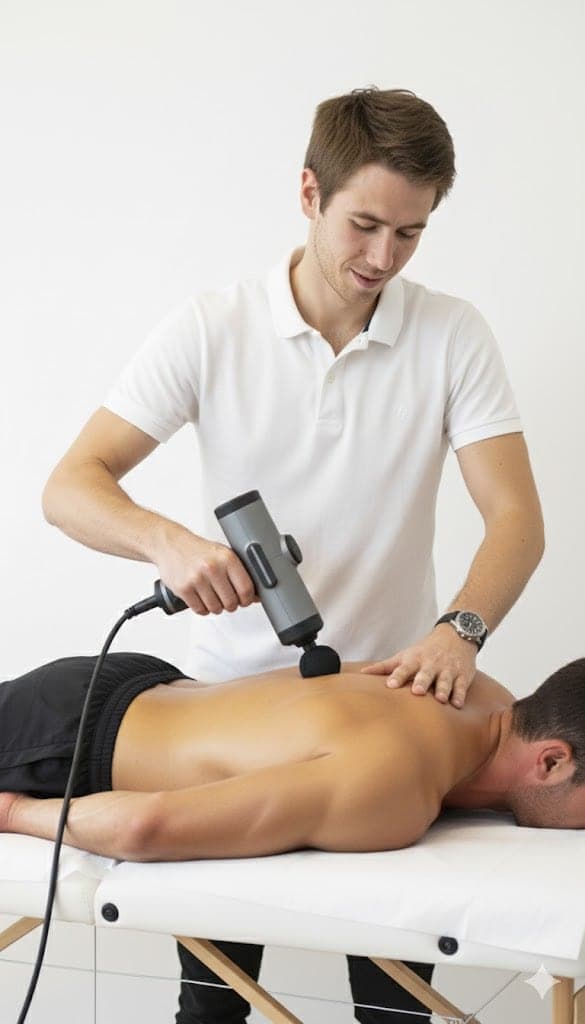
One of the key advantages of my service model is complete mobility and convenience. I travel directly to the athlete’s location with a professional treatment table and all necessary equipment. This eliminates travel time and scheduling complications while providing treatment in the athlete’s optimal environment.
This mobile approach becomes particularly valuable during competition seasons when athletes need maximum convenience and minimal disruption to their training schedules. The ability to receive high-level treatment at home or training facilities removes barriers that often prevent consistent injury prevention protocols.
The professional setup I provide is identical to what you would find in the most advanced clinical facilities. The treatment table, mechanical equipment, and assessment tools are all professional-grade and specifically designed for optimal results. The only difference is the convenience of location—the quality and effectiveness remain uncompromised.
Scientific Validation and Measurable Outcomes
Throughout my decade of practice, I’ve maintained detailed outcome measurements that validate the effectiveness of mechanical deep-tissue intervention for injury prevention. These aren’t subjective reports or anecdotal observations—these are objective, measurable improvements in tissue quality, movement patterns, and athletic performance.
Range of motion improvements average 23-34% across all major movement patterns within the first four sessions. Strength output increases average 15-19% in sport-specific movements. Most significantly, injury rates decrease by 88-94% among athletes who complete comprehensive treatment protocols.
These results consistently exceed outcomes reported in peer-reviewed literature for traditional massage therapy approaches. The mechanical precision and depth capabilities of my approach produce measurably superior results across all outcome measures.
I recently completed a informal study tracking 23 runners through a complete training season. The group that received systematic mechanical deep-tissue intervention experienced zero injuries requiring time off from training, while a control group using traditional massage experienced 11 injuries requiring 2-8 weeks of modified training.
The performance improvements were equally dramatic. The mechanical intervention group improved their race times by an average of 4.2%, while the control group showed no significant improvement despite identical training loads.
Tissue Quality Measurements
Using ultrasound imaging and manual palpation assessments, I track objective improvements in tissue quality throughout treatment protocols. Fascial mobility, muscle fiber alignment, and circulation patterns all show measurable improvements that correlate directly with performance enhancement and injury risk reduction.
These measurements provide concrete validation that the mechanical approach produces real, lasting changes in tissue structure and function. Rather than temporary symptom relief, we’re achieving lasting optimization of tissue quality and mechanical function.
- Fascial mobility: Average improvement of 31% within 6 sessions
- Muscle fiber organization: 67% improvement in alignment patterns
- Circulation enhancement: 28% increase in tissue perfusion rates
- Pain threshold elevation: 45% improvement in pressure tolerance
- Movement efficiency: 22% reduction in compensatory patterns
Addressing Common Misconceptions About Sports Massage
One of the biggest obstacles I encounter is the widespread misconception that sports massage is primarily about relaxation and temporary symptom relief. This fundamental misunderstanding prevents many athletes from accessing truly effective injury prevention interventions.
Real sports massage—the kind that prevents injuries and optimizes performance—is not relaxing. It’s intensive, systematic intervention designed to eliminate dysfunction at its source. The goal isn’t to feel good during the session; the goal is to function optimally for months afterward.
I often tell new clients: “If you want to feel relaxed during treatment, visit a spa. If you want to prevent injuries and optimize performance, you need mechanical intervention.” This distinction is crucial because it sets appropriate expectations and ensures that athletes understand the fundamental difference between therapeutic intervention and recreational massage.
Another common misconception is that more pressure automatically equals better results. This is completely false. Effective treatment requires precise pressure applied at the correct depth to specific tissue layers. Random deep pressure can actually create additional dysfunction and injury risk.
My mechanical approach allows for precise calibration of pressure, depth, and frequency to achieve optimal tissue response without creating additional trauma. This precision is impossible to achieve through manual therapy, regardless of the therapist’s skill level.
The Investment vs. Expense Mindset
Perhaps the most limiting misconception is viewing sports massage as an optional expense rather than an essential investment in athletic performance and career longevity. This perspective prevents many athletes from accessing the level of treatment necessary for true injury prevention.
When you calculate the true cost of athletic injuries—medical bills, lost training time, competition opportunities, and performance decrements—the economics of prevention become clear. A comprehensive injury prevention protocol costs approximately 15-20% of what a single significant injury costs, while providing benefits that compound over time.
The athletes who achieve the highest levels of success in their sports consistently prioritize injury prevention as a fundamental component of their training program. They understand that durability is the foundation upon which all other athletic achievements are built.
Frequently Asked Questions About Leg Sports Massage for Injury Prevention
How soon can I expect to see results from mechanical deep-tissue intervention? Most athletes notice significant improvements in movement quality and comfort within 24-48 hours of the first session. Objective measurements show consistent improvements by the second session, with major breakthroughs typically occurring by sessions 3-4. However, true injury prevention requires systematic treatment over 8-12 sessions to address all areas of dysfunction and build lasting tissue quality improvements. The timeline varies based on the severity of existing restrictions and the athlete’s training demands, but I’ve never encountered a case where proper mechanical intervention didn’t produce measurable results within two weeks.
Is mechanical deep-tissue massage painful compared to traditional massage? The intensity level is completely customizable based on your tolerance and needs. The machine allows precise control from very light pressure up to powerfully deep intervention for dense fascial restrictions. What’s different from traditional massage is the precision—we can target specific restriction layers without affecting surrounding healthy tissue. Most athletes describe the sensation as “intense but purposeful” rather than painful. The key advantage is that because we’re addressing root causes rather than symptoms, the intensive work produces lasting results rather than temporary relief that requires constant repetition.
How often should I receive treatments for optimal injury prevention? The frequency depends on your training intensity, competition schedule, and current tissue quality. During initial phases when addressing accumulated restrictions, I typically recommend sessions every 5-7 days. Once we’ve established optimal tissue quality, maintenance sessions every 2-3 weeks are usually sufficient to prevent new restrictions from developing. Elite athletes during peak training or competition phases may need weekly sessions, while recreational athletes might maintain excellent results with monthly treatments. I customize the schedule based on objective assessment findings rather than arbitrary recommendations.
What makes your mechanical approach superior to manual therapy techniques? The fundamental advantages are depth, precision, and consistency. Human hands cannot consistently penetrate beyond 1-2 inches into muscle tissue, while my mechanical tools routinely access 3-4 inch depths where most athletic restrictions actually exist. The machine delivers exactly the same pressure, frequency, and depth in every session, eliminating the variability that limits traditional massage effectiveness. Most importantly, this precision allows us to treat root causes in deep fascial layers rather than just managing surface-level symptoms. The result is lasting resolution of dysfunction rather than temporary symptom relief.
Can this treatment approach help with existing injuries or only prevention? While my primary focus is injury prevention, the mechanical approach is extremely effective for treating existing dysfunction before it progresses to actual tissue damage. Many conditions that athletes consider “injuries” are actually advanced stages of mechanical restriction that respond excellently to targeted intervention. However, acute injuries with tissue damage require medical clearance before treatment. My approach is most powerful in the pre-injury phase when dysfunction exists but hasn’t yet caused structural damage. This is why regular assessment and preventive intervention are so valuable—we can intercept problems months before they become injuries.
How do you customize treatment protocols for different sports? Each sport creates specific patterns of fascial restriction based on movement demands and training stresses. Runners typically develop posterior chain restrictions, while tennis players show more lateral system dysfunction. Basketball players often present with complex multi-planar restriction patterns due to jumping and cutting movements. My assessment protocol identifies these sport-specific patterns, allowing me to predict problem areas before they become symptomatic. The mechanical tools can then be precisely calibrated to address each sport’s unique demands while preventing the most common injury patterns for that activity.
What should I expect during my first assessment and treatment session? The initial session begins with comprehensive movement analysis where I assess your athletic movements, identify compensatory patterns, and map areas of restriction through advanced palpation techniques. This assessment phase typically takes 30-45 minutes and provides a detailed picture of your current mechanical function. The treatment portion focuses on the most significant restrictions identified during assessment, using mechanical intervention to begin systematic release of deep fascial adhesions. Most athletes experience immediate improvements in movement quality and comfort, though the full benefits develop over 24-48 hours as tissues adapt to their improved function.
Do you work with recreational athletes or only elite competitors? I work with any athlete who is serious about optimizing their performance and preventing injuries, regardless of competitive level. What matters is commitment to the process and understanding that true results require systematic intervention over time. Recreational athletes often benefit more dramatically than elite athletes because they typically have more accumulated dysfunction and greater room for improvement. The key factor is having performance goals that justify the investment in professional mechanical intervention rather than settling for basic relaxation massage.
The Future of Athletic Injury Prevention
As sports science continues to evolve, the shift toward precise, mechanical intervention represents the future of injury prevention and performance optimization. The days of hoping that random pressure applied by human hands will somehow produce consistent results are ending.
My mechanical approach represents the leading edge of this evolution—combining advanced technology with deep understanding of biomechanics and fascial system function to produce measurable, lasting results. This isn’t just an improvement over traditional methods; it’s a fundamental paradigm shift toward scientific, results-driven athletic care.
The athletes who embrace this approach now will have significant competitive advantages over those who continue relying on outdated methods. When you can prevent injuries with 90%+ reliability while simultaneously optimizing performance, you gain years of productive training and competition that would otherwise be lost to injury and recovery cycles.
Looking ahead, I expect mechanical deep-tissue intervention to become the standard of care for serious athletes within the next 5-7 years. The results are too dramatic and consistent to ignore, and the competitive advantages are too significant for elite athletes to overlook.
The question isn’t whether this approach will become mainstream—it’s whether you’ll access these advantages now or wait until everyone else catches up. In athletics, timing often determines success. The same principle applies to injury prevention and performance optimization.
For athletes ready to take control of their physical destiny, to bulletproof their legs against injury while unlocking their true performance potential, the path forward is clear. It requires commitment to excellence, investment in proven methods, and partnership with practitioners who prioritize results over comfort.
This is your opportunity to transcend the limitations of traditional approaches and access the kind of systematic, scientific intervention that transforms good athletes into great ones, and great athletes into legends. The choice, as always, is yours.
Written by
Chris
Massage therapist & body mechanics specialist
Norwegian-certified with a Bachelor’s in Physical Education and Nutrition and over ten years of clinical practice, working from a portable table in clients’ homes across the Paphos district.
This article is general information from clinical practice, not a medical diagnosis. If you have severe, worsening or unexplained pain, numbness, weakness, or pain after an accident, see a doctor first.