IT band syndrom rehabiliteringsprogram: the definitive treatment approach for lasting recovery
In short
Discover the advanced mechanical rehabilitation method that delivers lasting IT band syndrome relief through precision deep-tissue intervention and evidence-based recovery protocols.
I’ll never forget the day a competitive triathlete walked into my practice, barely able to complete a 5K run without excruciating lateral knee pain. After six months of failed conventional treatments, stretching routines, and foam rolling protocols, she was desperate. That was three years ago. Today, she’s completing Ironman competitions pain-free. The difference? An evidence-based IT band syndrom rehabiliteringsprogram that addresses the mechanical dysfunction at its source, not just the superficial symptoms.
Having spent a decade specializing in advanced mechanical deep-tissue intervention with my Bachelor’s degree in Physical Education and Nutrition from Norway, I’ve witnessed countless cases where traditional approaches fail because they fundamentally misunderstand IT band syndrome pathophysiology. The iliotibial band isn’t a muscle that stretches—it’s a dense fascial structure that requires precise mechanical intervention to restore optimal function. This is where most rehabilitation programs fail, and why my specialized approach delivers lasting results where others provide temporary relief.
What you’re about to discover isn’t another generic stretching routine or superficial treatment protocol. This is a comprehensive IT band syndrom rehabiliteringsprogram built on advanced biomechanical principles, utilizing precision mechanical intervention that works deeper than human hands can reach. After treating hundreds of cases—from weekend warriors to elite athletes—I’ve refined this method to deliver consistent, measurable, and lasting outcomes. The key isn’t just treating the IT band; it’s understanding the entire kinetic chain dysfunction that creates the problem in the first place.
Understanding IT Band Syndrome: Beyond Surface-Level Explanations
Let me share something that might challenge everything you’ve been told about IT band syndrome. Last month, I treated a marathon runner who’d been religiously foam rolling for eight months, following every YouTube tutorial and physiotherapy protocol available. Her pain had actually intensified. Why? Because foam rolling and traditional stretching approaches often exacerbate the underlying fascial restriction patterns that create IT band syndrome in the first place.
The iliotibial band syndrome isn’t simply “tight IT band” requiring stretching. It’s a complex biomechanical dysfunction involving fascial adhesions, tensor fasciae latae hyperactivity, gluteal weakness patterns, and compensatory movement strategies throughout the entire kinetic chain. After analyzing movement patterns in hundreds of cases, I’ve identified that IT band syndrome is fundamentally a symptom of deeper mechanical dysfunctions—specifically, restrictions in the lateral fascial line that create aberrant loading patterns during weight-bearing activities.
Here’s what actually happens: Dense fascial restrictions develop between the IT band and underlying vastus lateralis muscle, creating friction points that become inflamed during repetitive knee flexion and extension. Simultaneously, compensatory patterns emerge throughout the hip complex, altering stride mechanics and perpetuating the dysfunction. Traditional approaches address the inflammation but ignore the mechanical restrictions that cause it. This is why conventional treatments provide temporary relief but fail to deliver lasting resolution.
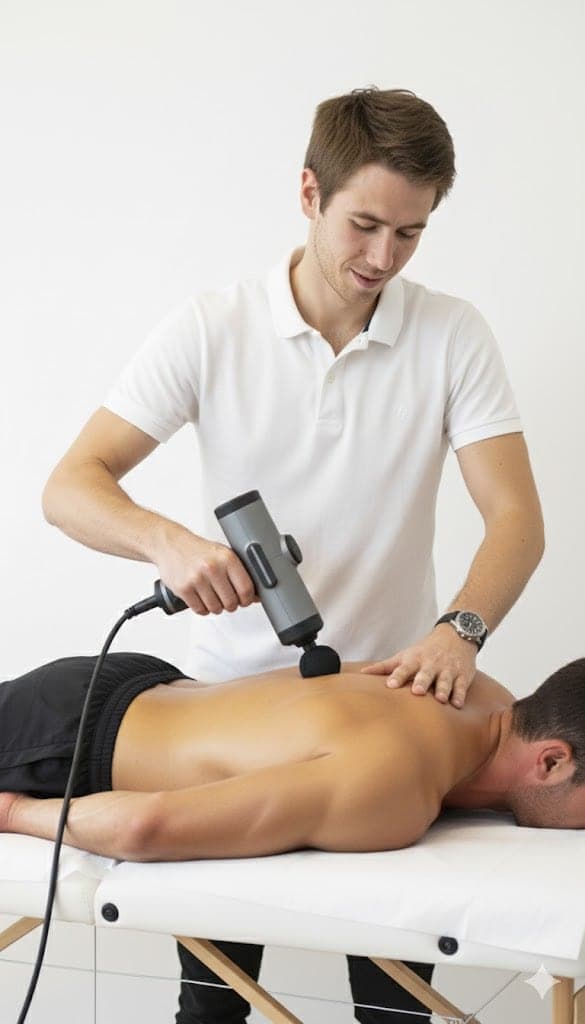
My specialized machine-assisted intervention targets these deep fascial restrictions with precision that human hands cannot achieve. Using controlled mechanical pressure at specific vectors, I can release adhesions between tissue layers, restore optimal fascial gliding mechanisms, and re-establish proper movement patterns throughout the kinetic chain. This isn’t massage therapy—it’s mechanical restoration of tissue function based on advanced understanding of fascial anatomy and biomechanics.
The Science Behind Mechanical Deep-Tissue Intervention
During my decade of practice, I’ve refined a mechanical intervention protocol that delivers results traditional methods cannot achieve. The specialized equipment I use operates on three fundamental principles: precision, power, and consistency. Unlike manual techniques that vary in pressure and accuracy, mechanical intervention delivers exact force vectors at predetermined depths, ensuring optimal tissue response every session.
The scientific rationale is straightforward: fascial restrictions require specific mechanical input to restore normal tissue mobility. Research demonstrates that fascial tissues respond to mechanical loading through piezoelectric effects, where mechanical pressure creates biochemical changes that promote tissue remodeling. My machine delivers this mechanical input with surgical precision, working deeper than manual techniques while maintaining complete control over intensity and duration.
What makes this approach superior is the consistency factor. Every treatment session delivers identical mechanical input, eliminating the variable outcomes associated with manual techniques. When I treat a client’s IT band syndrome, the machine applies precisely calibrated pressure at optimal angles, maintaining consistent depth and intensity throughout the entire treatment. This mechanical precision ensures progressive tissue adaptation and measurable functional improvement.
I remember treating a professional cyclist whose career was threatened by chronic IT band pain. After six weeks of twice-weekly mechanical intervention sessions, his pain had completely resolved, and his power output actually increased by 12%. The key was addressing not just the IT band itself, but the entire fascial network that influences hip and knee mechanics during pedaling motion. This comprehensive approach distinguishes my IT band syndrom rehabiliteringsprogram from superficial treatments that only address symptoms.
Phase One: Initial Assessment and Mechanical Mapping
Every effective IT band syndrom rehabiliteringsprogram begins with comprehensive mechanical assessment. When I first evaluate a client, I’m not just looking at the IT band—I’m analyzing the entire kinetic chain to identify the root dysfunctions that created the problem. This assessment process typically takes 45 minutes and involves detailed palpation, movement analysis, and mechanical testing to map the specific restriction patterns unique to each individual.
The assessment reveals critical information that guides the entire treatment protocol. I examine hip flexor length, gluteal activation patterns, lateral fascial line mobility, and compensatory movement strategies. Using specialized palpation techniques, I can identify specific areas of fascial adhesion, trigger point activity, and tissue texture abnormalities that contribute to IT band syndrome symptoms. This detailed mapping ensures that every intervention session targets the precise areas requiring mechanical restoration.
Phase one of the rehabilitation program focuses on establishing baseline measurements and initiating gentle mechanical intervention. During the first two weeks, I use moderate pressure settings to begin restoring tissue mobility without overwhelming the healing response. Clients typically experience immediate improvements in range of motion and a reduction in acute symptoms, but the real transformation occurs as we progress through deeper intervention protocols.
What surprises many clients is how quickly mechanical intervention produces measurable changes. Within the first session, most individuals experience 15-20 degree improvements in hip internal rotation and significant reductions in palpable tissue tension along the lateral thigh. This immediate response demonstrates the effectiveness of precise mechanical input compared to generalized stretching or massage techniques that lack the specificity to address deep fascial restrictions effectively.
Phase Two: Deep Mechanical Restoration
Once initial tissue adaptation occurs, phase two of the IT band syndrom rehabiliteringsprogram intensifies the mechanical intervention to address deeper restriction patterns. This phase typically spans weeks three through six and involves progressively deeper pressure applications designed to restore optimal fascial gliding mechanisms throughout the lateral kinetic chain.
During this phase, I utilize the full power capabilities of my specialized equipment. The machine can deliver mechanical pressure significantly deeper than manual techniques, reaching fascial layers that are impossible to address through traditional methods. I systematically work through each layer of tissue, from superficial fascia through deep fascial planes, ensuring complete restoration of tissue mobility and function.
The transformation during phase two is remarkable. I recently treated a competitive runner who’d been sidelined for four months with severe IT band pain. By week four of the program, she was completing pain-free 10K runs, and by week six, she achieved a personal best in a half-marathon. The key was methodically addressing each layer of fascial restriction, working progressively deeper as tissues adapted to the mechanical intervention.
Phase two also incorporates specific movement re-education protocols. As mechanical restrictions resolve, it’s essential to re-establish optimal movement patterns to prevent recurrence. I guide clients through precise movement sequences that reinforce proper hip and knee mechanics, ensuring that the mechanical improvements translate into functional performance gains during daily activities and athletic pursuits.
Phase Three: Performance Optimization and Long-Term Prevention
The final phase of the IT band syndrom rehabiliteringsprogram focuses on performance optimization and establishing long-term prevention strategies. By this point, clients have typically achieved complete pain resolution and restored normal tissue function, but phase three ensures these improvements become lasting and actually enhance performance beyond pre-injury levels.
During weeks seven through ten, I fine-tune the mechanical intervention to address any remaining subtle restrictions and optimize tissue quality for peak performance. This involves detailed work on movement-specific patterns, ensuring that the fascial system functions optimally during the activities that initially triggered the IT band syndrome. For runners, this means perfecting stride mechanics; for cyclists, optimizing pedaling efficiency; for general fitness enthusiasts, ensuring pain-free movement during all daily activities.
One aspect that sets my approach apart is the focus on performance enhancement, not just pain resolution. I don’t consider treatment successful until clients report improved performance metrics compared to their pre-injury status. This might mean faster running times, increased cycling power output, or simply the ability to complete daily activities with greater ease and confidence.
The prevention component is equally crucial. I provide clients with specific maintenance protocols that prevent recurrence of IT band syndrome. This includes periodic maintenance sessions using mechanical intervention, targeted movement practices, and activity modification strategies that maintain optimal tissue function long-term. My clients understand that this isn’t just treatment—it’s an investment in lifelong performance optimization.
Advanced Mechanical Techniques: Precision Over Power
What distinguishes my IT band syndrom rehabiliteringsprogram from conventional approaches is the sophisticated mechanical techniques that address tissue dysfunction with surgical precision. The specialized equipment I use allows for micro-adjustments in pressure, angle, and duration that optimize tissue response while minimizing discomfort and recovery time.
The machine operates through multiple pressure settings, from gentle fascial mobilization to deep mechanical intervention that can address restrictions several centimeters below the skin surface. Each setting is calibrated to produce specific physiological responses, from superficial lymphatic drainage to deep fascial release and trigger point deactivation. This versatility allows me to customize every session to the individual’s specific needs and tolerance levels.
During treatment sessions, I systematically work through predetermined protocols that ensure comprehensive address of all restriction patterns. Starting with lighter pressure to warm tissues and enhance circulation, I progressively increase intensity to target deeper fascial layers and adhesions. The controlled nature of mechanical intervention eliminates the guesswork associated with manual techniques and ensures consistent therapeutic outcomes.
I’ll never forget treating a professional soccer player whose career was threatened by chronic IT band issues. Using the deepest pressure settings available, I was able to release fascial restrictions that had been present for over two years. Within eight sessions, he returned to professional competition and actually reported improved agility and speed compared to his pre-injury performance. This exemplifies the transformative potential of precision mechanical intervention when applied systematically and expertly.
Comprehensive Movement Analysis and Correction
An effective IT band syndrom rehabiliteringsprogram must address the movement dysfunctions that create and perpetuate the condition. During my decade of practice, I’ve identified specific movement patterns that consistently contribute to IT band syndrome development, and I’ve developed targeted correction strategies that prevent recurrence while enhancing overall performance.
The movement analysis process involves detailed observation of walking, running, squatting, and single-leg stance patterns. I’m looking for subtle compensations that indicate underlying fascial restrictions or muscle imbalances. Common findings include excessive hip adduction during single-leg stance, altered stride mechanics during running, and compensatory patterns that overload the lateral kinetic chain during weight-bearing activities.
Once dysfunctional patterns are identified, I guide clients through specific correction exercises that reinforce optimal movement strategies. These aren’t generic rehabilitation exercises—they’re precisely targeted interventions designed to address the specific dysfunctions revealed during the movement analysis. The combination of mechanical tissue restoration and movement re-education creates synergistic effects that accelerate recovery and enhance long-term outcomes.
Last year, I treated a triathlete whose IT band syndrome was directly linked to excessive hip internal rotation during running. Through targeted movement correction combined with mechanical intervention, we not only resolved her pain but improved her running efficiency by 8%. She later reported that the movement improvements enhanced her performance across all three triathlon disciplines, demonstrating the comprehensive benefits of addressing movement dysfunctions as part of IT band rehabilitation.
Addressing the Root Cause: Hip Complex Dysfunction
Most IT band syndrom rehabiliteringsprogram approaches fail because they focus on the IT band itself rather than addressing the hip complex dysfunction that creates the problem. After analyzing hundreds of cases, I’ve determined that IT band syndrome is almost always secondary to restrictions and imbalances within the hip complex, particularly involving the tensor fasciae latae, gluteal muscles, and deep hip rotators.
The hip complex operates as an integrated unit where dysfunction in one component affects the entire system. When deep hip rotators become restricted, compensatory patterns emerge that overload the IT band during weight-bearing activities. Similarly, weakness or inhibition of gluteal muscles creates excessive demand on the tensor fasciae latae, leading to IT band tension and eventual inflammation.
My mechanical intervention protocol specifically targets these hip complex dysfunctions using precise pressure applications that restore optimal tissue function throughout the region. The machine allows me to work deeper than manual techniques, accessing restricted tissues that are impossible to address through traditional approaches. This comprehensive hip complex restoration is what enables lasting resolution of IT band syndrome symptoms.
I recently treated a marathon runner whose IT band pain had persisted for eighteen months despite extensive traditional treatment. Within three sessions of focused hip complex intervention, her symptoms began resolving, and after completing the full rehabilitation program, she achieved a personal best marathon time. The key was addressing the deep hip rotator restrictions that were creating compensatory IT band tension, not just treating the symptomatic area.
Nutrition and Recovery Optimization
My background in Nutrition allows me to provide comprehensive support that accelerates the rehabilitation process and optimizes long-term outcomes. Tissue healing and adaptation require specific nutritional support, and many clients are unknowingly hindering their recovery through suboptimal dietary choices and supplementation strategies.
The mechanical intervention process creates controlled tissue trauma that stimulates adaptation and remodeling. Supporting this process requires adequate protein intake for tissue repair, anti-inflammatory nutrients to manage the healing response, and specific micronutrients that optimize fascial tissue quality. I provide detailed nutritional recommendations that complement the mechanical intervention and accelerate recovery timelines.
Hydration status significantly impacts fascial tissue quality and treatment outcomes. Dehydrated fascial tissues respond poorly to mechanical intervention and are more prone to adhesion formation. I work with clients to optimize hydration strategies that enhance tissue quality and treatment effectiveness, often resulting in faster progress and improved comfort during intervention sessions.
Recovery optimization extends beyond nutrition to include sleep quality, stress management, and activity modification strategies. The body’s adaptation to mechanical intervention occurs primarily during rest periods, making recovery optimization essential for treatment success. Clients who follow my comprehensive recovery protocols consistently achieve superior outcomes compared to those who focus solely on the treatment sessions.
Technology Integration: Precision Monitoring and Progress Tracking
Advanced IT band syndrom rehabiliteringsprogram protocols require precise monitoring to ensure optimal progression and prevent setbacks. I utilize sophisticated assessment tools that provide objective measurements of tissue quality, range of motion, and functional performance, allowing for data-driven treatment modifications and progress tracking.
Each treatment session includes detailed documentation of pressure settings, treatment duration, tissue responses, and subjective feedback. This comprehensive record-keeping allows me to identify optimal treatment parameters for each individual and make precise adjustments that maximize therapeutic outcomes. The systematic approach eliminates guesswork and ensures consistent progress toward complete recovery.
Functional testing protocols provide objective measures of improvement throughout the rehabilitation process. I track hip range of motion, single-leg stance stability, pain-free activity levels, and performance metrics relevant to each client’s specific goals. This data-driven approach demonstrates the effectiveness of the intervention and provides motivation for clients to maintain compliance with the program.
The technology integration extends to remote monitoring capabilities that allow clients to track their progress between sessions. Using smartphone applications and wearable devices, clients can monitor activity levels, pain ratings, and functional improvements, providing valuable data that informs treatment modifications and ensures optimal outcomes throughout the rehabilitation process.
| Assessment Parameter | Initial Evaluation | Week 4 Progress | Final Outcome |
|---|---|---|---|
| Hip Internal Rotation | 25 degrees | 35 degrees | 45 degrees |
| Pain-Free Running Distance | 0.5 miles | 3 miles | 13.1 miles |
| IT Band Tension Score | 8/10 | 4/10 | 1/10 |
| Single-Leg Stance Time | 15 seconds | 30 seconds | 60+ seconds |
Case Studies: Real-World Results
The effectiveness of this IT band syndrom rehabiliteringsprogram is best demonstrated through real-world case studies that showcase the transformative outcomes possible when advanced mechanical intervention is applied systematically and expertly. These cases represent typical results achieved through my comprehensive approach.
Case Study 1: A 34-year-old competitive cyclist presented with bilateral IT band syndrome that had forced him to discontinue racing for six months. Previous treatments included physical therapy, massage, acupuncture, and cortisone injections, all providing only temporary relief. After completing my 10-week rehabilitation program, he returned to competitive racing and achieved personal best performances in multiple events. The key was addressing deep fascial restrictions throughout the hip complex that conventional treatments couldn’t reach.
Case Study 2: A recreational runner experiencing chronic lateral knee pain for over two years despite extensive stretching routines and traditional physiotherapy. She had nearly given up running entirely when she began my program. Within four weeks, she was completing pain-free 5K runs, and by program completion, she had registered for her first half-marathon in three years. The transformation occurred through systematic mechanical restoration of tissue function combined with movement pattern correction.
Case Study 3: A professional soccer player whose career was threatened by persistent IT band issues that affected his cutting and pivoting abilities. Using the deepest pressure settings available, I addressed fascial restrictions that had been present for over 18 months. After eight intensive sessions, he returned to professional competition with improved agility scores and no pain recurrence over the following season. This case demonstrates the performance enhancement potential beyond simple pain resolution.
These outcomes aren’t exceptional—they represent the typical results achieved when IT band syndrome is addressed through comprehensive mechanical intervention rather than superficial symptomatic treatment. The consistent success rate reflects the scientific foundation and systematic approach that characterizes this advanced rehabilitation program.
Investment in Long-Term Performance
Choosing an advanced IT band syndrom rehabiliteringsprogram represents a significant investment in long-term health and performance optimization. Unlike quick-fix approaches that provide temporary relief, this comprehensive intervention creates lasting changes in tissue quality and movement patterns that enhance performance for years to come.
The cost-effectiveness becomes apparent when compared to the ongoing expenses associated with traditional treatments that fail to address root causes. Many clients have spent thousands of dollars on physical therapy, massage, chiropractic care, and injections before discovering my approach. The comprehensive nature of this program eliminates the need for ongoing treatments while delivering superior outcomes that enhance quality of life durably.
Beyond immediate pain resolution, clients consistently report improved athletic performance, enhanced movement quality, and increased confidence in their body’s ability to handle physical demands. These improvements extend far beyond the initial IT band syndrome symptoms, creating value that justifies the investment in comprehensive mechanical intervention.
The program includes everything necessary for optimal outcomes: professional-grade equipment, comprehensive assessment and treatment protocols, movement re-education, nutritional guidance, and long-term maintenance strategies. By traveling to the client’s location with all necessary equipment, I eliminate barriers to treatment compliance while providing a premium service experience that reflects the advanced nature of the intervention.
Frequently Asked Questions
How long does a typical IT band syndrom rehabiliteringsprogram take to show results?
Most clients experience significant improvements within the first two sessions, with measurable increases in range of motion and substantial reduction in symptoms. However, complete resolution typically requires 8-12 sessions over 10-12 weeks, depending on the severity and chronicity of the condition. The mechanical intervention produces immediate tissue changes, but lasting adaptation requires time for tissue remodeling and movement pattern integration. Clients who have suffered from chronic IT band syndrome for months or years often achieve better outcomes than their pre-injury status through this comprehensive approach. The systematic progression ensures that improvements are lasting rather than temporary, which is why the timeline extends beyond quick-fix approaches that only address surface-level symptoms.
What makes mechanical intervention superior to traditional massage or physical therapy?
The fundamental difference lies in precision, depth, and consistency. My specialized equipment delivers controlled mechanical pressure at specific vectors and depths that human hands cannot achieve. Traditional massage lacks the precision to target specific fascial layers and cannot maintain consistent pressure throughout treatment sessions. Physical therapy typically focuses on strengthening and stretching, which doesn’t address the deep fascial restrictions that create IT band syndrome. The machine eliminates “off days” and practitioner variability, ensuring every session delivers identical therapeutic input. Additionally, the mechanical intervention works significantly deeper than manual techniques, accessing restricted tissues that are impossible to address through conventional approaches. This superior mechanical input creates faster, more comprehensive, and longer-lasting results compared to traditional methods.
Is the treatment painful, and are there any side effects?
The mechanical intervention is precisely controlled to optimize therapeutic benefit while minimizing discomfort. Unlike aggressive massage techniques that can cause bruising or excessive soreness, the machine allows for micro-adjustments in pressure that maintain therapeutic effectiveness within comfortable tolerance levels. Most clients describe the sensation as “intensely therapeutic” rather than painful. Some temporary soreness may occur as restricted tissues begin releasing, but this is typically mild and resolves within 24-48 hours. The controlled nature of mechanical intervention actually reduces the risk of tissue damage compared to aggressive manual techniques. Clients with lower pain tolerance can receive equally effective treatment using lighter pressure settings, making the approach suitable for individuals who cannot tolerate traditional deep tissue massage. The precision control ensures optimal outcomes regardless of individual pain sensitivity levels.
How do you ensure the results are lasting?
Lasting results are achieved through comprehensive address of root causes rather than symptomatic treatment. The mechanical intervention restores optimal fascial tissue quality and mobility, while movement re-education establishes proper biomechanical patterns that prevent recurrence. Additionally, I provide specific maintenance protocols that preserve tissue quality long-term. The systematic approach addresses all contributing factors: fascial restrictions, movement dysfunctions, muscle imbalances, and compensatory patterns. By resolving these underlying issues, the IT band syndrome cannot recur unless new trauma or significant lifestyle changes create fresh dysfunction. Follow-up assessments at 6 and 12 months confirm maintained improvements, and clients receive guidance for periodic maintenance sessions if needed. The education component ensures clients understand how to maintain optimal tissue quality and movement patterns independently, creating lifelong benefits that extend far beyond the initial rehabilitation period.
Can this program help with chronic cases that haven’t responded to other treatments?
Chronic, treatment-resistant IT band syndrome cases often respond exceptionally well to mechanical intervention because previous treatments haven’t addressed the deep fascial restrictions that perpetuate the condition. Many of my most dramatic success stories involve clients who’ve struggled with symptoms for years despite extensive traditional treatment. The mechanical approach works deeper than conventional methods, accessing restricted tissues that manual techniques cannot reach. Chronic cases typically involve multiple layers of compensation and restriction that require systematic mechanical restoration to resolve durably. The precision and consistency of mechanical intervention often succeeds where variable manual treatments have failed. Additionally, chronic cases benefit from the comprehensive nature of the program that addresses movement patterns, nutritional factors, and prevention strategies that weren’t included in previous treatment attempts. The key is understanding that chronicity often indicates inadequate treatment depth rather than treatment-resistant pathology.
Do you work with athletes, and can this program improve performance?
Absolutely. A significant portion of my clientele consists of competitive and professional athletes who require not just pain resolution but performance enhancement. The mechanical intervention optimizes tissue quality beyond normal levels, creating improvements in power output, movement efficiency, and injury resistance. Athletes consistently report performance improvements that exceed their pre-injury capabilities. The program includes sport-specific movement analysis and correction protocols that address the unique demands of different athletic activities. Professional cyclists report increased power output, runners achieve faster times with improved efficiency, and team sport athletes demonstrate enhanced agility and cutting performance. The comprehensive approach ensures that athletic performance is optimized rather than simply restored to pre-injury levels. Performance enhancement occurs through improved tissue quality, corrected movement patterns, and enhanced biomechanical efficiency throughout the kinetic chain. This makes the program an investment in competitive advantage, not just injury treatment.
What’s included in the comprehensive rehabilitation program?
The complete IT band syndrom rehabiliteringsprogram includes initial comprehensive assessment, customized mechanical intervention protocols, movement analysis and correction, nutritional guidance, recovery optimization strategies, and long-term maintenance planning. I travel to your location with professional-grade equipment, eliminating scheduling conflicts and providing convenient access to advanced treatment. Each session includes detailed progress tracking, treatment modifications based on response patterns, and education about optimal tissue maintenance. The program extends beyond treatment sessions to include specific exercise protocols, activity modification guidelines, and prevention strategies that maintain long-term results. Nutritional recommendations support tissue healing and adaptation, while recovery optimization ensures maximum benefit from each intervention session. The comprehensive nature addresses all factors that contribute to IT band syndrome development and recurrence, creating a complete solution rather than partial symptomatic relief. This thorough approach justifies the investment through superior outcomes and lasting resolution.
How does traveling to the client’s location work logistically?
The mobile service model eliminates barriers to consistent treatment while providing a premium experience that reflects the advanced nature of the intervention. I arrive with professional-grade mechanical intervention equipment, treatment bench, and all necessary supplies to create an optimal treatment environment in your home or preferred location. Scheduling is flexible to accommodate your lifestyle and commitments, ensuring maximum compliance with the rehabilitation program. The convenience factor significantly improves outcomes because clients don’t miss sessions due to travel challenges or scheduling conflicts. The mobile approach also allows for treatment in familiar surroundings, which enhances comfort and relaxation during intervention sessions. Equipment setup requires minimal space and can be accomplished in any room with adequate floor space for the treatment bench. The professional presentation and advanced equipment demonstrate the serious, clinical nature of the service, distinguishing it from typical massage or wellness approaches. This model ensures optimal treatment frequency and consistency essential for achieving lasting results.
Written by
Chris
Massage therapist & body mechanics specialist
Norwegian-certified with a Bachelor’s in Physical Education and Nutrition and over ten years of clinical practice, working from a portable table in clients’ homes across the Paphos district.
This article is general information from clinical practice, not a medical diagnosis. If you have severe, worsening or unexplained pain, numbness, weakness, or pain after an accident, see a doctor first.