
Neck pain relief exercises: a mechanical approach that lasts
In short
Most neck pain relief exercises fail because they treat the neck in isolation. Restore mid-back and shoulder-blade movement first, then load the deep neck flexors, and clear trigger points that block the pattern.
I have spent more than ten years treating stubborn neck pain in living rooms and villas across the Paphos district. Neck pain relief exercises do work, but only when they target the right tissue, which is why I pair them with trigger point therapy in Paphos.
The pattern I see most often is a person who has done every stretch on the internet and still wakes with a grinding tension at the base of the skull. This article is the exercise side of that pairing. I will explain why the usual routines fail, which movements I prescribe and how to do them, and where the line sits between what you can fix yourself and what needs hands-on treatment.
Why most neck exercises fail
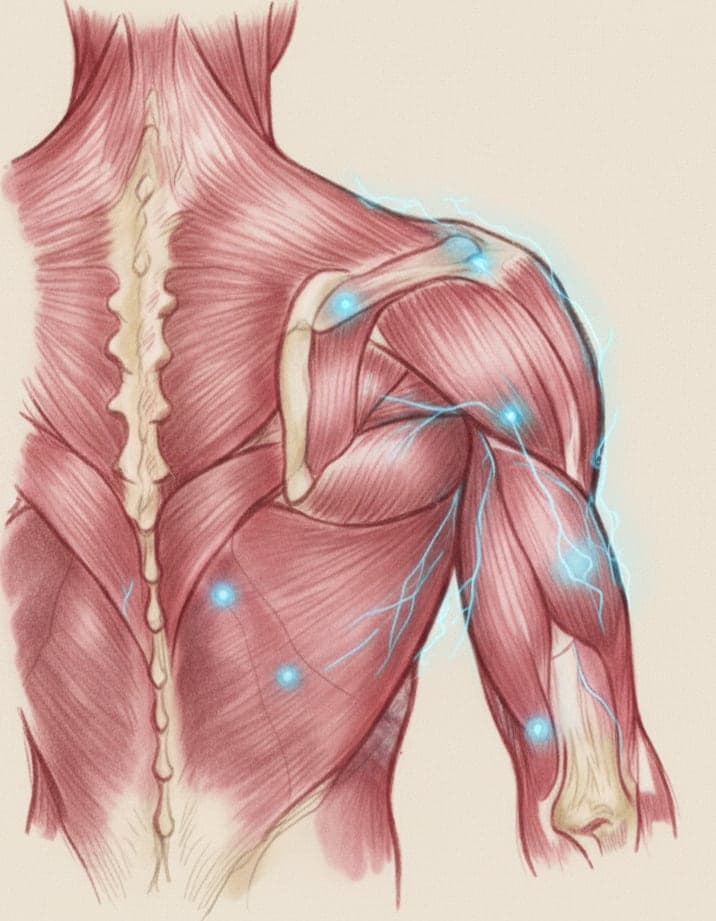
Most protocols treat the neck as though it exists on its own. It does not. Your cervical spine sits on top of a thoracic spine that is supposed to extend and rotate, and between two shoulder blades that are supposed to glide. When the mid-back stiffens, which happens to almost everyone who sits for long hours, the neck starts doing movement it was never built to do. The muscles that hold your head up become overworked, trigger points form in the upper trapezius, levator scapulae and suboccipitals, and the tension you feel is a symptom rather than the cause.
The presentation I see most often in Paphos is not a "weak neck". It is a shoulder girdle that has tipped forward, a mid-back that has stopped extending, and a set of neck extensors that are compensating for both. Stretching those extensors harder feels good for an hour and changes nothing.
The exercises below address the system, not the sore spot. That is the difference between an hour of relief and a change that holds.
The neck pain relief exercises I actually prescribe
I group these by what they do mechanically. If you understand the reason for each, you will do it precisely, and precision is the only way any of this works.
Foundation: restoring thoracic mobility
Thoracic extension over a foam roller. This is not a neck exercise; it is the prerequisite for neck function. Lie with the roller across your upper back just below the shoulder blades, support your head with interlaced fingers, and let the upper back extend over the roller while the lower back stays quiet. Hold each position for 30 to 45 seconds and move the roller up one segment at a time. Do it daily, ideally twice.
Quadruped thoracic rotation. On hands and knees, place one hand behind your head and rotate the torso so the elbow moves toward the opposite hand, then rotate open toward the ceiling. The pelvis and lower back stay still. Most people rotate from the hips or crank the neck when they first try this; the movement must come from the mid-back only. Twelve to fifteen repetitions each side, two sets.
Cervical work: precision over effort
Chin retraction, done properly. Sit tall as though a string is lifting the crown of your head. Without tipping the head, glide the chin straight back to make a slight double chin. You should feel work deep at the front of the neck, not compression in the throat. Hold five seconds, ten repetitions, three times a day. This is what wakes up the longus colli and longus capitis, the deep stabilisers that have usually gone quiet in long-standing neck pain.
Isometrics in six directions. Static endurance matters more than most people realise, because your neck has to hold position through a full working day.
| Direction | Hand placement | Hold | Effort |
|---|---|---|---|
| Flexion | Forehead | 6 seconds | About 30 percent |
| Extension | Back of head | 6 seconds | About 30 percent |
| Side bend, each side | Temple | 6 seconds | About 30 percent |
| Rotation, each side | Cheek | 6 seconds | About 30 percent |
The head does not move. You push gently into your hand and the hand resists. Twice a day.
Shoulder girdle: the missing link
Wall slides. Stand with your back against a wall, feet a hand's width forward, arms in a goal-post position. Keep head, upper back, elbows and the backs of the hands on the wall as you slide the arms up. Most people lose the hands or arch the lower back; if you do, shorten the range. Twelve repetitions, two sets.
Prone Y-T-W. Lying face down on a bed with arms hanging, raise the arms into a Y, then a T, then pull the elbows back into a W. Hold each shape two seconds, ten repetitions, two sets. The effort should be between the shoulder blades. If you feel it in the upper trapezius or neck, reduce the range and slow down.
When exercises alone are not enough
I will be direct, because it saves people months. Exercises are excellent for prevention and for mild, recent dysfunction. For pain that has been present for many months, they run into a wall, and the wall is usually a trigger point.
A trigger point is a taut band inside a muscle that refers pain elsewhere and, importantly, inhibits the muscle from activating normally. You can stretch a splenius capitis or a levator scapulae all day; until the point itself is released with sustained, precise pressure at the right depth, it keeps firing and the exercise keeps failing. This is where the mechanical deep-tissue work I do earns its place, and why I do it at your home rather than asking you to add another car journey to a sore neck.
The sequence I use looks like this:
| Phase | What happens | Purpose |
|---|---|---|
| Release | Deep-tissue and trigger-point work to the neck, upper back and shoulder girdle | Create the capacity to move properly |
| Retrain | The exercise protocol above, now that the tissue allows it | Build the pattern |
| Load | Progress to more demanding positions and endurance work | Make it hold under real life |
Nothing about this is magic. It is applying the right tool to the right tissue in the right order.
Mistakes that undo the work
I see the same handful of errors so consistently that I check for them at every first visit.
- Stretching an overworked muscle. The upper trapezius feels tight, so people stretch it endlessly. It is rarely short; it is overworked and guarding because the lower trapezius and serratus anterior are not doing their job. Strengthen the stabilisers and let the upper trap stand down.
- Aggressive self-mobilisation of the neck. Lacrosse balls on the cervical spine and hard rolling of the neck itself. The structures here are delicate, and the vertebral arteries do not appreciate uncontrolled pressure. Deep work on the neck should be precise and anatomically informed.
- Stopping the moment it feels better. Three good days, then nothing until the pain returns. Motor retraining takes weeks of consistent input, and stop-start practice never gets there.
- Ignoring load. If your desk, pillow or breathing pattern recreates the problem for eight hours a day, exercise becomes damage control. Fix the environment alongside the tissue.
A simple daily protocol
This is what I hand to people once serious causes have been ruled out and the tissue is ready.
Give it several consistent weeks before judging it. If the exercises are your only intervention, improvement tends to be gradual. If they follow hands-on release of the restrictions that were blocking them, most people notice the difference sooner and it holds better.
What I can help with is mechanical neck pain: stiffness, trigger-point referral into the skull or shoulder blade, and the postural pattern behind it. What I cannot help with is anything neurological or systemic, so see a doctor first if you have numbness, tingling or weakness in the arms or hands, pain after trauma, unexplained weight loss, fever, or morning stiffness that lasts more than half an hour. Sessions are 60 or 90 minutes and the current rates are on the pricing page.
Frequently asked questions
How long should I hold neck stretches?
For long-standing neck pain, static stretching is rarely the main answer, because the tissue that feels tight is usually overworked rather than short. A 30 to 60 second hold gives temporary ease but does not change the pattern underneath. I would rather you spend those minutes on chin retractions, thoracic extension and shoulder-blade strengthening, and stretch only where a muscle is genuinely shortened.
Can exercises fix neck pain on their own?
Often, if the problem is recent, purely mechanical and has not developed established trigger points. Consistent, precise work on the mid-back, deep neck flexors and shoulder blades resolves a good proportion of these cases. Once pain has been present for many months, exercises tend to stall until the restrictions blocking normal movement have been released by hand.
Why do my neck exercises make the pain worse?
Three common reasons. You may be recruiting the already overworked superficial muscles instead of the deep ones; you may have trigger points that flare when you try to move normally; or you may be doing too much too soon. Mild working discomfort is fine. Pain that lingers afterwards or is worse the next day is a signal to stop and get assessed.
How often should I do them?
Daily at minimum, and twice daily for the first several weeks, because the nervous system needs repetition to lay down a new pattern. Once the pain has settled and the movement is reliable, three or four sessions a week is enough to maintain it. The early consistency is what most people skip and what makes the biggest difference.
Should I rest completely or push through?
Neither. Complete rest leads to stiffness and deconditioning; pushing through sharp, spreading or worsening pain risks aggravating things. The aim is therapeutic load: effort you can feel in the working muscles, no lingering pain afterwards. If you cannot move the neck through basic ranges without significant pain, get the tissue treated before you start loading it.
Why is my neck worse in the morning?
Long static positioning overnight, often with a pillow that holds the neck in flexion or side bend, lets tissue stiffen and inflammation settle. It is both a symptom of the underlying pattern and something that feeds it. Adjust pillow height so the neck stays neutral, do the thoracic and retraction work first thing, and treat the trigger points that are keeping the extensors on guard.
Written by
Chris
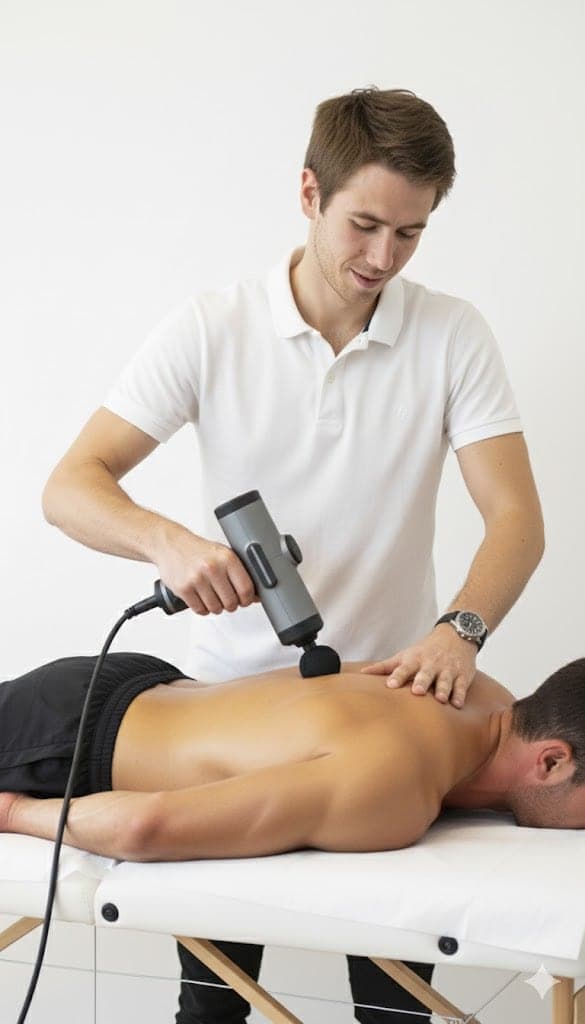
Massage therapist & body mechanics specialist
Norwegian-certified with a Bachelor’s in Physical Education and Nutrition and over ten years of clinical practice, working from a portable table in clients’ homes across the Paphos district.
- Norwegian-certified
- BSc Physical Education & Nutrition
- 10+ years clinical practice
- Based in Chlorakas · all of Paphos district
- No call-out fee anywhere in Paphos district
Last reviewed
This article is general information from clinical practice, not a medical diagnosis. If you have severe, worsening or unexplained pain, numbness, weakness, or pain after an accident, see a doctor first.