
Lower back pain exercises: what actually helps and what to skip
In short
The lower back pain exercises that help most are hip mobility, glute activation and controlled core work, done little and often. Stretching the sore spot itself rarely changes anything. Add deep-tissue work when the tissue is too tight to move.
I treat a lot of lower backs across the Paphos district, and most people I see have already tried stretching the sore area without much change. The mechanical deep-tissue massage in Paphos I do helps, but the exercises you do between sessions matter just as much. Here is what I actually recommend.
Why the sore spot is rarely the problem
The lower back pain exercises that work are mostly not aimed at the lower back. That sounds contrary, so let me explain what I see on the table week after week.
The lumbar spine sits between two big movers: the hips below and the thoracic spine above. When the hips are stiff from long hours of sitting or driving, or the glutes are switched off, the lumbar segments start doing the bending and twisting that the hips should have done. That extra work is what most people feel as a tight, aching band across the lower back at the end of the day.
So when I assess someone, I look at the whole chain rather than the painful spot. The pattern I see most often around Paphos is a combination of short hip flexors, tight hamstrings and glutes that are strong enough but slow to engage. The lower back muscles are sore because they are overworked, not because they are weak.
Hip mobility comes first
If I could only give someone one category of exercise, it would be hip mobility. When the hips regain their range, the lumbar spine can stop moving beyond what it was designed for, and the pain often quietens without anyone touching the back directly.
The presentation I meet most often is the desk worker or the driver: hip flexors shortened, front of the hip pulling the pelvis forward, and the lumbar curve exaggerated as a result. Restoring length there is not comfortable in the first week, but it is where the change comes from.
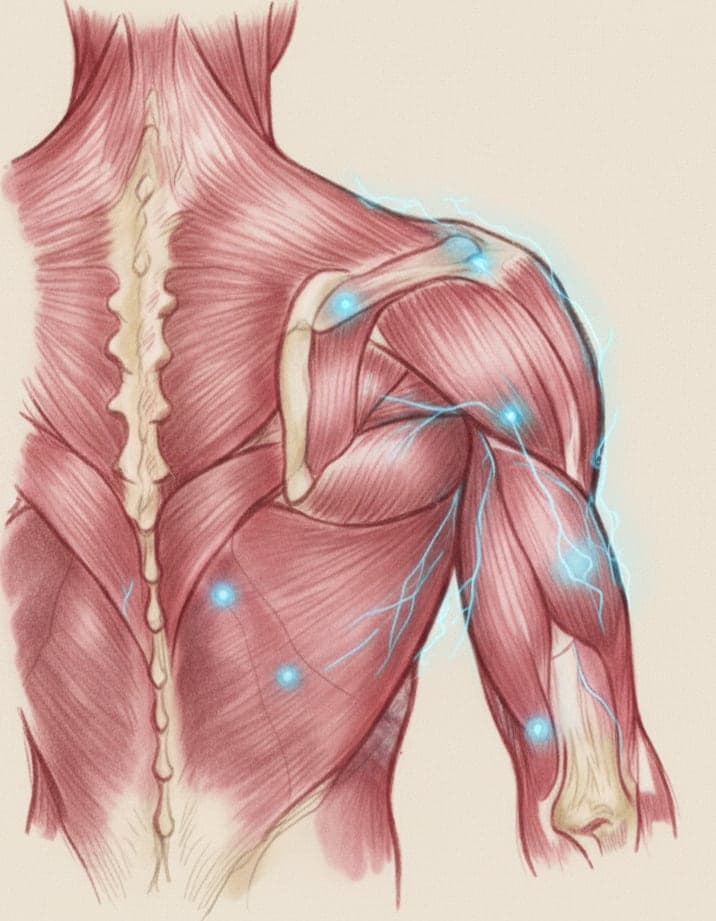
Here are the three hip movements I give most people to start with.
| Movement | What it targets | How I ask people to do it |
|---|---|---|
| Half-kneeling hip flexor stretch | Front of the hip, psoas | Tuck the tailbone under, squeeze the back-leg glute, shift forward slightly; 45 seconds each side |
| 90/90 sitting position | Hip rotation both directions | Sit tall with both knees at right angles, lean over the front shin, then switch sides; 8 slow reps |
| Hip hinge with a stick along the spine | Teaches the hips to bend so the back does not | Keep the stick touching head, mid-back and sacrum while pushing the hips back; 10 reps |
The point of each of these is control, not range. A smaller movement done with the pelvis held steady teaches the body far more than a big stretch where the lower back does half the work.
Glute activation and the posterior chain
The second piece is getting the glutes to do their job on time. Many people I see have glutes that test perfectly strong when isolated, yet during walking or bending the back muscles fire first. That timing problem is why someone can do a good glute bridge in the gym and still ache walking up the steps in Kato Paphos.
Activation work is short and unglamorous. It goes before any bigger exercise so the pattern is fresh.
- Glute bridge with a two-second pause at the top, feeling the squeeze in the buttock rather than the hamstring or lower back; 12 reps
- Side-lying clam or banded side steps for the smaller glute muscles that steady the pelvis; 15 each side
- Single-leg Romanian deadlift with bodyweight only, hinging at the hip and returning by driving the standing heel into the floor; 8 each side
- Standing hip extension against a wall, pushing one heel back without arching the lumbar spine; 10 each side
If you feel your lower back working during any of these, the movement has become too big. Shrink it until the glute takes over again.
Core control rather than crunches
Traditional core training, sit-ups and long planks, tends not to help back pain much and sometimes aggravates it. What protects the spine is the deep system: the diaphragm, pelvic floor, transverse abdominis and the small multifidus muscles along the vertebrae, working together to hold the trunk steady while the limbs move.
The exercises I use train the trunk to resist movement rather than create it.
The rule I give everyone is that these should feel like effort in the trunk, never pain in the spine. Quality beats quantity every time. Five clean repetitions do more than twenty rushed ones.
A simple daily routine for lower back pain exercises
People do better with a short routine they actually repeat than a long one they abandon after a fortnight. Here is the structure I hand out most often. It takes about twenty minutes and can be done on a mat at home, on a villa terrace, or in a hotel room.
| Block | Exercises | Time |
|---|---|---|
| Mobility | Hip flexor stretch, 90/90, gentle cat-cow moving one segment at a time | 7 minutes |
| Activation | Glute bridge, clam or side steps | 5 minutes |
| Control | Dead bug, bird dog | 5 minutes |
| Pattern | Hip hinge with stick, then single-leg deadlift | 3 minutes |
Do the mobility and activation blocks daily. The control and pattern work can be every other day once it feels familiar. If you have a flare-up, drop back to the mobility block only and keep moving gently rather than resting completely in bed. Bed rest for more than a day or two tends to lengthen a flare-up, not shorten it.
Timing matters too. Many of my clients do the mobility block in the morning, when the back is stiffest, and the activation and control work in the early evening. Split however suits your day. Consistency is what produces change, not the time of day.
How to progress without setbacks
Most self-directed programmes fail in one of two ways: people push too fast and re-irritate the back, or they stay at the easiest level indefinitely and stall. Progression should follow how the movement feels, not the calendar.
- Progress only when you can do every rep with the pelvis steady and no back sensation
- Add range before you add load, and add load before you add speed
- If pain the next day is higher than usual, go back one step for a week
- Mild muscular ache that eases within a few hours is normal; sharp or spreading pain is not
- Change one variable at a time so you know what caused any reaction
The signs I look for before letting someone advance are simple: standing and walking tolerance improving, less stiffness on waking, and the ability to bend to tie shoelaces without bracing. When those trend the right way, the load can go up.
When exercise alone is not enough
There is a group of people for whom the exercises are correct but progress stalls. In my experience the reason is usually tissue that is too tight to move through: hip flexors, glutes and the erector spinae so dense that the joint cannot reach the range the exercise is asking for. Stretching a muscle that has been held short for years is slow work.
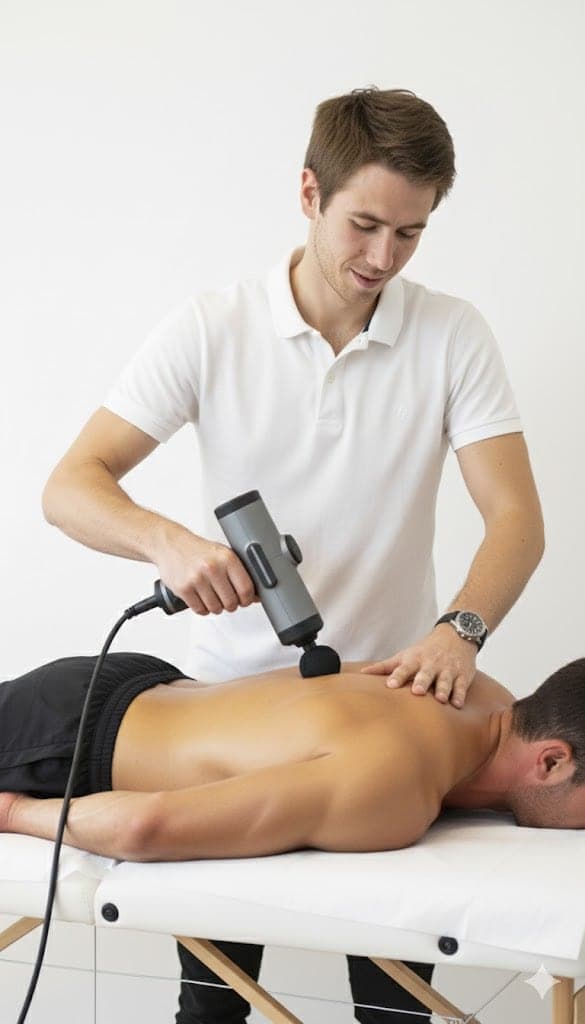
This is where deep-tissue massage earns its place. I use mechanical deep-tissue tools that let me apply steady, controlled pressure at a depth and consistency that is hard to hold with hands alone. It is not about brute force. It is about loosening the specific restriction, in the hip flexors or the glutes or the lumbar erectors, so that the exercises you were already doing finally have room to work. Sessions are €90 for 60 minutes or €130 for 90 minutes, and I come to your home anywhere in the Paphos district; the details are on the pricing page. People with sport-related back tightness sometimes prefer the sports massage format, which is similar work with more emphasis on the legs.
To be clear about what I can and cannot help with: I work on muscular and fascial tightness that limits movement, not on disc injuries, fractures or nerve compression. See a doctor first if your pain follows a fall or accident, spreads down the leg with numbness or weakness, comes with fever, unexplained weight loss or any change in bladder or bowel control, or wakes you at night and does not ease with a change of position.
Frequently asked questions
How long before lower back pain exercises start to help?
Most people notice easier movement in the mornings within a few weeks of doing the mobility work daily. Meaningful change in strength and timing takes longer, usually a couple of months of consistent practice. Long-standing pain tends to take longer to shift than a recent flare-up, but it does shift when the underlying stiffness is addressed rather than only the sore spot.
Should I exercise during a flare-up?
Gently, yes. Complete rest usually makes a flare-up last longer because everything stiffens further. Drop back to the mobility block, walk short distances several times a day, and avoid loading the spine until the sharp pain settles. If the pain is severe, spreads down the leg, or comes with numbness or weakness, stop and see a doctor before continuing.
Is it normal to feel sore after the exercises?
Mild muscular ache in the glutes, hamstrings or abdominals that eases within a few hours is a normal sign of muscles working in a new way. Sharp pain in the spine, pain that increases during the exercise, or a clearly worse back the following day means the movement was too big or too heavy. Reduce the range or go back a step for a week.
Can massage replace the exercises?
No, and I would not want it to. Deep-tissue work loosens tissue that has been held short for a long time and makes movement easier, but it does not teach the glutes to fire on time or the trunk to stabilise. The two work together: treatment creates room, the exercises fill it. Most people find their own routine carries them once the tightness is dealt with.
Do I need equipment for these exercises?
Almost none. A mat, a wall and a broomstick cover the mobility and control work. A single light resistance band adds the Pallof press and banded side steps, and costs very little. I deliberately keep the routine equipment-free so it can be done at home in Chlorakas, in a rented villa or in a hotel room while travelling, which is where most of my clients actually do it.
How do I know if my back pain is muscular?
Muscular pain is usually a dull ache or tight band across the lower back, worse after sitting or on waking, easing with movement, and reproduced by pressing on the sore muscle. Pain that shoots down the leg, comes with numbness or weakness, follows an injury, or is constant regardless of position needs a medical assessment first. If in doubt, see a doctor before booking treatment or starting an exercise programme.
Written by
Chris
Massage therapist & body mechanics specialist
Norwegian-certified with a Bachelor’s in Physical Education and Nutrition and over ten years of clinical practice, working from a portable table in clients’ homes across the Paphos district.
- Norwegian-certified
- BSc Physical Education & Nutrition
- 10+ years clinical practice
- Based in Chlorakas · all of Paphos district
- No call-out fee anywhere in Paphos district
Last reviewed
This article is general information from clinical practice, not a medical diagnosis. If you have severe, worsening or unexplained pain, numbness, weakness, or pain after an accident, see a doctor first.