Deep tissue vs Swedish massage: which one your problem needs
In short
Deep tissue vs Swedish massage comes down to purpose. Swedish is for relaxation and general tension; deep tissue is a slower, more specific treatment for chronic tightness and restricted movement. Choose by problem, not by pressure.
People often ask me for deep tissue when they mean firm Swedish, or for a relaxing massage when the shoulder actually needs slower, more specific work. This is my plain explanation of deep tissue vs Swedish massage, drawn from ten years of practising mechanical deep tissue massage in Paphos, so you can choose the treatment that fits the problem.
What each treatment is actually doing
Swedish massage and deep tissue massage are not two points on a pressure scale. They have different aims, and that is the whole distinction.
Swedish massage works mainly on the superficial muscle layers and the nervous system. Long gliding strokes, kneading and rhythmic techniques encourage circulation, ease general muscle tension and move the body towards a calm, parasympathetic state. It is very good at what it is designed to do: reduce stress, help sleep and take the edge off a hard week.
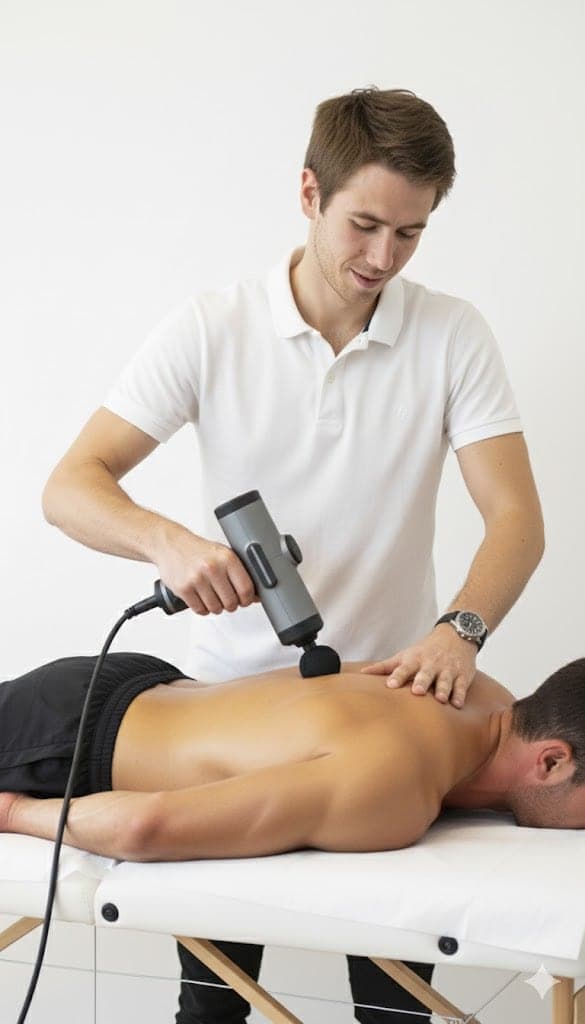
Deep tissue massage is a slower, more targeted intervention aimed at the deeper muscle layers and the fascia around them. Instead of covering the whole body evenly, I spend time on specific structures — a tight hip flexor, the outer thigh, the muscles between the shoulder blades — using sustained pressure to change how those tissues feel and move. The purpose is not relaxation, although that often follows; the purpose is to reduce a restriction that is limiting you.
Deep tissue vs Swedish massage side by side
When someone messages me unsure which to book, this is the comparison I talk them through.
| Question | Swedish massage | Deep tissue massage |
|---|---|---|
| Main aim | Relaxation, circulation, general tension | Reducing specific chronic tightness and restriction |
| Depth and speed | Superficial to moderate, flowing | Deeper, slow, held on one area at a time |
| Sensation | Pleasant throughout | Firm, sometimes uncomfortable, always within your tolerance |
| Coverage | Whole body, evenly | Focused on the problem areas, rest of the body lighter |
| Afterwards | Calm, loose, sleepy | Possible mild soreness for a day or two, then freer movement |
| Best suited to | Stress, poor sleep, feeling generally tight | Long-standing stiffness, old injuries, movement that has become limited |
Neither column is "better". A person carrying stress in their shoulders after a difficult month may get more from a Swedish session than from me leaning into their rhomboids. Someone who has not been able to turn their head fully for a year needs the other approach.
Pressure is not the difference
The most common misunderstanding I meet in Paphos is the belief that deep tissue simply means Swedish massage done harder. That belief causes two problems.
First, people who want relaxation avoid deep tissue because they assume it will hurt, when a well-run session should stay inside what you can breathe through comfortably. Second, people with genuine mechanical restrictions keep booking firm Swedish massages, feel better for two days, and are back where they started by the weekend. More force on a gliding stroke does not reach or change deep tissue; it just makes the surface sore.
What actually distinguishes deep tissue work:
- Pace: pressure is applied slowly and held, giving the tissue time to respond rather than guarding against it.
- Specificity: I am working on a named structure with a purpose, not covering an area.
- Feedback: the intensity is set by you, session by session, and adjusted as the tissue changes.
- Sequence: the surrounding muscles are warmed first, so depth is earned rather than forced.
Which one matches your situation
I would rather you book the right treatment than book me. These are the patterns I see most often across the Paphos district and where each tends to sit.
Swedish massage tends to be the better choice when:
- Your goal is to switch off, sleep better and feel less wound up.
- The tension is general and moves around rather than living in one place.
- You are recovering from illness or a period of low activity and want gentle circulation work.
- You have no specific movement that is limited or painful.
Deep tissue massage tends to be the better choice when:
- One area has been tight or aching for weeks or months and stretching does not shift it.
- A movement is restricted — reaching overhead, turning to reverse the car, bending to tie shoes.
- Old injuries have left you moving differently, and other areas are now complaining.
- You train regularly and specific muscles are staying stubbornly tight between sessions; the sports massage page covers that side in more detail.
If you fall between the two, the honest answer is that a session can be mostly one with elements of the other. Many of my visits are deep, specific work on two or three areas, then lighter work over the rest of the body so you leave feeling settled rather than worked over.
What to expect afterwards
The after-effects differ, and knowing that in advance saves people worrying.
After a Swedish massage you should feel relaxed, loose and possibly sleepy, with no soreness the next day. If you feel bruised after a "relaxing" massage, the pressure was wrong for the aim.
After deep tissue work the pattern I see most often is:
- Mild soreness in the treated areas for 24 to 48 hours, similar to the day after a good training session.
- A feeling of more room in the joint or muscle that was worked, sometimes immediately, sometimes the following day.
- Tiredness that evening — the body has had a real input and often wants an early night.
- Improvement that builds across a few sessions rather than arriving all at once.
Drink water, move gently, and avoid stacking a hard workout on top of the treatment the same day. Sharp pain, numbness or bruising is not part of the picture, and I would want to know about it.
How I work with deep tissue at your home
I work alone and travel to you across the Paphos district from Chlorakas with a portable table and everything needed. Deep tissue work is easier at home for a simple reason: you are already relaxed in your own space, so there is less protective guarding, and you can lie down or rest afterwards rather than driving through town with freshly worked muscles.
Because I am one therapist and not a menu, I do not sell "Swedish" and "deep tissue" as separate products. I ask what the problem is, assess how you move, and build the session around that. Sometimes that means a whole hour of slow, specific work; sometimes it means twenty minutes on the real issue and a calmer full-body treatment around it. A 60-minute session is €90 and a 90-minute session is €130, and every fifth session is free — details are on the pricing page.
- Sessions are booked by WhatsApp or phone, and I will tell you honestly which approach I think fits before we start.
- The first visit includes a short assessment so the time goes where the restriction is, not just where it hurts.
- Pressure is always agreed with you; nothing is forced, and you can stop or change it at any point.
- Chronic problems usually need a short series, then occasional maintenance rather than weekly dependence.
What I can help with is muscular tightness, restricted movement and the aftermath of old strains; what I cannot help with is anything that needs diagnosis, so see a doctor first if you have unexplained pain, numbness or weakness, pain that wakes you at night, recent trauma, fever, or a history of clotting problems.
Frequently asked questions
Is deep tissue massage just Swedish massage with more pressure?
No. Swedish massage uses flowing, rhythmic strokes across the whole body to relax you and improve circulation. Deep tissue massage is slower and more specific, holding sustained pressure on particular deeper structures to reduce chronic tightness and restriction. A hard Swedish massage is still a Swedish massage; it may feel intense, but it is not doing the same job.
Does deep tissue massage have to hurt?
It should not hurt in the sense of sharp or unbearable pain. You will feel firm, sometimes uncomfortable pressure on the tight areas, but it should always stay within what you can breathe through and relax into. If you are bracing or holding your breath, the pressure is too much for that tissue that day, and I adjust it. Discomfort that you can breathe through is useful; pain that makes you guard is counterproductive.
Which one should I choose if I have never had a massage before?
If you have no specific problem and want to see how your body responds, a Swedish-style session is a gentle introduction. If you are coming because one area has been stiff or painful for weeks, it makes more sense to address that directly, and I will build in enough general work that the first experience is not overwhelming. Tell me what you want from it and I will suggest which fits.
Can one session combine both approaches?
Yes, and in practice most of my home visits do. A common structure is slow, specific deep tissue work on the two or three areas that actually need it, then lighter Swedish-style work over the rest of the body so you finish settled rather than raw. The proportion depends on what you came for and how your tissue responds on the day.
How many deep tissue sessions do people usually need?
It depends on how long the problem has been there and what you do between visits. Recent tightness often responds quickly; restrictions that have been building for years tend to need a short series before the change holds, followed by occasional maintenance. I would rather give you an honest estimate after seeing how you move than promise a number in advance.
Is deep tissue massage safe for everyone?
Most healthy adults tolerate it well, but there are situations where I will keep the work lighter or ask you to check with a doctor first: recent injury or surgery, blood-thinning medication, clotting or circulation disorders, pregnancy, and some cardiovascular conditions. I ask about health history before the first session so the pressure and approach suit you, not a generic idea of "deep".
Written by
Chris
Massage therapist & body mechanics specialist
Norwegian-certified with a Bachelor’s in Physical Education and Nutrition and over ten years of clinical practice, working from a portable table in clients’ homes across the Paphos district.
- Norwegian-certified
- BSc Physical Education & Nutrition
- 10+ years clinical practice
- Based in Chlorakas · all of Paphos district
- No call-out fee anywhere in Paphos district
Last reviewed
This article is general information from clinical practice, not a medical diagnosis. If you have severe, worsening or unexplained pain, numbness, weakness, or pain after an accident, see a doctor first.