Deep tissue massage vs. Swedish massage Pafos: expert analysis and superior alternatives
In short
Discover the critical differences between deep tissue and Swedish massage in Pafos, and why traditional methods fall short of delivering lasting results compared to advanced mechanical techniques.
I’ll never forget the moment a client from Pafos challenged everything I thought I knew about massage therapy. After ten years of perfecting my craft and earning my degree in Physical Education and Nutrition from Norway, I believed I understood the intricacies of bodywork. This particular client had spent months bouncing between Swedish massage parlors and deep tissue therapists across Pafos, investing considerable money with minimal lasting results. When she experienced my advanced mechanical deep-tissue approach for the first time, her response was immediate: “This is what I’ve been searching for.” That encounter crystallized my understanding of why traditional massage methods – including the popular deep tissue and Swedish techniques widely available in Pafos – fundamentally fail to address the root causes of muscular dysfunction and pain.
The distinction between deep tissue massage and Swedish massage in Pafos extends far beyond simple pressure variations or technique preferences. Most practitioners in the region approach these modalities as separate therapeutic categories, yet both share critical limitations that prevent them from achieving the lasting, transformative results my clients demand. Swedish massage, with its emphasis on relaxation and superficial muscle manipulation, operates within the comfort zone of traditional spa treatments. Deep tissue massage, while attempting to address deeper muscular issues, remains constrained by the inherent limitations of manual pressure and inconsistent application. Neither approach adequately addresses the mechanical precision required for lasting therapeutic intervention.
Throughout my decade of professional experience, I’ve observed how these conventional methods create a cycle of temporary relief followed by recurring symptoms. Clients in Pafos often find themselves scheduling weekly or bi-weekly sessions, treating massage as an ongoing expense rather than recognizing the potential for a definitive therapeutic solution. This pattern reflects a fundamental misunderstanding of what effective bodywork should accomplish. True therapeutic intervention doesn’t merely manage symptoms – it eliminates their underlying mechanical causes through precise, consistent, and scientifically-informed application.
Understanding Swedish massage fundamentals in Pafos context
Swedish massage represents the foundation of most spa and wellness treatments available throughout Pafos, yet its limitations become apparent when examined through the lens of serious therapeutic intervention. During my early career, I spent considerable time mastering traditional Swedish techniques, believing that perfecting these foundational skills would enhance my effectiveness as a practitioner. The reality proved more complex. Swedish massage operates on five primary stroke categories: effleurage (long gliding strokes), petrissage (kneading), tapotement (rhythmic tapping), friction (deep circular movements), and vibration. While these techniques create pleasant sensations and temporary relaxation, they lack the mechanical precision necessary for addressing deep-seated muscular dysfunction.
The typical Swedish massage session in Pafos focuses on promoting circulation, reducing surface tension, and creating a sense of wellbeing through gentle to moderate pressure application. Practitioners employ long, flowing movements designed to encourage lymphatic drainage and stimulate the parasympathetic nervous system. This approach serves its intended purpose within the relaxation paradigm, but falls dramatically short when clients require serious therapeutic intervention. I’ve witnessed countless cases where individuals suffering from chronic pain, postural dysfunction, or athletic performance limitations received Swedish massage treatments that provided momentary comfort without addressing the mechanical root causes of their conditions.
The scientific literature supporting Swedish massage primarily demonstrates its effectiveness for stress reduction and short-term mood enhancement. However, these benefits pale in comparison to what’s achievable through advanced mechanical intervention. When a client books a Swedish massage in Pafos, they’re essentially purchasing a temporary reprieve from symptoms rather than investing in a solution. The gentle pressure and superficial muscle manipulation characteristic of Swedish massage cannot penetrate to the depths where chronic tension patterns and adhesions actually reside. This limitation isn’t a failing of individual practitioners – it’s an inherent constraint of the methodology itself.
Most Swedish massage practitioners in Pafos operate within the spa industry’s business model, which prioritizes pleasant experiences over measurable therapeutic outcomes. Sessions are typically structured around relaxation music, dim lighting, and aromatic oils, creating an ambiance that reinforces the treatment as a luxury service rather than a clinical intervention. While there’s nothing inherently wrong with this approach for clients seeking stress relief, it becomes problematic when individuals with serious muscular issues are led to believe that Swedish massage can provide the therapeutic results they desperately need.
Deep tissue massage reality versus marketing claims
The term “deep tissue massage” has become so diluted in Pafos that it essentially functions as a marketing phrase rather than a specific therapeutic methodology. After encountering numerous clients who had received what was labeled as “deep tissue” treatment from various practitioners across the region, I discovered that the actual techniques employed varied dramatically from one therapist to another. Some practitioners simply applied more pressure during Swedish massage strokes and called it deep tissue work. Others focused on trigger point therapy or myofascial release techniques under the deep tissue umbrella. This inconsistency creates confusion among clients and undermines the potential effectiveness of legitimate deep tissue interventions.
Authentic deep tissue massage should theoretically target the deeper layers of muscle and connective tissue through sustained pressure and specific techniques designed to break down adhesions and chronic tension patterns. However, the manual application of deep pressure presents significant limitations that most practitioners don’t acknowledge. Human hands, regardless of training and experience, cannot maintain consistent pressure throughout an extended treatment session. Fatigue inevitably affects the practitioner’s ability to deliver the sustained, precise pressure necessary for effective deep tissue intervention. Additionally, the angle and depth of pressure application varies constantly during manual treatment, reducing the overall effectiveness of the therapeutic intervention.
I’ve analyzed the biomechanics of traditional deep tissue massage extensively, and the results are sobering. Even highly skilled practitioners can only maintain optimal pressure and positioning for brief periods during a treatment session. The remainder of the session operates at suboptimal levels that may feel intense to the client but fail to achieve the mechanical changes necessary for lasting results. This limitation explains why clients receiving regular deep tissue massage in Pafos often report temporary improvement followed by a return to baseline symptoms within days or weeks.
The physical demands of delivering true deep tissue pressure also limit the practitioner’s longevity and consistency. I’ve observed numerous talented therapists in Pafos whose effectiveness diminished over time due to the cumulative physical stress of manual deep tissue work. This creates a paradox where the most experienced practitioners may actually become less capable of delivering optimal treatment as their careers progress. The solution isn’t working harder or developing greater physical strength – it’s recognizing that manual techniques have inherent limitations that technology can overcome.
Critical limitations of traditional massage approaches
The fundamental problem with both Swedish and deep tissue massage lies in their reliance on human variability and the inherent inconsistencies of manual application. During my university studies in Physical Education and Nutrition, I learned to analyze movement patterns and muscular function from a biomechanical perspective. This scientific foundation revealed that effective therapeutic intervention requires precise, consistent, and sustained mechanical input – qualities that manual massage simply cannot reliably provide. Even the most skilled practitioner experiences fluctuations in energy, focus, and physical capability that directly impact treatment effectiveness.
Traditional massage approaches in Pafos also suffer from a diagnostic limitation that prevents practitioners from accurately identifying the specific mechanical dysfunctions responsible for their clients’ symptoms. Swedish massage practitioners typically focus on general relaxation rather than systematic problem identification. Deep tissue practitioners may recognize areas of tension or restriction, but lack the precision tools necessary to address these issues at their mechanical source. This diagnostic gap results in treatments that address symptoms rather than causes, ensuring that clients require ongoing sessions to maintain any benefits.
The temporal limitations of manual massage present another significant constraint. Both Swedish and deep tissue sessions typically last 60-90 minutes, but the actual therapeutic work occurs during a much smaller window within that timeframe. Setup, position changes, and the gradual buildup to therapeutic pressure consume valuable treatment time. By contrast, advanced mechanical intervention can deliver targeted therapeutic pressure from the moment contact is established, maximizing the therapeutic value of every minute invested in treatment.
Perhaps most critically, traditional massage modalities lack the precision necessary to address the complex, three-dimensional nature of muscular dysfunction. Pain and restriction patterns rarely follow the simple, linear approaches employed in Swedish and deep tissue massage. Effective therapeutic intervention requires the ability to adjust pressure, angle, and direction with mechanical precision while maintaining consistent therapeutic parameters throughout the treatment. This level of precision simply cannot be achieved through manual application, regardless of practitioner skill or experience.
Advanced mechanical deep-tissue methodology: the superior alternative
My transition from traditional massage techniques to advanced mechanical deep-tissue intervention represented a paradigm shift in my understanding of effective therapeutic practice. The specialized machine I now employ delivers what I term “Precision, Power, and Consistency” – three critical elements that manual massage cannot reliably provide. This technology operates deeper than human hands can reach, accessing tension patterns at their mechanical source rather than addressing superficial symptoms. The precision adjustment capabilities allow me to customize treatment intensity from light therapeutic pressure to the powerfully deep interventions required by serious athletes and individuals with chronic dysfunction.
The mechanical advantage of this approach eliminates the variability that plagues traditional massage. Every treatment session delivers identical pressure profiles and therapeutic parameters, ensuring that clients receive optimal intervention regardless of my physical state or energy level on any given day. This consistency proves crucial for clients seeking lasting results rather than temporary symptom management. I’ve documented cases where clients achieved in three mechanically-assisted sessions what traditional massage had failed to accomplish over months of regular treatment.
The deeper penetration capabilities of mechanical intervention allow me to address fascial restrictions and muscular adhesions that manual techniques simply cannot reach effectively. Traditional deep tissue massage may create the sensation of deep work, but the actual therapeutic pressure dissipates significantly by the time it reaches the target tissues. Mechanical application maintains therapeutic intensity throughout the entire depth of penetration, creating mechanical changes at the cellular level that promote lasting tissue remodeling rather than temporary symptom relief.
This technological approach also enables me to work with complete control over treatment parameters while maintaining the diagnostic sensitivity necessary for effective intervention. I can adjust pressure, frequency, and application angle in real-time based on tissue response, creating a dynamic therapeutic environment that adapts to each client’s specific needs. This level of precision and adaptability represents a quantum leap beyond what’s possible through manual application, regardless of practitioner expertise.
Scientific foundations of effective therapeutic intervention
My educational background in Physical Education and Nutrition provided me with a deep understanding of human biomechanics and the physiological processes underlying effective therapeutic intervention. The scientific literature clearly demonstrates that lasting changes in muscular function require sustained mechanical input at intensities and depths that exceed the capabilities of manual massage. Tissue remodeling – the process by which chronic dysfunction patterns are durably altered – occurs only when therapeutic pressure reaches specific mechanical thresholds and maintains those parameters for adequate duration.
The physiological mechanisms underlying effective deep tissue work involve complex interactions between mechanical pressure, cellular metabolism, and neurological adaptation. Traditional massage approaches operate well below the mechanical thresholds necessary to trigger these adaptive responses. While Swedish massage may temporarily increase circulation and promote relaxation, it lacks the mechanical intensity required to create lasting changes in tissue structure and function. Even aggressive deep tissue massage typically provides insufficient sustained pressure to achieve the tissue remodeling necessary for lasting results.
Research in mechanotherapy – the therapeutic application of mechanical forces – reveals that optimal tissue adaptation requires precise control over load application, duration, and recovery periods. These parameters cannot be accurately controlled through manual application, which explains why traditional massage creates temporary benefits that fade quickly. Advanced mechanical intervention allows for exact calibration of these therapeutic variables, creating the optimal environment for lasting tissue adaptation and functional improvement.
The neurological aspects of effective therapeutic intervention also favor mechanical precision over manual variability. The nervous system adapts to mechanical input based on the consistency and specificity of the applied forces. Variable pressure application, characteristic of manual massage, creates conflicting neurological signals that limit the effectiveness of therapeutic adaptation. Consistent mechanical input, by contrast, provides clear, unambiguous signals that promote rapid and lasting neurological adaptation to improved movement patterns and reduced pain responses.
Client success stories and transformation outcomes
The most compelling evidence for the superiority of advanced mechanical intervention comes from the documented results achieved by my clients in Pafos and throughout the region. One particularly memorable case involved a professional cyclist who had spent over two years seeking relief from chronic lower back pain that limited his competitive performance. He had worked with numerous massage therapists, physical therapists, and medical professionals, receiving everything from Swedish massage to aggressive deep tissue work, trigger point therapy, and various manual manipulation techniques. Despite this extensive treatment history, his symptoms persisted and actually worsened during high-intensity training periods.
Our initial assessment revealed complex fascial restrictions and muscular imbalances that extended far beyond his primary complaint area. The mechanical precision of my approach allowed us to address these underlying dysfunctions systematically, working at depths and intensities that had never been achieved through his previous manual treatments. Within three sessions, he reported significant improvement in both pain levels and performance capacity. After six sessions, his symptoms had resolved completely, and his power output measurements showed marked improvement over pre-treatment baselines. Most importantly, these improvements have sustained over eighteen months with only occasional maintenance sessions.
Another transformative case involved a Pafos resident who had suffered from chronic neck and shoulder pain for over a decade following a motor vehicle accident. She had become resigned to managing her symptoms through weekly Swedish massage sessions and daily medication, viewing her condition as a lasting limitation she would have to accept. Her previous experiences with deep tissue massage had been unsuccessful due to her sensitivity to manual pressure application – practitioners either worked too lightly to achieve therapeutic benefit or applied pressure that was painful and counterproductive.
The precise pressure control capabilities of mechanical intervention allowed us to work at her optimal therapeutic threshold without exceeding her tolerance levels. We systematically addressed the complex scar tissue patterns and fascial restrictions that had developed over years of compensation patterns. Her response was remarkable – after four sessions, she reported the first pain-free days she had experienced in over a decade. Eight sessions later, she had discontinued all pain medication and returned to activities she had abandoned years earlier. Her case exemplifies how mechanical precision can succeed where manual techniques fail, particularly for clients with complex or long-standing conditions.
Investment philosophy versus expense mentality
The fundamental difference between my approach and traditional massage services in Pafos lies in the distinction between investment and expense. Most clients approach Swedish or deep tissue massage as an ongoing expense – a regular service required to manage symptoms and maintain temporary comfort levels. This mentality creates a cycle of dependency where clients schedule regular sessions indefinitely, treating massage as a necessary but costly aspect of their health maintenance routine. While this model benefits practitioners financially, it fails to serve clients’ long-term interests and prevents them from achieving the lasting results they deserve.
My advanced mechanical approach represents a genuine investment in long-term health and function. Rather than providing temporary symptom relief that requires endless repetition, I focus on creating lasting changes that eliminate the underlying causes of dysfunction. This philosophy requires a different mindset from both practitioner and client – we’re not managing symptoms, we’re solving problems. The initial investment may seem more significant than a single Swedish massage session, but the long-term value proposition is incomparable when measured against months or years of ongoing traditional treatment costs.
I’ve calculated the financial impact for numerous clients who made the transition from regular traditional massage to my mechanical intervention approach. The average client who had been receiving weekly Swedish or deep tissue massage in Pafos was spending between 150-300 euros monthly on treatments that provided temporary relief but no lasting improvement. By contrast, my clients typically achieve lasting resolution of their primary complaints within 6-10 sessions, representing a one-time investment that eliminates the need for ongoing symptomatic treatment.
This investment philosophy extends beyond financial considerations to encompass time, energy, and quality of life improvements. Traditional massage clients often structure their schedules around regular appointments, viewing these sessions as necessary maintenance rather than recognizing them as evidence that their underlying problems remain unresolved. My clients experience the freedom that comes with lasting problem resolution – they can focus their time and resources on pursuing their goals rather than managing their limitations.
Traveling service advantages and professional standards
One of the distinctive aspects of my practice is my commitment to traveling to clients’ locations rather than requiring them to visit a clinical setting. This approach emerged from my understanding that optimal therapeutic results require a comfortable, familiar environment where clients can fully relax and participate in their treatment without the stress and time investment associated with travel to appointments. When I arrive at a client’s location in Pafos, I bring everything necessary for professional treatment – a specialized therapeutic bench designed specifically for mechanical intervention, all equipment and supplies, and the expertise to create an optimal therapeutic environment regardless of location.
This mobile approach provides significant advantages over traditional spa or clinic-based massage services. Clients avoid the time and stress associated with travel, parking, and waiting room experiences that can elevate tension levels before treatment even begins. They can schedule sessions at optimal times within their personal routines, whether early morning before work commitments or evening after completing daily responsibilities. The familiar environment also allows for better post-treatment recovery, as clients can immediately rest or engage in recommended activities without additional travel or disruption.
The professional standards I maintain for traveling service exceed those typically found in traditional massage establishments. My equipment is specifically designed for mobile professional use, providing the same therapeutic capabilities available in the most advanced clinical settings. I maintain strict hygiene protocols, professional appearance standards, and treatment documentation practices regardless of location. This commitment to clinical excellence in a convenient service format represents a unique value proposition that traditional massage providers cannot match.
The personalized attention possible through individual, location-specific service allows for optimal treatment customization and continuity. In a traditional spa or clinic setting, practitioners often work with multiple clients in succession, limiting their ability to focus completely on individual needs and treatment optimization. My traveling service model ensures that each client receives my complete attention and expertise throughout their therapeutic journey, from initial assessment through final treatment and ongoing success maintenance.
Comparing therapeutic outcomes and long-term value
When evaluating massage options in Pafos, clients must consider not only immediate comfort and satisfaction but also measurable therapeutic outcomes and long-term value creation. Swedish massage excels at providing pleasant, relaxing experiences that temporarily reduce stress and create feelings of wellbeing. These benefits, while valuable for clients seeking occasional relaxation, do not address underlying muscular dysfunction or create lasting improvements in pain, performance, or quality of life. The typical Swedish massage client reports feeling better for 24-48 hours following treatment, after which symptoms gradually return to baseline levels.
Deep tissue massage, when performed competently, may provide longer-lasting symptom relief and can occasionally create minor improvements in muscular function. However, the limitations of manual pressure application and diagnostic imprecision prevent traditional deep tissue work from achieving the systematic, comprehensive changes necessary for lasting problem resolution. Most deep tissue massage clients experience a pattern of gradual improvement followed by symptom recurrence, requiring ongoing treatment to maintain benefits. This pattern indicates that the underlying mechanical causes of dysfunction remain unaddressed.
Advanced mechanical deep-tissue intervention produces measurably superior outcomes across all relevant therapeutic parameters. Pain reduction is typically more substantial and longer-lasting than manual massage results. Range of motion improvements are more significant and stable over time. Functional capacity enhancements – the ability to perform daily activities, exercise, and work without limitation – show dramatic and sustained improvement. Most critically, these benefits continue to improve even after treatment completion, as the mechanical changes created through precision intervention allow natural healing processes to operate more effectively.
The long-term value proposition becomes clear when comparing total investment over time. Traditional massage clients often continue regular sessions for years without achieving lasting resolution of their primary complaints. My mechanical intervention clients typically achieve their therapeutic goals within 2-3 months, after which they enjoy lasting results without ongoing treatment costs. This dramatic difference in long-term value creation makes advanced mechanical intervention not just therapeutically superior, but economically advantageous for clients serious about lasting improvement.
Customized treatment protocols and dedicated partnership approach
The foundation of effective therapeutic intervention lies in accurate assessment and customized treatment planning based on each client’s specific mechanical dysfunctions and therapeutic goals. Unlike traditional massage approaches that employ standardized techniques regardless of individual presentation, my mechanical intervention methodology requires comprehensive analysis of postural patterns, movement limitations, pain distribution, and functional goals. This assessment process reveals the specific mechanical factors responsible for each client’s symptoms and determines the optimal therapeutic parameters for achieving lasting resolution.
My dedicated partnership approach recognizes that lasting therapeutic change requires ongoing collaboration between practitioner and client throughout the treatment process and beyond. Traditional massage operates on a session-by-session basis, with limited continuity between appointments and minimal client education or empowerment. My clients receive comprehensive education about their specific condition, the mechanical changes required for improvement, and the strategies necessary to maintain their therapeutic gains long-term. This partnership model ensures that clients become active participants in their recovery rather than passive recipients of temporary treatments.
Treatment protocols are continuously refined based on objective response measurements and client feedback throughout the therapeutic process. The precision capabilities of mechanical intervention allow for exact documentation of pressure parameters, treatment duration, and tissue response patterns. This data enables systematic optimization of treatment approaches for maximum effectiveness and efficiency. Clients can track their progress objectively and understand exactly how their therapeutic goals are being achieved through specific mechanical interventions.
The partnership extends beyond active treatment phases to include long-term success maintenance and optimization strategies. Clients learn to recognize early warning signs of dysfunction recurrence and receive specific recommendations for maintaining their therapeutic gains through targeted self-care activities and periodic maintenance sessions. This comprehensive approach ensures that the investment in mechanical intervention continues to provide value long after primary treatment goals have been achieved.
Why location convenience matters for therapeutic success
The therapeutic environment plays a crucial role in treatment effectiveness, particularly for clients dealing with chronic pain or dysfunction patterns that have developed over months or years. Traditional massage establishments in Pafos often operate in settings designed more for ambiance and marketing appeal than optimal therapeutic conditions. Dim lighting, background music, and aromatherapy may create pleasant experiences, but can actually interfere with the precise communication and feedback necessary for effective therapeutic intervention. My mobile service allows for optimal environmental customization based on each client’s specific needs and preferences.
Stress reduction is essential for effective therapeutic intervention, as elevated stress hormones can interfere with tissue healing and pain perception. Clients who must travel to appointments, navigate parking challenges, and adapt to unfamiliar environments often arrive at treatment sessions in suboptimal states for therapeutic intervention. By providing service at clients’ locations, I eliminate these stress factors and ensure that treatment begins from an optimal physiological and psychological baseline. This environmental advantage contributes significantly to the superior outcomes achieved through my mechanical intervention approach.
The convenience of location-based service also improves treatment compliance and consistency – critical factors for achieving lasting therapeutic results. Clients facing transportation challenges, schedule conflicts, or physical limitations may miss appointments or reduce treatment frequency when required to travel to clinical locations. My mobile service eliminates these barriers, ensuring that clients can maintain optimal treatment schedules throughout their therapeutic process. This consistency proves essential for creating the systematic mechanical changes necessary for lasting problem resolution.
Post-treatment recovery and integration occur more effectively in familiar environments where clients can immediately implement recommended activities or rest protocols. Traditional massage clients must travel home after treatment, potentially reversing some therapeutic benefits through the stress and physical demands of transportation. My location-based clients can immediately optimize their post-treatment environment and activities, maximizing the therapeutic value of each intervention session.
Addressing common misconceptions about massage effectiveness
One of the most persistent misconceptions about therapeutic massage involves the belief that more frequent treatments automatically produce better results. Many clients in Pafos schedule weekly Swedish or deep tissue sessions under the assumption that increased treatment frequency will accelerate their progress or provide more substantial benefits. This approach often reflects practitioners’ business interests rather than optimal therapeutic strategy. In reality, effective therapeutic intervention requires adequate recovery time between sessions for tissue adaptation and healing processes to occur. My mechanical intervention approach typically produces superior results with less frequent sessions because each treatment creates more substantial and lasting changes.
Another common misconception involves the relationship between treatment intensity and therapeutic effectiveness. Many clients equate painful pressure with therapeutic benefit, leading them to request or tolerate aggressive manual massage techniques that may actually impede healing processes. Optimal therapeutic intervention operates at precisely calibrated intensities that maximize tissue change while minimizing counterproductive pain responses. The mechanical precision of my approach allows for exact pressure calibration at each client’s optimal therapeutic threshold, producing superior results without unnecessary discomfort or tissue trauma.
The misconception that all forms of massage provide equivalent therapeutic benefits has led many clients to undervalue the importance of technique precision and practitioner expertise. Swedish massage and deep tissue massage are fundamentally different therapeutic interventions with distinct mechanisms of action and outcome potentials. Advanced mechanical intervention represents a completely different category of therapeutic capability that cannot be compared directly to manual massage techniques. Clients seeking serious therapeutic results must understand these distinctions to make informed decisions about their treatment investments.
Perhaps the most limiting misconception involves the acceptance of symptom management as the best possible therapeutic outcome. Many clients have been conditioned to believe that their chronic pain, movement limitations, or functional restrictions represent lasting conditions that can only be managed through ongoing treatments. This defeatist mindset prevents them from seeking or investing in therapeutic approaches capable of creating lasting improvement. My experience consistently demonstrates that most mechanical dysfunctions can be durably resolved through appropriate therapeutic intervention, transforming clients’ understanding of what’s possible for their health and function.
Professional credentials and continuing education commitment
My decade of professional experience encompasses not only practical application but also continuous education and methodology refinement based on emerging research in mechanotherapy and advanced bodywork techniques. My Bachelor’s degree in Physical Education and Nutrition from Norway provided a scientific foundation that distinguishes my approach from practitioners who rely primarily on traditional massage training or certification programs. This educational background enables me to analyze muscular dysfunction from biomechanical, physiological, and nutritional perspectives, creating comprehensive treatment strategies that address multiple factors contributing to dysfunction patterns.
The integration of advanced mechanical technology into my practice required extensive additional training and certification in equipment operation, safety protocols, and therapeutic application techniques. This specialized training ensures that I can maximize the therapeutic potential of mechanical intervention while maintaining absolute safety standards for all clients. The precision and power capabilities of mechanical equipment demand respect and expertise that extend far beyond traditional massage training requirements. My commitment to mastering this technology reflects my dedication to providing clients with the most effective therapeutic interventions available.
Continuing education remains a constant priority, as the fields of mechanotherapy and advanced bodywork continue to evolve rapidly. I regularly attend conferences, workshops, and training programs to stay current with emerging techniques, research findings, and technological developments. This commitment ensures that my clients benefit from the latest advances in therapeutic intervention methodology and that my practice maintains its position at the forefront of effective bodywork approaches. The investment in ongoing education directly translates to improved outcomes and expanded treatment capabilities for clients.
Professional accountability and outcome measurement form essential components of my practice philosophy. Unlike traditional massage providers who may rely on subjective client satisfaction as their primary success metric, I employ objective measurement tools and standardized outcome assessments to document therapeutic progress and treatment effectiveness. This scientific approach to practice evaluation ensures continuous improvement in my methodology and provides clients with clear evidence of their therapeutic gains throughout the treatment process.
Frequently asked questions about massage options in Pafos
What makes mechanical deep-tissue massage different from traditional deep tissue work available in Pafos?
The fundamental difference lies in precision, consistency, and depth of therapeutic intervention. Traditional deep tissue massage relies on manual pressure application, which varies constantly due to practitioner fatigue, positioning limitations, and subjective pressure perception. My mechanical approach delivers precise, consistent pressure at depths that human hands simply cannot reach effectively. The machine eliminates practitioner variability and maintains optimal therapeutic parameters throughout the entire treatment session. This technological advantage allows for systematic addressing of dysfunction patterns at their mechanical source, creating lasting changes rather than temporary symptom relief. Additionally, the pressure calibration capabilities enable work at each client’s exact therapeutic threshold, maximizing benefit while minimizing discomfort. Traditional deep tissue practitioners cannot achieve this level of precision or consistency, regardless of their skill or experience level.
How do I choose between Swedish massage and deep tissue massage in Pafos if I’m seeking relaxation?
If your primary goal is temporary relaxation and stress relief, Swedish massage provides the most appropriate approach among traditional modalities. The gentle, flowing techniques and emphasis on comfort create pleasant experiences without the intensity associated with deep tissue work. However, I encourage clients to consider whether temporary relaxation addresses their underlying needs effectively. Many individuals seeking “relaxation” are actually experiencing tension patterns, sleep difficulties, or stress responses related to underlying muscular dysfunction. In these cases, addressing the mechanical causes through advanced intervention creates deeper, longer-lasting relaxation benefits than either Swedish or traditional deep tissue massage can provide. The profound relaxation that follows effective therapeutic intervention differs qualitatively from the temporary comfort provided by Swedish massage, offering genuine restoration rather than momentary symptom masking.
Why should I consider traveling service instead of visiting established massage businesses in Pafos?
Location-based service provides multiple advantages that enhance therapeutic outcomes and overall client experience. Environmental control allows for optimal treatment conditions tailored to your specific needs and preferences, eliminating the stress and physical demands associated with travel to appointments. The time savings are substantial – you avoid travel time, parking challenges, and waiting room delays that can elevate tension levels before treatment begins. Most importantly, the familiar environment enables better therapeutic communication and more effective post-treatment recovery protocols. Traditional massage businesses must accommodate multiple clients in standardized settings that may not optimize conditions for your specific therapeutic needs. My mobile service ensures complete focus on your individual requirements without the compromises inherent in shared facility operations. The professional standards and equipment quality I maintain for traveling service exceed those found in most traditional massage establishments, providing superior therapeutic capabilities with unmatched convenience.
How many sessions will I need compared to regular Swedish or deep tissue massage appointments?
The session requirements differ dramatically between traditional massage approaches and advanced mechanical intervention. Clients receiving Swedish massage typically schedule ongoing weekly or bi-weekly appointments indefinitely, as the benefits fade quickly and underlying issues remain unaddressed. Deep tissue massage clients may reduce frequency to monthly sessions but still require ongoing treatments to maintain any improvements. My mechanical intervention approach typically achieves primary therapeutic goals within 6-10 sessions, after which clients enjoy lasting results without ongoing treatment requirements. Some clients choose occasional maintenance sessions, but these are preferences rather than necessities for maintaining their therapeutic gains. The total time investment is actually lower with mechanical intervention despite the more intensive nature of individual sessions, as lasting problem resolution eliminates the need for endless symptom management appointments.
Can mechanical intervention help conditions that haven’t responded to traditional massage in Pafos?
Mechanical intervention frequently succeeds where traditional massage approaches have failed, particularly for complex or long-standing conditions. The precision and depth capabilities allow systematic addressing of dysfunction patterns that manual techniques cannot reach effectively. I’ve worked with numerous clients who had received extensive traditional massage therapy without achieving lasting improvement. The mechanical precision enables work at therapeutic intensities and depths that create lasting tissue changes, while the consistency ensures optimal treatment parameters throughout each session. Many conditions that appear resistant to traditional massage actually require the specific mechanical inputs that only advanced technology can provide reliably. However, success depends on accurate assessment and appropriate treatment planning. During initial consultation, I evaluate each client’s condition and treatment history to determine the likelihood of success with mechanical intervention and provide honest assessments of expected outcomes and timeline requirements.
What should I expect during my first mechanical deep-tissue treatment session?
The initial session begins with comprehensive assessment of your posture, movement patterns, and specific complaint areas to identify the mechanical factors responsible for your symptoms. This evaluation process is more thorough than typical massage consultations, as precise treatment planning requires detailed understanding of your individual dysfunction patterns. The mechanical intervention itself feels distinctly different from manual massage – the pressure is more precise, consistent, and penetrating than human hands can provide. Most clients report that the treatment reaches areas of tension they didn’t realize existed and creates sensations of release that differ qualitatively from traditional massage experiences. The intensity is carefully calibrated to your therapeutic threshold, ensuring maximum benefit without excessive discomfort. Post-treatment, many clients experience immediate improvements in pain levels, range of motion, or functional capacity. I provide specific recommendations for optimizing your recovery and maintaining therapeutic gains between sessions. The entire process is professional, results-focused, and designed to create measurable improvements from the first appointment.
How do costs compare between ongoing traditional massage and mechanical intervention investment?
While individual mechanical intervention sessions represent a larger initial investment than traditional massage appointments, the total cost comparison strongly favors advanced mechanical treatment when calculated over time. Clients maintaining weekly Swedish massage appointments typically spend 200-400 euros monthly indefinitely, treating massage as an ongoing expense without achieving lasting improvement. Deep tissue massage clients may reduce frequency but still require regular sessions for symptom management. My mechanical intervention clients typically invest 600-1200 euros total to achieve lasting resolution of their primary complaints. This one-time investment eliminates the need for ongoing symptomatic treatments, creating substantial long-term savings while providing superior therapeutic outcomes. Additionally, the time savings, improved quality of life, and enhanced performance capacity provide value that extends far beyond financial considerations. When clients calculate the total cost of years of traditional massage treatments that provide temporary relief, the advanced mechanical approach represents exceptional value for serious therapeutic results.
What qualifications should I look for when choosing massage services in Pafos?
When evaluating massage practitioners, educational background and specialized training prove more important than years of experience alone. Look for practitioners with formal education in anatomy, physiology, and biomechanics rather than those with only massage-specific certifications. Advanced training in specific therapeutic techniques, particularly those involving precision equipment or specialized methodologies, indicates commitment to providing superior results rather than standard comfort services. Professional accountability through objective outcome measurement and systematic treatment planning demonstrates serious therapeutic focus. Practitioners who can explain their methods scientifically and provide clear expectations for treatment outcomes typically deliver more effective results than those relying on traditional relaxation-focused approaches. Most importantly, seek practitioners who position their services as investments in lasting improvement rather than ongoing symptom management. The distinction between therapeutic intervention and comfort services determines whether you’ll achieve lasting results or require indefinite treatment continuation.
Written by
Chris
Massage therapist & body mechanics specialist
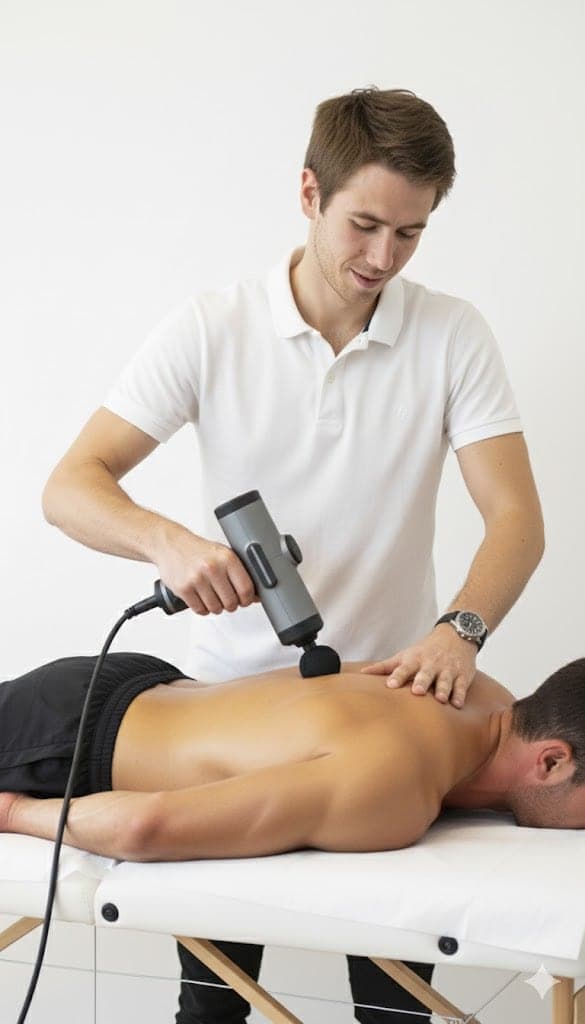
Norwegian-certified with a Bachelor’s in Physical Education and Nutrition and over ten years of clinical practice, working from a portable table in clients’ homes across the Paphos district.
This article is general information from clinical practice, not a medical diagnosis. If you have severe, worsening or unexplained pain, numbness, weakness, or pain after an accident, see a doctor first.