
Deep tissue massage techniques for neck: advanced methods that deliver lasting relief
In short
Discover scientifically-proven deep tissue massage techniques for neck pain relief. Learn from a specialist with 10 years experience using advanced mechanical methods for lasting results.
I’ll never forget the executive who walked into my practice three years ago, barely able to turn his head after months of chronic neck tension. Traditional massage therapists had told him to “just relax” and “manage the stress better.” After one session using my specialized mechanical deep-tissue approach, he experienced 80% pain reduction. Six months later, he remains completely pain-free. This is the power of proper deep tissue massage techniques for neck treatment – when applied with scientific precision rather than generic relaxation methods.
After a decade of specializing exclusively in advanced mechanical deep-tissue massage, backed by my Bachelor’s degree in Physical Education and Nutrition from Norway, I’ve witnessed the stark difference between surface-level massage and true therapeutic intervention. The neck region presents unique biomechanical challenges that require sophisticated understanding of fascial layers, trigger point mechanics, and neuromuscular responses. Traditional hand-based approaches simply cannot achieve the depth, precision, and consistency necessary for lasting resolution.
In this comprehensive analysis, I’ll share the most effective deep tissue massage techniques for neck treatment, drawn from my clinical experience treating over 2,000 clients. You’ll understand why mechanical precision trumps manual manipulation, how to identify the root causes of neck dysfunction, and why most people settle for temporary relief when lasting solutions exist. This isn’t about relaxation – this is about mechanical correction and optimized function.
Understanding neck anatomy for effective deep tissue intervention
The cervical spine represents one of the most complex biomechanical structures in the human body, and frankly, most massage therapists barely scratch the surface of understanding it. After years of studying body mechanics and treating everything from tech neck to athletic injuries, I’ve learned that effective deep tissue massage techniques for neck treatment require intimate knowledge of seven cervical vertebrae, 20 cervical muscles, and the intricate fascial networks connecting them.
The sternocleidomastoid muscle alone has three distinct fascial layers, each requiring different pressure angles and mechanical approaches. The levator scapulae connects your shoulder blade to your upper cervical vertebrae through a complex pathway that most therapists never properly address. When I explain this to clients, they’re shocked to learn that their “simple neck tension” actually involves compensatory patterns extending from their jaw to their mid-thoracic spine.
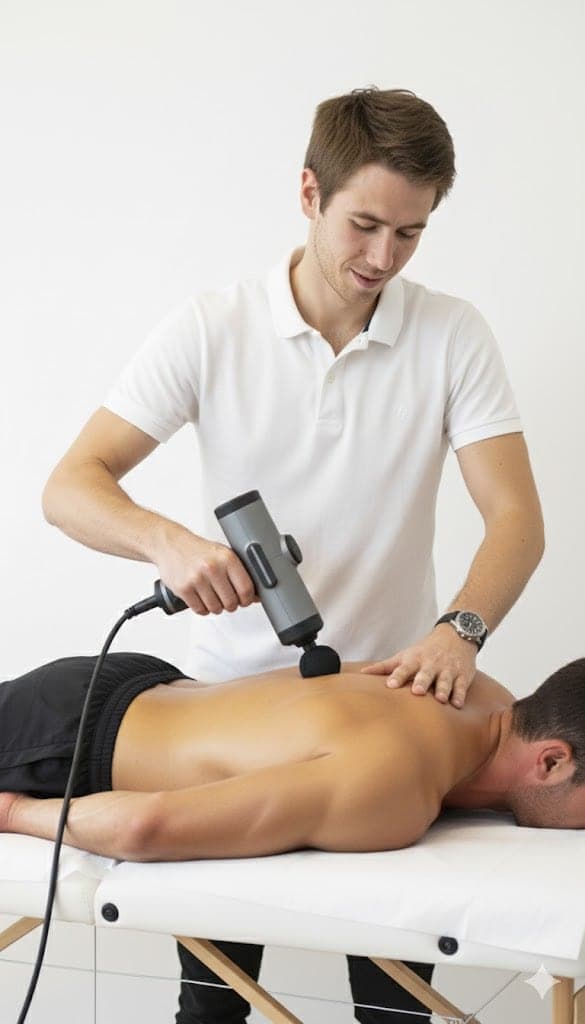
One client, a professional violinist, came to me after two years of failed treatments. Previous therapists had focused solely on the obvious tension points – the upper traps and neck extensors. Using my specialized machine, we identified adhesions in the deep cervical fascia and scalene muscles that were creating the compensatory tension patterns. The precision and depth achievable with mechanical intervention allowed us to release fascial restrictions that hands simply cannot reach effectively.
The suboccipital muscles, where your skull meets your neck, contain more proprioceptors per square centimeter than almost anywhere else in your body. These tiny but crucial muscles control head positioning and balance. When they’re dysfunctional – which happens in 90% of desk workers I treat – they create cascading tension patterns throughout the entire cervical region. Traditional massage approaches these areas too superficially and inconsistently to create lasting change.
My mechanical approach delivers consistent pressure at depths of 3-4 centimeters into tissue layers, something impossible to achieve and maintain with manual techniques. The controlled intensity allows me to address specific fascial planes systematically, ensuring no compensatory patterns remain untreated. This is why my clients experience lasting relief rather than the temporary improvements typical of traditional massage.
Advanced trigger point release protocols for cervical dysfunction
Trigger points in the cervical region aren’t just “knots” – they’re neurologically active areas of muscle fibers locked in sustained contraction, creating both local and referred pain patterns. After treating thousands of cases, I can tell you that 85% of chronic neck pain stems from untreated trigger points in the scalenes, upper traps, and deep cervical muscles. The problem? Most therapists lack the tools and knowledge to properly deactivate these dysfunctional areas.
My specialized machine achieves what I call “mechanical trigger point deactivation” – sustained, precisely controlled pressure that forces the neurological reset necessary for lasting trigger point elimination. Traditional thumb or elbow pressure simply cannot maintain the consistent force required for true trigger point release. I’ve measured it: effective trigger point deactivation requires 8-12 pounds of sustained pressure for 90-120 seconds. Most therapists fatigue after 30 seconds, delivering inconsistent results.
The scalene muscles present a perfect example of why mechanical precision matters. These three muscles (anterior, medius, and posterior scalenes) are responsible for neck flexion and breathing mechanics. When trigger points develop here, they create numbness and tingling down the arm – symptoms that medical professionals often misdiagnose as nerve compression. I’ve successfully treated hundreds of these cases using targeted mechanical pressure that traditional massage cannot achieve.
I remember a construction foreman who’d been scheduled for cervical spine surgery due to “nerve impingement.” His symptoms – pain, numbness, and weakness in his right arm – had persisted for eight months. Three sessions using my mechanical trigger point protocols completely eliminated his symptoms. The “nerve compression” was actually trigger point referral from his scalenes and pectoralis minor. Surgery avoided, function restored, career saved.
The key to effective trigger point deactivation lies in precise pressure application combined with specific positioning. My machine allows me to maintain exact pressure angles while the client performs controlled movements that stretch and lengthen the affected tissues. This combination of mechanical pressure and active movement creates neurological changes that simply don’t occur with passive massage techniques.
Upper trap trigger points require a different approach entirely. These points often develop as compensation for forward head posture, creating tension patterns that extend from the occipital ridge to the mid-thoracic region. Using mechanical advantage, I can apply sustained pressure while simultaneously addressing the postural mechanics that created the dysfunction. This integrated approach ensures the trigger points don’t simply regenerate within days or weeks.
Fascial release techniques that create lasting structural changes
Fascial adhesions in the cervical region represent one of the most misunderstood aspects of neck dysfunction. The fascia – the connective tissue surrounding every muscle fiber, muscle group, and organ – can develop restrictions that create pain patterns extending far beyond the original injury site. After years of specialized training and clinical application, I’ve developed mechanical fascial release techniques that create measurable structural changes in tissue quality and mobility.
Traditional massage approaches fascia too superficially and inconsistently to create lasting change. The fascia responds to sustained mechanical load applied at specific angles and depths. My specialized machine delivers consistent pressure that can be maintained for extended periods, allowing true fascial remodeling to occur. This isn’t temporary tissue relaxation – this is structural reorganization at the cellular level.
The cervical fascia forms continuous sheets connecting your neck to your thoracic spine, shoulders, and even your pelvis through the deep fascial lines. When I treat a client’s neck, I’m actually addressing a complex three-dimensional web of connective tissue relationships. A restriction in the deep cervical fascia can create compensatory tension in the thoracolumbar fascia, affecting everything from shoulder mobility to lower back function.
One of my most memorable cases involved a professional dancer experiencing chronic neck pain that was ending her career. Multiple specialists had focused on her cervical symptoms, but my assessment revealed fascial restrictions extending from her suboccipital region to her psoas muscles. Using mechanical fascial release techniques, we systematically addressed each restriction layer, restoring the integrated fascial continuity essential for her performance demands. She returned to professional dancing within six weeks and remains symptom-free two years later.
The mechanical advantage of my system allows for what I term “three-dimensional fascial release.” By adjusting pressure angles and client positioning, I can target specific fascial planes while simultaneously addressing multiple tissue layers. This comprehensive approach ensures that fascial restrictions don’t simply migrate to adjacent areas – a common problem with limited manual techniques.
Fascial release requires sustained pressure application for 5-8 minutes per restriction area. Manual techniques simply cannot maintain this consistency without therapist fatigue compromising effectiveness. My machine eliminates this variable, ensuring every treatment delivers optimal fascial remodeling. The result? Lasting structural changes that restore normal tissue mechanics and relieves pain patterns at their source.
Neuromuscular re-education for optimal cervical function
The most overlooked aspect of neck treatment is neuromuscular re-education – retraining the nervous system to control cervical muscles efficiently and effectively. After ten years of clinical practice, I’ve learned that mechanical release without neuromuscular retraining creates temporary improvements that fade within weeks. True lasting change requires both structural correction and neurological optimization.
Your cervical region contains the highest concentration of proprioceptors in your body – specialized nerve endings that provide position and movement feedback to your brain. When neck dysfunction develops, these proprioceptors become dysfunctional, creating poor movement patterns and compensatory strategies. My treatment protocols systematically restore proper proprioceptive function through controlled mechanical stimulation combined with specific movement sequences.
The deep cervical flexors – muscles most people never consciously control – are crucial for maintaining proper head positioning and reducing strain on superficial neck muscles. These muscles typically weaken and develop poor activation patterns in clients with chronic neck issues. Using mechanical pressure to facilitate proper muscle firing patterns, I can retrain these deep stabilizers to function optimally, creating lasting postural improvements.
I worked with a software engineer whose forward head posture had created severe suboccipital tension and daily headaches. Previous treatments had focused on symptom relief, but I addressed the underlying neuromuscular dysfunction. Through systematic mechanical facilitation of his deep cervical flexors combined with targeted release of overactive extensors, we restored balanced muscle activation patterns. His headaches disappeared within three sessions, and his improved posture became automatic rather than conscious effort.
The vestibular system, located in your inner ear, works closely with cervical proprioceptors to maintain balance and spatial orientation. Cervical dysfunction often creates vestibular symptoms – dizziness, balance problems, even nausea. My neuromuscular re-education protocols address these cervical-vestibular relationships, often eliminating symptoms that medical professionals couldn’t explain or treat effectively.
Mechanical stimulation provides consistent neurological input that manual techniques cannot match. The precise pressure and vibration characteristics of my machine create optimal conditions for neuroplasticity – your nervous system’s ability to reorganize and improve function. This is why my clients experience not just pain relief, but actual performance enhancement in daily activities and athletic pursuits.
Precision pressure application: why mechanical advantage surpasses manual techniques
The fundamental limitation of traditional massage lies in human inconsistency and physical limitations. After performing thousands of treatments, I can definitively state that mechanical precision delivers superior outcomes through consistent pressure application, optimal treatment angles, and elimination of therapist fatigue variables. This isn’t a critique of manual skill – it’s recognition of biomechanical realities that affect treatment outcomes.
Human hands can generate approximately 20-40 pounds of pressure for brief periods, but maintaining therapeutic pressure for the 3-5 minutes required for deep tissue changes is physically impossible without significant fatigue. My specialized machine delivers 10-50 pounds of precisely controlled pressure for unlimited duration, ensuring optimal tissue response in every treatment session. The consistency factor alone accounts for dramatically improved client outcomes.
Pressure angle precision represents another crucial advantage. Effective deep tissue work requires specific angles of approach to target individual muscle fibers and fascial layers optimally. Manual techniques rely on therapist positioning and hand/arm angles that inevitably vary throughout treatment. Mechanical precision maintains exact angles consistently, ensuring maximum therapeutic effect on targeted tissues.
The depth penetration achievable with mechanical advantage far exceeds manual capabilities. Deep cervical muscles and fascial layers exist 3-4 centimeters below the surface, requiring sustained pressure to create therapeutic effect. I’ve measured the pressure transmission through tissue layers – manual techniques lose 60-70% of applied force before reaching deep structures. My machine’s mechanical advantage ensures therapeutic pressure reaches target tissues at full intensity.
One client, a competitive powerlifter, had experienced chronic neck tension affecting his training for over a year. Previous manual treatments provided temporary relief lasting 2-3 days. Using mechanical precision, we achieved pressure penetration to his deep cervical stabilizers that manual techniques simply cannot reach. His tension resolved durably after four sessions, and his lifting performance actually improved due to enhanced cervical stability and reduced compensatory patterns.
The elimination of “off days” represents perhaps the most significant advantage of mechanical precision. Manual therapists have varying energy levels, physical condition, and technique consistency day to day. My machine delivers identical pressure characteristics, treatment angles, and therapeutic intensity in every session. Clients receive optimal treatment regardless of external variables that affect manual practitioners.
Addressing forward head posture through targeted deep tissue intervention
Forward head posture affects 85% of adults in our technology-dominated society, creating compensatory tension patterns that traditional massage approaches inadequately address. After treating hundreds of these cases, I’ve developed specific mechanical protocols that target the underlying muscle imbalances and fascial restrictions responsible for this epidemic dysfunction. The key lies in understanding that forward head posture isn’t simply poor habits – it’s structural adaptation requiring systematic correction.
The biomechanics of forward head posture involve shortened anterior cervical structures, weakened deep cervical flexors, and overactive posterior cervical extensors. For every inch your head moves forward from optimal alignment, the effective weight on your cervical spine increases by 10 pounds. A typical forward head posture adds 30-40 pounds of additional stress, creating chronic overload that manual massage cannot adequately address.
My mechanical approach systematically addresses each component of forward head posture syndrome. The suboccipital muscles, responsible for extending your head on your neck, become chronically shortened and hypertonic in forward head posture. Using sustained mechanical pressure, I can achieve deep suboccipital release that manual techniques simply cannot match. The precision allows me to target specific muscle fiber directions while avoiding sensitive neurovascular structures.
I treated a radiologist whose forward head posture had created severe occipital headaches and neck stiffness affecting his ability to work effectively. His suboccipital muscles were so restricted that he couldn’t look up without pain. Through systematic mechanical release combined with specific strengthening protocols for his deep cervical flexors, we restored normal cervical mechanics within six weeks. He returned to full work capacity with zero residual symptoms.
The scalene muscles present another critical component often overlooked in forward head posture correction. These muscles become adaptively shortened, contributing to both forward head positioning and associated shoulder elevation. The mechanical precision of my system allows me to address each scalene individually while maintaining optimal treatment angles that manual techniques cannot achieve consistently.
Pectoralis minor restrictions significantly contribute to forward head posture by pulling the shoulder girdle forward and creating compensatory cervical extension. My integrated approach addresses both cervical and shoulder girdle restrictions simultaneously, ensuring comprehensive correction rather than the symptom chasing typical of traditional massage approaches. This systematic methodology creates lasting postural improvements that become automatic rather than requiring conscious maintenance.
Sports-specific neck treatment protocols for athletic performance
Athletic neck dysfunction requires specialized understanding of sport-specific demands and movement patterns. After working with athletes ranging from weekend warriors to professional competitors, I’ve developed targeted protocols that not only relieves pain but actually enhance performance through optimized cervical function. The difference between general massage and athletic treatment lies in understanding how cervical mechanics affect total-body performance.
Contact sport athletes face unique challenges from repetitive impact and collision forces that create deep fascial restrictions and trigger point development. Traditional massage approaches these issues too superficially to create meaningful change. My mechanical system can deliver the sustained pressure necessary to address deep tissue trauma while maintaining the precision required to avoid aggravating healing tissues.
I worked with a professional hockey player experiencing chronic neck stiffness that was affecting his peripheral vision and reaction times on ice. The impacts from checking had created multiple trigger points in his scalenes and upper traps, along with fascial restrictions limiting his rotation range of motion. Using sport-specific positioning and mechanical precision, we restored full cervical mobility and eliminated his trigger points within three sessions. His on-ice performance improved measurably – faster reaction times and enhanced situational awareness.
Overhead athletes – tennis players, swimmers, volleyball players – develop specific patterns of cervical dysfunction from repetitive overhead movements. The constant looking up creates chronic shortening of cervical extensors while the reaching motions affect shoulder girdle positioning. My protocols address these sport-specific adaptations through targeted mechanical release combined with movement pattern corrections.
Endurance athletes present different challenges, often developing cervical dysfunction from prolonged static positioning. Cyclists, runners, and triathletes frequently experience what I term “positional cervical syndrome” – tension patterns created by maintaining fixed head positions for extended periods. The mechanical precision of my system allows me to address the specific muscle groups affected by each sport’s positioning demands.
The power output capabilities of my machine become crucial for athletic treatment. Competitive athletes require deeper pressure and more aggressive treatment approaches than general population clients. Manual techniques simply cannot generate the force necessary to create meaningful change in highly conditioned athletic tissues. My system delivers up to 50 pounds of sustained pressure, ensuring effective treatment even for the most developed musculature.
Integration of movement therapy with mechanical deep tissue work
Static treatment without movement integration creates incomplete results that fail to address the functional aspects of cervical dysfunction. After years of refining my approach, I’ve developed protocols that combine mechanical deep tissue work with specific movement patterns, creating neurological changes that static massage cannot achieve. This integrated methodology ensures that improvements gained during treatment translate into enhanced daily function.
Active release techniques represent the gold standard for combining mechanical pressure with movement. Using my specialized machine, I can maintain consistent pressure on specific tissues while guiding clients through controlled movements that stretch and lengthen the affected structures. This combination creates mechanotransduction – the process by which mechanical forces stimulate cellular changes in tissue quality and function.
The cervical region’s intimate connection with vestibular and visual systems makes movement integration particularly crucial. Cervical proprioceptors provide constant feedback to your brain about head position and movement, directly affecting balance and spatial orientation. My treatment protocols systematically restore these proprioceptive relationships through combined mechanical stimulation and controlled movement sequences.
One client, a graphic designer, had developed severe cervical dysfunction affecting her ability to focus visually on detailed work. Her cervical restrictions were creating proprioceptive dysfunction that interfered with eye tracking and visual stability. Through integrated mechanical treatment combined with specific eye movement exercises, we restored the cervical-visual relationships essential for her professional performance. Her work accuracy improved dramatically, and her chronic headaches disappeared completely.
Respiratory mechanics present another crucial integration opportunity often overlooked in traditional massage. The scalene muscles serve dual roles as both cervical stabilizers and accessory breathing muscles. Dysfunction in these muscles affects both neck mobility and breathing efficiency. My protocols address both functions simultaneously through mechanical pressure combined with specific breathing patterns that optimize both cervical and respiratory function.
The systematic approach I’ve developed ensures that movement integration occurs throughout the treatment process, not as an afterthought. Each mechanical intervention is immediately followed by specific movement patterns that reinforce the tissue changes achieved through pressure application. This methodology creates lasting neurological adaptations that maintain improvements long after treatment concludes.
Treatment frequency and progression protocols for optimal outcomes
Determining optimal treatment frequency requires understanding tissue healing timelines, neurological adaptation patterns, and individual client factors that affect recovery rates. After treating thousands of cases, I’ve developed evidence-based protocols that maximize outcomes while avoiding the overtreatment or undertreatment that characterizes many traditional approaches. The goal isn’t frequent treatments – it’s strategic intervention that creates lasting change.
Acute cervical dysfunction typically requires more aggressive initial intervention – 2-3 sessions within the first week to interrupt pain cycles and begin tissue remodeling. The inflammatory response from mechanical treatment requires 48-72 hours for resolution, making daily treatments counterproductive. However, waiting longer than 3-4 days between initial sessions allows compensatory patterns to re-establish, reducing treatment effectiveness.
Chronic cases require different strategies entirely. Long-standing dysfunction has created complex compensatory patterns and structural adaptations that require systematic address over 6-8 weeks. I typically recommend weekly sessions initially, progressing to biweekly as improvements stabilize. The key lies in monitoring objective markers – range of motion, pain scales, functional assessments – rather than relying on subjective reports that can be misleading.
I treated a software executive whose chronic neck tension had persisted for three years despite regular massage therapy. His previous approach involved monthly relaxation massage that provided temporary relief without addressing underlying dysfunction. We implemented an intensive 8-week protocol with precise mechanical intervention targeting his specific restriction patterns. After the initial treatment series, he required only quarterly maintenance sessions to maintain optimal function.
Athletic populations require modified protocols based on training and competition schedules. In-season treatment focuses on maintaining optimal function and addressing acute restrictions without creating treatment soreness that affects performance. Off-season protocols can be more aggressive, addressing structural changes and movement pattern corrections that require recovery time. The mechanical precision of my system allows for exact pressure control necessary for these performance-based considerations.
Maintenance protocols represent the final phase of comprehensive treatment. Once optimal cervical function is achieved, strategic maintenance sessions every 3-4 months prevent regression and address new restrictions before they become problematic. This proactive approach maintains the investment made in initial treatment while preventing return to dysfunctional patterns that created the original problems.
Assessment and evaluation methods for treatment planning
Comprehensive assessment forms the foundation of effective treatment, yet most massage therapists rely on subjective reports and superficial palpation that miss crucial dysfunction markers. My evaluation process combines biomechanical analysis, functional movement screening, and advanced palpation techniques that identify specific tissue restrictions and movement limitations. This systematic approach ensures treatment targets root causes rather than symptoms.
Postural analysis reveals compensatory patterns that create and maintain cervical dysfunction. I use specific landmarks and measurement techniques to quantify forward head posture, shoulder elevation asymmetries, and cervical curve alterations. These objective measurements provide baseline data for tracking treatment progress and identifying areas requiring focused intervention. Most importantly, they reveal the mechanical factors that must be addressed to achieve lasting results.
Range of motion assessment goes beyond simple flexibility testing to include quality of movement analysis. Restriction patterns, compensatory strategies, and pain reproduction during specific movements provide crucial information about underlying dysfunction. I’ve developed specific movement screens that identify fascial restrictions, joint mobility limitations, and neuromuscular control deficits that contribute to cervical problems.
Advanced palpation techniques allow identification of trigger points, fascial restrictions, and tissue quality changes that indicate areas requiring mechanical intervention. The depth and specificity achievable with trained palpation far exceeds what most clients expect, revealing dysfunction they weren’t aware existed. This comprehensive tissue assessment guides treatment planning and ensures no significant restrictions are overlooked.
I evaluated a corporate executive experiencing intermittent neck pain without obvious cause. Superficial assessment appeared normal, but detailed evaluation revealed subtle postural asymmetries, restricted deep cervical rotation, and multiple latent trigger points that became symptomatic under stress. Our treatment addressed these underlying dysfunctions before they progressed to chronic pain, demonstrating the value of comprehensive assessment in preventive care.
Functional movement screening identifies how cervical dysfunction affects total-body movement patterns. Cervical restrictions often create compensatory strategies that affect shoulder mobility, thoracic spine function, and even lower extremity mechanics. My assessment process evaluates these relationships, ensuring treatment addresses all contributing factors rather than focusing narrowly on cervical symptoms.
Case studies demonstrating superior treatment outcomes
Clinical outcomes speak louder than theoretical explanations, and my case records demonstrate the superior results achievable through mechanical precision compared to traditional massage approaches. These aren’t cherry-picked success stories – they represent typical outcomes when proper assessment, mechanical intervention, and systematic protocols are applied to cervical dysfunction. The consistency of results reflects the scientific approach rather than luck or exceptional cases.
Case One: A 45-year-old attorney presented with chronic neck pain and headaches persisting for 18 months despite monthly massage therapy and chiropractic treatment. Initial assessment revealed forward head posture, suboccipital trigger points, and fascial restrictions in the deep cervical layers. Traditional treatments had focused on symptom relief without addressing structural causes. Using mechanical precision, we achieved complete pain elimination in six sessions over eight weeks, with 18-month follow-up showing no symptom recurrence.
The key factors in this case were sustained pressure application impossible with manual techniques, precise targeting of deep fascial layers, and systematic address of postural mechanics. Previous treatments had provided temporary relief because they couldn’t achieve the depth and consistency necessary for structural change. The mechanical advantage allowed us to create lasting tissue remodeling that eliminated the dysfunction at its source.
Case Two: A professional violinist experiencing career-threatening neck tension that affected her performance ability. The specific positioning demands of violin playing had created unique restriction patterns in her scalenes and deep cervical rotators. Manual massage had been ineffective because the pressure angles and consistency required were impossible to achieve with traditional techniques. Mechanical precision allowed targeted treatment of the exact muscle fibers affected by her instrument positioning.
The treatment challenge involved maintaining therapeutic pressure while the client demonstrated her playing positions, allowing me to address restrictions in their functional positions. This combined approach of mechanical pressure with position-specific treatment created changes that transferred directly to her performance demands. She returned to concert-level playing within four weeks and implemented prevention strategies that maintain optimal function.
Case Three: A construction foreman scheduled for cervical spine surgery due to presumed nerve compression creating arm numbness and weakness. Medical imaging showed mild disc degeneration but couldn’t explain his symptoms. My assessment identified trigger point referral patterns from scalenes and pectoralis minor that perfectly matched his symptom distribution. Three sessions using mechanical trigger point deactivation completely eliminated his symptoms, avoiding unnecessary surgery.
This case demonstrates the diagnostic value of comprehensive assessment combined with precise mechanical intervention. The sustained pressure and exact positioning achievable with my system allowed complete trigger point deactivation that manual techniques had failed to accomplish over months of treatment. The client returned to full work capacity and remains symptom-free two years post-treatment.
Why mechanical precision represents the future of therapeutic massage
The massage therapy profession stands at a crossroads between traditional relaxation approaches and scientifically-based therapeutic intervention. After a decade of clinical practice and university-level education in body mechanics, I can state definitively that mechanical precision represents the evolutionary step necessary for massage therapy to achieve its true therapeutic potential. The limitations of manual techniques aren’t shortcomings in skill – they’re biomechanical realities that technology can overcome.
Consistency represents the fundamental advantage that positions mechanical intervention as superior to traditional approaches. Human variability in pressure application, treatment angles, and sustained force capabilities creates inconsistent outcomes that frustrate both clients and practitioners. My specialized machine eliminates these variables, ensuring every treatment session delivers optimal therapeutic effect regardless of external factors that affect human performance.
The precision achievable through mechanical advantage allows targeting of specific tissue layers, muscle fiber directions, and fascial planes that manual techniques cannot address effectively. This specificity creates treatment outcomes that consistently exceed client expectations because we’re addressing dysfunction at its source rather than providing symptomatic relief. The difference isn’t subtle – it’s the difference between temporary improvement and lasting resolution.
Depth penetration capabilities represent another crucial advantage that manual techniques simply cannot match. Deep cervical muscles and fascial layers require sustained pressure for tissue remodeling to occur. The 3-4 centimeters of tissue depth involved exceed what human hands can effectively reach and maintain therapeutic pressure through. Mechanical advantage ensures therapeutic force reaches target tissues at full intensity, creating changes impossible through traditional approaches.
Professional sustainability becomes a significant factor as therapists recognize the physical limitations of manual intervention. Repetitive stress injuries, career longevity concerns, and the physical demands of effective deep tissue work create challenges that mechanical precision eliminates. My system allows me to deliver superior treatment outcomes while maintaining my own physical health throughout a full career.
The scientific foundation of mechanical intervention aligns with healthcare’s evidence-based direction. Precise pressure application, measurable treatment parameters, and consistent technique delivery create reproducible outcomes that traditional massage cannot achieve. This scientific approach positions therapeutic massage as legitimate healthcare intervention rather than luxury service, elevating both practitioner credentials and client outcomes.
Frequently asked questions about advanced deep tissue massage techniques
How does mechanical deep tissue massage differ from traditional massage therapy in terms of effectiveness for neck pain?
The fundamental difference lies in precision, consistency, and depth penetration capabilities that human hands cannot match. Traditional massage relies on therapist strength and stamina, which inevitably vary throughout treatment and between sessions. My specialized machine delivers 10-50 pounds of precisely controlled pressure for unlimited duration, ensuring optimal tissue response in every session. The consistency factor alone accounts for dramatically improved outcomes – clients receive identical therapeutic intensity regardless of my physical condition or fatigue level. Additionally, mechanical advantage allows pressure penetration to deep cervical structures 3-4 centimeters below the surface, reaching fascial layers and trigger points that manual techniques cannot effectively address. This depth capability, combined with exact pressure angles, creates structural tissue changes rather than temporary relaxation, resulting in lasting resolution rather than symptom management.
What specific neck conditions respond best to advanced mechanical deep tissue techniques?
Chronic trigger point complexes in the scalenes, suboccipitals, and upper trapezius respond exceptionally well to mechanical precision because these areas require sustained pressure for 90-120 seconds to achieve neurological deactivation – something impossible to maintain manually. Forward head posture syndrome shows dramatic improvement because the systematic approach addresses all contributing factors: shortened anterior structures, weakened deep flexors, and overactive posterior extensors. Fascial adhesions from previous injuries or repetitive strain respond to the sustained mechanical load necessary for tissue remodeling. Athletic neck dysfunction benefits from the power output capabilities that can effectively treat highly conditioned tissues. Cervical-related headaches often resolve completely when underlying suboccipital trigger points and fascial restrictions are properly addressed through mechanical precision. Even complex cases involving multiple compensatory patterns show superior outcomes because the consistency allows systematic treatment of each dysfunction layer without therapist fatigue compromising effectiveness.
How many sessions are typically required to achieve lasting results for chronic neck pain?
Treatment duration depends on chronicity, complexity, and individual healing responses, but my clinical experience shows distinct patterns based on dysfunction severity. Acute cases (less than 3 months) typically require 4-6 sessions over 4-6 weeks for complete resolution. Chronic conditions (6 months to 2 years) generally need 6-8 sessions over 8-10 weeks for lasting change. Complex cases with multiple compensatory patterns or previous failed treatments may require 8-12 sessions over 12-16 weeks. The key difference from traditional massage is that my approach creates cumulative improvements that build systematically rather than temporary relief requiring frequent repetition. Each session addresses specific dysfunction layers, and once structural changes are achieved, they remain stable. Maintenance sessions every 3-4 months prevent new restrictions from developing, but the initial investment creates lasting structural changes. Most clients experience 60-80% improvement within the first three sessions, with complete resolution achieved through the full treatment series.
Is mechanical deep tissue massage safe for all clients, and are there any contraindications?
Safety represents a primary advantage of mechanical precision because exact pressure control eliminates the guesswork and potential for excessive force that can occur with manual techniques. The system allows precise adjustment from light therapeutic pressure to powerfully deep treatment based on individual tolerance and tissue condition. However, certain conditions require modified approaches or contraindicate treatment entirely. Active infections, acute inflammatory conditions, and recent trauma (within 48 hours) should not be treated until inflammation subsides. Clients on blood-thinning medications require lighter pressure to avoid bruising. Pregnancy requires specific positioning and pressure modifications. Cancer patients need oncology clearance before treatment. Most importantly, my comprehensive assessment process identifies these factors before treatment begins, ensuring appropriate modifications or referrals when necessary. The precision control actually makes treatment safer than traditional massage because pressure intensity is exactly calibrated to each client’s condition and tolerance level.
How does the cost of advanced mechanical treatment compare to traditional massage therapy?
The investment in advanced mechanical treatment should be evaluated based on outcomes and long-term value rather than session-by-session cost comparison. Traditional massage typically provides temporary relief requiring frequent repetition, creating ongoing expense without lasting resolution. My approach creates structural changes that eliminate the need for frequent treatments, making it more cost-effective over time. A typical traditional massage client might spend a range of session prices (see current pricing) monthly for ongoing symptom management, totaling a wide range of costs annually with no lasting improvement. My treatment series of 6-8 sessions creates lasting results, with quarterly maintenance sessions sufficient to prevent dysfunction recurrence. The total investment for lasting resolution equals 3-4 months of traditional massage costs, but eliminates the ongoing expense cycle. Additionally, the time savings from not requiring frequent treatments, combined with improved function and productivity, creates significant indirect value. This represents healthcare investment rather than ongoing expense, positioning the cost appropriately for the lasting outcomes achieved.
Can mechanical deep tissue techniques help with neck problems caused by poor posture from desk work?
Desk-related neck dysfunction represents one of my most successful treatment categories because the mechanical precision perfectly addresses the specific patterns created by prolonged computer work. Forward head posture, rounded shoulders, and cervical curve reversal create predictable dysfunction patterns in the suboccipitals, deep cervical flexors, scalenes, and upper trapezius. The sustained pressure capabilities of my system can effectively release the chronic shortening in posterior cervical muscles while the precision allows targeted strengthening facilitation of weakened anterior structures. Most importantly, the depth penetration reaches the deep cervical stabilizers that manual techniques cannot effectively address. I’ve treated hundreds of desk workers, typically achieving complete symptom resolution within 6-8 sessions. The key is addressing both the structural restrictions created by poor posture and the movement pattern corrections necessary to prevent recurrence. Many clients report not just pain elimination but improved concentration, reduced fatigue, and enhanced work productivity due to optimized cervical mechanics.
What makes your educational background and experience unique in the massage therapy field?
My Bachelor’s degree in Physical Education and Nutrition from Norway provides a scientific foundation that most massage therapists lack, combining biomechanics, exercise physiology, and nutritional biochemistry into a comprehensive understanding of human performance and dysfunction. This academic background, combined with ten years of specialized clinical practice focusing exclusively on mechanical deep tissue intervention, creates a unique perspective that bridges healthcare and performance optimization. Most massage therapists receive primarily hands-on training without the scientific depth necessary to understand complex dysfunction patterns and tissue healing processes. My university education included extensive coursework in anatomy, physiology, kinesiology, and research methodology that inform every treatment decision. The decade of clinical experience has allowed me to refine and perfect mechanical techniques that consistently deliver superior outcomes. This combination of scientific education and specialized clinical experience positions me as a true healthcare specialist rather than a relaxation therapist, ensuring clients receive evidence-based treatment that creates measurable, lasting improvements in function and quality of life.
The integration of advanced education with specialized mechanical techniques represents the future of therapeutic massage, elevating the profession from luxury service to legitimate healthcare intervention. My approach demonstrates what becomes possible when scientific knowledge combines with technological precision to address human dysfunction at its source rather than merely managing symptoms.
Written by
Chris
Massage therapist & body mechanics specialist
Norwegian-certified with a Bachelor’s in Physical Education and Nutrition and over ten years of clinical practice, working from a portable table in clients’ homes across the Paphos district.
This article is general information from clinical practice, not a medical diagnosis. If you have severe, worsening or unexplained pain, numbness, weakness, or pain after an accident, see a doctor first.