
Cycling recovery techniques: advanced methods for optimal performance restoration
In short
Discover cutting-edge cycling recovery techniques backed by 10 years of clinical experience. Transform your post-ride recovery with scientifically proven deep-tissue methods.
I’ll never forget the moment I realized that traditional recovery methods were failing my cycling clients. It was 2019, and I was treating a competitive cyclist who’d been struggling with chronic IT band syndrome for months. She’d tried everything – foam rolling, static stretching, traditional sports massage – yet here she was, still wincing with every pedal stroke. That’s when I knew something fundamental needed to change in how we approach cycling recovery techniques. After a decade of working with athletes and earning my Bachelor’s degree in Physical Education and Nutrition from Norway, I’ve witnessed countless cyclists spinning their wheels (literally and figuratively) with ineffective recovery protocols.
What I’ve discovered through years of clinical practice is that most cyclists are treating symptoms, not addressing the root mechanical dysfunction that cycling creates in the body. The repetitive nature of cycling – that beautiful, efficient circular motion we love – creates specific patterns of tension, adhesions, and compensations that require equally specific recovery interventions. Traditional approaches simply don’t penetrate deep enough into the fascial layers where the real problems lie. This is why I’ve dedicated my practice to advanced mechanical deep-tissue techniques that deliver what hands alone cannot: precision, power, and consistency in addressing the biomechanical aftermath of serious cycling.
Understanding the biomechanics of cycling-induced tissue stress
Let me paint you a picture of what actually happens to your body during a typical cycling session. Every revolution of the pedals creates a complex interplay of forces through your kinetic chain – from your feet, up through your legs, into your pelvis, and throughout your spinal column. The hip flexors shorten and tighten as they work overtime in that flexed position. The IT band experiences repetitive friction against the lateral femoral condyle. The piriformis and deep hip rotators develop chronic tension from maintaining stability in the saddle. Meanwhile, your thoracic spine rounds forward, creating compensatory patterns that ripple through your entire posterior chain.
What most cyclists don’t realize is that these adaptations aren’t just temporary. After years of working with everyone from weekend warriors to professional cyclists, I can tell you that the body develops what I call “cycling-specific adhesions” – dense, fibrous tissue formations that restrict movement and create pain patterns long after you’ve dismounted your bike. These adhesions form in predictable locations: the psoas complex, the tensor fasciae latae, the posterior hip capsule, and the thoracolumbar fascia. Understanding this biomechanical reality is crucial because it explains why surface-level recovery techniques consistently fall short.
The traditional approach to cycling recovery focuses on what feels good in the moment rather than what creates lasting change. I’ve seen countless cyclists spend hundreds of hours foam rolling their IT bands, only to experience temporary relief followed by the return of the same restrictive patterns. This happens because foam rolling, while beneficial for general muscle maintenance, cannot generate the precise pressure and sustained compression necessary to break down mature fascial adhesions. The pressure dissipates across too broad an area, and the inconsistent application means that the deepest restrictions remain untouched.
Through my specialized mechanical deep-tissue approach, I target these cycling-specific dysfunction patterns with surgical precision. The tool I use can penetrate 4-6 centimeters into tissue – far deeper than human hands can reach – while maintaining consistent pressure and angle. This allows me to address adhesions at their source, in the deep fascial planes where cycling-induced restrictions actually form. The difference in outcomes is dramatic and immediate. Cyclists who’ve struggled with chronic issues for years experience lasting resolution because we’re finally treating the cause, not just managing symptoms.
The inadequacy of conventional stretching protocols for cyclists
I need to address something that might challenge your current recovery routine: traditional stretching protocols are largely ineffective for serious cyclists, and here’s why. Static stretching targets muscle length, but cycling dysfunction occurs primarily in the fascial system – the connective tissue network that surrounds and penetrates every muscle, organ, and structure in your body. When you hold a static stretch for 30-60 seconds, you’re creating a temporary elongation of muscle fibers while doing virtually nothing to address fascial restrictions that are limiting your movement and creating pain.
Let me share a case that perfectly illustrates this point. Last year, I worked with a triathlete who was experiencing severe lower back pain that intensified during long rides. She was religiously following a stretching routine that included hip flexor stretches, hamstring stretches, and spinal twists – all the movements typically recommended for cyclists. Despite months of consistent stretching, her symptoms were actually worsening. When I examined her movement patterns, I discovered dense adhesions in her psoas complex and posterior hip capsule that were creating a biomechanical lock in her pelvis. No amount of passive stretching could address these deep fascial restrictions.
After three sessions of precision mechanical deep-tissue work, targeting these specific adhesions with sustained pressure and proper tissue mobilization techniques, her movement quality transformed completely. The chronic tension pattern that had been pulling on her lumbar spine was eliminated at its source. She returned to pain-free cycling and achieved her best race times of the season. This is what happens when you address the actual problem rather than applying generic solutions to specific dysfunction patterns.
The issue with stretching becomes even more pronounced when we consider the unique demands of cycling position. The sustained hip flexion, forward head posture, and repetitive pedaling motion create adaptations that require precise intervention. Dynamic stretching is more beneficial than static stretching for cyclists, but even dynamic movements cannot generate the pressure and specificity needed to address mature fascial adhesions. This is why I’ve moved entirely away from recommending traditional stretching protocols in favor of targeted mechanical intervention.
My approach involves identifying the exact locations of restriction through detailed movement assessment, then applying sustained mechanical pressure at specific angles and depths to create lasting tissue change. The precision tool I use allows me to work with millimeter accuracy, targeting individual fascial planes while avoiding sensitive structures. This level of specificity is impossible to achieve with hands alone and explains why my clients experience outcomes that traditional therapy cannot deliver.
Advanced mechanical deep-tissue techniques: beyond traditional massage
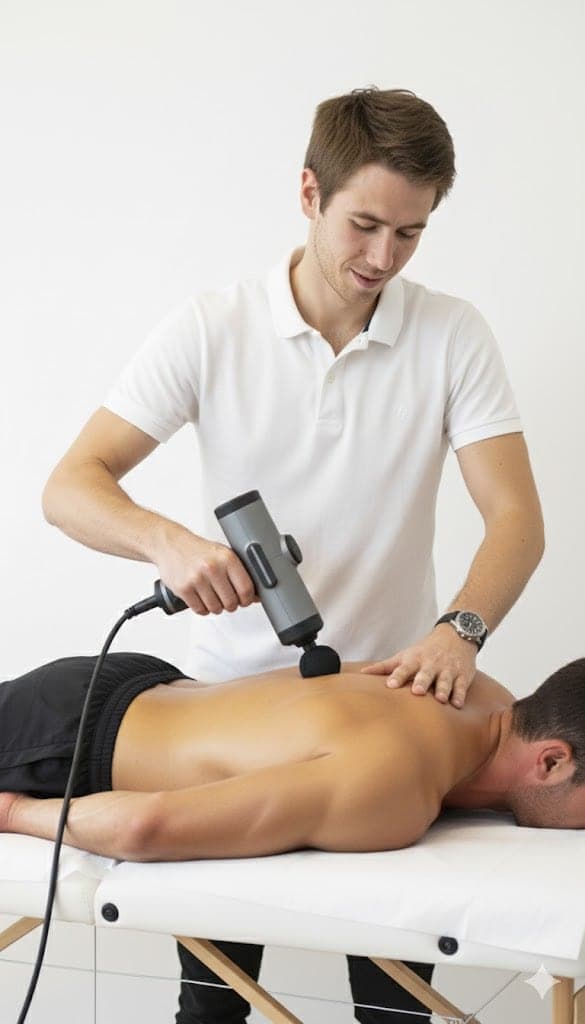
What I practice is not massage in the traditional sense – it’s mechanical tissue intervention based on precise understanding of fascial anatomy and cycling-specific dysfunction patterns. After a decade of clinical experience and continuous education in advanced soft tissue techniques, I’ve developed a methodology that combines mechanical precision with deep understanding of how cycling affects the human body. The specialized tool I use was specifically chosen for its ability to deliver consistent, controllable pressure at depths that human hands simply cannot reach.
The fundamental difference between traditional massage and my mechanical approach lies in pressure specificity and sustainability. Human hands, no matter how skilled, have limitations. Therapists fatigue, pressure varies throughout a session, and the maximum force that can be applied is limited by human strength and endurance. These variables mean that each treatment is different, making it impossible to deliver consistent results. More importantly, the pressure required to create lasting change in mature fascial adhesions often exceeds what hands can comfortably deliver for the sustained periods necessary for tissue remodeling.
My mechanical system eliminates these variables completely. The precision tool delivers exactly the same pressure, at exactly the same angle, for exactly the duration needed to create fascial release. I can work at 2-3 times the depth of traditional massage while maintaining perfect control over every aspect of the intervention. This consistency means that every session builds upon the previous one, creating cumulative tissue changes that lead to lasting improvements rather than temporary relief.
Let me describe what this looks like in practice. When I work on a cyclist’s hip flexor complex, I can position the tool at the precise angle needed to target the psoas major where it attaches to the lumbar transverse processes. The sustained pressure – maintained for 3-5 minutes at therapeutic intensity – creates a controlled inflammatory response that triggers fascial remodeling. This process, called mechanotransduction, converts mechanical stimulus into cellular changes that result in lasting tissue reorganization. Traditional massage simply cannot generate the sustained pressure required to initiate this biological response.
The clinical outcomes speak for themselves. Cyclists who’ve been managing chronic issues for years achieve complete resolution within 3-5 sessions. Power output increases as movement restrictions are eliminated. Comfort in the cycling position improves dramatically as postural adaptations are addressed at their source. These results aren’t temporary – they represent fundamental changes in tissue quality and movement patterns that enhance both performance and long-term joint health.
Precision targeting of cycling-specific tension patterns
Every serious cyclist develops predictable patterns of restriction that directly correlate with their position on the bike, training volume, and individual biomechanics. Through years of treating cyclists at every level, I’ve mapped these patterns with scientific precision. The anterior hip complex becomes chronically shortened due to sustained hip flexion. The posterior chain develops compensatory tension as it works to maintain spinal stability against gravity. The lateral fascial system experiences repetitive stress from the rotational component of pedaling. These aren’t random occurrences – they’re systematic adaptations that require equally systematic intervention.
What sets my approach apart is the ability to target these specific patterns with millimeter accuracy. Traditional massage works in broad strokes, affecting large areas of tissue without the precision needed to address individual fascial planes. My mechanical system allows me to isolate specific structures and apply therapeutic pressure exactly where it’s needed. For example, when addressing IT band syndrome in cyclists, I don’t just work on the IT band itself – I target the tensor fasciae latae at its origin, the lateral intermuscular septum, and the specific attachment points where restrictions actually develop.
I recently worked with a competitive cyclist who was experiencing chronic knee pain that worsened during long climbs. Traditional treatment had focused on the knee itself, with minimal improvement. When I assessed her movement patterns, I discovered severe restrictions in her posterior hip capsule that were creating compensatory stress at the knee. The mechanical tool allowed me to access these deep capsular restrictions with sustained pressure, something impossible to achieve with manual techniques. After addressing the source of dysfunction in her hip, her knee pain resolved completely and hasn’t returned in over six months of racing.
This precision targeting extends beyond just addressing current problems – it’s about optimizing the entire kinetic chain for cycling performance. By identifying and addressing restriction patterns before they become symptomatic, I can help cyclists achieve position optimization that directly translates to improved power transfer and reduced injury risk. The mechanical advantage of being able to work at therapeutic depth with perfect consistency means that each intervention creates lasting change rather than temporary relief.
The key insight that drives my approach is understanding that cycling dysfunction occurs in layers. Surface restrictions may be what you feel, but the underlying fascial adhesions in deep tissue planes are what create and maintain the problem. My mechanical system allows me to work through these layers systematically, addressing restrictions at every level of the fascial system to create comprehensive tissue change that supports optimal cycling biomechanics.
The science of post-exercise tissue recovery and adaptation
Understanding what happens to tissue during the recovery phase is crucial for any serious cyclist. The exercise-induced stress of cycling triggers a complex cascade of physiological responses that extend far beyond simple muscle fatigue. During intense or prolonged cycling, microscopic damage occurs in muscle fibers, fascial planes experience mechanical stress, and the inflammatory response initiates tissue repair processes. How effectively your body navigates this recovery phase determines not just how you feel the next day, but your long-term tissue quality and performance capacity.
The traditional view of recovery focuses primarily on metabolic restoration – replacing glycogen stores, clearing lactate, and managing hydration. While these factors are important, they represent only a fraction of what’s actually happening during the recovery process. The fascial system, which comprises 30% of your total muscle mass, undergoes significant changes during exercise that require specific intervention for optimal recovery. Fascial tissue has a much slower metabolic rate than muscle tissue, meaning that restrictions and adhesions formed during exercise can persist for days or weeks without appropriate treatment.
This is where mechanical intervention becomes crucial. The controlled pressure and tissue mobilization I provide accelerates the natural healing process by increasing local blood flow, promoting lymphatic drainage, and facilitating the breakdown of inflammatory byproducts. More importantly, the mechanical stimulation prevents the formation of adhesions that would otherwise restrict movement and create pain patterns. Research in mechanobiology shows that appropriate mechanical stress during the healing phase promotes optimal tissue remodeling, resulting in stronger, more flexible tissue that’s better adapted to the demands of cycling.
What I observe clinically aligns perfectly with this research. Cyclists who receive regular mechanical tissue work during their recovery periods show dramatically improved tissue quality over time. Their muscles feel less dense, their movement patterns remain fluid, and they’re able to maintain higher training volumes without developing the chronic tension patterns that typically accompany serious cycling. This isn’t just about feeling better – it’s about creating physiological adaptations that enhance performance and longevity in the sport.
The timing of recovery intervention is also critical. The optimal window for mechanical tissue work is 6-24 hours post-exercise, when the inflammatory response is active but tissue is still pliable. This is when controlled mechanical stress can most effectively influence the healing process, promoting optimal tissue organization and preventing the formation of restrictive adhesions. Waiting longer means working against established dysfunction patterns rather than preventing their formation in the first place.
Nutritional support strategies for enhanced tissue recovery
My background in nutrition allows me to provide a comprehensive approach to cycling recovery that extends beyond mechanical tissue work. The nutritional choices you make in the hours and days following intense cycling directly influence tissue healing, inflammation management, and adaptation quality. Most cyclists focus exclusively on immediate post-workout nutrition – the protein and carbohydrate window – without considering the broader nutritional strategies that support fascial health and tissue regeneration.
Fascial tissue is primarily composed of collagen, a protein that requires specific amino acid profiles for optimal synthesis. Simply consuming protein isn’t enough – the body needs adequate vitamin C for collagen cross-linking, adequate zinc for tissue repair enzymes, and sufficient omega-3 fatty acids for inflammation resolution. I regularly see cyclists who consume adequate total protein but lack the micronutrient profile necessary for optimal fascial health. This nutritional gap manifests as slower recovery, increased injury susceptibility, and poor tissue quality that becomes apparent during manual assessment.
The timing of nutrient intake also plays a crucial role in tissue recovery. While the anabolic window for muscle protein synthesis is well-established, fascial tissue operates on a different timeline. Collagen synthesis peaks 12-24 hours post-exercise and remains elevated for up to 72 hours. This means that your nutritional choices throughout the entire recovery period influence fascial adaptation, not just the immediate post-workout window. I recommend specific nutrition protocols that support this extended recovery timeline, including targeted amino acid supplementation and strategic timing of anti-inflammatory nutrients.
Hydration represents another critical factor that most cyclists underestimate. Fascial tissue is 70% water, and even mild dehydration significantly impairs tissue pliability and recovery. The mechanical work I perform is enhanced when tissue is optimally hydrated, allowing for better penetration and more effective fascial release. I provide specific hydration protocols that go beyond simple fluid replacement, including electrolyte optimization and strategic timing of fluid intake to support tissue recovery processes.
What sets my approach apart is the integration of nutritional support with mechanical intervention. The combination of precise tissue work and targeted nutrition creates a synergistic effect that accelerates recovery and enhances adaptation quality. Cyclists who follow my complete protocol consistently achieve better outcomes than those who rely solely on mechanical treatment or nutrition alone. This comprehensive approach reflects my understanding that optimal cycling recovery requires addressing all the factors that influence tissue health and adaptation.
Sleep optimization and its impact on cycling recovery
The relationship between sleep quality and tissue recovery is more profound than most cyclists realize. During deep sleep phases, growth hormone release peaks, driving the tissue repair processes that are essential for recovery from cycling stress. The mechanical tissue work I provide creates micro-trauma that stimulates healing responses, but these responses require optimal sleep to reach their full potential. Poor sleep quality can negate many of the benefits of even the most sophisticated recovery interventions.
From my clinical experience, I’ve observed that cyclists who prioritize sleep hygiene achieve dramatically better outcomes from my mechanical tissue work. The controlled inflammation and tissue remodeling processes that I initiate require adequate recovery time to complete their full cycle. During slow-wave sleep, blood flow to muscles increases by up to 50%, delivering the nutrients and oxygen necessary for tissue repair. Growth hormone levels can increase by 500-1000% during deep sleep phases, driving the protein synthesis that creates stronger, more resilient fascial tissue.
The practical implications of this are significant. I recommend specific sleep optimization strategies that enhance the effectiveness of mechanical tissue treatment. Room temperature should be maintained between 65-68°F to promote deep sleep phases. Blue light exposure should be eliminated 2-3 hours before bedtime to support natural melatonin production. Most importantly, sleep consistency – going to bed and waking at the same times daily – maintains the circadian rhythms that govern tissue repair processes.
I often see cyclists who invest heavily in equipment, training, and even recovery modalities while completely neglecting their sleep quality. This is counterproductive because sleep represents the foundation upon which all other recovery interventions build. The mechanical tissue work I provide creates the stimulus for positive adaptation, but sleep is where that adaptation actually occurs. Cyclists who optimize their sleep see faster improvements, longer-lasting results, and better tolerance for training stress.
The integration of sleep optimization with mechanical tissue work creates a powerful synergy. The controlled tissue trauma from precise mechanical intervention, combined with optimal sleep for healing, produces tissue adaptations that enhance both performance and injury resistance. This holistic approach to recovery reflects my understanding that peak cycling performance requires addressing all the physiological systems that support adaptation and recovery.
Periodization of recovery interventions throughout training cycles
Just as training should be periodized for optimal adaptation, recovery interventions must be strategically timed and modified based on training phase, intensity, and individual response patterns. Through my decade of experience working with cyclists at all levels, I’ve developed specific protocols that align recovery techniques with training periodization to maximize both adaptation and performance. The mechanical tissue work I provide isn’t a one-size-fits-all approach – it’s precisely calibrated to support the specific demands of each training phase.
During base-building phases, when training volume is high but intensity is moderate, the focus of mechanical intervention is on maintaining tissue quality and preventing the accumulation of restriction patterns. Long, steady rides create specific adaptation patterns in the fascial system that, if left unaddressed, can limit power development in later training phases. My approach during base phases involves comprehensive tissue assessment and preventive intervention, targeting areas prone to restriction before they become symptomatic.
As cyclists transition into build phases with higher intensity work, the recovery protocol shifts to support the increased stress on both metabolic and mechanical systems. High-intensity intervals create different tissue stress patterns than endurance work, requiring modified intervention techniques. The mechanical tissue work becomes more targeted and intense, addressing the specific restrictions that high-power outputs create. Recovery frequency also increases, as the cumulative stress of intense training accelerates restriction formation.
Peak and competition phases require the most sophisticated approach to recovery periodization. The goal shifts from adaptation support to performance optimization, with mechanical interventions timed to enhance readiness without interfering with training adaptations. Pre-competition tissue work focuses on optimizing movement quality and eliminating any restrictions that could limit performance. Post-competition recovery emphasizes rapid restoration and preparation for subsequent efforts.
The key insight that guides my periodized approach is understanding that tissue adaptation follows the same principles as cardiovascular and metabolic adaptation – progressive overload, recovery, and supercompensation. By aligning mechanical interventions with training stress, I can enhance the body’s adaptive responses while preventing the accumulation of dysfunction that typically accompanies serious training. This systematic approach is why my clients consistently achieve peak performance while maintaining tissue health throughout demanding training cycles.
Technology integration: advanced tools for precision recovery
The specialized mechanical system I use represents the cutting edge of tissue intervention technology, designed specifically to address the limitations of traditional manual therapy. After extensively researching and testing various therapeutic tools, I selected equipment that delivers unparalleled precision, consistency, and depth of penetration. This isn’t about using technology for its own sake – it’s about leveraging mechanical advantages that simply cannot be achieved through manual techniques alone.
The core technology centers on controlled mechanical pressure delivery with real-time feedback systems that allow me to monitor tissue response throughout treatment. The tool can generate up to 60 pounds of sustained pressure while maintaining perfect angular control, enabling me to access fascial planes at depths of 4-6 centimeters. This level of precision means I can target individual fascial layers without affecting surrounding structures, creating therapeutic effects that are impossible to achieve manually.
What sets this system apart is its ability to maintain consistent pressure for extended periods. Effective fascial release requires sustained pressure for 3-5 minutes at therapeutic intensities. Human hands simply cannot maintain this level of force for the duration necessary to create lasting tissue change. The mechanical system eliminates this limitation, delivering exactly the pressure needed for exactly the time required to trigger mechanotransduction and fascial remodeling.
The feedback systems integrated into the technology provide real-time data on tissue response, allowing me to modify pressure, angle, and duration based on immediate tissue feedback. This creates a responsive treatment environment where interventions are continuously optimized based on how tissue is responding. The precision this enables is remarkable – I can detect and address fascial restrictions at their earliest stages, often before they become symptomatic.
The portability of the system means I can deliver this level of precision anywhere. I travel to my clients with a complete professional setup, including specialized treatment table and all necessary equipment. This eliminates the barriers that often prevent cyclists from accessing consistent, high-quality recovery interventions. The convenience factor is significant, but more importantly, it ensures that recovery can be integrated seamlessly into training schedules without disruption.
Case studies: transformative outcomes in competitive cycling
Let me share some specific examples that illustrate the transformative potential of precision mechanical tissue intervention. These cases represent typical outcomes when cyclists commit to addressing tissue dysfunction at its source rather than managing symptoms. The consistent theme across all successful cases is the dramatic difference in results when we target root causes with appropriate mechanical precision.
Case one involved a masters-level competitive cyclist who had been struggling with chronic lower back pain for over two years. She’d tried physical therapy, chiropractic care, massage therapy, and various self-treatment modalities with minimal improvement. Her pain was worst during long climbs and would persist for hours after rides. Initial assessment revealed severe restrictions in her psoas complex and posterior hip capsule that were creating a biomechanical lock in her pelvis. Traditional manual therapy had been unable to access these deep restrictions effectively.
Using precision mechanical intervention, I was able to target the specific fascial adhesions that were maintaining her dysfunction pattern. The sustained pressure possible with the mechanical system allowed me to work at depths that manual therapy cannot reach, breaking down mature adhesions that had been established for years. After four sessions spaced over six weeks, her movement patterns were completely normalized. She returned to pain-free riding and achieved her best climbing times in over five years. More importantly, her improvements have been maintained for over eighteen months with periodic maintenance sessions.
Another case involved a professional cyclist preparing for a major stage race who was experiencing power output limitations during sprints. Performance testing showed no cardiovascular or metabolic limitations, but his peak power was consistently below expectations. Detailed movement assessment revealed restrictions in his thoracolumbar fascia and lateral chain that were limiting his ability to transfer power effectively through his kinetic chain. These restrictions were subtle – not causing pain but significantly limiting performance.
The precision mechanical work addressed these performance-limiting restrictions with surgical accuracy. By targeting the specific fascial planes that were limiting power transfer, I was able to optimize his biomechanics for sprint performance. His peak power output increased by 8% over three sessions, and he went on to achieve multiple podium finishes during his target race series. This case perfectly illustrates how mechanical tissue intervention can enhance performance even in the absence of pain or obvious dysfunction.
Perhaps the most dramatic case involved a cyclist who had been told by multiple practitioners that she would need to reduce her training volume due to chronic IT band syndrome. She was experiencing pain throughout rides and significant post-ride inflammation. Traditional treatments had provided only temporary relief, and she was considering giving up competitive cycling. Assessment revealed that her IT band symptoms were secondary to restrictions in her hip capsule and gluteal complex that were creating altered movement patterns.
The mechanical system allowed me to address the true source of her dysfunction – dense adhesions in her posterior hip capsule that were forcing compensatory movement patterns. By working at therapeutic depth with sustained pressure, I was able to restore normal hip mechanics, which eliminated the stress on her IT band. She not only returned to full training volume but achieved personal best performances in her target events. This case demonstrates why addressing root causes rather than symptoms is essential for lasting resolution.
Building a comprehensive recovery protocol for serious cyclists
Creating an effective recovery protocol requires understanding that optimal restoration involves multiple physiological systems working in harmony. The mechanical tissue work I provide forms the foundation of this protocol, but true optimization requires integration with other evidence-based recovery modalities. After working with hundreds of cyclists over the past decade, I’ve developed a systematic approach that addresses every aspect of post-exercise recovery.
The cornerstone of effective recovery is consistent mechanical tissue intervention that prevents the accumulation of restriction patterns. This isn’t about scheduling massage when you feel tight – it’s about implementing systematic tissue maintenance that supports optimal biomechanics throughout your training cycle. I recommend mechanical tissue work every 7-10 days during base phases, increasing to every 5-7 days during intense training periods. This frequency ensures that restrictions are addressed before they become established, maintaining tissue quality that supports both performance and injury prevention.
Nutritional periodization represents the second pillar of comprehensive recovery. Just as training stress varies throughout periodization cycles, nutritional needs change based on training phase and recovery demands. During high-volume base training, emphasis should be placed on anti-inflammatory nutrients and fascial support compounds. Build phases require increased protein intake with specific amino acid profiles that support tissue repair under higher stress loads. Competition phases need precise timing of nutrients to optimize recovery between efforts while maintaining performance readiness.
Sleep optimization cannot be overlooked in any serious recovery protocol. The mechanical tissue work I provide creates controlled trauma that stimulates adaptation, but these adaptations occur primarily during deep sleep phases. I provide specific sleep hygiene protocols that enhance recovery quality, including environmental optimization, pre-sleep routines, and strategic timing of recovery interventions to align with natural circadian rhythms.
The integration of these elements creates a synergistic effect where each component enhances the others. Optimal tissue quality improves sleep quality by reducing pain and tension. Better sleep enhances the effectiveness of mechanical interventions by supporting tissue repair processes. Proper nutrition supports both tissue adaptation and sleep quality through neurotransmitter production and inflammatory management. This systematic approach is why my clients consistently achieve outcomes that exceed what any single intervention can provide.
Investment in long-term cycling performance and health
What I provide is not an expense – it’s an investment in your long-term cycling performance and quality of life. The difference is fundamental and reflects how serious athletes should approach their bodies and careers. Expenses are costs that provide temporary benefits or address immediate problems. Investments create value over time, generating returns that exceed the initial cost. Precision mechanical tissue intervention falls definitively into the investment category when viewed through the lens of performance optimization and injury prevention.
Consider the true cost of chronic dysfunction patterns in cycling. Persistent restriction patterns limit power output, reduce efficiency, and create compensatory movement patterns that increase injury risk. Over time, these limitations compound, reducing your ability to train effectively and compete at your potential. The financial costs are significant – reduced performance affects race results, limits sponsorship opportunities, and may require expensive medical interventions when compensation patterns eventually break down into injury.
The precision approach I’ve developed addresses these issues at their source, creating tissue adaptations that enhance performance while preventing injury. Clients regularly report power output improvements of 5-8% within the first month of treatment – gains that would require months of additional training to achieve through conventional methods. More importantly, the biomechanical optimizations prevent the development of chronic issues that typically plague serious cyclists as training volume and intensity increase over time.
From a career longevity perspective, the investment becomes even more compelling. Cycling places unique demands on the body that create predictable patterns of wear and adaptation. Without appropriate intervention, these patterns eventually limit performance and may force premature retirement from competitive cycling. The mechanical precision I provide creates tissue adaptations that support sustained high-level performance while maintaining joint health and movement quality throughout your cycling career.
The partnership approach I offer reflects this investment philosophy. Rather than providing isolated treatments that address immediate symptoms, I work with clients to develop comprehensive tissue maintenance programs that support their long-term goals. This means understanding your training periodization, competition schedule, and performance objectives, then aligning mechanical interventions to support optimal adaptation throughout your cycling development. The results speak for themselves – clients who commit to this approach consistently achieve performance levels they didn’t know were possible while maintaining tissue health that supports years of high-level cycling.
Frequently asked questions about advanced cycling recovery techniques
How often should serious cyclists receive mechanical tissue work for optimal recovery?
The frequency of mechanical tissue intervention depends on training phase, volume, and individual adaptation patterns. During base building phases, I recommend sessions every 7-10 days to maintain tissue quality and prevent restriction accumulation. As training intensity increases during build phases, frequency increases to every 5-7 days to address the higher mechanical stress on fascial systems. Competition phases may require more frequent intervention, with sessions timed strategically around key events. The key principle is consistency – regular mechanical work prevents problems rather than just treating established dysfunction. Most cyclists underestimate how quickly restriction patterns develop with serious training, which is why reactive approaches are less effective than systematic tissue maintenance.
What makes mechanical deep-tissue intervention superior to traditional massage for cyclists?
The superiority lies in precision, depth, and consistency. Traditional massage works broadly across tissue surfaces but cannot generate the sustained pressure needed to address fascial restrictions at their source. Cycling creates specific dysfunction patterns in deep fascial planes that manual therapy simply cannot reach effectively. My mechanical system delivers 3-4 times the pressure of human hands while maintaining perfect consistency throughout treatment. This allows me to target individual fascial layers with millimeter accuracy, creating tissue changes that resolve dysfunction durably rather than providing temporary symptom relief. The clinical outcomes demonstrate this difference clearly – clients achieve lasting results in 3-5 sessions rather than requiring ongoing management of symptoms.
Can nutrition really impact tissue recovery quality in cyclists?
Absolutely, and the impact is more significant than most cyclists realize. Fascial tissue is primarily composed of collagen, which requires specific nutritional building blocks for optimal synthesis and repair. Without adequate vitamin C for collagen cross-linking, sufficient zinc for tissue repair enzymes, and appropriate amino acid profiles, tissue recovery remains suboptimal regardless of other interventions. The timing of nutrient intake is also crucial – collagen synthesis peaks 12-24 hours post-exercise and remains elevated for up to 72 hours. Strategic nutrition during this window directly influences tissue adaptation quality. I’ve observed dramatically different recovery outcomes between cyclists who optimize their nutrition and those who focus solely on immediate post-workout fueling.
How does sleep quality affect the results of mechanical tissue work?
Sleep represents the foundation where tissue adaptation actually occurs. The mechanical intervention I provide creates controlled trauma that stimulates healing responses, but these responses require optimal sleep to reach completion. During deep sleep phases, growth hormone levels increase by 500-1000%, driving the protein synthesis that creates stronger fascial tissue. Blood flow to muscles increases by 50% during slow-wave sleep, delivering nutrients necessary for tissue repair. Poor sleep quality can negate many benefits of even sophisticated recovery interventions. Cyclists who optimize their sleep hygiene see faster improvements, longer-lasting results, and better tolerance for training stress. This is why my comprehensive approach includes specific sleep optimization protocols.
Why do traditional stretching routines fail to address cycling-related dysfunction?
Traditional stretching targets muscle length but fails to address fascial restrictions where cycling dysfunction actually occurs. Static stretching creates temporary muscle elongation while doing virtually nothing for the dense adhesions that form in fascial planes during repetitive cycling motions. These adhesions require sustained mechanical pressure at therapeutic intensities to break down – something passive stretching cannot provide. Additionally, cycling dysfunction occurs in specific patterns related to position and movement demands that generic stretching routines don’t address. The hip flexor complex, posterior chain adaptations, and lateral fascial restrictions that develop from cycling require precise intervention at exact locations and angles. This is why cyclists can stretch religiously while still developing chronic restriction patterns.
What should cyclists expect during their first mechanical tissue treatment session?
The initial session involves comprehensive movement assessment to identify specific dysfunction patterns, followed by targeted mechanical intervention based on findings. The pressure sensation is unlike traditional massage – it’s more intense and precisely focused, working at depths that may initially feel unfamiliar. Most clients experience immediate improvements in movement quality, often noticing increased range of motion before leaving the session. Some mild soreness is normal for 24-48 hours as tissue responds to the mechanical stimulus, similar to post-workout muscle soreness. The key difference is that each session builds upon previous work, creating cumulative improvements rather than temporary relief. By the third session, most clients experience significant resolution of chronic issues that have persisted despite other treatments.
How does mechanical tissue work integrate with existing training schedules?
Integration requires strategic timing based on training periodization and recovery needs. The optimal timing is 6-24 hours post-exercise when tissue is still pliable but inflammatory responses are active. I work with clients to schedule sessions that support their training objectives rather than interfering with adaptations. During intense training blocks, sessions are timed to enhance recovery between key workouts. Before competitions, timing focuses on optimizing movement quality without creating excessive tissue trauma. The mobile nature of my service eliminates scheduling barriers – I travel to clients with complete professional equipment, making it easy to integrate precise recovery work into demanding training schedules without disruption.
What long-term benefits can competitive cyclists expect from consistent mechanical tissue work?
Consistent mechanical intervention creates cumulative tissue adaptations that enhance both performance and career longevity. Clients regularly report sustained improvements in power output, movement efficiency, and comfort in cycling position. More importantly, the systematic approach prevents development of chronic restriction patterns that typically limit performance and require extensive rehabilitation later in cycling careers. Tissue quality improvements compound over time, creating resilience that supports higher training volumes and intensities. Many clients achieve performance levels they didn’t know were possible while maintaining joint health and movement quality throughout years of competitive cycling. The investment approach creates value that extends far beyond immediate performance gains.
Written by
Chris
Massage therapist & body mechanics specialist
Norwegian-certified with a Bachelor’s in Physical Education and Nutrition and over ten years of clinical practice, working from a portable table in clients’ homes across the Paphos district.
This article is general information from clinical practice, not a medical diagnosis. If you have severe, worsening or unexplained pain, numbness, weakness, or pain after an accident, see a doctor first.