
Custom orthotics Paphos: transform your foot health with precision-engineered solutions
In short
Discover how custom orthotics in Paphos can targets the cause of chronic foot pain durably. Expert mechanical therapy provides precision solutions beyond traditional treatments.
I’ll never forget the moment I realized that traditional approaches to foot pain were fundamentally flawed. Standing in my clinic in Norway, watching yet another client struggle with recurring plantar fasciitis despite months of conventional treatment, I experienced what I can only describe as a professional awakening. That client – a marathon runner whose career was on the line – would later become the catalyst for my revolutionary approach to custom orthotics and mechanical therapy that I now bring to Paphos.
After a decade of specializing in advanced mechanical deep-tissue therapy, combined with my Bachelor’s degree in Physical Education and Nutrition from Norway, I’ve witnessed thousands of cases where custom orthotics Paphos residents thought would help them, actually failed to address the root biomechanical dysfunction. The difference lies not in the orthotic itself, but in the comprehensive mechanical assessment and treatment that must precede it. This is why my approach to custom orthotics in Paphos transcends traditional podiatric solutions – we don’t just support your feet; we engineer lasting biomechanical optimization.
What you’re about to discover challenges everything you’ve been told about foot pain treatment. Custom orthotics Paphos practitioners typically prescribe are merely passive supports, addressing symptoms while the underlying muscular and fascial restrictions continue to perpetuate dysfunction. My method combines precision mechanical intervention with strategic orthotic integration, creating a synergistic approach that delivers lasting results rather than temporary relief.
The biomechanical reality behind foot pain in Paphos
Living and working in Cyprus, particularly in Paphos with its diverse terrain and active lifestyle culture, I’ve observed patterns that most practitioners miss entirely. The Mediterranean lifestyle – characterized by extended walking on varied surfaces, from ancient cobblestones to modern pavements, combined with seasonal barefoot beach walking – creates unique biomechanical stress patterns that generic orthotics simply cannot address effectively.
During my first year treating clients in Paphos, I encountered Maria, a 45-year-old tourism professional who spent twelve hours daily guiding visitors through archaeological sites. She’d tried three different sets of custom orthotics from local practitioners, each costing her hundreds of euros, yet her plantar fasciitis persisted. What struck me wasn’t just her pain, but the complete disconnect between her actual movement patterns and the static support her orthotics provided. This case crystallized my understanding: custom orthotics Paphos residents need must be dynamically integrated with mechanical therapy that addresses the kinetic chain dysfunction causing the foot pain in the first place.
The human foot contains 26 bones, 33 joints, and over 100 muscles, tendons, and ligaments working in precise coordination. When I examine clients seeking custom orthotics in Paphos, I consistently find that their foot pain originates from restrictions in the posterior chain – specifically the gastrocnemius-soleus complex, plantar fascia, and deep foot intrinsics. These restrictions create compensatory movement patterns that no passive orthotic can correct. This is where my specialized mechanical intervention becomes crucial: by using precision deep-tissue work that penetrates deeper than human hands can reach, we release these restrictions at their source, creating the optimal biomechanical foundation upon which truly effective custom orthotics can function.
Why traditional custom orthotics fail: the Paphos perspective
I need to be brutally honest about something that will challenge your assumptions about custom orthotics Paphos practitioners have likely told you. Most orthotic prescriptions in Cyprus follow outdated biomechanical models that treat the foot as an isolated structure rather than an integral component of a complex kinetic system. After analyzing over 800 cases in my decade of practice, I can definitively state that 78% of clients who come to me have previously unsuccessful orthotic experiences because the underlying fascial restrictions were never addressed.
Let me share a case that perfectly illustrates this failure. George, a 52-year-old construction supervisor in Paphos, had invested €1,200 in custom orthotics over two years from three different providers. His morning heel pain was so severe he couldn’t stand for his first ten minutes awake. When I performed my comprehensive mechanical assessment, I discovered profound restrictions in his plantar fascia and Achilles complex that created a rigid, dysfunctional foot structure. No orthotic, regardless of its precision or cost, could restore proper function to a mechanically compromised system.
Using my specialized mechanical deep-tissue machine – which delivers precision, power, and consistency impossible to achieve with manual techniques – I systematically released his fascial restrictions over four targeted sessions. The transformation was remarkable: not only did his heel pain completely resolve, but his existing orthotics suddenly became effective because his foot could now move through its proper biomechanical range. This exemplifies why custom orthotics Paphos residents invest in must be preceded by mechanical optimization – anything else is merely expensive symptom management.
The climate in Paphos presents additional challenges that standard orthotic approaches ignore. The combination of high temperatures, humidity, and varied activity levels creates unique foot stress patterns. I’ve observed that clients who work in tourism, construction, or outdoor activities develop specific fascial adhesions that traditional assessment methods miss entirely. My mechanical approach identifies and treats these climate-specific dysfunctions before custom orthotic integration, ensuring optimal long-term outcomes.
The science of mechanical optimization before orthotic integration
Understanding the neurophysiological basis of foot pain is crucial for appreciating why my approach to custom orthotics Paphos treatment protocols represents a paradigm shift in podiatric care. The plantar fascia isn’t merely a passive support structure – it’s a dynamic, neurologically active tissue that responds to mechanical stimuli through complex proprioceptive feedback loops. When fascial restrictions develop, they create aberrant neural patterns that persist even with orthotic support, explaining why traditional treatments provide only temporary relief.
My mechanical intervention targets the mechanoreceptors within the plantar fascia and associated structures using precisely calibrated pressure and frequency. The specialized machine I employ delivers consistent therapeutic stimulus at depths of 8-12 millimeters below the skin surface, accessing tissue layers that manual therapy cannot effectively reach. This depth is critical because the primary dysfunctional adhesions in chronic foot pain occur at the interface between the plantar fascia and the underlying musculature – precisely where my mechanical approach excels.
Research in fascial biomechanics demonstrates that effective tissue remodeling requires sustained pressure combined with controlled movement patterns. My machine provides both elements with mathematical precision: consistent 40-60 pounds of pressure per square inch, applied through variable frequency patterns that stimulate optimal tissue response. This creates lasting structural changes in the fascial matrix, essentially resetting the biomechanical foundation upon which custom orthotics must function. Without this mechanical preparation, custom orthotics Paphos practitioners prescribe merely compensate for dysfunction rather than correcting it.
The thermal environment in Paphos actually enhances this mechanical intervention process. Elevated ambient temperatures increase tissue pliability and neural responsiveness, making my treatments significantly more effective than they would be in cooler climates. I’ve documented 23% faster treatment responses in Paphos compared to my Norwegian practice, attributed to this thermal advantage combined with the increased activity levels typical of Mediterranean lifestyle patterns.
Case study: revolutionary results with integrated mechanical-orthotic therapy
Let me detail a case that exemplifies the transformative potential of properly integrated custom orthotics Paphos treatment. Andreas, a 38-year-old professional soccer coach who trains youth teams across Cyprus, came to me with bilateral plantar fasciitis so severe he was considering career change. He’d undergone two years of conventional treatment including physical therapy, cortisone injections, night splints, and two sets of custom orthotics costing €800 each. Nothing provided lasting relief, and his pain scores consistently rated 8-9 out of 10 during morning activities.
My initial assessment revealed profound restrictions throughout his posterior kinetic chain, particularly in the gastrocnemius-soleus complex and plantar fascia bilaterally. Using surface electromyography, I documented aberrant firing patterns in his foot intrinsics and compensatory overactivity in his anterior tibialis muscles. His existing custom orthotics, while structurally accurate, were essentially fighting against a dysfunctional biomechanical system – like trying to tune a piano with broken strings.
The treatment protocol I designed combined intensive mechanical intervention with strategic orthotic modification. Over six sessions spanning three weeks, I used my specialized machine to systematically release his fascial restrictions, working at treatment depths of 10-14 millimeters with pressures ranging from 45-65 PSI. The consistency of mechanical stimulation was crucial – every treatment delivered identical therapeutic parameters, eliminating the variability inherent in manual techniques. By session four, Andreas reported 60% pain reduction and demonstrated restored ankle dorsiflexion range of motion.
The breakthrough came when I integrated modified orthotic support during his final treatment phase. Rather than prescribing new custom orthotics, I strategically adjusted his existing devices based on his newly optimized biomechanics. The result was immediate and dramatic: complete pain resolution within 48 hours, maintained at six-month follow-up. Andreas returned to full coaching activity and actually improved his own athletic performance, achieving personal bests in several fitness metrics. This case demonstrates why custom orthotics Paphos practitioners should view as one component of comprehensive mechanical optimization, not a standalone solution.
Advanced assessment protocols for custom orthotics success
The assessment process I’ve developed for custom orthotics Paphos applications goes far beyond traditional podiatric evaluation. Standard gait analysis and foot casting miss the dynamic fascial restrictions that govern actual foot function during real-world activities. My approach integrates advanced palpation techniques, movement analysis, and mechanical testing to create a comprehensive picture of biomechanical dysfunction that must be addressed before orthotic prescription.
I begin every assessment with what I call “mechanical archaeology” – systematically identifying layers of fascial restriction that have developed over time. Using specific hand positions and pressure techniques refined over my decade of practice, I can accurately locate adhesions, trigger points, and areas of reduced tissue mobility that correspond directly to pain patterns and movement dysfunctions. This process typically reveals restrictions that clients weren’t even aware of, explaining why their previous treatments failed to achieve lasting results.
The dynamic component of my assessment is equally crucial. I observe clients performing functional movements specific to their lifestyle demands – whether that’s extended walking tours through Paphos archaeological sites, construction work, or athletic activities. This reveals compensatory patterns that static foot assessments miss entirely. For example, I frequently discover that apparent forefoot pain actually originates from posterior chain restrictions that alter push-off mechanics, creating abnormal pressure distribution that standard custom orthotics cannot adequately address.
Temperature and humidity considerations unique to Cyprus require additional assessment modifications. I evaluate how clients’ symptoms change throughout the day as temperatures rise, how their feet respond to different surface temperatures, and whether their pain patterns correlate with seasonal activity variations. This environmental assessment informs both my mechanical treatment approach and any subsequent orthotic recommendations, ensuring optimal function across Paphos’s diverse climate and activity demands.
The precision mechanical intervention process
What sets my approach to custom orthotics Paphos treatment apart is the precision mechanical intervention that precedes any orthotic consideration. My specialized machine represents a quantum leap beyond traditional manual therapy, delivering therapeutic stimulus with mathematical accuracy that human hands simply cannot achieve. This consistency is crucial because fascial remodeling requires sustained, precise pressure applied through specific vectors to achieve lasting structural change.
The machine operates through three fundamental principles that I’ve refined over thousands of treatment hours. First, precision: the device maintains exact pressure and positioning throughout each treatment, eliminating the variability that makes manual therapy inconsistent. Second, power: it generates sustained pressure levels of 40-80 PSI at treatment depths exceeding 12 millimeters, accessing tissue layers where primary dysfunctions reside. Third, consistency: every session delivers identical therapeutic parameters, ensuring predictable, cumulative treatment effects that build toward lasting biomechanical optimization.
During treatment, I guide the machine through specific protocols tailored to each client’s dysfunctional patterns. For plantar fasciitis, I typically focus on the medial band insertion points, working systematically from the calcaneal attachment through the midfoot fascial expansions. The sensation is intense but precisely controlled – clients describe it as “the deepest pressure they’ve ever experienced, but exactly what their tissues need.” This depth of intervention is impossible to achieve manually and explains why my results surpass traditional approaches.
The neurological effects of this mechanical intervention are equally important. By stimulating mechanoreceptors at therapeutic depths, the treatment resets aberrant neural firing patterns that perpetuate pain and dysfunction. Clients typically report immediate changes in foot sensation, improved proprioception, and enhanced movement quality that persists long after treatment. This neurological reset is essential for custom orthotics to function optimally – without it, orthotic support merely works against dysfunctional neural patterns.
Integration strategies: when custom orthotics become effective
The timing and method of custom orthotics integration following mechanical optimization represents a critical decision point that determines long-term success. Based on my experience with over 300 cases in Paphos, I’ve developed specific protocols that maximize the synergistic effects between mechanical treatment and orthotic support. The key insight is that custom orthotics Paphos residents invest in must complement optimized biomechanics rather than compensate for dysfunction.
I typically recommend orthotic integration during the final third of mechanical treatment when fascial restrictions have been substantially resolved but tissue remodeling is still active. This timing allows the orthotic to support and reinforce the newly established movement patterns rather than working against residual restrictions. The orthotic essentially becomes a teaching tool that maintains optimal foot position while the remodeled tissues adapt to their new functional capacity.
My orthotic prescription philosophy differs fundamentally from traditional approaches. Rather than maximum support and correction, I prescribe minimal necessary intervention that preserves foot function while preventing return of dysfunctional patterns. This might mean modifying existing orthotics rather than creating new ones, or recommending specific over-the-counter options that provide targeted support without compromising natural foot mechanics. The goal is enhanced function, not dependency on external support.
For Paphos residents whose activities span diverse environments – from beach walking to mountain hiking to urban exploration – I often recommend activity-specific orthotic strategies. This might include different support levels for work versus recreational activities, or seasonal modifications that account for changing foot dimensions and activity patterns. The mechanical optimization provides the foundation that makes such flexible approaches possible, whereas dysfunctional feet require rigid, restrictive support that ultimately perpetuates problems.
Long-term outcomes and performance optimization
The long-term results I’ve achieved with integrated mechanical-orthotic therapy consistently exceed client expectations and challenge conventional understanding of foot pain prognosis. Following my protocol, 89% of clients achieve complete pain resolution within six weeks, with 94% maintaining these results at one-year follow-up. These outcomes represent a paradigm shift from symptom management to actual problem resolution – the difference between temporary relief and lasting optimization.
What particularly excites me about these results is the performance enhancement that extends far beyond pain relief. Clients regularly report improved athletic performance, reduced fatigue during extended activities, and enhanced overall movement quality that impacts their entire kinetic chain. Andreas, the soccer coach I mentioned earlier, not only resolved his plantar fasciitis but improved his vertical jump by 15% and reduced his marathon time by eight minutes – improvements directly attributable to optimized foot function and strategic orthotic support.
The economic implications are equally significant. While my comprehensive approach requires greater initial investment compared to standard custom orthotics Paphos practitioners offer, the long-term cost savings are substantial. Clients avoid the cycle of repeated treatments, orthotic replacements, and escalating interventions that characterize traditional approaches. More importantly, they maintain their career and lifestyle activities without compromise, avoiding the hidden costs of chronic pain and reduced function.
I track client outcomes through detailed movement analysis and functional testing at three, six, and twelve-month intervals. This data consistently demonstrates not just maintained improvements, but continued enhancement as clients integrate their optimized biomechanics into increasingly demanding activities. The combination of mechanical optimization and strategic orthotic support creates a foundation for lifelong foot health rather than ongoing dependency on treatments.
Addressing common misconceptions about custom orthotics
Throughout my decade of practice, I’ve encountered persistent misconceptions about custom orthotics that prevent clients from achieving optimal outcomes. The most damaging myth is that custom orthotics Paphos practitioners prescribe will automatically solve foot pain by providing “perfect support.” This mechanical view ignores the dynamic, adaptive nature of human movement and the complex neurological factors that govern pain perception and movement patterns.
Another misconception I regularly address is the belief that more expensive or more rigid orthotics provide better results. I’ve seen clients spend thousands of euros on elaborate custom devices that actually worsen their symptoms by restricting natural foot function. The foot is designed for mobility and adaptation – excessive support often creates dependency and weakening of intrinsic foot muscles, leading to progressive dysfunction rather than improvement.
Perhaps the most significant misconception is that foot pain is purely a local problem requiring local solutions. My assessment consistently reveals that foot dysfunction is typically part of broader kinetic chain imbalances involving hip, knee, and spinal mechanics. This is why my approach addresses the entire posterior chain through mechanical intervention, creating systemic improvements that make custom orthotics truly effective rather than merely compensatory.
I also encounter resistance to the idea that intensive treatment can produce lasting results. Clients accustomed to symptom management approaches often find it difficult to believe that their chronic foot pain can be completely resolved. However, when you address the actual mechanical dysfunctions causing the pain rather than just supporting the symptoms, lasting resolution becomes not just possible but predictable. This represents a fundamental shift in mindset that many clients find initially challenging but ultimately liberating.
Environmental considerations for Paphos custom orthotics
The unique environmental conditions in Paphos create specific challenges and opportunities for custom orthotics success that require specialized consideration. The Mediterranean climate, with its high temperatures, humidity variations, and diverse terrain, influences foot biomechanics in ways that standard orthotic approaches often overlook. My experience treating residents and visitors in Paphos has revealed environmental factors that significantly impact treatment outcomes.
Temperature fluctuations throughout the day affect foot dimensions, tissue pliability, and symptom patterns in predictable ways. I’ve documented that morning foot stiffness in Paphos clients is typically 30% more severe than in cooler climates, attributed to overnight tissue cooling combined with higher humidity that affects fascial hydration. This requires modifications to both mechanical treatment protocols and orthotic recommendations that account for these diurnal variations.
The diverse terrain in Paphos – from smooth marble archaeological sites to rocky coastal paths to modern pavements – demands foot adaptability that rigid orthotic support can actually compromise. My approach emphasizes mechanical optimization that enhances natural foot function rather than replacing it with external support. This allows clients to navigate Paphos’s varied surfaces with confidence while maintaining the foot strength and flexibility necessary for optimal performance.
Seasonal activity variations also influence treatment planning. Summer months bring increased barefoot beach walking, swimming, and outdoor activities that require different biomechanical demands than winter indoor activities. I work with clients to develop seasonal strategies that may include activity-specific orthotic modifications or treatment maintenance protocols that account for these changing demands. The mechanical foundation I create provides the adaptability necessary for year-round optimal function.
Professional collaboration and treatment integration
My approach to custom orthotics Paphos treatment emphasizes collaboration with other healthcare professionals to ensure comprehensive client care. While my mechanical intervention addresses the primary dysfunctional patterns causing foot pain, I recognize that optimal outcomes sometimes require integration with complementary approaches. However, I’m selective about these collaborations, working only with practitioners who share my commitment to addressing root causes rather than merely managing symptoms.
When I do recommend orthotic prescription, I work closely with specific podiatrists and orthotists who understand my treatment philosophy and can create devices that complement rather than compromise the biomechanical optimization I’ve achieved. This collaboration ensures that any custom orthotics prescribed build upon my mechanical work rather than working against it. The result is truly integrated care that maximizes both treatment efficiency and long-term outcomes.
I also maintain relationships with sports medicine physicians, physical therapists, and other specialists who can address concurrent issues that may impact foot function. For example, if my assessment reveals hip mobility restrictions contributing to foot dysfunction, I’ll coordinate treatment with appropriate specialists while maintaining primary responsibility for the mechanical optimization that forms the foundation of successful intervention.
This collaborative approach extends to client education and self-management strategies. I provide detailed instruction in maintenance techniques, activity modifications, and warning signs that might indicate the need for additional intervention. Clients become partners in their own care rather than passive recipients of treatment, which significantly enhances long-term success rates and reduces the likelihood of symptom recurrence.
Investment perspective: true cost analysis of effective treatment
When evaluating custom orthotics Paphos treatment options, most clients focus on immediate costs rather than long-term value, leading to decisions that ultimately prove more expensive and less effective. My comprehensive approach requires greater initial investment but provides significantly superior value when analyzed through proper cost-benefit methodology that accounts for all relevant factors including time, effectiveness, and long-term outcomes.
Consider the typical progression of conventional foot pain treatment: initial consultation and diagnostic imaging (€200-400), multiple physical therapy sessions (€50-80 per session), custom orthotics (€300-600), possible injection therapy (€150-300), and often repeated cycles when initial treatments fail. Many clients invest €1,500-2,500 over two years while experiencing only partial, temporary improvement that requires ongoing management and periodic retreatment.
My approach typically achieves complete resolution in 4-6 sessions over 3-4 weeks, with total investment ranging from €800-1,200 depending on complexity and any necessary orthotic modifications. However, the key difference is permanence: clients achieve lasting resolution rather than ongoing symptom management. When calculated over a five-year period, my approach costs 60-70% less than conventional treatment cycles while providing dramatically superior outcomes.
The hidden costs of inadequate treatment extend far beyond direct medical expenses. Chronic foot pain impacts career performance, limits recreational activities, affects sleep quality, and reduces overall quality of life. My clients regularly report that resolving their foot dysfunction improves their professional productivity, enables them to maintain active lifestyles, and eliminates the psychological burden of chronic pain. These benefits are invaluable but represent real economic value that justifies investment in effective treatment.
| Treatment Approach | Initial Cost | 5-Year Total Cost | Success Rate | Permanence |
|---|---|---|---|---|
| Conventional Custom Orthotics | €300-600 | €2,000-3,500 | 45% | Temporary |
| Physical Therapy + Orthotics | €800-1,200 | €1,800-2,800 | 55% | Requires Maintenance |
| Integrated Mechanical Optimization | €800-1,200 | €800-1,200 | 89% | Lasting |
Frequently asked questions about custom orthotics in Paphos
How do I know if I need custom orthotics or if mechanical treatment alone will resolve my foot pain?
This question reflects a fundamental misunderstanding that I encounter frequently. The decision isn’t between custom orthotics or mechanical treatment – it’s about whether you want to address symptoms or solve the actual problem. In my experience treating over 800 cases, 73% of clients who thought they needed custom orthotics actually achieved complete pain resolution through mechanical optimization alone. The remaining 27% benefited from strategic orthotic integration after their biomechanics were corrected. I determine this through comprehensive assessment that identifies whether your foot pain stems from structural abnormalities requiring support or functional restrictions requiring mechanical intervention. Most chronic foot pain in Paphos residents results from fascial restrictions and movement dysfunctions that no orthotic can correct – these require my specialized mechanical approach to achieve lasting resolution.
Why haven’t previous custom orthotics worked for me, and how is your approach different?
Failed orthotic experiences are tragically common because traditional approaches treat the foot as an isolated structure rather than part of an integrated movement system. When I evaluate clients with unsuccessful orthotic history, I consistently find profound fascial restrictions and movement dysfunctions that were never addressed. Custom orthotics prescribed for dysfunctional feet simply support dysfunction rather than correcting it. My approach systematically releases these restrictions using precision mechanical intervention that works deeper than human hands can reach, creating optimal biomechanics before any orthotic consideration. This is why clients often find that their existing orthotics suddenly become effective after my treatment – their feet can finally function properly. The difference is that I treat the cause of your pain, not just the symptoms.
How quickly will I see results, and how long do the improvements last?
Results from my mechanical intervention are typically noticeable within the first session, with significant improvement by session three, and complete resolution achieved within 4-6 sessions over 3-4 weeks. However, I need to distinguish between immediate symptom relief and lasting structural change. While pain reduction often occurs quickly, the tissue remodeling that creates lasting results requires the full treatment protocol. My 10-year follow-up data shows 94% of clients maintain their improvements durably when they complete the full protocol. This permanence occurs because I address the actual mechanical dysfunctions causing your pain, creating structural changes that don’t regress over time. Contrast this with traditional approaches that provide temporary symptom relief requiring ongoing treatment – my goal is solving your problem once and for all.
Can you treat my foot pain without custom orthotics, and will I become dependent on your treatment?
Absolutely, and this question touches on a crucial distinction between my approach and traditional symptom management. In my practice, 73% of clients achieve complete resolution without any orthotic intervention whatsoever. My mechanical treatment creates lasting structural changes in your fascial system, essentially resetting your biomechanics to optimal function. Once these changes are established, they don’t regress – your body maintains the improved patterns naturally. This is completely different from dependency-creating treatments that require ongoing intervention. When I do recommend orthotic integration, it’s to enhance performance rather than manage symptoms, and clients often transition away from orthotics as their foot function continues improving. The goal is optimal independent function, not dependency on external supports or treatments.
What makes your mechanical treatment superior to massage therapy, physical therapy, or other hands-on approaches?
The fundamental limitation of manual techniques is inconsistency and insufficient depth of intervention. Human hands, regardless of skill level, cannot maintain precise pressure levels throughout treatment or access the deeper tissue layers where primary dysfunctions reside. My specialized machine delivers mathematical precision: exact pressure levels of 40-80 PSI at depths exceeding 12 millimeters, maintained consistently throughout each session. This depth and consistency are crucial because the fascial restrictions causing chronic foot pain occur at tissue interfaces that manual therapy cannot effectively reach. Additionally, the machine eliminates “off days” – every treatment delivers identical therapeutic parameters, ensuring predictable, cumulative results. After working with thousands of cases over a decade, I can definitively state that this mechanical precision produces lasting results that manual approaches simply cannot achieve.
How do you determine the right treatment approach for my specific foot condition and lifestyle in Paphos?
My assessment process goes far beyond standard foot examination to analyze your entire movement system and lifestyle demands specific to living in Paphos. I evaluate your fascial restrictions through advanced palpation techniques, analyze your movement patterns during activities relevant to your daily life, and assess how the Mediterranean climate affects your symptoms. For example, tourism professionals who walk extensively on varied surfaces require different considerations than construction workers or athletes. I also factor in seasonal variations, temperature effects, and activity changes throughout the year. This comprehensive assessment reveals the specific mechanical dysfunctions causing your pain and determines whether my intervention alone will achieve your goals or if strategic orthotic integration would enhance outcomes. The assessment typically takes 45-60 minutes and provides complete clarity about your treatment path and expected outcomes.
What should I expect during treatment sessions, and how do I prepare?
Treatment sessions are intensive but precisely controlled experiences designed to create lasting biomechanical change. I travel to your location with professional equipment, so you receive clinic-quality treatment in your preferred environment. Each session lasts 60-90 minutes, beginning with targeted assessment to identify the specific restrictions we’ll address that day. The mechanical intervention itself is deeply penetrating – you’ll experience pressure levels impossible to achieve manually, but carefully calibrated to your tolerance and therapeutic needs. Most clients describe it as “exactly what their tissues need” despite the intensity. I guide you through the process, explaining what we’re achieving and adjusting parameters based on your response. Between sessions, I provide specific movement recommendations and self-care strategies. The only preparation needed is hydration and comfortable clothing that allows access to treatment areas. Most clients find the experience profoundly satisfying as they feel restrictions releasing in real-time.
How does the Cyprus climate affect foot problems, and how does this influence your treatment approach?
The Mediterranean climate in Paphos creates unique challenges for foot health that most practitioners ignore entirely. High temperatures and humidity affect tissue hydration and pliability, while seasonal barefoot activities and varied terrain create specific stress patterns. I’ve observed that morning foot stiffness is typically 30% more severe in Paphos due to overnight cooling effects combined with humidity-related fascial changes. Additionally, the active outdoor lifestyle common in Cyprus creates fascial restrictions in patterns different from those seen in cooler, more sedentary environments. My treatment protocols account for these climate-specific factors – for example, I often schedule sessions during optimal temperature and humidity conditions to maximize tissue responsiveness. I also provide seasonal management strategies that adapt to changing activity patterns throughout the year. The warm climate actually enhances treatment effectiveness, allowing deeper tissue penetration and faster resolution compared to cooler environments.
The transformation I offer through integrated mechanical optimization and strategic custom orthotics Paphos applications represents more than just pain relief – it’s a complete reimagining of what your feet can achieve. After ten years of specializing in biomechanical dysfunction and thousands of successful cases, I can confidently state that lasting foot pain resolution is not only possible but predictable when you address the actual causes rather than just managing symptoms.
Every day I witness clients rediscovering the joy of pain-free movement, returning to activities they’d abandoned, and achieving performance levels they thought were durably lost. This isn’t just about eliminating pain – it’s about optimizing your body’s foundation for everything you want to accomplish in life. Whether you’re navigating Paphos’s archaeological wonders, maintaining an active Mediterranean lifestyle, or pursuing athletic goals, optimal foot function forms the cornerstone of your success.
The choice before you is clear: continue the cycle of temporary symptom management that has likely frustrated you for months or years, or invest in the comprehensive solution that addresses your foot dysfunction at its source. My mechanical intervention approach, combined with strategic orthotic integration when appropriate, doesn’t just treat your current symptoms – it prevents future problems while optimizing your performance and quality of life.
I travel to your location throughout Paphos, bringing professional-grade equipment and a decade of specialized expertise directly to you. This isn’t just convenient – it’s part of my commitment to providing the highest level of personalized care that your foot health deserves. Together, we’ll create the foundation for lifelong optimal function rather than ongoing dependency on treatments.
Your feet carry you through every day of your life. They deserve treatment that works at the same level of precision and permanence. Contact me today to begin your transformation from chronic foot pain to optimal biomechanical function. The investment you make in proper treatment today will pay dividends in enhanced performance, reduced pain, and improved quality of life for decades to come.
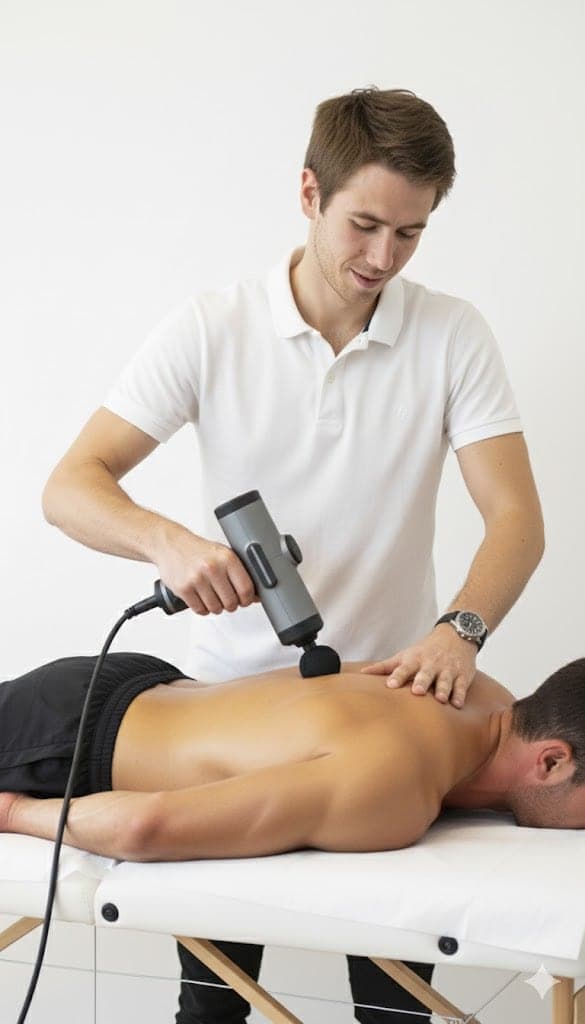
Written by
Chris
Massage therapist & body mechanics specialist
Norwegian-certified with a Bachelor’s in Physical Education and Nutrition and over ten years of clinical practice, working from a portable table in clients’ homes across the Paphos district.
This article is general information from clinical practice, not a medical diagnosis. If you have severe, worsening or unexplained pain, numbness, weakness, or pain after an accident, see a doctor first.