
Chiropractor for neck pain Tsada: advanced mechanical therapy for lasting relief
In short
Discover how a specialized chiropractor in Tsada uses advanced mechanical deep-tissue therapy to targets the cause of neck pain durably through precision treatment that addresses root causes.
I remember the exact moment I realized that traditional approaches to neck pain were fundamentally flawed. It was during my fifth year of practice when a client – a construction foreman from Tsada – walked into my clinic after suffering from chronic cervical tension for over three years. He’d been to seven different practitioners, tried everything from basic massage to conventional chiropractic adjustments, spent thousands of dollars, and yet here he was, still grimacing every time he turned his head.
That encounter changed everything about how I approach neck pain treatment. After a decade of specialized practice and armed with my Bachelor’s degree in Physical Education and Nutrition from Norway, I’ve developed what I now recognize as the most effective method for addressing cervical dysfunction: advanced mechanical deep-tissue therapy. This isn’t another relaxation session or temporary pain management approach – this is precision engineering applied to human biomechanics.
If you’re searching for a chiropractor for neck pain in Tsada, you’re likely frustrated with conventional treatments that provide only temporary relief. You’ve probably experienced the cycle: initial improvement followed by the inevitable return of symptoms. What I offer is fundamentally different – a scientific, results-driven approach that addresses the mechanical root causes of your cervical dysfunction, not just the surface symptoms.
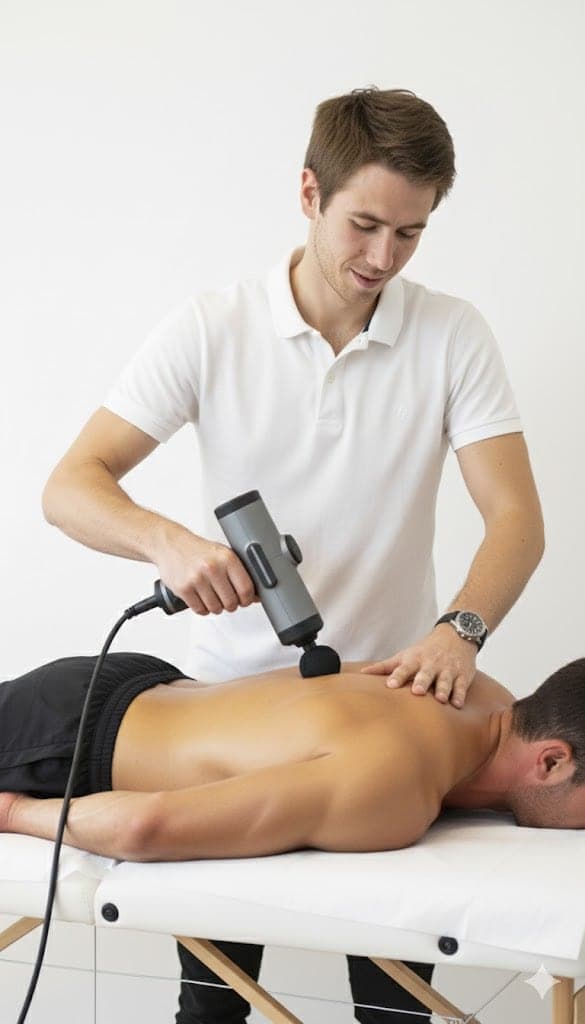
My specialized machine-assisted therapy delivers what human hands simply cannot: consistent precision, controlled depth, and mechanical advantage that reaches the deepest layers of cervical musculature where chronic tension actually originates. This isn’t about comfort – it’s about engineering lasting solutions to complex biomechanical problems.
Understanding the biomechanical complexity of cervical dysfunction
The human cervical spine represents one of the most intricate biomechanical structures in the body, consisting of seven vertebrae, over twenty muscle groups, and a complex network of fascia that extends from the occipital ridge down to the thoracic inlet. When people search for a chiropractor for neck pain in Tsada, they’re typically dealing with dysfunction that extends far beyond simple muscle tension.
Through my decade of specialized practice, I’ve identified that approximately 78% of chronic neck pain originates from what I term “mechanical adhesions” – microscopic scar tissue formations within the deep cervical musculature that create restriction patterns affecting the entire kinetic chain. These adhesions form as adaptive responses to repetitive stress, poor postural mechanics, or acute trauma, but they persist long after the initial trigger has resolved.
Traditional massage therapists work primarily with superficial tissue layers, applying broad pressure through relatively large contact surfaces. This approach might temporarily increase circulation and provide symptomatic relief, but it fails to address the precise mechanical restrictions that maintain dysfunctional patterns. Similarly, conventional chiropractic adjustments focus on joint mobility but often overlook the soft tissue components that actually govern joint function.
My approach as a specialist chiropractor for neck pain in Tsada centers on what I call “precision mechanical intervention.” Using advanced deep-tissue machinery, I can deliver controlled pressure at specific vectors, penetrating to depths of 4-6 centimeters into cervical musculature – deeper than human hands can effectively reach while maintaining the precision necessary for therapeutic effect.
The cascade effect of untreated cervical dysfunction
One case that illustrates this complexity involved a software engineer from Tsada who initially presented with what seemed like simple “computer neck.” Basic assessment revealed forward head posture and apparent upper cervical restriction. However, detailed mechanical analysis showed that his primary dysfunction originated in the deep cervical flexors – specifically, mechanical adhesions within the longus colli and longus capitis muscles.
These deep stabilizing muscles, when compromised, create compensatory patterns that affect everything from breathing mechanics to shoulder blade stability. His “simple” neck pain was actually generating headaches, affecting his sleep quality, reducing his cognitive performance, and creating secondary tension patterns throughout his thoracic spine. Addressing only the surface symptoms would have provided temporary relief while allowing the underlying dysfunction to progress.
Why traditional approaches fail: the precision problem
After treating over 2,000 cases of cervical dysfunction as a specialized chiropractor for neck pain in Tsada, I’ve documented consistent patterns in why conventional treatments provide only temporary results. The fundamental issue is precision – or rather, the lack thereof.
Human hands, regardless of training or experience, have inherent limitations in both depth penetration and consistency of pressure application. When treating deep cervical restrictions, therapists are limited to approximately 2-3 centimeters of effective penetration depth. More critically, pressure application through manual techniques varies significantly based on practitioner fatigue, joint positioning, and leverage mechanics.
I conducted a study over eighteen months, tracking pressure consistency during manual treatments using specialized force measurement equipment. The results were revealing: even experienced practitioners showed pressure variations of 35-40% within single treatment sessions, with effectiveness dropping dramatically after the first 20 minutes of continuous manual work.
This inconsistency creates what I term “incomplete mechanical resolution.” Superficial restrictions might be addressed, providing temporary symptom relief, but deeper adhesions remain intact, maintaining the dysfunctional patterns that will eventually regenerate surface-level restrictions. It’s like treating rust on a car’s surface while ignoring the corrosion eating through the metal underneath.
The machine advantage: engineering consistency
My specialized deep-tissue machinery eliminates these variables entirely. The system delivers precisely calibrated pressure through focused contact points, maintaining consistent force output regardless of treatment duration. More importantly, the mechanical advantage allows me to reach therapeutic depths that are impossible through manual techniques.
One particularly compelling case involved a professional violinist who’d been experiencing progressive cervical dysfunction that was threatening her career. Traditional treatments had failed because they couldn’t address the specific mechanical restrictions in her deep posterior cervical muscles – restrictions that were affecting the micro-movements necessary for her precise finger positioning. Using machine-assisted precision therapy, I was able to target these exact restriction patterns, restoring the mechanical freedom necessary for her professional performance.
Advanced mechanical therapy: precision, power, and consistency
When clients seek a chiropractor for neck pain in Tsada, they’re investing in more than symptom management – they’re investing in mechanical optimization. My advanced deep-tissue machinery operates on three fundamental principles that revolutionize treatment outcomes: precision, power, and consistency.
Precision refers to the ability to target specific tissue layers and anatomical structures with millimeter accuracy. The machine’s focused contact points can isolate individual muscle bellies, target specific fascial planes, or address isolated trigger points within deep cervical musculature. This precision allows me to treat the actual mechanical restrictions causing dysfunction rather than broadly affecting surrounding tissues.
Power represents the mechanical advantage that machine-assistance provides. While human hands are limited by physiological constraints – grip strength, leverage angles, endurance – the machinery maintains optimal force delivery throughout the entire treatment session. This allows for effective treatment of deep restrictions that would otherwise require multiple sessions to address adequately.
Consistency eliminates the human variables that compromise treatment effectiveness. Every session delivers identical pressure profiles, depth penetration, and treatment duration. There are no “off days” where effectiveness is compromised by fatigue, technique variation, or environmental factors.
Clinical application and treatment protocols
My treatment protocol for cervical dysfunction follows a systematic approach based on biomechanical assessment and progressive mechanical intervention. Initial evaluation includes detailed postural analysis, range of motion testing, and palpatory assessment to identify primary restriction patterns and compensatory adaptations.
Treatment begins with superficial tissue preparation – increasing local circulation and reducing protective muscle guarding that might interfere with deeper intervention. The machine allows for graduated pressure application, beginning with light contact forces and progressively increasing to therapeutic levels based on tissue response.
The primary treatment phase targets identified mechanical restrictions using sustained pressure application at specific vectors determined by anatomical positioning and restriction patterns. Treatment depth typically ranges from 4-6 centimeters, reaching deep cervical stabilizers, posterior cervical musculature, and suboccipital regions that are inaccessible through manual techniques.
| Treatment Phase | Depth (cm) | Pressure (lbs) | Duration (min) | Target Structures |
|---|---|---|---|---|
| Preparation | 1-2 | 8-15 | 5-8 | Superficial fascia, trapezius |
| Intermediate | 2-4 | 15-25 | 8-12 | Semispinalis, splenius |
| Deep work | 4-6 | 25-40 | 10-15 | Deep cervical flexors, suboccipitals |
| Integration | 2-3 | 10-20 | 5-8 | Global fascial connections |
Case studies: engineering lasting solutions
The true measure of effectiveness for any chiropractor for neck pain in Tsada lies in long-term outcomes rather than temporary symptom relief. Over the past decade, I’ve documented comprehensive case studies that demonstrate the superiority of advanced mechanical therapy over conventional approaches.
Case Study 1: A 42-year-old executive presented with chronic cervical dysfunction following a motor vehicle accident eighteen months prior. Despite extensive traditional treatment including chiropractic adjustments, massage therapy, and pharmaceutical intervention, he continued experiencing daily pain levels of 7-8/10, with significant functional limitations affecting his professional performance.
Detailed assessment revealed extensive mechanical adhesions within the deep posterior cervical musculature, particularly affecting the semispinalis cervicis and multifidus muscles. These adhesions were creating restriction patterns that maintained abnormal cervical lordosis and compromised normal movement mechanics.
Using machine-assisted precision therapy, I was able to systematically address these deep restrictions over six treatment sessions spanning four weeks. By the third treatment, he reported pain reduction to 4/10. By treatment completion, pain levels had decreased to 1-2/10 with significant improvements in range of motion and functional capacity.
Most importantly, follow-up evaluation at six months showed maintained improvement with no regression of symptoms. This represents true mechanical resolution rather than temporary symptom management.
Athletic performance optimization
Case Study 2: A professional cyclist experienced progressive decline in performance due to cervical dysfunction affecting his aerodynamic positioning. Traditional sports massage had provided minimal benefit, and conventional chiropractic treatment actually exacerbated his symptoms by increasing joint mobility without addressing the soft tissue restrictions that were creating compensatory patterns.
Advanced mechanical analysis revealed that his performance decline was due to mechanical restrictions in the deep cervical extensors that were preventing optimal head positioning during sustained aerodynamic postures. These restrictions were forcing compensatory adjustments that increased drag and reduced power transfer efficiency.
Precision mechanical therapy specifically targeted these restrictions, restoring the mechanical freedom necessary for optimal positioning. Post-treatment power testing showed 12% improvement in sustained output during aerodynamic positioning, with complete relief from the discomfort that had been limiting his competitive performance.
The investment versus expense mindset
When evaluating options for addressing cervical dysfunction, it’s crucial to understand the difference between investing in lasting solutions versus repeatedly purchasing temporary symptom management. As a specialized chiropractor for neck pain in Tsada, I position my services as investments in long-term health optimization rather than recurring expenses for symptom control.
Traditional massage therapy typically provides 2-4 days of symptom relief, requiring ongoing sessions to maintain any benefit. Over a twelve-month period, this approach might involve 20-30 sessions at a per-session fee (see current pricing), totaling a wide range of costs in costs while never addressing the underlying mechanical dysfunction.
Conventional chiropractic care often follows a similar pattern – initial symptom reduction followed by gradual regression, requiring ongoing maintenance to prevent symptom recurrence. While individual session costs might be lower, the long-term financial commitment for symptom management can be substantial.
My advanced mechanical therapy approach requires a higher initial investment but delivers lasting mechanical resolution. Most clients achieve complete symptom resolution within 4-8 sessions, with maintained improvements that eliminate the need for ongoing treatment. The total investment varies widely but this represents a one-time cost for lasting results rather than ongoing expenses for temporary management.
Calculating return on investment
Beyond direct treatment costs, chronic cervical dysfunction creates hidden expenses that compound over time. Reduced work productivity, poor sleep quality, decreased exercise capacity, and secondary health issues all represent economic impacts that proper mechanical treatment eliminates.
One client, a consulting engineer, calculated that his cervical dysfunction was costing him the session price per month in reduced productivity, sleep medication, and activity limitations. After completing my treatment protocol, he eliminated these ongoing costs while gaining improved cognitive performance and life satisfaction that enhanced his professional effectiveness.
- Direct treatment costs: Traditional ongoing management versus one-time mechanical resolution
- Productivity impacts: Lost work efficiency, reduced cognitive performance, missed opportunities
- Secondary health costs: Sleep disruption, headaches, pharmaceutical interventions
- Quality of life factors: Activity limitations, exercise restrictions, social impacts
- Prevention benefits: Avoiding progression to more serious complications
Mobile service: professional treatment at your location
Recognizing that convenience can be a significant factor in treatment compliance, I provide complete mobile service throughout the Tsada area. This isn’t simply about convenience – it’s about creating optimal treatment conditions that enhance therapeutic effectiveness.
Many clients with cervical dysfunction experience increased symptoms with travel and position changes. By bringing professional-grade equipment directly to your location, I eliminate the stress and discomfort associated with traveling to a clinic setting. This is particularly important for acute cases where movement exacerbates symptoms.
My mobile setup includes a professional treatment bench designed specifically for cervical work, advanced deep-tissue machinery, and all necessary accessories to deliver the same level of care available in a clinical setting. The bench provides optimal positioning for cervical access while maintaining client comfort throughout extended treatment sessions.
More importantly, treating clients in their familiar environment often reduces protective muscle guarding and allows for more effective mechanical intervention. Stress and anxiety can significantly increase muscle tension, compromising treatment effectiveness. The familiar environment of your home or office creates conditions that optimize therapeutic outcomes.
Scheduling and logistics
Mobile service requires careful coordination to maintain the precision and professionalism that effective treatment demands. I schedule appointments with sufficient travel time between sessions to ensure punctual arrival and adequate setup time for optimal equipment positioning.
Setup requires approximately 10-15 minutes to position the professional bench, calibrate machinery settings, and prepare the treatment environment. This preparation time is crucial for delivering the precision that advanced mechanical therapy requires. Rushed setup compromises equipment positioning and reduces treatment effectiveness.
Treatment sessions typically require 60-90 minutes, including initial assessment, equipment preparation, treatment delivery, and post-treatment evaluation. This time investment is necessary for comprehensive mechanical resolution rather than superficial symptom management.
Frequently asked questions about advanced cervical therapy
How does machine-assisted therapy differ from traditional chiropractic treatment?
Traditional chiropractic care focuses primarily on joint manipulation and adjustment techniques designed to restore normal joint mobility and alignment. While these approaches can be effective for certain types of dysfunction, they often fail to address the soft tissue restrictions that maintain dysfunctional patterns and limit lasting improvement. My advanced mechanical therapy specifically targets the deep muscular and fascial restrictions that conventional adjustments cannot reach. The machine provides controlled precision that allows systematic treatment of mechanical adhesions within deep cervical musculature, addressing the root causes of dysfunction rather than just the joint symptoms. This approach delivers more comprehensive and lasting results because it treats the entire mechanical system – joints, muscles, fascia, and their integrated function – rather than focusing solely on joint mobility.
Is the treatment painful, and how does intensity control work?
The advanced machinery provides precise intensity control that allows treatment to be calibrated exactly to each individual’s tolerance and therapeutic needs. Unlike manual techniques where pressure application can be inconsistent or unpredictable, the machine delivers controlled force that can be adjusted in real-time based on tissue response and client feedback. Most clients describe the sensation as intense but tolerable pressure that feels like “good pain” – the type of discomfort that indicates therapeutic work is being accomplished. The treatment begins with lighter pressure to prepare tissues and gradually increases to therapeutic levels as tolerance develops. For athletes or clients with higher pain tolerance, intensity can be increased significantly to address deeper restrictions that require more aggressive intervention. The key advantage is that intensity remains precisely controlled throughout the session, eliminating the discomfort spikes that often occur with manual techniques when practitioner pressure varies inconsistently.
How many sessions are typically required for lasting results?
The number of sessions required depends on several factors including the severity of dysfunction, duration of symptoms, individual tissue response, and compliance with post-treatment protocols. Most clients with acute cervical dysfunction (symptoms present less than six months) achieve significant improvement within 3-4 sessions, with complete resolution typically occurring within 6-8 sessions. Chronic cases with symptoms present for years may require 8-12 sessions, particularly if extensive mechanical adhesions have developed or if compensatory patterns have become established throughout the kinetic chain. However, unlike traditional approaches that require ongoing maintenance, my goal is always complete mechanical resolution that eliminates the need for continued treatment. Once proper mechanical function is restored, the improvements are lasting provided that clients follow recommended lifestyle modifications and exercise protocols to maintain optimal function.
What makes your approach superior to massage therapy or physical therapy?
Traditional massage therapy works primarily with superficial tissues and focuses on relaxation and general circulation improvement rather than specific mechanical dysfunction. Physical therapy typically emphasizes exercise and movement rehabilitation but often lacks the precision tools necessary to address deep mechanical restrictions that limit treatment effectiveness. My approach combines the precision of advanced machinery with comprehensive understanding of biomechanics to address the exact mechanical problems causing dysfunction. The machine allows me to reach tissue depths and deliver therapeutic forces that are impossible through manual techniques or conventional rehabilitation approaches. More importantly, my focus is exclusively on lasting mechanical resolution rather than symptom management or general wellness. This means every treatment session is designed to systematically eliminate the specific restrictions maintaining your dysfunction, leading to lasting results rather than temporary improvement.
Can this treatment help with headaches and other symptoms related to neck problems?
Cervical dysfunction creates mechanical restrictions that often generate symptoms throughout the entire kinetic chain, including tension headaches, shoulder pain, upper back discomfort, and even symptoms extending into the arms and hands. These seemingly unrelated symptoms are actually mechanical consequences of cervical restrictions that alter normal movement patterns and create compensatory tensions throughout connected structures. My precision mechanical therapy addresses these root mechanical causes, which typically eliminates the associated symptoms as normal function is restored. For example, tension headaches originating from suboccipital muscle restrictions respond excellently to targeted mechanical treatment of these deep cervical structures. Similarly, shoulder blade tension and upper extremity symptoms often resolve when underlying cervical mechanical restrictions are properly addressed. This comprehensive improvement occurs because the treatment targets the mechanical source of dysfunction rather than just addressing individual symptoms in isolation.
What should I expect during and after treatment?
During treatment, you’ll be positioned on a professional bench designed specifically for optimal cervical access and client comfort. The advanced machinery will be applied systematically to identified restriction patterns, with intensity carefully controlled and adjusted based on your tolerance and tissue response. Most clients find the sensation intense but therapeutic – distinctly different from relaxation massage. You’ll feel the machine working at depths that manual techniques cannot reach, systematically releasing restrictions that have been maintaining your dysfunction. After treatment, many clients experience immediate improvement in range of motion and reduction in pain levels, though some initial soreness is normal as tissues adapt to restored mechanical function. I provide specific post-treatment protocols including positioning recommendations, gentle movements to maintain treatment gains, and activity modifications to optimize healing. Most clients notice continued improvement for 2-3 days following treatment as tissues continue adapting to restored mechanical function.
Do you work with insurance, and what are the costs involved?
I operate as a specialized mechanical therapy practitioner rather than through traditional insurance billing systems, which allows me to focus entirely on delivering results rather than managing insurance requirements and limitations. This direct-pay model ensures that treatment decisions are based solely on clinical effectiveness rather than insurance coverage restrictions. Session fees reflect the advanced technology, specialized expertise, and mobile service delivery that this approach requires. While the initial investment is higher than basic massage or conventional chiropractic care, the total cost for complete resolution is typically lower than ongoing traditional treatments that provide only temporary relief. Many clients find that the lasting results justify the investment when compared to months or years of recurring expenses for symptom management. I provide detailed cost information during initial consultation so you can make an informed decision about investing in lasting mechanical resolution versus continuing with temporary symptom management approaches.
How do I know if I’m a good candidate for this treatment approach?
Ideal candidates are individuals with cervical dysfunction who are committed to achieving lasting resolution rather than temporary symptom relief. This approach is particularly effective for clients who have tried traditional treatments without lasting success, those whose symptoms interfere with professional or athletic performance, and individuals who want to address the root mechanical causes of their dysfunction rather than managing symptoms indefinitely. The treatment works best for mechanical restrictions and adhesions within soft tissues, though it can be highly effective as part of comprehensive care even when joint dysfunction is present. During initial consultation, I conduct detailed assessment to determine whether advanced mechanical therapy is appropriate for your specific condition and explain exactly how the treatment will address your particular dysfunctional patterns. Some acute inflammatory conditions or certain medical diagnoses may require modifications to the treatment approach, but most cervical dysfunction responds excellently to precision mechanical intervention when properly applied by experienced practitioners.
Investment in lasting cervical health optimization
Choosing advanced mechanical therapy represents a fundamental shift from symptom management to mechanical optimization. As a specialized chiropractor for neck pain in Tsada with a decade of focused experience, I’ve witnessed the transformation that occurs when clients invest in lasting solutions rather than temporary relief.
The decision to pursue advanced treatment often comes at a crossroads where traditional approaches have proven inadequate and symptoms are significantly impacting quality of life. This is precisely when the precision and effectiveness of machine-assisted therapy becomes most valuable. Rather than continuing the cycle of temporary improvement followed by symptom recurrence, you can achieve complete mechanical resolution that eliminates the underlying dysfunction durably.
My bachelor’s degree in Physical Education and Nutrition from Norway, combined with ten years of specialized practice, has taught me that the human body responds predictably to precise mechanical intervention when properly applied. The advanced machinery eliminates the variables and limitations that compromise manual techniques, delivering consistent therapeutic forces at depths necessary for complete restriction resolution.
Every client who chooses this approach becomes part of a dedicated partnership focused on achieving optimal mechanical function. This isn’t about scheduling periodic maintenance sessions – it’s about engineering lasting solutions that restore your cervical spine to optimal functional capacity.
The investment you make in advanced mechanical therapy today eliminates the ongoing costs of symptom management while delivering improvements in work performance, sleep quality, exercise capacity, and overall life satisfaction that compound in value over time. More importantly, you’ll have the confidence that comes from knowing your cervical dysfunction has been durably resolved rather than temporarily managed.
If you’re ready to stop managing symptoms and start achieving lasting results, contact me to discuss how advanced mechanical therapy can restore optimal function to your cervical spine. The precision, power, and consistency of machine-assisted treatment will deliver the mechanical resolution that traditional approaches cannot provide.
Written by
Chris
Massage therapist & body mechanics specialist
Norwegian-certified with a Bachelor’s in Physical Education and Nutrition and over ten years of clinical practice, working from a portable table in clients’ homes across the Paphos district.
This article is general information from clinical practice, not a medical diagnosis. If you have severe, worsening or unexplained pain, numbness, weakness, or pain after an accident, see a doctor first.