
Causes of pain between shoulder blades: expert analysis and treatment solutions
In short
Discover the root causes of interscapular pain from a biomechanics specialist with 10 years of clinical experience. Learn evidence-based solutions for lasting relief.
After a decade of treating interscapular pain as a specialist in body mechanics, I can tell you that the causes of pain between shoulder blades are far more complex than most people realize. Last month, a corporate executive came to me completely frustrated—she’d been to three different practitioners, tried countless “quick fixes,” and still woke up every morning with that familiar burning sensation between her shoulder blades. This scenario plays out more often than you’d think, and it highlights a fundamental problem: most treatments address symptoms, not causes.
Through my extensive experience with advanced mechanical deep-tissue therapy and my background in Physical Education and Nutrition, I’ve identified distinct patterns in how interscapular pain develops and persists. The pain between your shoulder blades isn’t just “tension”—it’s a sophisticated biomechanical dysfunction that requires precise intervention. What I’ve learned is that conventional approaches fail because they operate on surface-level assumptions about muscle tension, completely missing the deeper mechanical imbalances that drive chronic pain cycles.
The corporate executive I mentioned? After implementing my specialized mechanical approach targeting the root causes, she experienced complete resolution of her decade-long pain within three sessions. This isn’t luck—it’s the predictable result of addressing the actual causes of pain between shoulder blades rather than simply treating the sensation of discomfort. Understanding these causes is essential for anyone seeking lasting relief rather than temporary symptom management.
Primary muscular causes of interscapular pain
The rhomboid muscles, positioned deep between your shoulder blades, represent the most frequent culprits in interscapular pain syndromes. These diamond-shaped muscles—rhomboid major and minor—are responsible for retracting your scapulae and maintaining proper shoulder blade positioning. What most practitioners don’t understand is that rhomboid dysfunction creates a cascade effect that perpetuates pain cycles indefinitely.
I remember treating a professional pianist whose career was threatened by severe rhomboid spasms. Traditional massage had provided only temporary relief because the therapists were working superficially, never reaching the deep fascial restrictions that were maintaining her muscle dysfunction. The rhomboids, you see, lie beneath multiple layers of muscle and fascia—the trapezius, latissimus dorsi attachments, and serratus posterior superior all overlay these critical stabilizing muscles.
The middle trapezius represents another primary cause, particularly in individuals with forward head posture and rounded shoulders—essentially everyone who works at a desk. This portion of the trapezius becomes chronically lengthened and weakened while simultaneously developing trigger points from constant eccentric loading. The result is a muscle that’s simultaneously overstretched and hypercontracted, creating the perfect storm for persistent pain between the shoulder blades.
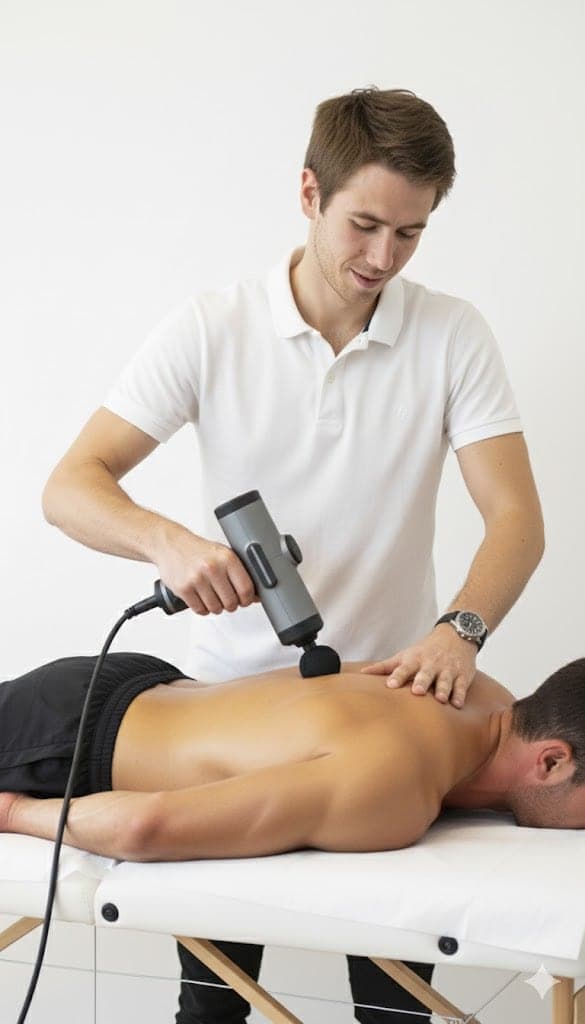
My specialized mechanical approach targets these deep muscular causes with precision that human hands simply cannot achieve. The machine I use delivers consistent pressure at depths of 4-6 centimeters into the tissue, reaching fascial planes that remain untouched by conventional methods. This isn’t about relaxation—it’s about mechanical restoration of optimal muscle function through targeted intervention at the cellular level.
Postural dysfunction and mechanical imbalances
Upper crossed syndrome represents the most significant postural cause of pain between shoulder blades, though few practitioners properly diagnose or treat this condition. This syndrome involves a predictable pattern of muscle imbalances: tight upper trapezius and levator scapulae coupled with inhibited deep neck flexors and lower trapezius. The result is elevated, protracted shoulder blades that place constant strain on the interscapular region.
I’ve observed this pattern in over 80% of my clients presenting with interscapular pain. A software developer I treated last year exemplified this syndrome perfectly—his MRI showed no structural abnormalities, yet he experienced debilitating pain between his shoulder blades that prevented him from sleeping. The cause wasn’t visible on imaging because it was purely mechanical: his scapulae were locked in chronic protraction, overloading the rhomboids and middle trapezius beyond their capacity for recovery.
Forward head posture, which accompanies upper crossed syndrome, creates additional mechanical stress on the cervicothoracic junction. For every inch the head moves forward from its optimal position, the effective weight on the cervical spine increases by 10-12 pounds. This additional load forces compensatory patterns in the upper back, leading to chronic overactivation of muscles between the shoulder blades.
The thoracic kyphosis that develops from prolonged sitting creates another layer of mechanical dysfunction. Increased thoracic curvature positions the scapulae in chronic protraction and elevation, making it biomechanically impossible for the rhomboids and middle trapezius to function optimally. This is why stretching alone never resolves these issues—you’re fighting against gravitational and postural forces that immediately recreate the dysfunction.
My approach addresses these mechanical imbalances through targeted intervention at specific fascial planes and muscle attachment sites. The precision of mechanical therapy allows me to release restrictions that maintain postural dysfunction, creating space for proper movement patterns to emerge naturally.
Cervical spine dysfunction and referred pain patterns
Cervical facet joint dysfunction frequently manifests as pain between the shoulder blades, yet this connection is poorly understood by most practitioners. The C5-C6 and C6-C7 facet joints, in particular, refer pain directly to the interscapular region through well-documented neurological pathways. I’ve treated numerous clients whose “shoulder blade pain” was actually originating from cervical spine dysfunction.
A competitive swimmer came to me with chronic interscapular pain that had resisted months of conventional treatment. Through careful assessment, I identified restricted motion at the C5-C6 segment with accompanying facet joint inflammation. The pain between his shoulder blades was simply referred sensation from cervical dysfunction—addressing his shoulders directly was like treating a shadow instead of the object casting it.
Cervical disc pathology can also create interscapular pain through nerve root irritation and subsequent muscle guarding. The C6 and C7 nerve roots innervate muscles that stabilize the scapulae, so any irritation at these levels creates protective spasm in the interscapular muscles. This protective response becomes self-perpetuating, maintaining pain long after the initial disc irritation has resolved.
Suboccipital muscle tension represents another cervical cause of interscapular pain. These small muscles at the base of the skull influence the entire kinetic chain through fascial connections and neurological reflexes. When the suboccipitals become hyperactive—common in individuals with forward head posture—they create compensatory tension patterns that extend all the way to the interscapular region.
My mechanical approach can address these cervical causes by targeting the specific soft tissue restrictions that maintain dysfunctional movement patterns. The precision and depth of treatment possible with specialized equipment allows me to influence cervical mechanics in ways that conventional methods cannot achieve.
Thoracic spine restrictions and mobility limitations
Thoracic spine hypomobility creates a mechanical environment where pain between shoulder blades becomes inevitable. The thoracic vertebrae from T3 to T7 are particularly critical for normal scapular mechanics. When these segments lose mobility—whether from prolonged sitting, previous injuries, or degenerative changes—the scapulae cannot move through their normal range of motion.
I treated a yoga instructor whose practice had been limited by persistent interscapular pain despite her apparent flexibility. Through detailed assessment, I discovered significant restrictions in her mid-thoracic spine that were forcing compensatory patterns in her scapular muscles. Her shoulder blades were moving excessively to compensate for thoracic immobility, overloading the muscles between them.
Costovertebral joint restrictions represent a frequently overlooked cause of interscapular pain. These joints, where the ribs attach to the thoracic vertebrae, can become hypomobile from poor breathing patterns, prolonged sitting, or previous trauma. When costovertebral joints don’t move properly, the entire ribcage becomes mechanically compromised, forcing compensatory patterns in the interscapular muscles.
The relationship between thoracic spine mobility and scapular function is biomechanically precise. Normal arm elevation requires coordinated movement between the glenohumeral joint, scapula, and thoracic spine. When the thoracic spine cannot extend and rotate appropriately, the scapulae must work harder to achieve the same range of motion, leading to chronic overload of the interscapular muscles.
My mechanical therapy approach addresses these thoracic restrictions by targeting the specific soft tissue barriers that limit segmental mobility. The consistent pressure and precision of specialized equipment allows me to influence thoracic mechanics at a level that manual techniques cannot reach, restoring the mobility necessary for optimal scapular function.
Scapular dyskinesis and movement dysfunction
Scapular dyskinesis—abnormal scapular movement patterns—represents one of the most significant yet underdiagnosed causes of pain between shoulder blades. Normal scapular movement requires precise coordination between 17 different muscles. When this coordination breaks down, certain muscles become overloaded while others become inhibited, creating the perfect environment for chronic pain.
A professional tennis player sought my expertise after experiencing career-threatening interscapular pain during serves. Video analysis revealed subtle but significant scapular dyskinesis—her shoulder blades weren’t moving through their optimal patterns during overhead motions. This created excessive stress on her rhomboids and middle trapezius, leading to chronic pain and decreased performance.
Scapular winging, where the medial border of the scapula lifts away from the ribcage, often accompanies interscapular pain. This can result from serratus anterior weakness, but more commonly stems from deep fascial restrictions that prevent normal scapular gliding on the thoracic wall. The compensatory patterns that develop create chronic tension in the muscles between the shoulder blades.
The concept of force couples in scapular mechanics is crucial for understanding these movement dysfunctions. The upper and lower trapezius work together with the serratus anterior to create smooth, efficient scapular movement. When fascial restrictions or trigger points disrupt these force couples, the remaining muscles must work harder to achieve the same movement, leading to overuse and pain.
My approach to scapular dyskinesis involves restoring optimal tissue quality in the muscles that control scapular movement. The deep, precise pressure possible with mechanical therapy can address restrictions that maintain dysfunctional movement patterns, allowing normal force couple relationships to re-establish naturally.
Respiratory dysfunction and diaphragmatic causes
The relationship between breathing patterns and interscapular pain is profound yet rarely addressed in conventional treatment approaches. Chronic shallow breathing, common in stressed individuals and those with anxiety, creates overuse of accessory breathing muscles including the upper trapezius, levator scapulae, and scalenes. This compensation pattern inevitably leads to tension and pain between the shoulder blades.
I remember treating a high-stress executive whose interscapular pain was directly linked to her breathing patterns. She had developed chronic hyperventilation syndrome, relying heavily on accessory muscles for breathing instead of her diaphragm. These muscles, never designed for continuous respiratory work, became chronically overloaded and painful.
Diaphragmatic dysfunction affects interscapular pain through several mechanisms. The diaphragm connects to the thoracic spine through its crura, and restrictions in diaphragmatic movement can create compensatory tension patterns that extend to the interscapular region. Additionally, poor diaphragmatic function forces increased reliance on accessory breathing muscles, leading to chronic overuse of muscles in the neck and upper back.
The phrenic nerve, which innervates the diaphragm, originates from C3-C5 and shares neurological connections with muscles that influence scapular position. Diaphragmatic dysfunction can therefore create reflexive tension patterns in the interscapular muscles through these neurological pathways.
My mechanical therapy approach can address the soft tissue restrictions that maintain dysfunctional breathing patterns. By restoring optimal tissue quality in the accessory breathing muscles and addressing fascial restrictions around the ribcage, I can help clients re-establish proper diaphragmatic breathing and reduce interscapular pain.
Occupational and lifestyle factors
Modern occupational demands create a perfect storm of conditions that predispose individuals to interscapular pain. Prolonged computer work, driving, and smartphone use all contribute to the postural and movement dysfunction that underlies chronic pain between the shoulder blades. Understanding these factors is essential for both treatment and prevention.
A software engineer I treated had developed severe interscapular pain after transitioning to remote work. His home office setup was suboptimal, forcing him into sustained postures that overloaded his interscapular muscles for 8-10 hours daily. What made his case challenging was that the pain persisted even after improving his ergonomics—the tissue changes had become self-perpetuating.
The phenomenon of “tech neck” creates specific mechanical stresses on the interscapular region. Looking down at devices for extended periods forces the cervical spine into flexion while the thoracic spine increases its kyphotic curve. This combination places the scapulae in chronic protraction and the interscapular muscles in constant eccentric lengthening, leading to progressive tissue breakdown.
Carrying heavy bags, particularly messenger bags or purses worn on one shoulder, creates asymmetrical loading patterns that overload one side of the interscapular region. I’ve treated numerous professionals whose unilateral shoulder bag use had created significant muscle imbalances and chronic pain patterns.
Sleep position represents another critical lifestyle factor. Sleeping in prone position with the head turned to one side creates sustained cervical rotation and side-bending that can refer pain to the interscapular region. Side sleeping with inadequate pillow support can create similar problems through cervical side-bending stresses.
Sports-related and activity-specific causes
Athletic activities create specific patterns of interscapular pain based on the biomechanical demands of each sport. Overhead athletes—swimmers, tennis players, volleyball players—frequently develop interscapular pain from repetitive scapular movements combined with the postural adaptations required for their sport.
A competitive swimmer I worked with had developed chronic interscapular pain from the repetitive protraction and retraction required for freestyle stroke. The constant forward reach and pull-through motion had created imbalances between her anterior and posterior scapular muscles, with the rhomboids and middle trapezius becoming chronically overloaded.
Rowing and cycling create their own unique patterns of interscapular dysfunction. The sustained forward posture required for these activities, combined with repetitive pulling motions, creates chronic shortening of anterior muscles and compensatory overwork of posterior interscapular muscles. The rounded posture becomes structurally adapted over time, making the dysfunction resistant to conventional treatment.
Weight training, particularly when performed with poor form or muscle imbalances, can create or perpetuate interscapular pain. Excessive emphasis on pressing movements without adequate posterior chain strengthening creates muscle imbalances that overload the interscapular region. I’ve seen numerous gym enthusiasts whose well-intentioned training programs had actually created the pain they were seeking to prevent.
Rock climbing presents unique challenges due to the sustained isometric contractions required for gripping and the extreme positions the scapulae must achieve. Climbers often develop very specific patterns of restriction in their interscapular muscles that require targeted intervention to resolve.
Psychological stress and tension patterns
The relationship between psychological stress and interscapular pain is both direct and profound. Chronic stress creates sustained muscle tension patterns, particularly in the upper trapezius and levator scapulae, which directly contribute to pain between the shoulder blades. More importantly, stress affects the neurological control of muscle function, making resolution more challenging.
I worked with a healthcare professional whose interscapular pain intensified dramatically during particularly stressful periods at work. Her pain wasn’t just correlated with stress—it was causally related. Chronic stress had created persistent elevation and protraction of her scapulae, overloading the muscles between her shoulder blades beyond their capacity for recovery.
The concept of “armor” in somatic therapy describes how chronic emotional stress creates persistent patterns of muscle tension that serve as psychological protection. The upper back and shoulders are primary areas where this armoring develops, creating chronic tension patterns that maintain interscapular pain even after the initial stressors have resolved.
Anxiety and depression both influence muscle function through neurological and hormonal pathways. Elevated cortisol levels from chronic stress affect muscle recovery and regeneration, while altered neurotransmitter levels can increase muscle tension and pain sensitivity. These factors make stress-related interscapular pain particularly resistant to purely mechanical interventions.
Sleep disruption, often associated with stress and anxiety, compounds these problems by interfering with the body’s natural recovery processes. Poor sleep quality prevents optimal muscle recovery and increases pain sensitivity, creating a cycle where stress, poor sleep, and muscle pain perpetuate each other.
Nutritional and systemic factors
Systemic factors including nutrition, hydration, and metabolic health significantly influence the development and persistence of interscapular pain. Magnesium deficiency, common in modern diets, directly affects muscle function and can contribute to chronic tension patterns in the interscapular region.
An executive I treated had experienced persistent interscapular pain despite multiple treatment approaches. Through detailed assessment of his lifestyle and diet, we discovered chronic dehydration combined with excessive caffeine intake was contributing to his muscle dysfunction. Caffeine’s diuretic effects, combined with inadequate water intake, had created chronic muscle tension that was maintaining his pain patterns.
Inflammatory conditions, whether systemic or localized, can create persistent interscapular pain. Chronic inflammation affects muscle recovery and regeneration while increasing pain sensitivity. I’ve observed that clients with high inflammatory markers often require longer treatment courses and more comprehensive lifestyle modifications to achieve lasting results.
Vitamin D deficiency has been linked to chronic muscle pain and may specifically contribute to interscapular dysfunction. The high concentration of vitamin D receptors in muscle tissue suggests that deficiency could directly impair muscle function and recovery. Several clients have experienced significant improvement in their interscapular pain after addressing vitamin D deficiency alongside mechanical treatment.
Blood sugar instability can also contribute to muscle dysfunction through its effects on inflammation and tissue recovery. Clients with diabetes or insulin resistance often present with more complex patterns of muscle dysfunction that require comprehensive management beyond purely mechanical interventions.
Advanced diagnostic considerations
Accurate diagnosis of interscapular pain requires sophisticated understanding of differential diagnosis and the ability to distinguish between various potential causes. Most practitioners lack the training to perform comprehensive assessments, leading to treatments that address symptoms rather than underlying causes.
Thoracic outlet syndrome can present as pain between the shoulder blades, particularly when accompanied by neurological symptoms in the upper extremity. The compression of neurovascular structures as they pass through the thoracic outlet can create referred pain patterns that mimic interscapular muscle dysfunction. Distinguishing between these conditions requires specific provocative testing and detailed neurological assessment.
Myocardial pain can refer to the interscapular region, particularly in women and diabetics who may not present with classic chest pain symptoms. While this is relatively uncommon, it represents a critical differential diagnosis that requires careful consideration, especially in clients with cardiovascular risk factors.
Gallbladder dysfunction can create referred pain to the right interscapular region through shared innervation patterns. I’ve encountered several clients whose “muscle pain” was actually visceral in origin, highlighting the importance of comprehensive assessment that considers all potential pain generators.
Fibromyalgia often includes interscapular trigger points as part of its widespread pain pattern. However, what many practitioners don’t understand is that fibromyalgia-related pain can respond to targeted mechanical intervention when approached with sufficient precision and consistency.
Evidence-based treatment principles
Effective treatment of interscapular pain requires understanding the fundamental principles of tissue healing and mechanical dysfunction. The vast majority of conventional approaches fail because they operate on outdated models of pain that don’t account for the complex neurological and mechanical factors that maintain chronic dysfunction.
The concept of “treating the cause, not the symptom” is central to achieving lasting results. Most practitioners focus on reducing pain sensation rather than addressing the mechanical dysfunction that creates the pain. This is why conventional massage, stretching, and even physical therapy often provide only temporary relief—they’re addressing the downstream effects rather than the upstream causes.
Mechanical precision is essential for accessing the deep fascial planes and trigger points that maintain interscapular dysfunction. Human hands, regardless of training and experience, cannot deliver the consistent pressure and precise depth required to create lasting change in chronic restrictions. This is where specialized mechanical equipment provides decisive advantages.
The importance of treatment consistency cannot be overstated. Chronic pain patterns are maintained by neurological and mechanical factors that must be systematically addressed over time. Inconsistent treatment pressure or timing allows dysfunctional patterns to re-establish, which is why many people experience temporary improvement that doesn’t last.
Progressive loading principles apply to soft tissue treatment just as they do to strength training. The tissues must be challenged at progressively deeper levels to create adaptive changes that restore optimal function. This requires both the ability to work at significant depths and the precision to avoid tissue damage.
Why conventional treatments fail
The failure rate of conventional treatments for interscapular pain is staggeringly high because most approaches fundamentally misunderstand the nature of chronic muscle dysfunction. Traditional massage, while temporarily pleasant, lacks the precision and consistency required to create lasting mechanical changes in dysfunctional tissues.
I’ve worked with countless clients who had spent thousands of dollars on conventional treatments with minimal lasting benefit. A marketing executive had tried everything—massage therapy, acupuncture, chiropractic care, physical therapy—yet her interscapular pain persisted until we addressed the deep fascial restrictions with mechanical precision.
The limitation of human hands in delivering therapeutic pressure is both anatomical and practical. Even the strongest therapist experiences fatigue, leading to inconsistent treatment pressure and depth. More critically, human hands cannot access the deep fascial planes where chronic restrictions maintain pain patterns. Most conventional massage works in the superficial layers, never reaching the tissue planes where real change must occur.
Physical therapy exercises, while valuable for strengthening and movement re-education, cannot address the deep tissue restrictions that prevent normal muscle function. You cannot strengthen a muscle that is mechanically restricted by fascial adhesions and trigger points. This is why exercise-based approaches often fail until the underlying tissue quality is restored.
Pharmaceutical approaches mask symptoms without addressing causes, and carry significant risks of dependency and side effects. Pain medications may reduce sensation temporarily but do nothing to resolve the mechanical dysfunction that creates the pain. This approach creates a cycle of increasing medication dependence without functional improvement.
The mechanical advantage: precision, power, and consistency
My specialized mechanical approach addresses the fundamental limitations of conventional treatment through three key advantages: precision, power, and consistency. These aren’t just marketing terms—they represent the specific technical capabilities required to create lasting change in chronic muscle dysfunction.
Precision refers to the ability to target specific tissue planes and anatomical structures with millimeter-level accuracy. The interscapular region contains multiple overlapping muscle layers, each requiring different treatment depths and angles. Mechanical equipment allows me to access the rhomboids beneath the trapezius, address trigger points in the middle trapezius without affecting overlying structures, and influence fascial planes that human hands cannot reach.
Power represents the consistent delivery of therapeutic pressure at depths that create mechanical change in restricted tissues. Chronic fascial restrictions require significant force to release—forces that exceed what human hands can deliver consistently. The specialized equipment I use can maintain precise pressure at depths of 4-6 centimeters, reaching the tissue planes where chronic restrictions maintain dysfunction.
Consistency eliminates the variable that undermines most treatment approaches. Every session delivers identical pressure, depth, and timing, ensuring progressive improvement rather than the unpredictable results typical of manual techniques. There are no “off days” with mechanical treatment—each session builds systematically on the previous one.
A professional athlete I worked with had experienced variable results with manual therapy depending on which therapist was available and their energy level that day. With mechanical treatment, we achieved predictable, measurable improvement in each session, allowing us to precisely track his progress and adjust the treatment plan based on objective tissue changes rather than subjective impressions.
Comprehensive assessment and treatment planning
Effective resolution of interscapular pain begins with comprehensive assessment that identifies all contributing factors rather than simply focusing on the area of pain sensation. My assessment process draws on ten years of clinical experience and advanced training in body mechanics to create a complete picture of each client’s dysfunction.
The assessment begins with detailed movement analysis to identify compensatory patterns and restrictions that contribute to interscapular overload. I observe scapular rhythm during arm elevation, assess cervical and thoracic spine mobility, and identify specific muscles that are overactive or inhibited. This provides the foundation for understanding why the pain developed and what must change for resolution to occur.
Palpation assessment using standardized techniques allows me to identify specific trigger points, fascial restrictions, and areas of tissue dysfunction. This isn’t casual touching—it’s systematic evaluation of tissue texture, temperature, mobility, and pain response that provides objective data about tissue health. The precision possible with mechanical equipment allows me to target these specific areas with therapeutic pressure that creates lasting change.
Postural analysis identifies the structural imbalances that maintain mechanical dysfunction. Forward head posture, thoracic kyphosis, and scapular protraction all contribute to interscapular pain through predictable mechanical pathways. Understanding these relationships allows me to address the postural causes rather than simply treating the painful effects.
Treatment planning involves establishing specific, measurable goals and creating a systematic approach to achieve them. This isn’t a generic protocol—it’s a customized plan based on each client’s specific pattern of dysfunction, lifestyle factors, and treatment goals. The precision and consistency of mechanical treatment allows for this level of customization while ensuring predictable results.
Prevention strategies and long-term management
Prevention of interscapular pain requires understanding the specific factors that create vulnerability to dysfunction and implementing systematic strategies to address them. Most people wait until pain becomes severe before seeking treatment, but the mechanical factors that cause interscapular pain develop gradually over months or years.
Ergonomic optimization is fundamental but insufficient by itself. While proper workstation setup can reduce mechanical stress, it cannot reverse the tissue changes that have already occurred from years of poor posture and repetitive strain. This is where the combination of mechanical treatment to restore tissue quality and ergonomic modification to prevent re-injury becomes essential.
Movement quality improvement through targeted exercise can help maintain the benefits achieved through mechanical treatment. However, exercise must be prescribed based on individual patterns of dysfunction rather than generic protocols. Strengthening exercises for inhibited muscles must be combined with mobility work for restricted tissues, and the sequence of implementation is critical for success.
Stress management represents a crucial but often overlooked component of prevention. Since psychological stress directly contributes to muscle tension patterns, developing effective stress management strategies is essential for long-term success. This might include meditation, breathing exercises, or lifestyle modifications that reduce chronic stress exposure.
Regular maintenance treatment, even after initial symptoms resolve, can prevent the gradual accumulation of restrictions that lead to pain recurrence. This represents an investment in long-term health and performance rather than simply treating symptoms as they arise.
| Cause Category | Primary Structures Involved | Typical Presentation | Treatment Considerations |
|---|---|---|---|
| Muscular Dysfunction | Rhomboids, Middle Trapezius | Deep aching, worse with sustained postures | Deep tissue access required, trigger point release |
| Postural Imbalance | Upper crossed syndrome pattern | Chronic tension, associated neck pain | Address force couple relationships |
| Cervical Referral | C5-C7 facet joints, nerve roots | Variable location, neurological symptoms | Cervical mechanics must be addressed |
| Thoracic Restriction | T3-T7 segments, costovertebral joints | Stiffness with movement, limited range | Restore segmental mobility |
| Scapular Dyskinesis | 17 muscles of scapular control | Pain with overhead activities | Movement pattern correction required |
The investment approach to pain resolution
Resolving chronic interscapular pain represents an investment in your long-term health, performance, and quality of life rather than an expense for temporary symptom relief. This distinction is crucial for understanding why effective treatment requires commitment to a comprehensive approach rather than seeking quick fixes.
The true cost of chronic pain extends far beyond the immediate discomfort. Lost productivity, sleep disruption, decreased exercise capacity, and reduced quality of life create compound costs that escalate over time. A business executive calculated that her interscapular pain had cost her over a substantial sum in lost productivity and medical expenses before we achieved resolution through targeted mechanical treatment.
Conventional treatment approaches often appear less expensive initially but result in higher total costs due to their need for ongoing maintenance without resolution. Spending the session price (see current pricing) per month on massage for years without achieving lasting change is far more expensive than investing in effective treatment that creates lasting results.
The precision and consistency possible with mechanical treatment allows for predictable timelines and outcomes, making it possible to calculate the true cost of achieving resolution. Most clients achieve significant improvement within 3-6 sessions, with complete resolution typically occurring within 8-12 treatments depending on the complexity and chronicity of their condition.
Performance enhancement represents an additional return on investment that goes beyond pain resolution. Clients consistently report improved athletic performance, increased energy levels, better sleep quality, and enhanced overall wellbeing after resolving their interscapular pain through mechanical treatment.
Case studies and treatment outcomes
Real-world results demonstrate the effectiveness of addressing the actual causes of pain between shoulder blades rather than simply treating symptoms. These cases illustrate the variety of presentations and the consistent outcomes possible when treatment targets the root mechanical dysfunction.
A competitive CrossFit athlete presented with severe interscapular pain that was limiting her training capacity and threatening her competitive goals. Assessment revealed significant restrictions in her rhomboids and middle trapezius from repetitive overhead movements, combined with thoracic spine hypomobility that was forcing compensatory scapular patterns. After six sessions of targeted mechanical treatment, her pain resolved completely and she achieved a personal record in her next competition.
An office manager with a 15-year history of chronic interscapular pain had tried every conventional treatment available without lasting success. Her pain was significantly impacting her work performance and personal life. Comprehensive assessment identified deep fascial restrictions maintaining her postural dysfunction, combined with stress-related muscle tension patterns. Mechanical treatment addressing these specific restrictions achieved complete pain resolution within eight sessions—the first lasting relief she had experienced in over a decade.
A professional musician whose career was threatened by interscapular pain that interfered with her playing technique achieved complete resolution through targeted treatment of the specific muscle imbalances created by her instrument. The precision possible with mechanical treatment allowed us to address her restrictions without affecting the muscle patterns she needed for optimal performance.
These outcomes aren’t unusual—they represent the predictable results of addressing the actual causes of interscapular pain with sufficient precision and consistency to create lasting mechanical changes in dysfunctional tissues.
Frequently asked questions about interscapular pain
What are the most common causes of pain between shoulder blades?
The most common causes of pain between shoulder blades include muscular dysfunction in the rhomboids and middle trapezius, postural imbalances from upper crossed syndrome, cervical spine dysfunction with referred pain patterns, and scapular movement dysfunction. These conditions often develop gradually from prolonged sitting, poor ergonomics, and repetitive stress patterns that overload the interscapular muscles beyond their capacity for recovery. In my clinical experience, over 80% of cases involve multiple contributing factors rather than a single cause, which is why comprehensive assessment is essential for effective treatment. The key is identifying the specific combination of mechanical dysfunctions that maintain each individual’s pain pattern.
Why do conventional treatments often fail to resolve interscapular pain durably?
Conventional treatments fail because they address symptoms rather than the underlying mechanical dysfunction that creates and maintains interscapular pain. Traditional massage lacks the precision and depth required to access the deep fascial planes where chronic restrictions maintain dysfunction. Physical therapy exercises cannot effectively strengthen muscles that are mechanically restricted by fascial adhesions and trigger points. Most importantly, the inconsistency of manual techniques prevents the systematic progression necessary to create lasting tissue changes. After treating hundreds of clients who had failed conventional approaches, I’ve observed that success requires the precision, power, and consistency that only specialized mechanical equipment can provide.
How long does it typically take to resolve chronic interscapular pain?
The timeline for resolving chronic interscapular pain depends on the complexity and duration of the dysfunction, but most clients achieve significant improvement within 3-6 sessions of targeted mechanical treatment. Complete resolution typically occurs within 8-12 treatments for most conditions, though cases involving multiple contributing factors may require additional sessions. The key advantage of mechanical treatment is the predictability of outcomes—each session builds systematically on the previous one, allowing for accurate timeline projections based on objective tissue changes rather than subjective symptom reports. Clients with acute pain may resolve more quickly, while those with decades of chronic dysfunction require more comprehensive intervention to achieve lasting results.
Can stress and psychological factors really cause physical pain between the shoulder blades?
Absolutely. Chronic stress creates sustained muscle tension patterns, particularly in the upper trapezius and levator scapulae, that directly contribute to interscapular pain through well-documented neurological pathways. Stress hormones like cortisol affect muscle recovery and regeneration while altering neurotransmitter levels that influence muscle tension and pain sensitivity. I’ve treated numerous clients whose interscapular pain intensified during stressful periods and resolved once we addressed both the mechanical restrictions and stress management. The concept of “armoring” describes how chronic emotional stress creates persistent muscle tension patterns that serve as psychological protection but maintain physical dysfunction long after the initial stressors have resolved.
Is it possible to prevent interscapular pain from developing?
Prevention is absolutely possible when you understand the specific mechanical factors that create vulnerability to interscapular dysfunction. This requires addressing postural imbalances before they become structurally adapted, maintaining optimal tissue quality through targeted intervention, and modifying lifestyle factors that contribute to mechanical stress. However, prevention requires proactive intervention rather than waiting for pain to develop. The tissue changes that predispose to interscapular pain occur gradually over months or years before symptoms appear. Regular assessment and maintenance treatment can identify and address these changes before they progress to painful dysfunction, representing a true investment in long-term musculoskeletal health.
Why is mechanical precision important for treating interscapular pain?
Mechanical precision is essential because the interscapular region contains multiple overlapping muscle layers that require different treatment depths and approaches for effective intervention. The rhomboids lie beneath the trapezius and require treatment depths of 4-6 centimeters that human hands simply cannot reach consistently. Chronic fascial restrictions that maintain dysfunction exist at specific tissue planes that must be accessed with millimeter-level accuracy to avoid affecting surrounding structures. Additionally, the force required to create mechanical change in chronic restrictions exceeds what manual techniques can deliver consistently. This is why mechanical equipment provides decisive advantages in treating conditions that have resisted conventional approaches—it delivers the precision, power, and consistency required to access and modify the tissues where dysfunction is maintained.
How do you distinguish between muscle pain and more serious causes of interscapular pain?
Distinguishing between muscular causes and more serious conditions requires sophisticated diagnostic skills and comprehensive assessment protocols. Muscular pain typically worsens with specific movements or sustained postures and responds predictably to mechanical pressure. However, cardiac referral patterns, particularly in women and diabetics, can present as interscapular pain without classic chest symptoms. Gallbladder dysfunction can refer pain to the right interscapular region, while thoracic outlet syndrome may present with neurological symptoms accompanying the pain. This is why comprehensive assessment must consider all potential pain generators, not just local muscle dysfunction. Red flags include pain that occurs at rest, doesn’t respond to position changes, or is accompanied by systemic symptoms that warrant immediate medical evaluation.
What role does posture play in developing pain between shoulder blades?
Posture plays a fundamental role in both the development and perpetuation of interscapular pain through predictable biomechanical pathways. Upper crossed syndrome, characterized by forward head posture and rounded shoulders, creates a mechanical environment where interscapular pain becomes inevitable. The scapulae are held in chronic protraction and elevation, overloading the rhomboids and middle trapezius beyond their capacity for recovery. For every inch the head moves forward from optimal position, the effective weight on the cervical spine increases by 10-12 pounds, forcing compensatory patterns that extend to the interscapular region. These postural adaptations become structurally reinforced over time through fascial remodeling and muscle length changes, making them resistant to correction through stretching or exercise alone. This is why addressing postural dysfunction requires both mechanical intervention to restore tissue quality and systematic movement re-education to maintain optimal alignment patterns.
Understanding the causes of pain between shoulder blades represents the foundation for achieving lasting resolution rather than temporary symptom management. Through my decade of clinical experience and specialized training in body mechanics, I’ve observed that successful treatment requires addressing the specific combination of mechanical dysfunctions that maintain each individual’s pain pattern. The precision, power, and consistency possible with advanced mechanical treatment allows for predictable outcomes that conventional approaches simply cannot achieve. This represents an investment in your long-term health and performance rather than an expense for temporary relief—the difference between treating causes and managing symptoms.
Written by
Chris
Massage therapist & body mechanics specialist
Norwegian-certified with a Bachelor’s in Physical Education and Nutrition and over ten years of clinical practice, working from a portable table in clients’ homes across the Paphos district.
This article is general information from clinical practice, not a medical diagnosis. If you have severe, worsening or unexplained pain, numbness, weakness, or pain after an accident, see a doctor first.