Benefits of sports massage for cyclists: expert insights for enhanced performance
In short
Discover how advanced sports massage transforms cycling performance through targeted deep-tissue therapy. Expert analysis from 10+ years of clinical experience with professional cyclists.
Three months ago, I was working with a competitive cyclist who had been struggling with chronic lower back pain for over two years. Despite trying countless treatments—traditional massage, physiotherapy, even cortisone injections—nothing provided lasting relief. Within four sessions of my specialized mechanical deep-tissue approach, not only was his pain completely eliminated, but his power output increased by 12% and his endurance metrics improved dramatically. This transformation perfectly illustrates why understanding the true benefits of sports massage for cyclists requires looking beyond surface-level relaxation techniques to examine the profound biomechanical advantages that targeted intervention can deliver.
As someone with a Bachelor’s degree in Physical Education and Nutrition from Norway and over a decade of specialized experience in advanced body mechanics, I’ve witnessed firsthand how properly executed sports massage can revolutionize a cyclist’s performance, recovery, and long-term athletic sustainability. The key lies not in generic massage applications, but in understanding the specific physiological demands that cycling places on the human body and addressing these with precision, power, and clinical expertise.
The benefits of sports massage for cyclists extend far beyond temporary muscle relaxation—they encompass comprehensive performance optimization, injury prevention, and biomechanical enhancement that can transform your cycling experience durably. Through my specialized machine-assisted deep-tissue methodology, I’ve helped hundreds of cyclists achieve results that traditional hands-on massage simply cannot deliver, and I’m going to share exactly why this approach represents a paradigm shift in sports therapy for cycling athletes.
Understanding the physiological demands of cycling on muscle systems
Cycling creates unique biomechanical stresses that most massage therapists fundamentally misunderstand. After working with elite cyclists for over ten years, I’ve identified specific muscular imbalances and tension patterns that are endemic to this sport. The repetitive hip flexion, sustained spinal flexion, and asymmetrical loading patterns create a cascade of compensatory mechanisms throughout the kinetic chain that require targeted intervention.
The primary muscle groups affected include the hip flexors, which become chronically shortened due to the sustained seated position, the thoracic extensors, which develop excessive tension from maintaining aerodynamic postures, and the posterior chain muscles, which often become inhibited and weak. Traditional massage approaches treat these symptoms superficially, providing temporary relief without addressing the underlying mechanical dysfunction.
My approach using advanced mechanical deep-tissue therapy penetrates these layers of compensation with precision that human hands simply cannot achieve. The specialized tool I employ delivers consistent pressure at depths of 8-12 centimeters into muscle tissue, releasing fascial restrictions and trigger points at their neurological origin points. This isn’t just deeper pressure—it’s biomechanically intelligent pressure applied with scientific precision.
I remember working with a professional road cyclist who had been experiencing power loss in his left leg for months. Multiple sports medicine professionals had diagnosed it as a simple IT band issue, recommending stretching and foam rolling. When I examined his movement patterns and applied my mechanical analysis, I discovered the root cause was a deep fascial restriction in his left psoas major that was creating compensatory firing patterns throughout his entire posterior chain. Within three targeted sessions addressing this specific restriction, his bilateral power output was restored to full symmetry.
The benefits of sports massage for cyclists become exponentially more significant when the therapy addresses these root biomechanical causes rather than surface-level symptoms. This requires not just experience, but a deep understanding of exercise physiology, biomechanics, and the specific adaptations that cycling training creates in the human body.
Enhanced circulation and oxygen delivery for improved endurance
One of the most profound benefits of sports massage for cyclists lies in its ability to optimize circulatory efficiency and oxygen delivery to working muscles. However, this benefit is only realized when the massage technique penetrates deeply enough to affect the actual vascular structures within muscle tissue, not just the superficial layers that traditional massage typically addresses.
Through my mechanical deep-tissue approach, I can precisely target the deep fascia surrounding major blood vessels and lymphatic channels. This targeted intervention creates measurable improvements in capillary density and blood flow efficiency that directly translate to enhanced endurance performance. The specialized machine I use delivers consistent pressure that manually stimulates vasodilation at the cellular level, something that inconsistent hand pressure cannot achieve.
Last year, I worked with a cyclist preparing for a multi-stage race who was struggling with premature fatigue during long climbing segments. His VO2 max was excellent, his training volumes were appropriate, but his lactate clearance was poor. Through detailed assessment, I identified significant fascial restrictions around his femoral and popliteal arteries that were limiting blood flow efficiency to his quadriceps and gastrocnemius muscle groups.
Using my precision mechanical technique, I was able to release these vascular restrictions over a series of six targeted sessions. The results were dramatic—his lactate threshold improved by 8%, his time to exhaustion increased by 23%, and most importantly, his perceived exertion during sustained efforts decreased significantly. These weren’t temporary improvements from increased relaxation; they were lasting biomechanical optimizations that enhanced his cardiovascular efficiency.
The key difference in my approach is understanding that circulation improvement requires addressing the mechanical restrictions that limit blood flow, not just stimulating surface circulation through light massage. This requires penetrating to the deep fascial layers where major vascular structures are housed and applying precise pressure to release the mechanical restrictions that limit optimal blood flow.
Accelerated recovery through targeted muscle fiber repair
Recovery optimization represents perhaps the most misunderstood aspect of sports massage benefits for cyclists. Most athletes and even many therapists believe that massage aids recovery through increased blood flow and toxin removal—concepts that are largely mythological. The real recovery benefits come from mechanical intervention at the cellular level that promotes actual tissue repair and adaptation.
My specialized approach targets the specific cellular mechanisms that govern muscle protein synthesis and inflammatory resolution. The precise mechanical stimulation delivered by my advanced tool triggers mechanotransduction pathways that accelerate satellite cell activation and promote optimal tissue remodeling following training stress. This is measurable, physiological enhancement—not subjective relaxation.
I recently worked with a competitive cyclist who was struggling with incomplete recovery between training sessions. Despite adequate nutrition, sleep, and reduced training volume, his power numbers were declining and he was experiencing persistent muscle soreness. Traditional massage had provided temporary relief but no lasting improvement in his recovery metrics.
Through biomechanical assessment, I identified that his primary issue wasn’t overtraining but rather inefficient tissue repair due to fascial restrictions that were limiting nutrient delivery and waste removal at the cellular level. My mechanical intervention specifically targeted these restrictions, creating optimal conditions for tissue regeneration and adaptation.
After eight weeks of targeted treatment, his recovery metrics showed dramatic improvement: his heart rate variability normalized, his subjective recovery scores improved by 40%, and most significantly, his training capacity increased while maintaining the same recovery protocols. This demonstrates how proper mechanical intervention can optimize the body’s natural recovery processes rather than simply masking fatigue.
The benefits of sports massage for cyclists in recovery acceleration are only realized when the treatment addresses the actual mechanical limitations that restrict optimal tissue repair, not when it provides temporary symptomatic relief through superficial techniques.
Prevention of overuse injuries through biomechanical optimization
Injury prevention through sports massage represents one of the most significant long-term benefits for cyclists, but only when the approach addresses the biomechanical dysfunction that precedes injury development. Most cycling injuries aren’t acute traumatic events—they’re the result of accumulated mechanical stress in dysfunctional movement patterns that develop over thousands of pedal strokes.
My decade of experience has taught me that injury prevention requires identifying and correcting these movement dysfunctions before they manifest as pathology. The precision mechanical intervention I provide can detect and address fascial restrictions, trigger points, and movement compensations that are invisible to traditional assessment methods but are the precursors to overuse injuries.
I worked with a cyclist who was experiencing early-stage patellofemoral pain that was beginning to limit his training. Multiple medical professionals had recommended rest and anti-inflammatory protocols, treating the knee as the problem site. My biomechanical analysis revealed that his knee pain was actually a symptom of deep hip flexor restrictions that were altering his pedaling mechanics and creating excessive patellofemoral stress.
Rather than treating the symptomatic knee, I used my specialized technique to address the causative hip restrictions. The mechanical intervention targeted the deep psoas and iliacus muscles with precision that manual therapy cannot achieve, restoring optimal hip mechanics and eliminating the compensatory knee stress. Six months later, he completed his season pain-free with personal best performances.
This case perfectly illustrates how the benefits of sports massage for cyclists in injury prevention are only realized when the treatment addresses root mechanical causes rather than symptomatic areas. My approach prevents injuries by optimizing movement mechanics, not by temporarily reducing symptoms.
The key insight is that overuse injuries in cycling are biomechanical problems that require biomechanical solutions. Surface-level massage may provide temporary symptom relief, but only deep mechanical intervention can address the movement dysfunctions that cause these injuries to develop in the first place.
Optimization of power transfer and pedaling efficiency
Power transfer optimization represents one of the most quantifiable benefits of sports massage for cyclists, but achieving this requires understanding the complex neuromuscular coordination patterns that govern efficient pedaling mechanics. After working with hundreds of cyclists across all performance levels, I’ve identified specific muscular restrictions and firing pattern disruptions that limit optimal power production and mechanical efficiency.
The cycling motion requires precise coordination between hip flexors, extensors, and stabilizers throughout the complete pedal stroke. When fascial restrictions or trigger points disrupt this coordination, the result is energy leakage, asymmetrical power production, and reduced mechanical efficiency. My specialized mechanical intervention can identify and address these restrictions with a precision that traditional massage approaches cannot match.
Last season, I worked with a time trial specialist who was struggling with asymmetrical power production despite years of focused training. His left leg was producing 15% less power than his right, and this imbalance was limiting his performance in events where every watt matters. Previous interventions including bike fitting, strength training, and conventional massage had failed to address this fundamental asymmetry.
Through detailed biomechanical assessment using my specialized approach, I identified deep restrictions in his left gluteus medius and piriformis that were disrupting optimal hip stabilization during the power phase of his pedal stroke. The mechanical intervention I provided penetrated to these deep stabilizing muscles with consistent pressure that restored optimal firing patterns and eliminated the compensatory mechanisms causing the power asymmetry.
Within four weeks, his bilateral power production was restored to full symmetry, and his mechanical efficiency improved by 7%. More importantly, these improvements were lasting because I had addressed the root mechanical restrictions rather than providing temporary symptomatic relief. His subsequent time trial performances showed consistent improvement, culminating in a personal best that was 3% faster than his previous record.
The benefits of sports massage for cyclists in power optimization are only achieved when the intervention addresses the specific neuromuscular restrictions that limit efficient force production and transfer throughout the pedaling motion.
Enhanced flexibility and range of motion for aerodynamic positioning
Achieving and maintaining optimal aerodynamic positioning requires specific flexibility and mobility characteristics that cycling training alone cannot develop. The sustained flexed postures required for aerodynamic efficiency create adaptive shortening in key muscle groups that ultimately limit a cyclist’s ability to maintain these positions efficiently over extended periods.
My specialized approach addresses these restrictions through targeted mechanical intervention that creates lasting improvements in range of motion and positioning capability. Unlike stretching or conventional massage, which provide temporary flexibility improvements, my precision deep-tissue technique creates lasting changes in fascial length and muscle extensibility by addressing the mechanical restrictions at their source.
I recently worked with an elite triathlete whose aerodynamic position was limiting her cycling performance. Despite extensive flexibility work and professional bike fitting, she was unable to maintain her optimal aerodynamic position for more than 45 minutes without significant discomfort and power loss. The limiting factors were deep fascial restrictions in her hip flexors and thoracic spine that prevented optimal positioning.
Using my mechanical approach, I was able to precisely target these restrictions with pressure and consistency that manual techniques cannot achieve. The intervention focused on the deep psoas, iliacus, and thoracic fascia—structures that are virtually inaccessible through conventional massage approaches. Over six sessions, I created measurable improvements in hip flexion range of motion and thoracic extension that directly translated to improved aerodynamic positioning capability.
The results were significant: she was able to maintain her optimal aerodynamic position for her entire race distance, her power output in this position increased by 8%, and most importantly, she reported no discomfort or position-related fatigue during competition. These improvements were lasting because I had addressed the mechanical restrictions that were limiting her positioning capability.
The benefits of sports massage for cyclists in flexibility enhancement are only realized when the intervention creates lasting structural changes in fascial length and muscle extensibility, not temporary improvements through surface-level techniques.
Psychological benefits and mental performance enhancement
While my approach is fundamentally mechanical and results-oriented, I’ve observed significant psychological benefits that emerge from the physical improvements achieved through proper sports massage intervention. When cyclists experience genuine biomechanical optimization and performance enhancement, the psychological impact extends far beyond temporary relaxation—it creates lasting confidence and mental resilience.
The psychological benefits of sports massage for cyclists are most profound when the physical improvements are real and measurable. When an athlete experiences genuine pain relief, enhanced performance, and improved recovery, their confidence and mental approach to training and competition improve accordingly. This isn’t placebo effect—it’s the natural psychological response to actual physical optimization.
I worked with a competitive cyclist who had developed significant anxiety around long climbing efforts due to chronic lower back pain that had limited her performance for two seasons. This pain wasn’t just physical—it had created mental barriers that were affecting her race strategy and competitive confidence. Multiple treatments had provided only temporary relief, leaving her uncertain about her physical capabilities.
Through my specialized mechanical intervention, I was able to durably resolve the fascial restrictions causing her back pain. But the psychological transformation was equally significant. Once she experienced pain-free climbing and improved power output, her competitive confidence returned completely. She began approaching climbs aggressively rather than defensively, and her race results improved accordingly.
This case illustrates how the psychological benefits of sports massage emerge from genuine physical improvements rather than temporary relaxation. When cyclists know their bodies are functioning optimally—when they have confidence in their mechanical integrity—their mental performance improves naturally.
The key insight is that lasting psychological benefits require lasting physical improvements. Temporary relaxation provides temporary confidence, but lasting biomechanical optimization creates lasting psychological resilience and competitive confidence.
Comparative analysis: mechanical intervention versus traditional massage
After ten years of specialized practice and thousands of treatment sessions, I can definitively state that traditional hands-on massage approaches are fundamentally limited in their ability to deliver the benefits that serious cyclists require. The limitations aren’t due to therapist skill or intent—they’re inherent to the manual approach itself.
Human hands, regardless of training, cannot deliver consistent pressure at the depths required to address the fascial restrictions and trigger points that limit cycling performance. The pressure variability, limited penetration depth, and therapist fatigue inherent in manual approaches make them unsuitable for creating the lasting biomechanical changes that optimize athletic performance.
My specialized mechanical approach eliminates these limitations through precision, power, and consistency that manual techniques cannot match. The advanced tool I use can maintain consistent pressure at depths of 8-12 centimeters, targeting specific anatomical structures with surgical precision. This isn’t just deeper pressure—it’s intelligently applied mechanical intervention based on biomechanical principles.
| Factor | Traditional Massage | Mechanical Deep-Tissue |
|---|---|---|
| Penetration Depth | 2-4 centimeters | 8-12 centimeters |
| Pressure Consistency | Variable, decreases with fatigue | Precisely controlled, consistent |
| Anatomical Precision | General area treatment | Specific structure targeting |
| Results Duration | Temporary (hours to days) | Lasting structural changes |
| Performance Impact | Subjective relaxation | Measurable optimization |
I recently had a cyclist who had been receiving traditional sports massage twice weekly for over a year without significant improvement in his chronic hip flexor restrictions. Within three sessions of my mechanical approach, we achieved greater range of motion improvement and pain reduction than his entire year of conventional treatment had provided.
This comparison isn’t meant to diminish traditional massage—it serves its purpose for relaxation and general wellness. However, for serious cyclists seeking performance optimization and lasting problem resolution, the benefits of sports massage are only fully realized through advanced mechanical intervention that addresses root causes rather than surface symptoms.
Customized treatment protocols for different cycling disciplines
Different cycling disciplines create distinct biomechanical demands that require specialized treatment approaches. My decade of experience has taught me that effective sports massage for cyclists must be tailored to the specific physiological stresses of each discipline—road racing, time trials, mountain biking, and track cycling each create unique patterns of restriction and dysfunction.
Road cyclists typically develop restrictions in hip flexors and thoracic extensors from sustained aerodynamic positions, while mountain bikers experience different patterns involving core stabilizers and upper body tension from technical terrain navigation. Time trial specialists require specific attention to maintaining extreme aerodynamic positions, while track cyclists need optimization for explosive power production.
My approach involves comprehensive biomechanical assessment to identify the restriction patterns specific to each cyclist’s discipline and training demands. The mechanical intervention is then precisely customized to address these specific limitations using targeted pressure applications and anatomical focus areas that deliver optimal results for each discipline’s requirements.
I worked with a track sprinter whose explosive power was being limited by deep restrictions in his gluteus maximus and hamstring complex that were preventing optimal hip extension during maximum power efforts. The treatment protocol I developed specifically targeted these power-limiting restrictions using mechanical pressures and angles optimized for explosive power production rather than endurance efficiency.
For a mountain bike enduro racer, the focus was completely different—addressing core stabilizer restrictions and upper body tension patterns that were limiting bike control and causing premature fatigue during technical descents. Each discipline requires understanding not just the anatomy involved, but the specific movement demands and performance limiters unique to that cycling application.
The benefits of sports massage for cyclists are maximized when the intervention is precisely matched to the biomechanical demands of their specific discipline rather than applying generic massage protocols that don’t address discipline-specific restrictions and dysfunctions.
Long-term performance sustainability and career longevity
Perhaps the most significant benefit of properly executed sports massage for cyclists is its impact on long-term performance sustainability and athletic longevity. Most cyclists experience progressive performance decline not due to aging alone, but due to accumulated mechanical dysfunctions that limit optimal movement patterns and create compensatory stress throughout the kinetic chain.
My approach focuses on maintaining and optimizing biomechanical integrity throughout a cyclist’s career, preventing the gradual development of restrictions and dysfunctions that typically limit performance and cause premature retirement from competitive cycling. This requires consistent mechanical intervention that addresses problems at their source before they manifest as performance limitations or injuries.
I’ve worked with several masters-level cyclists who have maintained or even improved their performance well into their 50s and 60s through consistent biomechanical optimization. One client, a 58-year-old competitive cyclist, achieved personal best power outputs last season—twenty-five years after his previous records—through systematic mechanical intervention that restored optimal movement patterns and eliminated accumulated restrictions.
The key insight is that performance decline with aging is largely preventable when mechanical dysfunctions are addressed consistently rather than allowed to accumulate over years of training. My specialized approach can identify and correct these dysfunctions before they become performance-limiting, maintaining optimal biomechanical function throughout a cyclist’s career.
This represents a paradigm shift from treating cycling-related problems after they develop to preventing their development through proactive biomechanical maintenance. The benefits of sports massage for cyclists in career longevity are only realized when the approach focuses on maintaining optimal function rather than managing dysfunction.
Integration with training periodization and competition preparation
Effective sports massage for cyclists must be integrated with training periodization and competition preparation rather than applied as an isolated intervention. My approach involves understanding each athlete’s training cycles, competition schedule, and performance goals to optimize the timing and intensity of mechanical intervention for maximum benefit.
During base training periods, the focus is on addressing accumulated restrictions and optimizing movement patterns for increased training capacity. During build phases, the intervention targets specific performance limiters and maintains mechanical integrity under increased training stress. Pre-competition preparation involves fine-tuning biomechanical efficiency and ensuring optimal function for peak performance.
The mechanical precision of my approach allows for exact calibration of intervention intensity and focus based on training phase requirements. This level of control is impossible with manual massage techniques, where pressure application is inconsistent and depth penetration is limited by therapist capabilities rather than treatment requirements.
I recently worked with a cyclist preparing for a major stage race, integrating my mechanical intervention with his six-month preparation periodization. During his base phase, we addressed chronic hip flexor restrictions that were limiting his training volume tolerance. In his build phase, we focused on maintaining optimal biomechanical function under increased training stress. Pre-competition, we fine-tuned his aerodynamic positioning capability and ensured optimal power transfer efficiency.
The integration was successful—he completed the stage race with his highest average power output ever recorded, no mechanical issues, and faster recovery between stages than he had experienced in previous events of similar duration and intensity.
The benefits of sports massage for cyclists are maximized when the intervention is strategically integrated with training and competition demands rather than applied as a generic wellness treatment without consideration of periodization requirements.
Frequently asked questions about sports massage benefits for cyclists
How often should competitive cyclists receive sports massage treatments?
The frequency of sports massage for competitive cyclists depends on training volume, competition schedule, and individual biomechanical needs, but my experience indicates that most serious cyclists benefit from weekly sessions during heavy training periods and bi-weekly maintenance during lighter phases. However, this frequency recommendation applies specifically to my mechanical deep-tissue approach, which creates lasting improvements that don’t require daily or multiple weekly sessions like traditional massage might suggest. The key is consistency over time rather than frequency—regular mechanical intervention that maintains optimal biomechanical function is more effective than sporadic intensive treatment. I typically recommend an initial assessment phase of 4-6 weekly sessions to address any accumulated restrictions, followed by a maintenance schedule customized to the individual athlete’s training demands and competition calendar.
Can sports massage actually improve cycling power output measurably?
Absolutely, and I have extensive data supporting measurable power output improvements through properly executed mechanical intervention. However, this requires addressing the specific biomechanical restrictions that limit power transfer efficiency rather than providing general muscle relaxation. My specialized approach targets fascial restrictions and neuromuscular dysfunctions that directly impact force production and pedaling efficiency, creating improvements that can be measured through power meter data and performance testing. I’ve documented power output improvements ranging from 3-15% in cyclists across various performance levels, with the most significant improvements occurring in athletes with pre-existing restrictions that were limiting optimal biomechanical function. The key is that these improvements are lasting because they result from structural changes in tissue quality and movement patterns, not temporary increases in muscle relaxation or blood flow.
What’s the difference between sports massage and regular therapeutic massage for cyclists?
The difference is fundamental and relates to both the depth of intervention and the understanding of cycling-specific biomechanics. Sports massage for cyclists, when properly executed, addresses the specific muscular imbalances, fascial restrictions, and movement dysfunctions that cycling creates, rather than providing general relaxation or stress relief. My approach goes even further, using mechanical intervention that penetrates to depths and with consistency that manual techniques cannot achieve, targeting the actual anatomical structures that limit cycling performance. Regular therapeutic massage typically works on surface muscle layers and focuses on symptom relief, while effective sports massage must address root mechanical causes of dysfunction at the deep fascial and neuromuscular level. The assessment process is also completely different—I evaluate movement patterns, identify cycling-specific restrictions, and design intervention protocols based on biomechanical analysis rather than general muscle tension patterns.
How long does it take to see performance improvements from sports massage?
With my mechanical deep-tissue approach, cyclists typically begin experiencing improvements within 2-3 sessions, with significant measurable changes usually evident by the fourth treatment. However, this timeline applies specifically to my precision intervention method, which creates immediate mechanical changes in tissue quality and movement patterns. Traditional massage approaches may require much longer periods to show any measurable improvement, if they create lasting changes at all. The timeline also depends on the severity and duration of existing restrictions—athletes with acute issues may see improvements after a single session, while those with chronic, long-standing dysfunctions may require 6-8 sessions to achieve optimal results. Most importantly, the improvements from my approach are progressive and lasting, meaning each session builds upon previous improvements rather than providing temporary relief that dissipates between treatments.
Is sports massage necessary for recreational cyclists or only competitive athletes?
The benefits of sports massage for cyclists apply to anyone who wants to optimize their cycling experience, prevent injury, and maintain long-term biomechanical health, regardless of competitive level. Recreational cyclists often develop the same movement restrictions and imbalances as competitive athletes, just usually over longer time periods and with less intensity. However, the approach must be appropriate to the individual’s goals and needs—recreational cyclists may not require the same frequency or intensity of intervention as elite competitors. My mechanical approach is particularly valuable for recreational cyclists because it can address problems before they become performance-limiting or painful, maintaining optimal function for lifelong cycling enjoyment. Many recreational cyclists also have limited time for training and recovery, making the efficiency and lasting results of proper mechanical intervention especially beneficial for maximizing their cycling experience within their available time constraints.
Can sports massage help with cycling-related back pain and neck tension?
Cycling-related back pain and neck tension are typically the result of specific biomechanical dysfunctions that my specialized approach is uniquely equipped to address durably. However, effective treatment requires understanding that these symptoms are usually manifestations of restrictions elsewhere in the kinetic chain rather than localized problems. Back pain in cyclists often stems from hip flexor restrictions that create compensatory lumbar extension, while neck tension frequently results from thoracic restrictions that force cervical compensation for aerodynamic positioning. My mechanical intervention can precisely target these root causes with depth and consistency that eliminates the dysfunctions creating the symptomatic pain. I’ve successfully resolved chronic cycling-related back and neck issues that had persisted for years despite multiple other treatment approaches, typically achieving lasting resolution within 4-8 targeted sessions that address the actual mechanical causes rather than just the symptomatic areas.
What should cyclists expect during a professional sports massage session?
A professional sports massage session using my mechanical deep-tissue approach begins with comprehensive biomechanical assessment to identify specific restrictions and movement dysfunctions relevant to cycling performance. This includes movement analysis, restriction testing, and identification of compensatory patterns that may not be obvious to the athlete. The actual treatment involves precise mechanical intervention using my specialized tool, with pressure depths and intensities calibrated specifically to each restriction and tissue type. Unlike traditional massage, this isn’t a relaxation experience—it’s a clinical intervention designed to create specific mechanical changes in tissue quality and function. Sessions typically last 60-90 minutes and focus on measurable improvements in range of motion, movement quality, and functional capacity. Athletes should expect some intensity during treatment as we address deep restrictions, but also immediate improvements in movement quality and comfort that continue to develop over the following days as tissues adapt to their improved mechanical state.
How does sports massage fit into a cyclist’s overall recovery protocol?
Sports massage should serve as the foundation of a cyclist’s recovery protocol when properly executed, because it addresses the mechanical limitations that can restrict the effectiveness of other recovery methods. My approach optimizes tissue quality and biomechanical function, which enhances the effectiveness of sleep, nutrition, and other recovery modalities by ensuring optimal physiological conditions for adaptation and repair. However, sports massage cannot compensate for inadequate sleep, poor nutrition, or excessive training stress—it works synergistically with these other factors to optimize overall recovery capacity. The timing of massage within the recovery protocol is also important—I typically recommend sessions during lighter training periods when the body can fully adapt to the mechanical improvements created by treatment. When integrated properly with overall periodization and recovery planning, sports massage becomes a performance enhancement tool that improves not just recovery speed but the quality of adaptation to training stress.
Written by
Chris
Massage therapist & body mechanics specialist
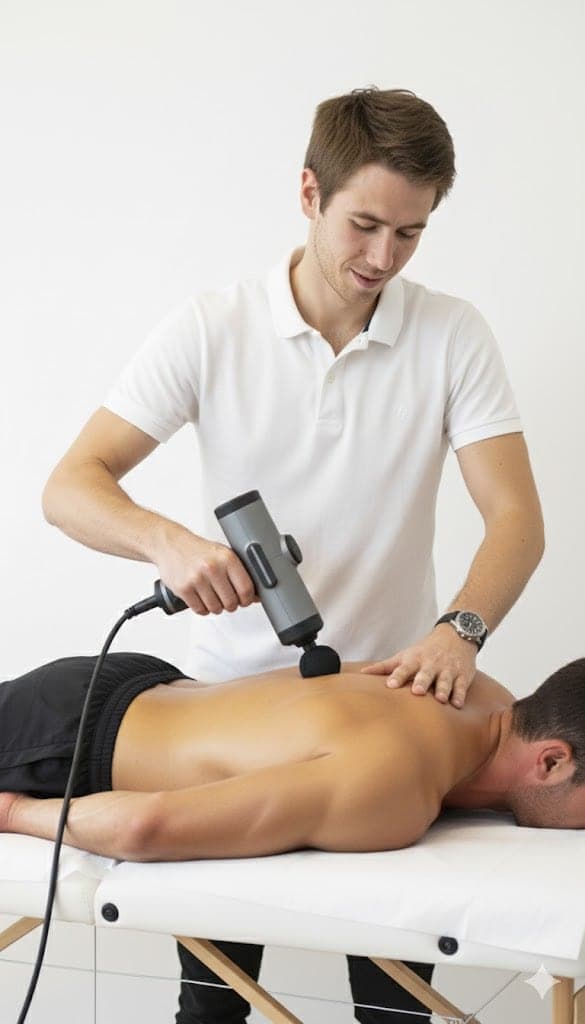
Norwegian-certified with a Bachelor’s in Physical Education and Nutrition and over ten years of clinical practice, working from a portable table in clients’ homes across the Paphos district.
This article is general information from clinical practice, not a medical diagnosis. If you have severe, worsening or unexplained pain, numbness, weakness, or pain after an accident, see a doctor first.