Massage for lower back pain: what actually helps and why
In short
Massage for lower back pain works best when it treats the deep hip flexors, glutes and lumbar muscles that load the spine, not just the sore spot. I bring mechanical deep-tissue treatment to your home across Paphos district.
Lower back pain is the complaint I am asked about more than any other in Paphos. I am Chris, a Norwegian-certified therapist working from Chlorakas, and my answer is usually mechanical deep-tissue massage at your home. This article explains what massage for lower back pain can realistically do, which muscles matter, and how I work.
Why the lower back hurts in the first place
Most of the lower back pain I see is not a spine problem in the strict sense. It is a load problem. The lumbar spine sits between the pelvis and the ribcage, and it takes whatever the muscles around it fail to handle. When those muscles are short, tight or weak, the joints and discs of the lower back absorb the difference, and that is where the ache lands.
Three patterns account for the great majority of what I treat across Paphos district:
- Shortened hip flexors from long hours of sitting, which tilt the pelvis forward and increase the arch in the lower back.
- Tight, overworked lumbar extensors that never fully switch off, especially in people who stand or drive for long periods.
- Glutes and deep hip rotators that have stopped doing their share, so the lower back muscles take over during walking, lifting and gardening.
- Compensation after an old injury elsewhere: an ankle, a knee or a hip that changed the way someone moves years ago.
The presentation I see most often in expats and long-term residents here is a mix of the first two. Desk work, long drives to Limassol or the airport, and a sudden burst of physical activity at the weekend. The back muscles are tight because they are being asked to do the job of muscles that have gone quiet, and rubbing the sore spot alone does not change that.
What massage for lower back pain should target
This is where most massage falls short. A general back rub feels pleasant, and it can ease the guarding for a day or two, but if the treatment stays on the painful area it rarely lasts. The tissue that is loading the lower back is usually somewhere else, and much of it is deep.
Massage for lower back pain, done properly, should reach these structures:
| Structure | Where it sits | Why it matters for the lower back |
|---|---|---|
| Psoas and iliacus | Deep in the front of the hip and lower abdomen | Attaches directly to the lumbar vertebrae; when short it pulls the spine into extension |
| Quadratus lumborum | Between the lowest rib and the top of the pelvis | Hikes the hip and side-bends the spine; a common source of one-sided ache |
| Erector spinae and multifidus | Either side of the spine | Chronic tension here is usually the symptom, not the cause, but it still needs releasing |
| Gluteus medius and piriformis | Outer and deep buttock | Weak or tight glutes shift load onto the lower back with every step |
| Hamstrings | Back of the thigh | Short hamstrings tilt the pelvis backward and stiffen the whole chain |
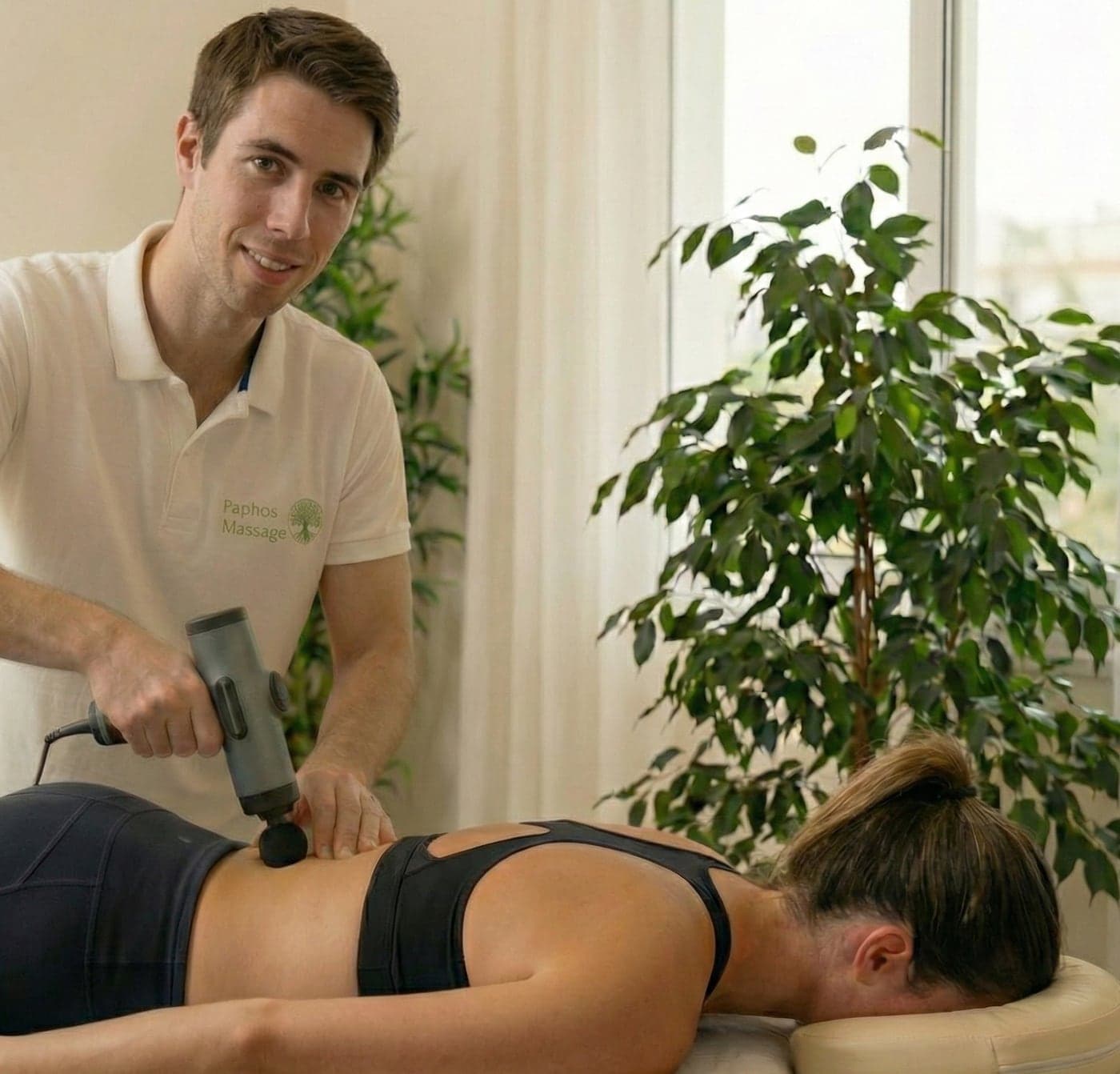
Hands alone struggle to hold consistent, controlled pressure in the deeper of these tissues for long enough to make a lasting difference. That is the reason I built my practice around a mechanical method rather than a purely manual one. The device I use lets me work at depth with the same pressure from the first minute to the last, and I choose the intensity to suit the person on the table.
How a mechanical deep-tissue session works
I travel to you with the table, the device and everything else needed. A home visit removes the part of the process most people with a bad back dread, which is getting into a car and sitting in traffic afterwards. You need a room with space for a table and, ideally, a shower nearby, but nothing more.
A typical first session for lower back pain runs like this:
Sessions are 60 or 90 minutes. For a lower back that has been sore for a while I usually suggest 90 minutes for the first visit, because the hips and glutes take time to work through properly and I do not like rushing that part. Prices are on the pricing page: €90 for 60 minutes and €130 for 90 minutes, and every fifth session is free.
The pressure is firm. People often describe it as intense but bearable, and I adjust constantly based on what I feel under the device and what you tell me. Discomfort during treatment is normal; sharp or shooting pain is not, and if it appears I stop and change what I am doing.
What you can expect over a course of treatment
I would rather set honest expectations than sell a miracle. Massage does not put a disc back or rebuild a weak muscle. What it does do is release the tissue that is loading the spine, calm the guarding, and give you a window in which movement and strengthening are actually possible.
The pattern that repeats most often in my practice is this:
- After the first session, the back usually feels looser and less guarded, with some tenderness in the treated areas for a day or so.
- Over the next few sessions the interval between flare-ups gets longer and the mornings get easier.
- Somewhere in the middle of a course the person notices they have stopped thinking about their back for hours at a time.
- After that, the frequency drops to occasional maintenance visits, or none at all if the home exercises are kept up.
How many sessions that takes depends on how long the problem has been there and how much of your day involves the positions that caused it. Recent, mechanical pain often settles within a handful of visits. Pain that has been there for years, with layers of compensation, takes longer, and I will say so at the first appointment rather than pretend otherwise.
The other thing to say plainly is that maintenance is not failure. Someone who drives an hour a day and sits at a desk for eight more is going to keep loading the same tissue. A session every month or six weeks to keep the hips and glutes moving is a reasonable arrangement, and far cheaper than living with a back that seizes up twice a year.
Who this suits, and who should see a doctor first
Mechanical deep-tissue work suits people whose lower back pain is muscular and mechanical: the stiff morning back, the ache after driving, the one-sided pull that came on after gardening or lifting, the athlete whose lumbar spine tightens after training. It suits people who have had gentler massage that felt nice and changed nothing. If your pain is more general and less mechanical, my therapeutic massage is the gentler fit and I am happy to say so.
What I can help with is muscle and fascia that are loading the spine; what I cannot help with is nerve compression, disc injury or anything structural, so see a doctor first if any of the following apply:
- Numbness, tingling or weakness running down one or both legs
- Any change in bladder or bowel control, or numbness around the groin
- Pain that came on after a fall, a road accident or a heavy impact
- Night pain that does not ease with rest, unexplained weight loss, fever or a history of cancer
- Pain that has been getting steadily worse for weeks rather than fluctuating
None of that means massage is off the table for good. Once a doctor has ruled out the serious causes, or once the acute phase of a disc problem has settled, deep-tissue work on the surrounding muscles is often part of what gets someone moving again. But those checks come first, and I will tell you if what I find on the table makes me think you should have them.
Frequently asked questions
Is deep-tissue massage safe for lower back pain?
For mechanical, muscular lower back pain, yes, when the pressure is controlled and adjusted to the person. The device I use lets me set intensity precisely, and I begin lighter and go deeper as the tissue allows. If your pain involves nerve symptoms, a recent injury or any of the red flags above, see a doctor before booking, and tell me what they said.
How many sessions will I need for lower back pain?
It depends on how long the pain has been there and what your days involve. Recent mechanical pain often settles in a small number of visits. Pain that has built up over years, with hip and glute compensation on top, takes longer. I give my honest estimate after the first session, once I have felt the tissue, rather than promising a number in advance.
Will the treatment hurt?
It is firm and you will feel it, particularly in the glutes and hip flexors, which are often more tender than the back itself. Most people describe it as intense but manageable, and I adjust constantly. Sharp, shooting or electric pain is not something to push through; if it appears I stop and change approach. Expect some tenderness for a day afterwards.
Can massage replace physiotherapy or exercise for a bad back?
No, and I would not want it to. Massage releases the tissue that is loading the spine and calms the guarding, which makes movement and strengthening possible. The strengthening still has to happen, and I give simple home work for that. For structural problems, physiotherapy or a specialist comes first and massage supports it.
Do you treat lower back pain at home anywhere in Paphos?
Yes. I am based in Chlorakas and travel across Paphos district with the table and equipment, from Coral Bay and Pegeia through Paphos town to Geroskipou and the villages inland. You need a room with space for a table. Booking is by WhatsApp or phone, and I will confirm the time and anything you need to prepare.
What should I do after the session?
Drink water, keep moving gently, and avoid sitting for long stretches for the rest of the day if you can. A short walk that evening helps more than lying down. Some tenderness in the treated muscles is normal for a day or so. If I have given you specific movements, start them the next morning rather than the same day.
Written by
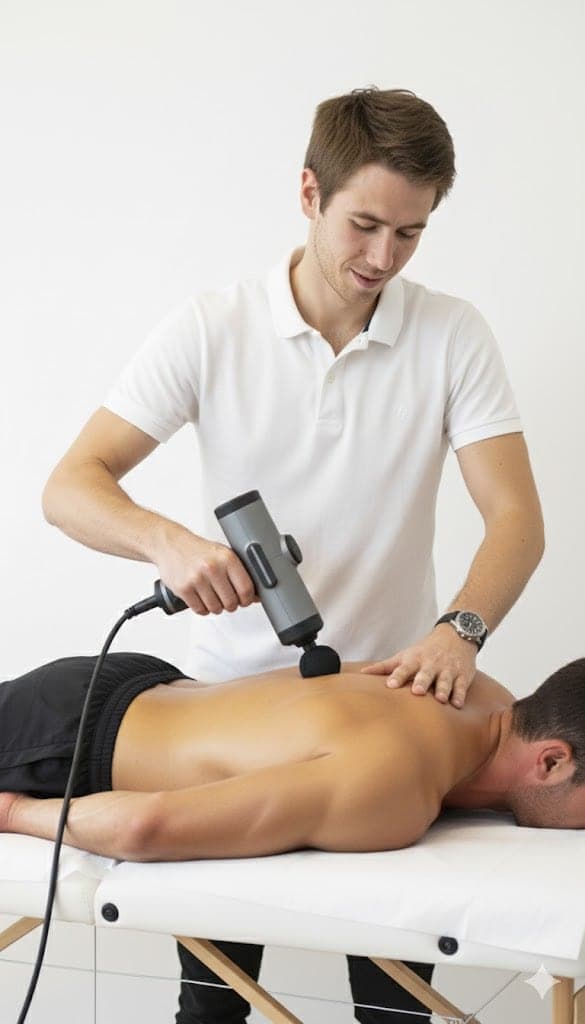
Chris
Massage therapist & body mechanics specialist
Norwegian-certified with a Bachelor’s in Physical Education and Nutrition and over ten years of clinical practice, working from a portable table in clients’ homes across the Paphos district.
- Norwegian-certified
- BSc Physical Education & Nutrition
- 10+ years clinical practice
- Based in Chlorakas · all of Paphos district
- No call-out fee anywhere in Paphos district
Last reviewed
This article is general information from clinical practice, not a medical diagnosis. If you have severe, worsening or unexplained pain, numbness, weakness, or pain after an accident, see a doctor first.