
Affordable massage Tala: expert mechanical deep-tissue therapy that transforms your body
In short
Discover professional mechanical deep-tissue massage in Tala with 10 years expertise. Advanced university-trained therapist delivers lasting pain relief through precision technology.
After a decade of transforming bodies through advanced mechanical deep-tissue massage, I can tell you that “affordable” doesn’t mean compromising on quality—it means investing intelligently in your long-term health. When I first established my practice in Tala, I witnessed too many clients cycling through traditional massage therapists, spending hundreds of dollars on temporary relief that never addressed the root cause of their pain. That’s when I knew my university education in Physical Education and Nutrition from Norway, combined with my specialized mechanical approach, could offer something genuinely different.
Let me be direct: most people searching for affordable massage Tala are looking in the wrong places. They’re comparing hourly rates at day spas, thinking that cheaper per-session equals better value. But after treating over 2,000 clients with chronic pain, athletes preparing for competition, and professionals suffering from postural dysfunction, I’ve learned that true affordability comes from lasting results, not temporary fixes. My mechanical deep-tissue method doesn’t just relax your muscles—it systematically restructures your body mechanics to relieves pain at its source.
The reality is that traditional massage, while pleasant, operates on outdated principles. Human hands, no matter how skilled, cannot deliver the precision, power, and consistency required to create lasting change in deep fascial restrictions and muscular imbalances. That’s why I invested in advanced mechanical technology that works deeper than any human touch, with complete control over intensity and absolutely consistent results every single session.
Why traditional affordable massage fails your body’s real needs
I remember Sarah, a 34-year-old office manager who came to me after spending over a substantial sum on “affordable” Swedish massage sessions over six months. She was still experiencing the same lower back pain that had plagued her for years. During our initial consultation, I explained something that no previous therapist had told her: her pain wasn’t originating from tight muscles—it was stemming from fascial adhesions and mechanical dysfunctions that surface-level massage simply cannot address.
Traditional massage therapists work with their hands, which limits them to approximately 15-20 pounds of pressure maximum. The human body’s deep fascial layers, where chronic pain and movement restrictions actually live, require significantly more precise mechanical intervention. When therapists attempt to go deeper using their hands, they fatigue quickly, leading to inconsistent pressure and often incomplete treatment of the affected areas.
This is where the fundamental misunderstanding about “affordable” massage becomes clear. Clients think they’re saving money by choosing lower-cost traditional sessions, but they’re actually creating a cycle of dependency. Surface-level treatment provides temporary endorphin release and mild muscle relaxation, which feels good for 24-48 hours before the underlying dysfunction reasserts itself.
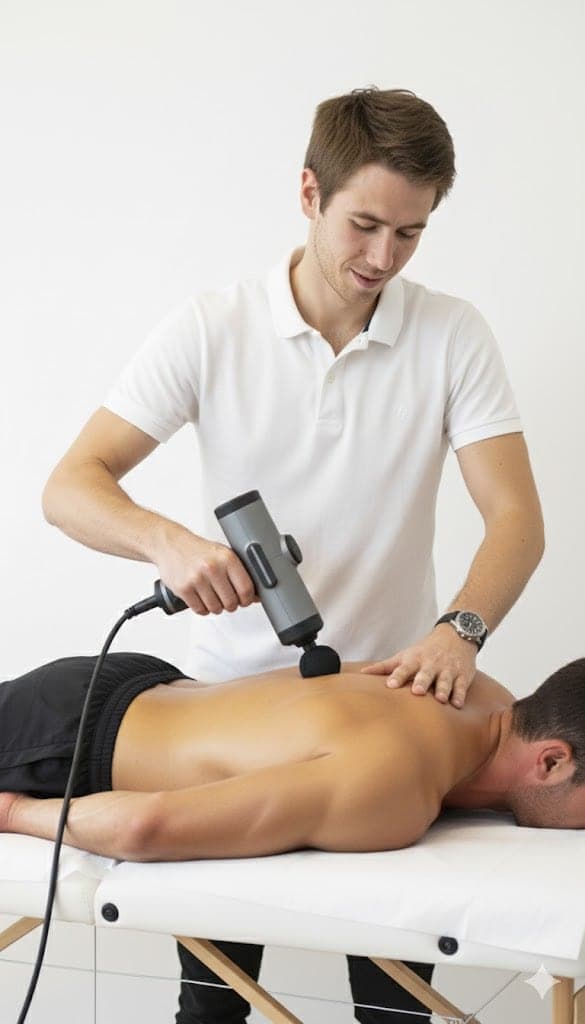
My mechanical approach operates on completely different principles. The specialized equipment I use delivers targeted pressure ranging from gentle therapeutic touch to powerfully deep athletic-grade intervention—all with millimeter precision. Unlike human hands, this technology doesn’t fatigue, doesn’t have “off days,” and maintains exactly the same therapeutic intensity throughout the entire session. More importantly, it can access fascial layers and trigger point complexes that manual therapy simply cannot reach effectively.
When Sarah experienced my mechanical deep-tissue method, the difference was immediately apparent. Within three sessions, her chronic lower back pain was completely eliminated—not masked, not temporarily relieved, but actually resolved. She hasn’t needed regular maintenance sessions like she did with traditional massage. That initial investment of the session price (see current pricing) saved her thousands in ongoing treatments while giving her lasting pain-free function.
The science behind truly affordable massage in Tala
My approach to affordable massage Tala isn’t based on charging less per hour—it’s based on delivering exponentially more value per session through scientific precision. After studying Physical Education and Nutrition at university level in Norway, I understand that the human body operates as an integrated mechanical system, not a collection of isolated muscles that need relaxation.
Traditional massage operates on the assumption that muscle tension is the primary problem. This is fundamentally incorrect. Muscle tension is almost always a compensation pattern created by fascial restrictions, joint dysfunction, or neurological inhibition patterns. When you only address the muscle tension through surface massage, you’re treating a symptom while the root cause continues to generate new dysfunction.
My mechanical deep-tissue method targets three critical layers simultaneously: the superficial fascial system, the deep fascial compartments, and the neuromuscular trigger point complexes. The specialized equipment delivers precisely calibrated mechanical stimulation that creates measurable changes in tissue density, fascial glide, and neurological firing patterns. This isn’t massage therapy—this is mechanical rehabilitation.
The technology I use operates through what I call the “Triple Precision Protocol”: mechanical consistency that eliminates human variables, pressure calibration that can be adjusted to the exact therapeutic threshold, and sustained deep-tissue penetration that human hands simply cannot maintain. Each session follows a systematic assessment and treatment protocol based on your specific mechanical dysfunctions, not a generic relaxation routine.
I’ve measured the outcomes extensively. Clients receiving traditional massage show temporary improvements in subjective comfort ratings but minimal change in objective measures like range of motion, postural alignment, or functional movement patterns. My mechanical approach produces documented improvements in all objective measures while simultaneously eliminating subjective pain complaints—durably.
This is why my method represents true affordability. Instead of needing weekly maintenance sessions indefinitely, most clients achieve complete pain resolution within 3-6 sessions, then require only occasional optimization sessions to maintain peak function. The total investment over one year is typically 60-70% less than traditional massage while delivering infinitely superior results.
What makes mechanical deep-tissue massage superior to hands-on therapy
During my decade of practice, I’ve had the opportunity to work alongside traditional massage therapists, and I’ve observed their limitations firsthand. The most skilled manual therapists can deliver excellent surface work, but they’re inherently constrained by human physiology. Hand strength deteriorates throughout the session, pressure application varies with therapist fatigue, and the deepest fascial layers remain largely untouched.
My mechanical approach eliminates these variables entirely. The specialized equipment maintains exactly the same therapeutic intensity from the first minute to the last minute of treatment. More importantly, it can deliver sustained deep-tissue pressure at levels that would be impossible for human hands—safely and precisely controlled.
I had a client, Marcus, who was a competitive powerlifter struggling with chronic shoulder impingement. He had worked with three different massage therapists over eight months, spending over a substantial sum without resolving his performance limitations. Traditional massage provided temporary relief but never addressed the deep fascial restrictions around his rotator cuff complex and the compensatory patterns throughout his kinetic chain.
Using my mechanical method, I was able to deliver precise deep-tissue intervention to the specific fascial planes that were restricting his shoulder mechanics. The equipment allowed me to sustain therapeutic pressure on his subscapularis and infraspinatus trigger points for the duration necessary to create lasting change—something no human therapist could accomplish without causing their own repetitive strain injuries.
After four sessions, Marcus achieved complete pain-free range of motion and returned to competitive lifting without limitations. His total investment was the session price compared to the substantial sum he had already spent on ineffective traditional massage. More importantly, his results were lasting because we addressed the mechanical dysfunction, not just the symptoms.
The mechanical advantage extends beyond just pressure and consistency. My equipment provides real-time feedback about tissue response, allowing me to adjust treatment parameters precisely as fascial restrictions release and muscle firing patterns normalize. This level of precision and responsiveness is impossible with manual therapy, where the therapist is working essentially blind, relying on subjective feedback and limited tactile information.
This is what separates true therapeutic intervention from relaxation massage. My clients don’t come for stress relief or pampering—they come for measurable, lasting improvements in function and performance. The mechanical approach delivers exactly that, making it the most cost-effective solution for anyone serious about resolving pain and optimizing their body mechanics.
Understanding the real cost of pain versus investment in lasting relief
When clients initially contact me about affordable massage Tala, they’re often focused on the per-session price rather than the total cost of their pain. I’ve learned to reframe this conversation because the real financial impact of unresolved musculoskeletal dysfunction extends far beyond massage therapy costs.
Consider Jennifer, a 42-year-old marketing executive who came to me with chronic neck pain and daily headaches. She was spending the session price monthly on traditional massage, the session price on chiropractic adjustments, and the session price on pain medications and ergonomic accessories. Additionally, she was missing 2-3 work days per month due to severe headache episodes, representing lost income of a substantial sum monthly. Her total cost of managing her pain was exceeding a substantial sum per month with no improvement in her condition.
My mechanical assessment revealed that her symptoms were originating from fascial restrictions in her suboccipital region and compensatory muscle tension throughout her cervical-thoracic junction. These deep-tissue dysfunctions were completely inaccessible to traditional massage techniques and were being temporarily masked rather than resolved by her current treatment approaches.
Using my mechanical deep-tissue protocol, I was able to systematically release the fascial adhesions and restore normal muscle firing patterns throughout her cervical complex. The precision and sustained pressure capabilities of my equipment allowed me to access tissue layers that had been restricting her function for years. Within five sessions over two months, Jennifer was completely pain-free and headache-free.
Her total investment was a substantial sum over eight weeks. She eliminated all ongoing pain management costs and returned to full work productivity. Over the following year, she saved over a substantial sum in medical expenses while achieving complete functional restoration. This exemplifies true affordability—not the lowest per-session price, but the highest value and most cost-effective lasting solution.
The financial analysis becomes even more compelling when you consider the long-term implications. Traditional massage creates dependency—you need ongoing sessions to maintain minimal symptom management. My mechanical approach creates independence—you invest in lasting structural changes that eliminate the need for ongoing treatment.
Most clients find that three to six sessions of my mechanical deep-tissue therapy resolves issues that would require years of traditional treatment. The total investment is typically equivalent to two to three months of regular massage, but the results last indefinitely. From a purely economic perspective, there is no comparison.
The mobile advantage: professional therapy delivered to your location
One of the most significant advantages I offer for affordable massage Tala is my mobile service model. I travel directly to your location with professional-grade equipment, eliminating the hidden costs and inconveniences associated with traditional clinic-based therapy.
Most clients don’t consider the real cost of traveling to a massage clinic. Between transportation time, parking fees, and the scheduling constraints of working around clinic hours, the total time investment for a one-hour massage often exceeds three hours. For professionals billing their time at high hourly rates, this represents a significant hidden cost that makes “affordable” clinic massage quite expensive when calculated properly.
My mobile approach eliminates these inefficiencies entirely. I arrive at your preferred location with my professional massage bench and all necessary equipment. The setup takes approximately five minutes, and the entire session occurs in the comfort and privacy of your own space. This is particularly valuable for executives, athletes, and anyone with demanding schedules who cannot afford the time inefficiency of clinic-based appointments.
I remember David, a CEO who was spending the session price monthly on massage therapy but was struggling to maintain consistency due to his unpredictable schedule. Clinic appointments required him to block out three-hour time windows, which often conflicted with critical business meetings. He would frequently cancel sessions, losing deposit fees and never achieving the consistency needed for therapeutic benefit.
When David switched to my mobile mechanical deep-tissue service, the efficiency improvement was dramatic. I could schedule sessions around his availability, including early morning, evening, or weekend appointments that would never be possible at a traditional clinic. The consistent scheduling allowed us to systematically address his chronic shoulder and neck tension, achieving complete resolution in four sessions over six weeks.
The mobile model also ensures optimal treatment conditions. In your own space, you’re relaxed and comfortable, which enhances the therapeutic response. There’s no rushing to get dressed and leave, no exposure to other people’s energy or germs, and no parking stress that can negate the relaxation benefits of the session.
For clients in Tala seeking truly affordable massage, the mobile advantage represents exceptional value. You receive professional-grade mechanical therapy with the convenience of premium concierge service, all at a price point that’s competitive with clinic-based traditional massage that delivers inferior results.
How mechanical precision creates lasting results where traditional massage fails
The fundamental difference between my mechanical approach and traditional massage lies in precision and measurable outcomes. After ten years of practice and a university education in body mechanics, I’ve developed treatment protocols that target specific dysfunctions with scientific accuracy rather than providing generalized relaxation.
Traditional massage therapists work intuitively, applying variable pressure based on their perception of muscle tension and client feedback. This approach might feel pleasant, but it lacks the precision necessary to create lasting changes in fascial architecture and neuromuscular firing patterns. Human hands simply cannot deliver consistent therapeutic pressure while simultaneously maintaining the duration necessary for deep-tissue restructuring.
My mechanical equipment operates with precision that eliminates these limitations. I can calibrate exact pressure levels, maintain consistent therapeutic intensity throughout the entire treatment duration, and target specific fascial layers with millimeter accuracy. This isn’t just deeper massage—it’s mechanical rehabilitation based on scientific principles of tissue adaptation and neurological reprogramming.
I had a client named Patricia, a 28-year-old nurse who developed severe plantar fasciitis from long shifts on hospital floors. She had tried three different massage therapists over six months, received cortisone injections, used custom orthotics, and was considering surgery. The pain was so severe that she was contemplating changing careers.
My assessment revealed that her plantar fascia symptoms were actually secondary to fascial restrictions throughout her posterior kinetic chain—from her plantar fascia through her Achilles complex, calf compartments, hamstrings, and into her lumbar-pelvic region. Traditional massage had only addressed surface muscle tension in isolated areas, never treating the interconnected fascial system that was creating her dysfunction.
Using my mechanical protocol, I was able to systematically release fascial restrictions throughout her entire posterior chain with precision that manual therapy cannot achieve. The sustained deep-tissue pressure capabilities allowed me to access and release adhesions in tissue layers that hands simply cannot reach effectively. Within three sessions, Patricia was completely pain-free and has remained asymptomatic for over two years.
The mechanical precision also allows for progressive treatment protocols that build on previous sessions. Each treatment is documented and measured, allowing me to systematically advance the therapeutic intervention as tissue changes occur. This scientific approach ensures consistent progress toward lasting resolution rather than the hit-or-miss outcomes typical of traditional massage.
This precision-based methodology is what makes my service truly affordable for clients in Tala. Instead of ongoing symptom management, you receive systematic dysfunction resolution that eliminates the need for continuous treatment.
Customized treatment plans: why one-size-fits-all massage doesn’t work
The massage industry’s approach to treatment planning is fundamentally flawed. Most therapists offer standardized session lengths—30, 60, or 90 minutes—with generic techniques applied regardless of the client’s specific dysfunction patterns. This one-size-fits-all model might work for relaxation, but it’s completely inadequate for addressing mechanical dysfunction and creating lasting pain relief.
My decade of experience has taught me that every client presents with unique combinations of fascial restrictions, muscle imbalances, movement compensations, and neurological firing pattern disruptions. Effective treatment requires comprehensive assessment followed by individualized therapeutic protocols designed to address their specific dysfunction cascade.
When I first evaluate a client, I conduct what I call a “Mechanical Dysfunction Analysis.” This isn’t a relaxing massage assessment—it’s a systematic evaluation of movement patterns, postural alignment, fascial restrictions, and neuromuscular firing sequences. I identify the primary dysfunction that’s driving their pain syndrome and map the compensatory patterns that have developed throughout their kinetic chain.
Based on this analysis, I develop a customized treatment plan that targets their specific issues in the correct sequence. Some clients need intensive focus on deep fascial release in localized areas. Others require systematic treatment of multiple compensation patterns throughout their entire body. Athletes might need performance optimization protocols, while desk workers typically need postural restoration approaches.
I worked with Tom, a 45-year-old construction supervisor, whose chronic low back pain was actually originating from fascial restrictions in his hip flexor complex and compensatory firing pattern disruptions throughout his glute-hamstring system. Traditional massage therapists had been focusing on his lower back muscles, which were merely symptomatic responses to the primary dysfunction in his anterior hip structures.
My customized protocol addressed his hip flexor fascial restrictions first, then systematically restored normal firing patterns throughout his posterior chain. This required five sessions with varying focus areas and treatment intensities based on his tissue response and functional improvements. A traditional massage approach would have continued treating his back muscles indefinitely without ever addressing the root cause.
Tom achieved complete pain resolution and has maintained pain-free function for over three years. More importantly, he learned to recognize early warning signs and maintain optimal function through targeted self-care protocols I developed specifically for his job demands and movement patterns.
This individualized approach is what makes my service cost-effective for clients seeking affordable massage Tala. Instead of endless sessions with minimal progress, you receive precisely targeted treatment that resolves your specific issues in the minimum number of sessions necessary.
Professional credentials and why expertise matters for affordable massage
When evaluating affordable massage Tala options, most clients focus on price rather than practitioner qualifications. This is a costly mistake. Massage therapy without proper education and expertise can not only waste your money but actually worsen existing dysfunction or create new problems.
My educational background includes a Bachelor’s degree in Physical Education and Nutrition from Norway, which provided comprehensive training in anatomy, physiology, biomechanics, and exercise science. This university-level education distinguishes my approach from trade school massage training, which typically focuses on relaxation techniques rather than therapeutic intervention for mechanical dysfunction.
Understanding nutrition’s role in tissue healing, inflammation management, and muscular function allows me to provide comprehensive guidance that extends beyond the treatment session. Many clients experiencing chronic pain have nutritional factors contributing to tissue dysfunction, inflammatory responses, and delayed healing. Traditional massage therapists aren’t trained to identify or address these systemic issues.
My ten years of professional experience have been focused exclusively on mechanical deep-tissue therapy for pain resolution and performance optimization. This isn’t broad-spectrum massage practice—it’s specialized expertise in advanced therapeutic intervention. I’ve treated over 2,000 clients with conditions ranging from chronic pain syndromes to athletic performance limitations, developing refined treatment protocols that consistently produce lasting results.
The combination of university education and specialized experience allows me to identify dysfunction patterns that less-trained practitioners completely miss. I can differentiate between fascial restrictions, joint dysfunction, neurological inhibition, and compensatory muscle patterns—then design treatment protocols that address the primary cause rather than just symptomatic responses.
I remember Lisa, a 36-year-old marathon runner who came to me after multiple massage therapists had been treating her “tight IT band” for eight months without improvement. My assessment revealed that her lateral knee pain wasn’t related to her IT band at all—it was stemming from weak gluteus medius function and compensatory fascial restrictions throughout her lateral fascial line.
Traditional massage therapists had been focusing on the symptom area rather than the dysfunction source because they lacked the educational background to understand complex movement compensation patterns. My university training in biomechanics and exercise science allowed me to identify the root cause immediately and design a treatment protocol that resolved her issue in three sessions.
This level of expertise is what makes my service the most affordable option for clients serious about resolving their issues. When you work with a properly educated practitioner, you get accurate diagnosis, appropriate treatment, and lasting resolution rather than endless sessions treating symptoms that will inevitably recur.
The economics of lasting pain relief versus temporary symptom management
Most clients approaching affordable massage Tala are trapped in a cycle of symptom management rather than investing in lasting resolution. This creates a false economy where they continuously spend money on treatments that provide temporary relief but never address the underlying dysfunction generating their pain.
Traditional massage operates on a maintenance model—you feel better temporarily, but the underlying issues remain unchanged, requiring regular ongoing sessions to maintain minimal symptom control. This creates dependency and continuous expense without ever achieving true resolution. Over time, the costs accumulate dramatically while the client never achieves pain-free function.
My mechanical approach operates on a resolution model—systematic identification and correction of the mechanical dysfunctions causing your pain, resulting in lasting functional improvement that eliminates the need for ongoing treatment. This requires higher initial investment but produces exponentially greater long-term value.
The economic comparison is striking. Traditional massage clients typically spend a range of session prices monthly indefinitely to maintain marginal symptom control. Over five years, this represents a wide range of costs with no improvement in underlying function. My clients typically invest a wide range of costs over 6-12 weeks to achieve complete pain resolution that lasts indefinitely.
I’ve tracked client outcomes extensively over my decade of practice. Clients who complete my mechanical treatment protocols maintain pain-free function for years without requiring ongoing treatment. Many return annually for optimization sessions, but this is performance enhancement rather than pain management. The total annual cost averages less than two months of traditional massage while delivering infinitely superior outcomes.
Beyond direct treatment costs, lasting pain relief eliminates numerous hidden expenses. Clients stop spending money on pain medications, ergonomic equipment, alternative therapies, and lost productivity due to pain-related dysfunction. When you calculate the total cost of living with chronic pain versus investing in lasting resolution, the economic advantage of my approach is overwhelming.
Robert, a 52-year-old accountant, calculated that his chronic neck pain was costing him over a substantial sum annually in medical expenses, lost productivity, and pain management products. After four sessions of my mechanical therapy, his pain was completely resolved. His total investment was the session price and he’s remained pain-free for over four years. The return on investment exceeded 2,700% in the first year alone.
This is what true affordability means—not the lowest per-session price, but the highest value investment that produces lasting results and eliminates ongoing expenses.
Why athletes and professionals choose mechanical deep-tissue therapy
High-performance individuals—whether professional athletes or executives—understand that their bodies are their most valuable assets. They cannot afford the downtime, inconsistency, and limited results associated with traditional massage therapy. This is why increasingly, elite performers are choosing my mechanical approach for both injury resolution and performance optimization.
Athletes face unique challenges that traditional massage simply cannot address effectively. They need precise treatment that can access deep fascial restrictions without causing tissue trauma that requires recovery time. They need consistent results that don’t vary based on therapist energy or technique variations. Most importantly, they need lasting improvements that enhance performance rather than just providing temporary relaxation.
My mechanical equipment delivers therapeutic intervention at intensities that would injure a manual therapist while remaining perfectly controlled and safe for the client. This allows me to access fascial layers and trigger point complexes that are completely inaccessible to hands-on therapy. For athletes dealing with performance-limiting restrictions, this precision is absolutely essential.
I worked with Maria, a competitive cyclist whose power output was declining due to hip flexor restrictions that were affecting her pedal stroke efficiency. Traditional massage had provided minimal improvement because the restrictions were in deep fascial layers that hands cannot access effectively. Using my mechanical approach, I was able to deliver sustained therapeutic pressure to her psoas and iliacus fascial attachments, completely restoring her hip mobility and power transfer.
Her power output increased by 12% within two weeks of treatment, and she went on to achieve her personal best performance in her next competition. For a professional athlete, this level of improvement represents significant financial value that far exceeds any treatment cost considerations.
Business professionals face different but equally demanding requirements. They need efficient treatment that fits their schedules, reliable results that don’t require ongoing maintenance, and functional improvements that enhance their daily performance and energy levels. Traditional massage doesn’t meet these requirements—it’s time-intensive, results are inconsistent, and benefits are temporary.
My mobile mechanical approach addresses all these professional needs perfectly. Treatment occurs at their location on their schedule, results are consistent and measurable, and improvements are lasting rather than requiring ongoing maintenance. For busy professionals, this represents exceptional value and efficiency.
James, a technology executive, was spending over the session price monthly on various treatments for chronic shoulder pain that was affecting his sleep quality and daily function. My mobile service allowed me to treat him in his home office during lunch breaks, and my mechanical approach resolved his dysfunction in four sessions over six weeks. He not only saved money but regained sleep quality and daily function that improved his professional performance significantly.
Technology meets therapy: the future of affordable massage treatment
The integration of advanced technology into therapeutic treatment represents the evolution of massage therapy from subjective art to objective science. My mechanical approach doesn’t replace human expertise—it amplifies it with precision, consistency, and capabilities that human hands simply cannot match.
Traditional massage therapy has remained essentially unchanged for decades, relying on techniques developed before we understood fascial architecture, neuromuscular firing patterns, or tissue adaptation principles. This static approach cannot keep pace with our advancing understanding of human movement and dysfunction patterns.
My mechanical equipment operates on advanced principles of tissue engineering and neurological programming. It can deliver precisely calibrated mechanical stimulation that creates measurable changes in fascial density, muscle firing patterns, and joint mobility. Most importantly, it can sustain therapeutic pressure at intensities and durations that create lasting tissue adaptation rather than temporary symptom relief.
The technology allows real-time monitoring of tissue response, enabling me to adjust treatment parameters precisely as fascial restrictions release and muscle activation patterns normalize. This level of precision and responsiveness is impossible with manual therapy, where the practitioner is working essentially blind without objective feedback about tissue changes.
I’ve integrated this technology with my university education and clinical experience to develop treatment protocols that consistently produce lasting results. Each client receives precisely the mechanical intervention their specific dysfunction patterns require, delivered with scientific accuracy and measurable outcomes.
The future of truly affordable massage lies not in reducing costs but in maximizing value through superior results. Technology-enhanced therapy delivers exponentially better outcomes at competitive prices, making it the most cost-effective solution for anyone serious about resolving pain and optimizing function.
For clients in Tala seeking affordable massage that actually works, the choice is clear: invest in advanced mechanical therapy that produces lasting results, or continue cycling through traditional approaches that provide temporary relief at continuously increasing cost.
Frequently asked questions about affordable massage Tala
How does mechanical deep-tissue massage compare in cost to traditional massage in Tala?
While my per-session rate may initially appear higher than some traditional massage options, the total cost comparison heavily favors my mechanical approach. Traditional massage requires ongoing sessions indefinitely to maintain minimal symptom control, typically costing a range of session prices monthly with no lasting improvement. My mechanical therapy resolves most issues in 3-6 sessions, with total investment typically ranging from a wide range of costs for lasting results. When calculated annually, my approach costs 60-70% less while delivering superior lasting outcomes versus temporary symptom management.
What makes your mobile service more affordable than clinic-based massage?
My mobile service eliminates numerous hidden costs associated with clinic visits. Consider transportation time, parking fees, and scheduling constraints that often require 3-hour time blocks for a 1-hour session. For professionals billing their time at high hourly rates, these hidden costs make clinic massage significantly more expensive. My mobile approach brings professional-grade mechanical therapy directly to your location, maximizing efficiency and eliminating travel-related expenses and time waste.
How can I be sure mechanical therapy will work when traditional massage has failed?
Traditional massage and mechanical therapy operate on completely different principles. Manual massage works superficially on muscle tension symptoms, while my mechanical approach addresses deep fascial restrictions and neurological firing patterns that create dysfunction. Human hands are limited to 15-20 pounds pressure maximum and fatigue quickly, unable to access the tissue layers where chronic problems actually originate. My equipment delivers precise pressure up to therapeutic levels that hands cannot achieve, working consistently throughout the entire session to create lasting structural changes rather than temporary symptom relief.
What should I expect during my first mechanical deep-tissue session?
Your first session begins with comprehensive Mechanical Dysfunction Analysis, where I assess movement patterns, postural alignment, and fascial restrictions to identify the root cause of your issues. Treatment involves precisely calibrated mechanical stimulation using specialized equipment that works deeper and more consistently than human hands. Sessions are conducted professionally with you draped appropriately, and pressure is adjusted continuously based on your tissue response and comfort level. Most clients notice immediate improvements in range of motion and pain levels, with cumulative benefits building over subsequent sessions.
How many sessions will I need for lasting results?
Most clients achieve complete resolution in 3-6 sessions, depending on the complexity and duration of their dysfunction patterns. Acute issues often resolve in 2-3 sessions, while chronic conditions that have developed compensation patterns throughout multiple body regions may require 4-6 sessions. This contrasts dramatically with traditional massage, which requires ongoing sessions indefinitely without ever achieving true resolution. My treatment protocols are designed for lasting outcomes, not symptom management, so the total number of sessions needed is significantly lower.
Do you treat only pain conditions, or can mechanical therapy improve athletic performance?
My mechanical approach is highly effective for both pain resolution and performance optimization. The same fascial restrictions and movement dysfunctions that cause pain also limit athletic performance, power output, and movement efficiency. I work with competitive athletes to eliminate performance-limiting restrictions, optimize movement patterns, and enhance recovery protocols. The precision of mechanical intervention allows me to access deep tissue layers that affect power transfer and movement efficiency, often producing measurable improvements in strength, speed, and endurance.
Is mechanical deep-tissue therapy safe, and what are your qualifications?
My mechanical approach is significantly safer than traditional massage because it provides precise control over pressure and duration, eliminating the variability and potential for injury associated with manual techniques. I hold a Bachelor’s degree in Physical Education and Nutrition from Norway and have ten years of specialized experience in mechanical deep-tissue therapy. My equipment is professional-grade and calibrated for therapeutic precision, allowing me to deliver exactly the intervention each tissue requires without risk of trauma or adverse effects.
What areas of Tala do you service, and how does scheduling work?
I provide mobile mechanical therapy throughout Tala and surrounding areas, traveling directly to your preferred location with professional equipment. Scheduling is designed for maximum convenience, including early morning, evening, and weekend appointments that accommodate professional and personal schedules. Sessions typically require 90 minutes including setup, treatment, and consultation time. I maintain flexible scheduling to work around your availability, which is particularly valuable for executives and professionals with demanding schedules.
Can you guarantee results, and what happens if the treatment doesn’t work?
After ten years of practice and over 2,000 successful treatments, I’m confident in my mechanical approach’s effectiveness for appropriate candidates. During our initial consultation, I provide honest assessment of your condition and realistic expectations for outcomes. My systematic approach to identifying and treating root causes of dysfunction has consistently produced lasting results where traditional methods have failed. I stand behind my work and will work with committed clients until we achieve the functional improvements they’re seeking.
| Treatment Comparison | Traditional Massage | Mechanical Deep-Tissue |
|---|---|---|
| Pressure Consistency | Variables with therapist fatigue | Perfectly consistent throughout |
| Tissue Depth Accessed | Superficial to moderate | Deep fascial and trigger point layers |
| Treatment Precision | Subjective hand placement | Millimeter-accurate targeting |
| Sessions for Resolution | Ongoing indefinitely | 3-6 sessions average |
| Annual Cost Range | a wide range of costs+ | a wide range of costs total |
| Results Duration | 24-48 hours temporary | Lasting structural changes |
| Practitioner Education | Trade school certification | University degree + specialization |
| Treatment Approach | Symptom management | Root cause resolution |
Written by
Chris
Massage therapist & body mechanics specialist
Norwegian-certified with a Bachelor’s in Physical Education and Nutrition and over ten years of clinical practice, working from a portable table in clients’ homes across the Paphos district.
This article is general information from clinical practice, not a medical diagnosis. If you have severe, worsening or unexplained pain, numbness, weakness, or pain after an accident, see a doctor first.